
Morning Five: 10.03.12 Edition

Posted by rtmsf on October 3rd, 2012

  1. It’s officially considered preseason when the various Top 25s start rolling out from the more reputable sources, and even though we’re still aghast that The Sporting News no longer publishes its college basketball annual (or any annual, for that matter), we’ll give them a break and assume that they still generally know what they’re talking about over there. TSN‘s Top 25 rankings were released Tuesday, and if you’re looking for any major surprises, this probably isn’t the place to start. Still, these rankings are bullish on the Big Ten (three teams in the top five), Duke (#6), and giving some love to the high-mids (seven teams on the list). On the flip side, the group is still a bit skeptical of UCLA (#11) and the Big 12 (only Kansas is represented). If you can’t handle the annoying slideshow format, check out Mike DeCourcy’s write-up on the logic of their selections here.
  2. Is the Atlantic 10 positioning itself to eventually become the pre-eminent basketball league with a predominantly east coast footprint? Obviously we’re excluding the ACC from this consideration, but with the news on Tuesday that the A-10 had signed a new eight-year television deal with ESPN, CBS Sports Network and the NBC Sports Group, you have to wonder if the conference could overcome the dwindling Big East during some of its down years, and especially if more moves (ahem, Louisville) are coming. According to CBSSports.com‘s Jeff Goodman, the league will have roughly 150 annual games on those networks, and although financial terms of the deal were not disclosed, it’s reasonable to assume that the additions of Butler and VCU as mid-major basketball empires produced a significant uptick in the league’s overall marketability and value.
  3. That muffled groan you heard late Monday night emanating from Indianapolis had nothing to do with the Monday Night Football game but instead everything to do with a decision by a federal judge in San Francisco concerning its case versus Ed O’Bannon and his friends. The class action suit against the NCAA depends primarily on the plaintiffs proving that the organization has for decades knowingly exploited its “student-athletes” through the use and sale of their names, likenesses, and images. To show the financial incentives for such a scheme, the O’Bannon group filed a motion for the NCAA to release its licensing and television contracts with ESPN since 2005, and lo and behold, the judge sided with their request. As SI.com‘s Michael McCann writes, this information is invaluable for the plaintiffs, as it not only provides specific dollar figures for the ‘monetization’ of college sports but it also opens up other companies such as ESPN and EA Sports to lawsuits down the line for exactly the same thing. This is a substantial ruling, one that should be watched carefully.
  4. North Carolina continues to find itself under fire for its jock-friendly academic coursework, as the Raleigh News & Observer has repeatedly embarrassed the school with release after release of new information that only serves to further fuel a national sentiment that there needs to be a comprehensive NCAA investigation of the academic side of the basketball program. The latest news is that a number of Tar Heel hoops players (among other athletes) were surprisingly enrolled in a 2007 Naval Weapons Systems class, a course ostensibly designed to produce commissioned US Naval officers rather than eligible power forwards. A Twitter war erupted over the fact that every school has easy classes and majors of which many athletes are attracted to, but people omitting the other side of the story are missing the bigger point. There already is clear and convincing evidence that members of the football team committed academic fraud at the school, and there is significant circumstantial evidence that the university has been at best, incompetent, or at worst, obstructionist, in evaluating the basketball side of the equation — there’s enough smoke here to strongly suggest further scrutiny because it’s becoming increasingly apparent that the school either cannot or will not adequately police itself.
  5. It’s becoming a huge recruiting week for the Class of 2013, as the Harrison twins are due to announce their decisions on ESPNU this Thursday and a couple of other top five players are busily narrowing their lists. Let’s start with some pundits’ overall #1 player, Jabari Parker. The Chicago big man released a list of 10 finalists over the summer (Connecticut was added last week), but his reported favorites Duke and Michigan State will be the first two schools to receive his official visits this fall. He will soon add three more schools from a list including the Huskies, BYU, DePaul, Florida, Georgetown, Kansas, Kentucky, North Carolina and Stanford. Another player considered by some to be the top overall player, Julius Randle, has narrowed his final list to six schools: Kentucky, NC State, Florida, Texas, Kansas and Oklahoma. Interestingly, Tobacco Road powerhouses Duke and UNC were removed from Randle’s list, while Mark Gottfried’s Wolfpack remain. After this coming weekend, the pieces of this year’s recruiting class will start to really fall into place.
Share this story

Morning Five: 09.27.12 Edition

Posted by rtmsf on September 27th, 2012

  1. Has the interminable fight between the NCAA, the state of North Dakota, and its flagship university over the usage of a nickname finally come to an end? In the latest twist from a saga over North Dakota‘s Fighting Sioux nickname that has spanned decades without resolution, all parties announced on Wednesday that they have come to an agreement that hopefully satisfies everyone involved as well as the affected stakeholders. The NCAA has since 2005  threatened schools like UND with what it deems “hostile and abusive” nicknames, and the state has in recent years gone through considerable legal wrangling and even a ballot measure put to the voters over the divisive issue. This agreement ends North Dakota’s use of the nickname (considered offensive to a local Sioux tribe), but will allow much of the imagery embedded into the school’s sports arenas to remain, at least until father time wears them off. In return, the NCAA will allow the school to host postseason events on its campus, while the university and its alumni get to work deciding on options for a new and more agreeable nickname (they will have three years to think about it ).
  2. It’s extremely rare that we’ll go from a North Dakota blurb to a Montana one, but this is a weird news cycle. Will Cherry, Montana’s best player and the leading candidate for the Big Sky POY in 2012-13, has broken his right foot and will miss as much as the next three months of action. The 6’2″ guard was named last season’s Big Sky DPOY and has shown enough versatility and athleticism to make it onto the radar of NBA scouts searching for the next Damian Lillard. The hope for the Grizzlies is that Cherry, who will not have surgery on the foot, will recover quickly and only have to miss a handful of games at the start of the season. A quick review of the Montana schedule suggests that a return date by the start of conference play on December 19 would be ideal.
  3. Josh Pastner is the kind of coach whom everyone seems to have a very strong opinion about — many folks think his only real talent is salesmanship, an ability to convince potential recruits on the virtues of Memphis basketball so that they sign to play for him. Others think that he’s someone who has perhaps appeared a little green on the sidelines at times, but is a tireless worker whose chops in coaching up young players just needs some time to mature. With news this week that Memphis has received a commitment from elite 2013 east coast prospect Kuran Iverson (The Answer’s cousin), there’s one fact nobody can dispute — the Tigers coach has proven without question that he can leave the Mississippi River watershed to fill out his talented recruiting classes. The next step, of course, is to convert all that on-court talent into postseason success (and nobody cares about Conference USA titles when you’re bringing in these hauls), and, as Mike DeCourcy notes, there is a general sense among those in the know that Pastner is about to turn the corner on building his program and improving his career 0-2 NCAA Tournament record.
  4. DeCourcy must have had his typewriter working overtime yesterday, as he also published a related article on Big East recruiting with the clear thesis that available evidence suggests that the Big East as a basketball conference might not be as ‘dead as in doornail dead’ as many seem to think. According to the Rivals recruiting rankings for the Class of 2013, 16 of the 72 players (22%) in the top 115 who have already chosen schools are headed to the Big East. It’s a fair point, but a closer look at the numbers reveals the devil in the details, which is as of right now, the Big East can boast volume and depth but not much in terms of star incoming talent — of the 24 committed players who are currently ranked in the top 50, only four of those are headed to the Big East (three to Memphis; one to Louisville). By way of a contrast, the ACC and SEC already have four commitments each in the top 30, with more surely on the way once Kentucky and North Carolina are finished.
  5. Here’s a piece of trivia for your Thursday morning: Name the handful of pairs of schools that reside in the same city and also play basketball in the same multiple-bid conference. Most people will get the Pac-12’s UCLA and USC immediately; some will remember that Big Fivers Temple, La Salle and St. Joseph’s have one more season together in the Atlantic 10; if you want to get clever you might even recall Conference USA’s Rice and Houston; but how many folks outside of the Old Dominion State will remember that VCU‘s joining of the A-10 means that a bitter crosstown rivalry with Richmond is about to get realer. Gary Parrish writes that the two schools separated by only seven miles as the crow flies might be near one another in proximity, but they’re worlds apart in style and attitude. All we can say is that the two games scheduled for conference play are going to be must-see television, mid-major style. Can’t wait.
Share this story

RTC Summer School: Atlantic 10 Conference

Posted by rtmsf on August 31st, 2012

This weekend represents the end of the summer, and as such, our last offseason status of the high mid-major leagues. Up next: the Atlantic 10.

Joe Dzuback is the RTC correspondent for the Atlantic 10 Conference.

Five Offseason Storylines

Majerus Will Be Missed by A-10 Fans and Foes Next Season

  1. The Evolving Conference. Recruiting new members to replace those moving on, hiring new coaches to meet rising expectations and postseason performance, and finding a brand new venue to highlight the conference championship tournament, the Atlantic 10 and its individual members continue to respond proactively to the Division I conference realignments of the past eight years.
  2. Changing Membership. “Atlantic 10” is a misleading description for this conference. The footprint stretches from Kingston, Rhode Island, south to Charlotte, North Carolina, and west to Saint Louis, Missouri. The membership will expand from 14 to 16 for the 2012-13 season (only… at this point). The “not quite Atlantic, not quite 10” conference will add Virginia Commonwealth University (late of the Colonial Athletic Association) and Horizon League powerhouse Butler, before returning to 14 teams in 2013-14. Two schools — Temple, a conference stalwart since 1982 will depart for the Big East, and Charlotte, a member since 2005, will rejoin Conference USA. The faces may change, but all the departing and arriving members share a common passion – outstanding college basketball.
  3. Changing Faces. Since expanding to 14 teams in 2005, the conference has welcomed 14 new head coaches, an average of 1.75 new regimes per season. In the early weeks of the 2012 offseason both Rhode Island and Duquesne fired their head coaches. Jim Baron’s curmudgeonly reputation was tolerated (barely) as his teams recorded four consecutive 20-win seasons. The 25-year veteran (11 in Kingston) had no good will to draw on as the Runnin’ Rams struggled through a 7-24 season. Rhode Island AD Thorr Bjorn tabbed Wagner head coach Danny Hurley as the man to bring the program back to the NCAA Tournament. The offseason shocker came with Duquesne AD Greg Amodio’s announcement that 18-year (the last six at Duquesne) veteran Ron Everhart was out. Everhart interviewed for the Penn State job in the 2011 offseason before he withdrew from consideration (much to the relief of Dukes fans). Duquesne hired 14-year veteran coach Jim Ferry, who spent the last 10 years at Long Island University, to bring stability to the roster and coaching staff.
  4. Changing Venues. When Saint Bonaventure cut down the nets in Boardwalk Hall last March, the conference closed out a six-year run in the venerable old facility. The 2012 conference championship will be held at the Barclays Center in Brooklyn, New York, on track for completion next month. The brand new venue offers 675,000-square feet devoted to state-of-the-art sports and entertainment with an 18,000 seat basketball arena as the centerpiece. Given the access to the New York City media, will the stage be bright enough for the geographically diverse membership, which includes seven members not located along the Mid-Atlantic coast?
  5. Rick Majerus Takes a Leave of Absence from Saint Louis. For those who attended postgame pressers hosted by the Billiken mentor last season knew that head coach Rick Majerus was in fragile condition. Though he was attentive and animated during the games, his voice was lower and answers more deliberate than in previous years afterward. Athletic Director Chris May’s August 24 announcement that the 25-year veteran — the last five with Saint Louis — was in California “undergoing evaluation and treatment for an ongoing heart condition” and would not take the first chair this season at SLU was not surprising. Jim Crews, a former head coach at Evansville (1986-2002) and Army (2003-09) will assume the job on an interim basis. Crews was hired in October 2011 and was set to start his second season as an assistant when Majerus made the decision to step aside temporarily. Crews will be assisted by Jim Whitesell, also hired last offseason. The timing – late August after a stent operation in July – speaks to both Majerus’ reluctance to step aside and to his confidence in Crews and Whitesell.

Reader’s Take I


Summer Team Notes

Read the rest of this entry »

Share this story

CAA Decision Shows Why Conference Realignment is More Complex Than You Think

Posted by EJacoby on June 20th, 2012

With a number of schools changing conference affiliation every six months or so, conference realignment remains a dominant factor in the college basketball landscape. Will the Big East soon lose its distinction as the most consistently good hoops league to the ACC? Perhaps so, given that three of the league’s premier teams – West Virginia, Syracuse, and Pittsburgh – will have departed for new conferences after next year, the latter two headed south to the ACC. It begs the question why some schools even consider sticking with their current leagues if they have offers on the table to join a more flourishing conference or – for the mid-majors of the world – the Atlantic 10. But Tuesday’s news that the CAA will disallow departing schools Georgia State and Old Dominion from competing for a conference championship next season sheds some light on the drawbacks of bolting for greener pastures. Not only will these two schools be forced to pay a hefty exit fee of $250,000, but both must wait out a lame duck season in their current leagues without a chance to play for a conference championship. This is especially detrimental to the Monarchs, a team which finished fourth in the CAA last season and should have another good team next year. ODU essentially will waste a year of basketball competition that could significantly affect player focus and development and potentially result in transfers from young players who don’t want to wait two or three seasons for its transition to Conference USA to run smoothly.

Blaine Taylor’s ODU Monarchs won’t have much to play for in the CAA next season (AP Photo)

As we mentioned earlier in today’s Morning Five, it’s been surprising that other conferences haven’t imposed similar restrictions on departing schools. How crazy would it be if Syracuse and Pittsburgh were unable to compete in the Big East Tournament next season? The CAA has a long-standing rule that migrating schools are not allowed to compete in their postseason tournament, and conference commissioner Tom Yeager says that the universities fully understood the punishments when they decided to bolt. “The conference bylaws were well understood and evaluated when the institutions made their decision to withdraw from the conference,” he said. “We desire to have those institutions that are fully invested in the continued prosperity of the conference represent the conference as its champion.” So now, unless ODU puts together one of the 37 most impressive at-large resumes in hoops next season (highly unlikely), the Monarchs won’t have a realistic shot at the Big Dance despite a flourishing young roster. This puts in perspective how fortunate VCU is to have received immediate acceptance into the Atlantic 10. The Rams won one, and nearly two, games in the NCAA Tournament last season after winning the CAA Tournament (firmly on the bubble at the time). Shaka Smart’s team likely would not have qualified for the Big Dance had it not have played so well to win the league tourney.

Read the rest of this entry »

Share this story

Atlantic 10’s New Schedule Shows No Love for Newcomer Butler

Posted by EJacoby on June 6th, 2012

The Atlantic 10 has had perhaps the busiest offseason of any major basketball conference, highlighted by the exciting additions of Butler and VCU to the league starting immediately next season. The A-10 all of a sudden has 16 teams competing in 2012-13, causing a dilemma in seeking a balanced 16-game conference schedule. But as has been the case all offseason, the league did a terrific job at solving the problem quickly and effectively. On Tuesday the conference released its new league schedule for next season, one that includes all teams playing each other once, and each member taking on a rival opponent twice. Most notable about the set schedule is how difficult a draw was given to darling newcomer Butler. The Bulldogs are in for a much tougher slate than they faced the past several years en route to finishing third or better in the Horizon League for the past seven seasons.

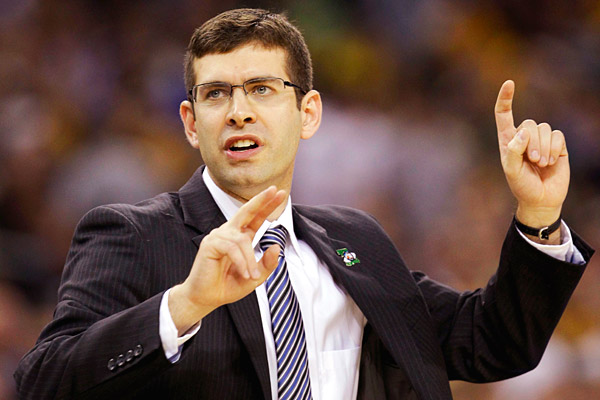
Brad Stevens' Team Received No Favors from the Atlantic 10 (AP Photo/D. Phillip)

Brad Stevens’ team was already facing increased competition by upgrading from the Horizon to the Atlantic 10, but things are made that much harder by the draw they earned next year. To start, Butler’s chosen ‘rival’ is Saint Louis, a league favorite next season that returns four starters from a round-of-32 NCAA Tournament team. The Bulldogs also drew fellow newcomer VCU on the road where the Rams lost just once last season and return a number of key contributors. In addition, Butler plays on the road at Dayton, Massachusetts, and St. Joseph’s, the latter two of which are up-and-coming contenders for next season. The Flyers finished tied for fifth in the league last year and bring back some strong players, as well. Finally, although the Bulldogs drew Xavier at home, they still have to play the Musketeers a second time during the season as part of a previously scheduled ‘non-conference’ game – and it’s in Cincinnati.

Read the rest of this entry »

Share this story

Morning Five: 05.03.12 Edition

Posted by rtmsf on May 3rd, 2012

  1. Round and round and round we go… coming on the heels of Tuesday’s announcement that Butler will join the Atlantic 10 beginning in the 2013-14 season, the Mountain West leaked on Wednesday that Utah State and San Jose State are set to join its ranks on Friday of this week. While bolstering the MW in light of its pending losses of TCU, San Diego State and Boise State, this move may effectively finish off the WAC, a high-mid major conference with just shy of 50 years of history behind it. The league may be left with only two football-playing members (New Mexico State and Idaho) and it appears that the remaining schools are likewise off to greener pastures. Such is the natural consequence of every school acting in its own self-interest.
  2. While on the subject of conference realignment, everyone has had a little time to digest the Butler move to the Atlantic 10 by now, and Luke Winn writes that much of the media got it wrong in suggesting that the “Butler Way” will need to change in order for the Bulldogs to find success in their new conference. His argument makes total sense — while the Atlantic 10 as a whole is a clearly better league than the Horizon, it’s really only better at the top. Now, instead of having to rely on non-conference play to build its overall NCAA resume, the Bulldogs will have enough games against the likes of Xavier, Dayton, Richmond, St. Louis, et al, by which to impress the selection committee. As Winn notes, efficiency metrics suggest that Butler would have finished in one of the top two positions of the A-10 standings in five of the last six years, and while those metrics don’t actually play the games, there’s not a compelling piece of evidence we’ve yet seen that would suggest Brad Stevens or Butler will have trouble in their new league.
  3. The 2012 Jimmy V Classic matchups were announced on Wednesday and the event will have a decidedly nostalgic feel next season in Madison Square Garden. The school where Jim Valvano became famous, NC State, will headline with its strong squad heading to New York to face Connecticut, while Texas and Georgetown will play in the other game. It’s only been 31 days since we last saw a college basketball game tip off, but simply reading about these matchups has already caused a marked increase in our heart rate and blood pressure.
  4. The 2012-13 version of ESPN Gameday will have a decidedly lower pitch next season, as the hyena-like laughter of Hubert Davis will no longer be a regular part of the show. Davis has agreed to take Jerod Haase’s open assistant coaching spot at his alma mater, North Carolina, after Haase decided to accept the head job at UAB last month. Roy Williams noted in previous comments about the position that a number of his former players were interested in the spot on his bench, and although Davis never played for the Kansas/UNC coach, his claim that the new assistant would have Carolina ties was clearly a factual statement. At the ripe age of 41, Davis is getting into the collegiate coaching game a bit late, but he’s certainly well connected and could use his seven years as an ESPN personality to help with recruiting and name recognition.
  5. Stanford’s basketball program may not be among the elite, but we’re becoming increasingly convinced that the university through its deep connections with tech giants such as Google and Facebook is well on its way to taking over the world, one terabyte at a time. In the Moneyball world of sports analytics, a Stanford senior named Muthu Alagappan recently developed an entirely new (and award-winning) way of looking at positions in basketball, based on the actual production of NBA players regardless of size or favored spots on the floor. Using data visualization techniques, he came up with 13 basketball positions with such descriptive names like the “Defensive Ball-Handler,” the “Paint Protector,” and the “One-of-a-Kind.” By grouping players into similar buckets and showing how they interact in a visual way, the concept is that value between similarly situated players will be easier to discern and effective balance between players on a team will be more easily achieved. It’s really interesting stuff — if you want to see the entire presentation, click over here.
Share this story

Why The Atlantic 10 and Butler Both Benefit From Bulldogs’ Addition

Posted by EJacoby on May 2nd, 2012

Evan Jacoby is a regular contributor for RTC. You can find him @evanjacoby on Twitter.

In recent years, the Atlantic 10 Conference has established itself as perhaps the strongest non-BCS league in college basketball. It’s not part of the power six, yet the A-10 is too good to put in the “mid-major” category. The conference sent four teams to the 2012 NCAA Tournament, and three teams to the Big Dance in each of the four years prior. With Tuesday’s news that Butler is heading to the Atlantic 10 for all sports beginning in the 2013-14 season, there’s reason to believe that the A-10 should remain one of the stronger college basketball leagues in the nation. Butler is a great replacement for Temple (departing in 2013), and the move also makes plenty of sense for the Bulldogs. After tremendous success in the Horizon League and historic prominence as a mid-major in back-to-back national title games in 2010 and 2011, it’s time for Brad Stevens and Butler to challenge itself in a stronger league.

Brad Stevens and Butler Is Headed to the Atlantic 10 in 2013-14 (AP Photo/D. Phillip)

Butler’s feat of back-to-back title game appearances will certainly hold as one of the biggest college basketball stories of this decade, but coach Stevens doesn’t want his legacy to be defined by those two seasons. Stevens could have had nearly any job opening he wanted after leading Butler to an 89-15 record in his first three seasons, but the coach was content with the ‘Butler Way,’ signing a long extension that will keep him in Indy through the 2021-22 season. Despite the team’s nationally recognized success, it’s still not easy to draw top recruits to play in the Horizon League. Butler could not pass up on this opportunity to join the stable and competitive A-10 starting in the fall of 2013, when the Bulldogs will ratchet up their schedule strength by taking on the likes of Xavier, Massachusetts, Saint Louis, St. Bonaventure, La Salle, and St. Joseph’s in conference play. Already armed with one of the top names in coaching and a talented young roster, Butler now has the benefit of added exposure and competition to offer to potential recruits.

Read the rest of this entry »

Share this story

Morning Five: 05.02.12 Edition

Posted by rtmsf on May 2nd, 2012

  1. The biggest non-Amare Stoudemire basketball news on Tuesday was that the Atlantic 10’s courtship of Butler appears to have finally resulted in a match. ESPN.com reported last night that Butler will formally accept an offer today to join the league in 2013-14, replacing Temple in all sports. As one of the few truly elite mid-major basketball programs unaffiliated with a top 10 conference, this represents a major coup for the A-10 going forward regardless of whether the league is also able to also poach VCU and George Mason from the CAA. Butler’s admission helps to bolster the midwestern footprint of the conference, along with existing members Xavier, St. Louis and Dayton, and it will allow Brad Stevens an entree into the fertile recruiting grounds of the mid-Atlantic with multiple trips to the East Coast cities of New York, Philadelphia, Washington each year.
  2. The other conference realignment news that shook out on Tuesday related to another Atlantic 10 school, Charlotte, and whether that school will be on the move in coming days or weeks as well. The school rejected an offer to join the Sun Belt on Tuesday and reportedly did so because it anticipates an opportunity to join Conference USA after it adds a football program next year. Where this would leave C-USA is really anybody’s guess, as the conference is slowly but surely maneuvering toward an incomprehensible 30+ team behemoth (with the eventual pairing of the Mountain West). Whoever wrote the law of unintended consequences when all of this conference realignment stuff (re)started a couple of years ago could not have predicted this morass.
  3. In the 2008 presidential election, the citizens of the Commonwealth of Kentucky voted for Republican candidate John McCain over Democrat Barack Obama by a 58% to 41% margin. That 17% victory margin will be put to the test on Friday when the thing that Kentuckians love more than anything else in the world — their national champion Wildcats — will visit the Obama White House to honor and celebrate the school’s eighth NCAA trophy. Of course, these events are rarely political in tenor (apologies to the Boston Bruins’ Tim Thomas), but that hasn’t stopped full-time politicos from speculating that both Senate Minority Leader Mitch McConnell (R-Ky), who refused an invitation, and the White House, are playing partisan games in scheduling the event on Kentucky Derby week (which occurs Saturday). Is this an election year?
  4. Tuesday was a busy day in the world of comings and goings, but the most disheartening news is that college basketball will not get another year of Tim Abromaitis at Notre Dame. Abromaitis had petitioned for a sixth year of eligibility because he tore his ACL in November after playing only two games last season — he also had taken a redshirt year in 2008-09, meaning that he ultimately only suited up in South Bend for three full seasons. In other news, Tennessee’s Renaldo Woolridge (aka SwiperBoy) will spend his last year of eligibility at USC, no doubt spending his free time outside the gym over on the Sunset Strip pitching his audio wares.
  5. It was 10 months ago when Michigan recruit Austin Hatch lost his family, his dog and very nearly his own life in a horrific plane crash that left him with a severe brain injury and the possibility of a very restricted way of life. The Detroit Free-Press revisited his story on Tuesday and found that although there are still many steps to go, Hatch’s doctors say that his rehabilitation has been “as successful as anyone they have seen.” Hatch still plans on attending Michigan in a little over a year, and says that he keeps in touch with head coach John Beilein a couple of times a month. He hasn’t yet been cleared to play basketball, but he has the spirit and will to believe that he’ll get back on the court eventually. Considering how far he’s already come and with 17 months before his first collegiate practice in Ann Arbor, it’s hard to believe that he won’t get there and become one of the best stories in all of amateur athletics.
Share this story

Atlantic 10 Remains Serious About Its Basketball Presence

Posted by nvr1983 on April 23rd, 2012

Joe Dzuback is the RTC correspondent for the Atlantic 10 Conference.

Just one month ago today, Duquesne President Charles Dougherty wrote to his Board of Trustees:

The A10 conference itself is on the verge of a major improvement with the addition of new high quality university programs. All of this amounts to an exciting professional opportunity for a new coach

Dr. Dougherty’s email was supposed to assure Duquesne’s Board of Trustees that the prospects for attracting a quality replacement for the just-fired Ron Everhart were strong, but CBSSports.com’s Brett McMurphy saw this message as an unintended confirmation that the Atlantic 10 Conference was about to consummate a blockbuster expansion deal.  This deal is rumored to bring Colonial Athletic Association members Virginia Commonwealth and George Mason, along with Horizon League member Butler, into what is already arguably the best non-power conference basketball conference in Division I. Faced with the loss of Temple for the 2013-14 basketball season, speculation since late February has centered on Butler and the Virginia universities as possible replacements for the Owls. Reaction to McMurphy’s report ranged from a vehement denial by VCU to a nuanced acknowledgement by Butler University President James Danko that a move to the A-10 was far from certain but worthy of study.Officials from both the A-10 and the CAA also denied talks were taking place.

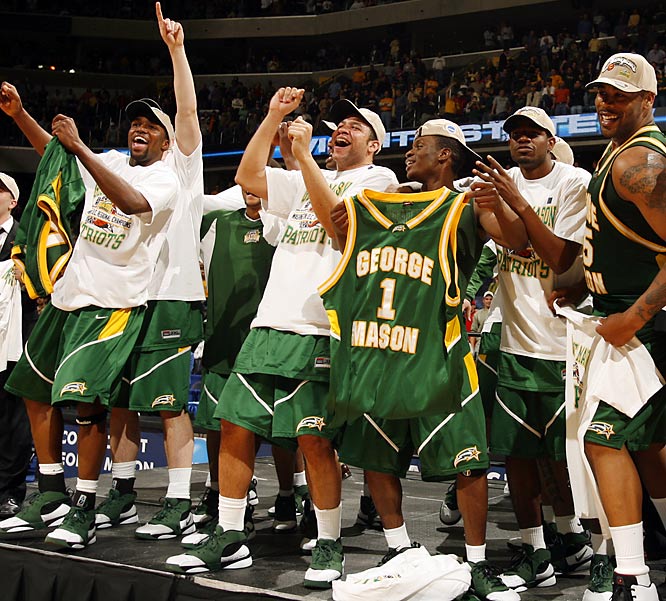
Mason Started the Era of Mids Crashing the Final Four

The story fell off of the national radar relatively quickly at the end of March, but Lenn Robbins’ tweet last Friday afternoon (“George Mason and VCU to the A-10 on May 1…Butler probably…The [New York] Post has learned”) ignited a six-hour flurry of tweets and counter-tweets as national (Andy Katz: “A-10 commish Bernadette McGlade and CAA commish Tom Yeager deny report GMU and VCU are heading to A-10.”) and regional (Adam Zagoria: “Source on Mason/VCU to the A-10: ‘I would be shocked if it doesn’t happen.’ ”) basketball writers weighed in with almost equal parts affirmation and denial.

Read the rest of this entry »

Share this story

Morning Five: 04.23.12 Edition

Posted by rtmsf on April 23rd, 2012

  1. Last week, Wisconsin’s Jarrod Uthoff became perhaps the most well-known non-contributor in college basketball, as the redshirt freshman’s public fracas with head coach Bo Ryan over his transfer made headlines and sparked debate throughout the college basketball world. If you were vacationing in Bali last week, the long and short of it is that Uthoff ‘s request to transfer was met with a list of 26 schools (including the entire Big Ten and ACC) to which he was restricted. Bo Ryan’s version of events, as told to Seth Davis, suggests that he was merely minimizing the chance that Uthoff would play against Wisconsin in a future game and that he was doing nothing different than any other head coach would do in a similar situation (the list was later trimmed to include just the other 11 Big Ten schools). To that last point, ESPN Radio interviewed three prominent coaches on Friday about this — John Calipari, Mark Few, and Jim Boeheim — and if you can believe their hypotheticals, the trio generally think that they would have handled Uthoff’s transfer differently.
  2. As for Uthoff’s specific situation, Fox Sports Wisconsin reported over the weekend that the player disputes Bo Ryan’s contention that the head coach had offered to return early from vacation to meet with him about his transfer options. He also publicly wondered why Ryan had not reached out to him after his scheduled return from vacation on April 14, even going to so far as to offer up his phone records as proof that Ryan had never made an effort to talk to him. One thing is for sure — it’s clear that the relationship between coach and player is beyond repair at this point. Uthoff has visits to Creighton and Iowa State (one of the originally restricted schools) scheduled in the next few weeks, so let’s hope that things calm down and everyone ultimately gets what they want from this crazy situation.
  3. Transitioning to a transfer candidate that fans had actually heard of prior to last week, Connecticut’s Roscoe Smith announced on Saturday that he would become the fifth Husky to leave Jim Calhoun’s suddenly-sinking program in the last month. Recall that on the heels of the announcement that UConn would not be eligible for the 2013 NCAA Tournament because of a low APR rolling average, Andre Drummond and Jeremy Lamb announced they were going to the NBA while teammates Alex Oriakhi and Michael Bradley let everyone know they were transferring. This leaves the Huskies extremely thin up front next year, with only marginal contributors Tyler Olander (4/4 in 18 MPG), Niels Giffey (3/2 in 12 MPG) and DeAndre Daniels (3/2 in 12 MPG) returning on the front line. Call him overly optimistic, but head coach Jim Calhoun believes that his program will be just fine next season regardless of all the defections. As he put it, UConn has had 25 years without a losing season and he expects it to go to 26. He also notes that Bradley may be wavering on his decision to transfer now that Smith appears to be gone.
  4. Sticking to transfer-mania, Xavier’s Mark Lyons is being forced out of the program, according to a weekend report from CBS Sports’ Jeff Goodman. Lyons is a fourth-year junior who is scheduled to graduate this year, so he could transfer without penalty to another program for his senior season, or he could opt to enter his name into the NBA Draft by next Sunday evening. Combined with the losses of Tu Holloway and Kenny Frease from a group that won three Atlantic 10 regular season titles and made three Sweet Sixteens in the last four years, Chris Mack will have some substantial rebuilding to do next season. The trio including Lyons averaged 42 PPG and 13 RPG last season, but if there’s any non-power conference program that makes replacing star players look easy, it’s Xavier.
  5. It’s the offseason so clearly it’s time for schools to haphazardly jump around again. And you thought this M5 would only focus on player transfers? A report by the New York Post’s Lenn Robbins on Friday afternoon claimed for the second time in a month that CAA stalwarts George Mason and VCU were preparing to move to the Atlantic 10 as soon as early May, and that Horizon League and national power Butler is also ready to join a new and improved A-10. At this point, all interested parties are publicly denying everything, but if we’ve learned anything in the past two years of conference realignment madness, such denials are virtually meaningless. Assuming that Xavier and St. Louis aren’t headed anywhere, the top of the Atlantic 10 could be poised to become one heck of a basketball league for years to come.
Share this story