Morning Five: 09.26.13 Edition

Posted by rtmsf on September 26th, 2013

morning5

  1. A random late September day was an odd time for the tried-and-true “baseball model” argument to once again rear its ugly head, but Big Ten commissioner Jim Delaney did his part in making a discussion of one-and-done headline-worthy on Wednesday. His stated premise is one that we’ve heard hundreds of times before: that the NBA (and interestingly, he also mentions the NFL, which is usually immune from this argument) and colleges should work together to allow elite basketball and football players to enter the “pro ranks” — whether through the minor leagues, IMG training, or whatever else — immediately out of high school. As he puts it, “if an athlete wants to professionalize themselves, professionalize themselves.” Forgetting the dripping irony implicit in comments from someone who has done more to “professionalize” his conference than any other administrator, he relies on the value of collegiate “brands that have been built over 100 years” to suggest that college athletics will be just fine without the star power of Nerlens Noel, Anthony Bennett, Johnny Manziel, Robert Griffin III, and the rest. Here’s the thing: they won’t be. While it’s true that Michigan fans will continue to watch Michigan football in the same way that Kentucky fans will watch Kentucky basketball regardless of the talent wearing those uniforms, the rest of the country will not. Casual fans of both sports want to see stars, the “next big thing,” and as we already know from the awful preps-to-pros era of college basketball (roughly 1997-2005), the game suffered as a result of the loss of its best players before they ever made it to campus.
  2. Now, this isn’t to say at all that league rules forcing basketball players to spend a “gap year” between high school and the pros in college, overseas, or in the D-League is fair to them either — the above argument relates more to what’s best for the sport of college basketball rather than the elite players themselves. As such, Dana O’Neil gives the flip side of the debate, which is to ask what true positive effect does that single year between the ages of 18 and 19 have on NBA Draftable players like Andrew Wiggins, Julius Randle and Jabari Parker? She figures that Kentucky’s Nerlens Noel lost approximately $2 million as a result of his knee injury last season, but she doesn’t address the money that #1 pick Anthony Bennett made for himself because of his one successful year at UNLV (the same dichotomy might be shown in a comparison between the stock drop of UCLA’s Shabazz Muhammad versus the rise of Kansas’ Ben McLemore). Still, her point about the NBA protecting itself from draft mistakes is a salient one — teams hope to avoid the next Kwame Brown by evaluating men playing against other men — but her underlying question as to “the point” of the one year in college seems forced. The point is that the one-and-done rule is actually better for nearly all parties involved except for the tiny percentage of highly-evaluated high schoolers whose stock ends up dropping during that one season — it’s better for the NBA, its teams, college basketball, its teams, and even some of the players themselves (the ones, like Anthony Bennett and Kyrie Irving, whom it helps). Two years would be even better.
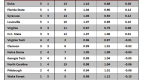
  3. We mentioned yesterday that SI.com‘s Andy Glockner is unveiling his top 20 current college basketball programs this week, using a methodology that includes historical and contemporary success, sustainability, budget, facilities, league affiliation, fan base, and recruiting pipeline. The biggest surprise in our view in the #16-20 grouping was the inclusion of Illinois at #19, but his latest group has a couple more interesting placements. At #15 was Memphis, which no doubt has a great fan base and facilities, but my goodness, it’s tough to swallow a program that has underachieved relative to its talent in each of its head coach’s four seasons on campus. The other peculiar placement is certainly UCLA at #12, behind a football-first school of Florida at #11 and back-to-back Sweet Sixteens Indiana (somewhere in the top 10). With a brand new Pauley Pavilion, this is probably based on some hesitation about Steve Alford as the new head man in Westwood, but if he can prove to have even an average recruiting touch in Southern California, it would be hard to buy this program falling outside the top 10. We’re looking forward to his rankings on Thursday — how will he handle North Carolina and Syracuse — do they fall into the second five behind Duke, Kentucky, Kansas, Louisville and Michigan State?
  4. Arkansas‘ Bud Walton Arena suffered a good bit of water damage due to torrential rains in the area last Friday, and as a result the men’s and women’s basketball teams have been forced to hold preseason practice sessions at the school’s PE/Rec building. While flooding of a school’s home arena isn’t a typical occurrence, the outsourcing of the team’s workouts to the intramural courts highlights the school’s need for a permanent basketball practice facility. Arkansas remains the only of the 14 SEC programs without one, and the Razorbacks’ 15-year long dalliance with mediocrity is partially to blame, especially from a recruiting standpoint. The damage to the arena isn’t expected to be long-term, certainly good news for the Fayette-nam Rim Rockers and all the other intramural stalwarts tired of ceding their best courts to the SEC’s most middling program.
  5. One of the best health stories of the past few years in our sport has been that of BYU’s Dave Rose. He was one of the very small percentage of survivors of pancreatic cancer, having a large tumor removed from the organ back in 2009. He recently spent another few days in the hospital after a six-month scan revealed a few more cancerous spots on his pancreas, and the Salt Lake Tribune filled us in on how he is feeling heading into a new season. Rose has proven to be someone with an eminently positive attitude, and it shines through in the piece. Still, a relapse from his remission with such an aggressive disease is cause for concern. We will certainly send equally positive thoughts his way, and hope for the best as his team heads into what should be a quite promising season on the hardwood.
Share this story

Morning Five: 09.25.13 Edition

Posted by rtmsf on September 25th, 2013

morning5

  1. Yesterday we mentioned that SI.com‘s Andy Glockner was brewing up a firestorm with his series of articles ranking the top 20 current programs in college basketball. Such an endeavor has two verifiable truths: first, everyone loves lists; second, everyone loves to rip lists. With that in mind (and he’s well aware of those truths), his honorable mentions came out Monday, followed by his rankings of programs from #16 to #20 on Tuesday. In order, let’s welcome Gonzaga, Illinois, Michigan, Georgetown and Texas to the top 20. Of this group, we’re having the most trouble with the Illinois pick at #19. The Illini had a renaissance season under the tutelage of new head coach John Groce last year, but spent most of the previous five years struggling to regain its national relevance of the early-to-mid 2000s. We realize of course that Glockner is using historical and other qualitative metrics to make these determinations, but we probably would have had Pittsburgh, Marquette, Xavier and several others ahead of the Illini. Still, that’s nitpicky. What will really make or break this list will be how Glockner handles the top five (and the fans of the four runners-up will let him know it!). We’re excited to see the next group released later today.
  2. As more and more people marry themselves to the idea that college football and basketball players are being exploited by their schools and the NCAA, we’ll continue to see analyses like one from Business Insider published on Tuesday. Their methodology for determining the fair market value of players at the top 25 revenue-producing football schools is quite simple, probably overly simple — just multiply football revenue by 47 percent (per the NFL’s collective bargaining agreement with its players), then divide by the number of scholarships (85). What BI found mimics the numbers we’ve seen elsewhere — at the richest athletic schools such as Texas, Alabama and Michigan, college football players are worth roughly a half-million dollars each annually in value. The same analysis is also easy enough to do for college basketball players. Louisville‘s hoops revenue of $42.4 million in 2012 is divided in half given the NBA’s rough 50/50 split with the players, leaving $21.2 million to be split 13 ways. The result: a Cardinals’ basketball player is worth $1.63 million to the university (if you buy into this methodology). This is the mistake that many of these gridiron-centric analyses don’t realize — while it’s definitely true that football provides more aggregate revenue to the schools, the players in college basketball are individually much more valuable. If you want to make the point most strongly, which is the better headline? Texas football players are worth a half-million each; or Louisville basketball players are worth three times that much?
  3. While on the subject of football powers, the NCAA announced yesterday that Penn State would regain some of the football scholarships it lost as a result of the Jerry Sandusky sexual abuse scandal. In announcing the removal of those sanctions, the NCAA recognized that the school had made great efforts to change its culture of abuse but NCAA president Mark Emmert made it clear that other schools shouldn’t expect a reduction in their own penalties. That’s too bad, writes The Dagger‘s Jeff Eisenberg, who outlines four major recent (and fixable) misfires by the NCAA, two of which were focused on men’s basketball. The most well-known example, of course, was the NCAA’s “strict liability” punishment on Memphis for playing Derrick Rose in the 2007-08 season, even though the NCAA Clearinghouse had deemed him eligible to play before that season. The other is far less recognizable, involving the NCAA’s decision to rule that Old Dominion’s Donte Hill was ineligible for his senior season because he played eight minutes in a closed-door preseason scrimmage against Clemson back in 2010. We’re quite sure that we could probably come up with a dozen more of these if we spent the time on it, but Eisenberg’s list is a good place to start. It wouldn’t hurt the NCAA to consider more reductions (or commutation) of sentences based on additional facts, precedents and behaviors.
  4. What’s a Final Four appearance worth to an MVC school like Wichita State? We’ll have to wait for the Business Insider analysis on that one, but it’s at least worth around $600,000 to its head coach, Gregg Marshall. The university announced his new salary on Tuesday, with a base of $1.6 million that kicks in this November and another raise to $1.75 million that begins next April. The long-underrated head coach will move into the top 25 or so highest-paid college basketball coaches as a result of this raise, which is a substantial financial commitment for a school living outside the Power Six or Seven hoops leagues. But Final Four appearances at schools like Wichita State tend to result in ironclad job security.
  5. Believe it or not, but with the new practice rules in effect this season, schools will actually begin suiting up for real, live, full-on practices this Friday. As in 48 hours from now. One of the players who will definitely be there to play post-practice games of HORSE with his teammates is Ole Miss’ Marshall Henderson. As reported by Gary Parrish at CBSSports.com, Andy Kennedy expects the all-SEC shooting guard to be on the floor Friday. The controversial shooting guard reportedly failed multiple drug tests and spent much of the offseason “suspended” from the team, whatever that means, but let’s be honest with ourselves here. There aren’t all that many name-brand players who pass through Oxford, Mississippi — especially in roundball — so there was not much of a question as to whether Henderson would suit up this year.
Share this story

Morning Five: 09.05.13 Edition

Posted by rtmsf on September 5th, 2013

morning5

  1. Wednesday was a day of moves — some planned, others not — as we slowly but assuredly inch our way to the start of season practice at the end of the month. The biggest news, of course, was that former Missouri guard Michael Dixon had been cleared by the NCAA to play at Memphis this upcoming season. Dixon was dismissed from Missouri last fall after a pair of unrelated sexual assault allegations (no charges were ever filed against him), leaving the former Big 12 Sixth Man of the Year something of a free agent last season. Perhaps using the Dez Wells/Xavier incident as a related precedent, the NCAA decided to allow Dixon to play without sitting out the mandated transfer year, a good call considering that would have represented a 32-month layoff for the senior. His addition to a Memphis backcourt of Joe Jackson, Chris Crawford and Geron Johnson makes Josh Pastner’s group one of the most talented in America — the key question is whether there will be enough basketballs to go around. In Dixon’s final year in Columbia, he accounted for nearly a quarter of the available shots while he was on the floor, while the returning Memphis trio also likes to chuck in the 19-22 percent range. Still, there’s plenty of reason for Memphis players and fans to be excited now, as Johnson tweeted a picture of the “4Kings” soon after the news was released yesterday — Dixon is a player who can mean the difference between a Sweet Sixteen and a Final Four.
  2. Another player on the move is former Louisville, FIU and Minnesota (albeit ever so briefly) forward, Rakeem Buckles. According to ESPN.com‘s Jeff Goodman, Buckles was back on campus at FIU last week and plans on spending his final year of eligibility playing for the school where he sat out last season. He had originally intended to transfer for a second time to Richard Pitino’s club after FIU was put in APR jail (hey, Isiah), but the NCAA rejected his waiver request leaving him with few other viable options. Buckles has been a case study in hard luck over his career, suffering two ACL injuries at Louisville that never allowed him to find much momentum there, followed by a transfer to a school where he now has no shot at sniffing the NCAA Tournament. At a minimum, we hope that he has an injury-free 2013-14 season with the dangling carrot of a possible pro career awaiting him somewhere overseas.
  3. So about those transfers… Luke Winn from Sports Illustrated has been quiet lately, but now that we can see the finish line of the offseason, expect a lot of great new stuff from him. On Tuesday he published his second annual look at the phenomenon of up-transferring, the growing tendency of good players at small programs to transfer to bigger programs to finish out their careers (especially in the case of those using the graduate transfer exception). What he finds is that the trend that appears to have taken off during the last offseason has continued on its upward trajectory. A total of 30 up-transfers are at bigger programs heading into this season (with three others awaiting NCAA decisions), a slight increase over last year, with notable new talent at national contenders such as Florida, Duke, Kansas, Arizona and several others. Oregon by itself is hoping to have as many as three up-transfers in its lineup, one year after former transfers Arsalan Kazemi (Rice) and Tony Woods (Wake Forest) led the Ducks to the Sweet Sixteen. Winn digs into some of the theories and reasoning behind why this trend continues to grow, and as always, you’ll enjoy the thoughtful analysis that he puts forth.
  4. Rivals.com released its post-summer Top 150 of prep basketball prospects yesterday, and there were few surprises as Chicago’s Jahlil Okafor remained firmly planted at the top of the list. Emmanuel Mudiay, the most heralded recruit that Larry Brown has wooed since Danny and Ed Manning came to Lawrence, Kansas, has moved into the #2 overall position. The rest of the top 10 at this point only bears one other committed player, North Carolina’s Justin Jackson at the #10 slot, but as we know that will begin to change in earnest as we head into the official visit period and look forward to the November signing day. Speaking of package deals — the Mannings were of the most epic variety — Adam Zagoria from Zagsblog.com breaks down the likelihood that any of the rumored deals in this year’s senior class will actually attend school together next season. The most likely scenario remains the longest-running one, which is that Okafor and Minneapolis’ Tyus Jones will end up in the same place next year — most likely at Duke. While getting two top five players in the same class has become de riguer at Kentucky under John Calipari, it’s still nearly unprecedented elsewhere. So if Coach K pulls off this coupling of elite hoops talent at the ripe age of 66, it will prove perhaps once again that as long as Krzyzewski is still involved in this game, Duke isn’t going anywhere.
  5. Winn’s partner at SI.com, Andy Glockner, was also active this week. The resident master at crowd-sourcing his Twitter followers to develop interesting column ideas, he sought to answer the question of which of the major conferences was most likely to produce the 2013-14 national champion? Given that this isn’t the BCS and there’s a wider variety of talent diffused throughout more leagues in college basketball, Glockner writes that there was “absolutely zero consensus” to the answers (we’d have to imagine that “SEC” would carry three-quarters or more of the vote in college football). Breaking down the component parts of each conference viewed through the “title or bust” analysis, he ultimately settles on the Big Ten, SEC and ACC as the three leagues with the strongest possibilities. We’d have to agree — each of those conferences has at least two teams with national championship talent, and although coaching, seeding, injuries and a lot of luck has to do with who ends on on the crown in April, you’d want to hedge your bets as much as possible with teams carrying the most future pros.
Share this story

Morning Five: 09.04.13 Edition

Posted by rtmsf on September 4th, 2013

morning5

  1. Labor Day is in the rear-view mirror now, so prepare yourselves for two solid months of preview material from the college basketball writing industry. Frankly, in the need to fill space with relevant content, we all probably overdo it a tad, but with the start of practice mere weeks away and preview magazines already hitting the newsstands, it’s hard to not get excited. SI.com‘s Andy Glockner has put together his third annual “non-conference primer” for us, which, if you’re not familiar, breaks down the slates at a number of the top programs in America. He slots 13 schools into four separate categories ranging from “This is how you do it” (Kansas) to “Not good enough, given context” (Louisville, Ohio State, Oklahoma State and UCLA), and there’s not much room for disagreement. Even more agreeable is that simply reading about some of these games is more than enough reason to start daydreaming.
  2. One of the schools that falls into Glockner’s “Certainly acceptable” category is Michigan, which boasts non-conference games with Duke, Stanford, Arizona, Iowa State and possibly a rematch with VCU in the Puerto Rico Shootout. The rise of John Beilein’s Wolverines over the last few years has been well-documented as a trademark success story where great coaching, recruiting and player development all intertwined, and now Michigan fans everywhere can get the inside scoop on the progression with former walk-on Josh Bartelstein’s new eBook, “We On.” Bartelstein originally started blogging behind-the-scenes for MGoLive.com with his “Bartelstein Blog” while Michigan was sitting at 1-6 in the Big Ten during his sophomore year. The Wolverines went on to make the NCAA Tournament that season, following it up the next two years with a Big Ten championship and a trip to last year’s national title game. With a courtside seat for all the fun, Bartelstein’s documentation of the rise of Michigan basketball will sell for $7.99 and is sure to inspire some copycats along the way. Does Andrew Wiggins blog?
  3. One basketball player who wouldn’t have trouble finding a willing readership if he ever decided to blog is LeBron James. The two-time NBA champion never attended a single day of college, but when you’re as marketable as he is, you don’t have to. The Ohio State University has already claimed James as its own (remember, James’ talents are originally from Akron), wearing his line of basketball shoes and gear since 2007. Never one to miss a great recruiting opportunity, Thad Matta has decided to dress up the Buckeyes’ locker room with a nameplate and locker filled with James’ OSU product line. This is simply brilliant — we’re guessing that most 16- and 17-year olds don’t realize that James was a prep-to-pros kid a decade ago — so, in the worst case, recruits are impressed by the school’s association with the World’s Best Player; in the best case, they might believe he actually played in Columbus. That sound you just heard was John Calipari getting out his hammer to nail a photo montage of Kobe Bryant, Dwight Howard and Kevin Garnett on the wall of the locker room at Rupp Arena. Hey, friends of the program…
  4. One of the nastiest rumors of the summer involved Louisville hardwood hero Kevin Ware, he of the gruesomely snapped leg against Duke in the NCAA Tournament’s Elite Eight. We won’t lower ourselves to discuss the content of the Kentuckiana rumor-mongering other than to say that his head coach, Rick Pitino, summarily dismissed any accusation that Ware had been suspended from the team. Pitino also said that Ware was recovering nicely but he is still a month to six weeks from getting back onto the basketball court, and even then, he’s likely to have some issues trusting his body for a while. With all the depth that Louisville will have in this year’s backcourt, it wouldn’t be unreasonable to foresee a redshirt year for the junior should he take a bit longer to come around after what was such a devastating injury. And who would blame him (other than the conspiracy theorists, of course)?
  5. We’ll end with a sad note today as Butler’s friendly canine mascot, Blue II, passed away over the Labor Day weekend. The English bulldog became synonymous with Butler basketball as the school spent the better part of his nine-year lifespan rising from the role of plucky mid-major to that of a national program. His final blog post located here, entitled “I Leave You With ‘Thanks,'” is pretty much the tear-jerker that you’d imagine it would be, inasmuch as you can suspend reality to give the slobbery mascot his own voice. That suspension of belief wasn’t very hard for this writer, nor would it likely be hard for many millions of other dog owners who too consider man’s best friend an indispensable part of the family. A snarky commenter on Twitter yesterday suggested that, given the short life span of dogs, it’s best to consider them merely as pets and remain “detached” so as to not suffer after they’re gone. To that we say, that’s no way to live, sir, no way to live at all. Rather, we should strive to attach with all your heart’s desire — these furry little creatures will never let you down. RIP, Blue II.
Share this story

Morning Five: 08.29.13 Edition

Posted by rtmsf on August 29th, 2013

morning5

  1. It’s not very often that a piece of random news floors us, but the revelation that former Washington State, Iowa and USC head coach George Raveling has in his possession a copy of one of Martin Luther King’s original “I Have a Dream” speeches is nothing short of astonishing. CBS News reported on Tuesday that the 76-year old coach and media personality — then an assistant coach at Villanova — was one of the volunteer security marshals standing on the Mall near King 50 years ago when he delivered his rousing speech, and that King handed him a copy of it as he stepped off the podium. One expert on genuine historical documents estimated that Raveling’s copy could be worth as much as $20-25 million on the open market, given that King’s most famous speech was given at the height of the civil rights movement. It is sometimes so beautifully strange how life intersects with itself.
  2. And on that note, we move to eligibility issues. The NCAA ruled Wednesday on the case of former Louisville and Florida International forward Rakeem Buckles, a fifth-year senior who had applied for a transfer waiver (based on FIU’s postseason ban) to play at Minnesota this season. If his appeal is denied, Buckles will be forced into a precarious situation where if he stays at Minnesota he risks gambling that the NCAA will allow him a sixth year of eligibility in 2014-15 (no slam dunk), or he will have to return to FIU this season to play in a no-win situation there. For Minnesota, a team facing a significant rebuilding project inside after losing most of its frontcourt talent, Buckles was expected to help man the interior for new head coach Richard Pitino. Now all he can do is cross his fingers and hope for the best.
  3. We mentioned the Lindy’s top 10 rankings in yesterday’s M5, and that created a bit of a firestorm on Twitter as a result. But the truth is that in today’s college basketball environment there are no teams in any year that don’t come in with weaknesses. The most experienced teams are short on talent; and the most talented teams are short on experience. As a result, your preseason top 10 might look a good bit different than ours, and even splitting the difference, there’s a better than reasonable chance that both of us will be completely wrong. The Sporting News yesterday released its 16 regional magazine covers, in the process also unveiling its preseason top 10, and needless to say, there were fewer surprises than with Lindy’s. Mike DeCourcy took time to break down each team’s glaring weakness, and as we’ve said before, even using the dreaded slideshow format, he gives great analysis that makes it worth the click-throughs. Although we’re still not sold on North Carolina, fellas, just for the record.
  4. One of the teams we do believe in next season is Duke, and it goes without saying that Mike Krzyzewski will mold his personnel into a tightly-knit unit that maximizes the talent it can put on the floor. One of K’s all-time great point guards — and there have been several — was Bobby Hurley, and as the standard by which most of the others are measured, he is about to begin his first season as a Division I head coach at the University of Buffalo. ESPN.com‘s Dana O’Neil writes that Hurley the head coach is truthfully in no hurry to get his young charges started on their first season with him at the helm — in fact, he wants as much time as possible to set goals and expectations. Of course, there’s no telling whether the superb floor game and team leadership that Hurley possessed in spades at Duke can effectively translate to players two decades later who have barely heard of him, but if there’s any of the brand-new coaches we’d be willing on betting on, it would probably be this one. The guy has always been a winner.
  5. Where is Canada? We feel like there’s a South Park reference in that question somewhere, but that didn’t stop Wisconsin’s Sam Dekker from doing an ad lib Jaywalking-style Q&A with his teammates about all things above the border. It’s more cute than clever, but we will give it up for the #goodjobgoodeffort of somehow bringing Ryan Gosling into the mix.  But that’s enough from us, enjoy your Thursday, the starting date of the college football season, and feel free to start it off with the video.

Share this story

Morning Five: 08.28.13 Edition

Posted by rtmsf on August 28th, 2013

morning5

  1. With the college football season kicking off Thursday night, the New York Times has used this week to closely examine the power and ubiquity that ESPN has enjoyed as the voice of American sports for the better part of two generations. Part Three of Remote Control: Inside the Power of ESPN was published on Tuesday, and the core theme of the piece is that ESPN has remained on the offensive in an effort to retain its relative hegemony among US sports fans. But with Fox Sports 1 already launched and a growing but powerful minority of people seeking to cut the cord from bundled cable television (and major Internet companies seeking to serve them), the World Wide Leader is facing legitimate assaults on its business model for perhaps the first time in its history. Here’s the most key takeaway from the piece, in our opinion: “Of the network’s nearly 100 million households, an average of just 1.36 million viewers watched in prime time during the second quarter of this year.” A model where 100 percent of subscribers pay $5.54 each for the use and enjoyment of 1.36 percent of the pool does not seem sustainable for perpetuity. It’s going to be very, very interesting to see how Google, Apple and the others spend the next few years working around this problem.
  2. Mark your calendar. Yesterday was exactly 45 days from the Friday that we traditionally associate with Midnight Madness (October 11), and 73 days from the opening night of the 2013-14 regular season (November 9). Why do these random passages of time matter? Because yesterday was also the day that the first glossy preseason magazine — Lindy’sreleased its preseason Top 10 in hopes of building up some drama before its press release on September 10 (guess what, it worked). The magazine’s choice of Michigan State for #1 was reasonable if not a bit contrarian (most publications are likely to go with Kentucky or Louisville), but the odd choice to drop the defending national champion Louisville down as far as #7 in the poll was a real eye-opener. ESPN.com‘s Myron Medcalf called the selection “ridiculous… nonsense,” and we can’t disagree with him on that point; no more of an authority than last season’s team leader, Peyton Siva, went on record with Jeff Goodman on Tuesday and legitimately believes that next year’s Cardinals should be “better” than his title-winning group. You hear that a lot from recently-graduated players who have experienced a lot of their own success, but a top 10 preseason list that left out Arizona (and some say Syracuse) might be setting itself up for substantial criticism. Still, if Lindy’s is right, that Champions Classic this year looks even more dynamite!
  3. One of the schools in Lindy’s top 10 is Florida, ranked at #8 in their preseason poll. With the amount of talent that Billy Donovan is both retaining and bringing into Gainesville, it’s entirely reasonable to place the Gators in the top 10 for next season. However, it appears that they will need to survive the first semester without one of its most-hyped newcomers, as elite forward Chris Walker has run out of time to finish coursework needed to enroll in school this term. The lanky forward will presumably now have plenty of hours available to get eligible by the time winter break hits, and as The Dagger‘s Jeff Eisenberg writes, he theoretically could still be in Florida’s lineup for its December 17 game against Memphis in the Jimmy V Classic. With so much on the line — both in terms of plain old fun not to mention any professional aspirations — it always amazes us when someone can’t do enough simple school work to earn his eligibility. Still, we don’t mean to try to walk in another man’s shoes, but for his own sake as well as the game of college basketball, we hope he finds his path to Gainesville sometime in the next four months.
  4. Did you know that the NCAA, a non-profit institution in name only of course, has what it calls a “quasi-endowment?” And were you aware that this quasi-endowment along with an “operating reserve” is worth a reported $527 million after a three-year run where the fund earned a robust 10.8 percent? According to Bloomberg News, the NCAA has in fact been building this “rainy day” fund since 2004, attempting to cover itself in case of a future catastrophic drop in revenue. You might as well call it the Ed O’Bannon Fund at this point, as the credit rating agency Moody’s recently lowered the NCAA’s grade to “negative,” citing the O’Bannon case as well as risk from rules improprieties as primary factors affecting its rating. The NCAA uses all but four percent of its annual revenue by passing it along to its member conferences, schools and operating expenses of its 89 national championships, but it is a little-known fact that the organization has a half-billion in investments sitting in the virtual vault out in Indy.
  5. Let’s end this one with a strong interview from SI.com‘s Andy Glockner, who spent some time recently conversing with USA Today‘s longtime statistical guru, Jeff Sagarin. In a two-part series called Verbatim, Glockner explores how Sagarin came to develop his incredibly robust system for rating and comparing teams across many different sports. As a reader who grew up studying the Sagarin ratings as printed on the back page of the Sports section of USAT, this interview was fascinating stuff, but fair warning, if you’re not really into the numbers behind sports — and really, we’re talking probabilities here — then it might not be for you. Nevertheless, here’s part one and part two. Enjoy, you might just learn a few things.
Share this story

Morning Five: 08.22.13 Edition

Posted by rtmsf on August 22nd, 2013

morning5

  1. When you have the facts, pound the facts. When you have the law, pound the law. When you have neither, pound the table. The NCAA would do well to remember this old legal axiom as it enters a dangerous stage of its lawsuit over image and likeness rights collectively known as the Ed O’Bannon case. On Monday of this week, the organization requested a 15-month continuance of the opening date of the trial — currently scheduled for June 9, 2014 — in a shamelessly transparent attempt to solidify its position by distancing itself from one of its most embarrassing gaffes in the past few years. Jay Bilas, anyone? EA sports and Collegiate Licensing Co., co-defendants in the case along with the NCAA, interestingly enough only requested a five-month continuance for the start of the trial. The federal judge overseeing this lawsuit, Claudia Wilken, had requested that the defendants come to a mutual agreement on trial date by Monday, but their inability to come to simple terms on that question may only serve to anger her as she weighs a number of important motions on class certification and other items that will seriously impact the case.
  2. And the hits just keep on coming. Mere days after a social media-fueled firestorm over the NCAA’s initial decision (subsequently reversed) to deny former US Marine Steven Rhodes from walking on to play football this year for Middle Tennessee, another controversy has enveloped the organization over an eligibility question that strains the limits of common sense. As The Star-Ledger‘s Tom Liucci writes, Iowa State transfer Kerwin Okoro was recently denied a waiver to play for Rutgers in 2013-14 because his medical hardships — Okoro’s father and brother each passed away last winter — are not current. The rule on receiving a medical hardship waiver states that the player must show “medical documentation of a debilitating injury or illness to a student-athlete’s immediate family member that is debilitating and requires ongoing medical care,” technically precluding Okoro from the benefit. But how about some big picture common sense here? While it’s true that Okoro will not be required to care for his now-deceased relatives, there are other compelling reasons involving his family’s overall healing process that should also be considered in such a decision.
  3. We’ve long known that Division I college basketball players are some of the best all-around athletes in the world, what with the core components of elite “athleticism” — speed, agility, strength, flexibility, stamina — all very well-represented in our sport. Several athletes who perhaps weren’t skilled enough for professional basketball found their way into other athletic sports — we’re thinking about NFL tight ends such as Tony Gonzalez or Antonio Gates here — but, as The Dagger‘s Jeff Eisenberg writes, a lesser-known version of football played in Australia is looking at college basketball as a nice pipeline to find its next generation of ruckmen. A what, you say? Well, a ruckman is someone in Australian Rules Football who is tasked with securing possession for his team after dead balls and scores through a modified jump ball situation. Who better than to fit that need for our friends Down Under than undersized big men with explosive hops and a knack for getting their hands on the ball. As the world becomes flatter in economics and sport, we imagine that we’ll start to hear more stories like these as the rest of the planet discovers just how athletic our basketball players — even those outside the NBA — actually are.
  4. One of the most discouraging stories of last offseason has resurfaced in a big way with the news on Wednesday that former Xavier-turned-Maryland guard Dez Wells, he of the rape allegations so absurd that the local prosecutor publicly stated they were “fundamentally unfair,” has decided to sue his old school for damage to his reputation and a good old-fashioned apology. In an environment where seemingly every semi-public figure claims that he will sue to protect his good name after getting blatantly caught telling bold-faced lies, it’s encouraging to see a situation where the justice system will be used to mete out some actual justice. Xavier expelled Wells from its school last summer, citing a decision made by its Conduct Board (and upheld on appeal) that predated the related criminal grand jury investigation; as a result, Wells has since suffered mightily from the school’s rush to judgment. That he’s bringing this case while he’s still playing NCAA basketball is rich with storyline possibilities — could he somehow face his legal adversary in a postseason match-up for the ages between the Terps and Musketeers? We can only hope…
  5. A lot of schedules have been releasing over the past couple of weeks, and the most notable in the last 24 hours were from a couple of conferences. First, the SEC released its conference-only schedule, featuring a bunch of mediocre teams that nobody pays attention to until February a solid balance of Tuesday/Wednesday/Thursday night games with the standard Saturday smorgasbord but lacking the Kentucky-Tennessee battle in Knoxville that has produced so many great contests over the years. A special thank you goes out to Texas A&M and Missouri for that omission. On the other side of the continent, the WCC also released its conference schedule, which means that the only two games of true importance in this league — Gonzaga vs. Saint Mary’s, Acts I and II — should already be inked into your calendar (January 2 and March 1). Many more of these releases to come in the next few weeks.
Share this story

Morning Five: 08.21.13 Edition

Posted by rtmsf on August 21st, 2013

morning5

  1. It’s never too early — repeating, never too early — to begin talk of undefeated seasons. After all, all 350 Division 1 basketball schools are unbeaten in August, and September, and even October. A fair number will make it through November unscathed, but by the time we hit the new year, roughly a dozen or fewer will be standing. To make it to February without a blemish is rare indeed, while standing with a zero in the L column at the start of March is just short of impossible. Still, it makes for fun speculation no matter the time of year, and with the release of Kentucky‘s 2013-14 schedule on Tuesday, the chatter has already become rampant on the likelihood of John Calipari’s team running the table. The marketing guru himself uses the opportunity to “chase perfection” in his pitch to elite recruits, and he’s certainly got enough raw talent on board next year to at least entertain the question. Of course, dozens of more experienced and talented teams than next year’s Wildcats have proven unable to win every game on the schedule, so you’ll forgive us if we, along with a few other veteran watchers of the sport such as TSN’s Mike DeCourcy, collectively roll our eyes at the very notion (DeCourcy gives five reasons why UK won’t do it). Not only will UK not go unbeaten next season, it says here that they’d best be served by losing a couple before heading into March Madness — the last team to lose fewer than two games en route to a national title were those same legendary 1976 Indiana Hoosiers.
  2. Sticking around the Bluegrass State, the UK Athletics Hall of Fame announced its 2013 incoming class on Tuesday, and one of the names on the list makes you wonder whether enough time and water under the bridge has passed for Kentucky fans to again embrace one of their five national championship coaches, Tubby Smith. When Smith alighted north for Minnesota in 2007, the attitude among the majority of Wildcat faithful was one of good riddance. Smith’s recruiting struggles had manifested in a series of disappointing seasons in the mid-2000s, and while the head coach was almost universally liked and respected as a person, he had unquestionably worn out his welcome in Lexington. A harrowing subsequent two years with Billy Gillispie led to the John Calipari era and all the riches that followed, but six years of (mostly) success isn’t really all that long to heal old wounds. It will be interesting to hear the partisan crowd’s response to the announcements at the school’s football game versus Florida during induction weekend on September 28 — will they cheer Smith for his accomplishments (one national title and a boatload of SEC championships); will they boo him for his lack of recruiting and postseason failures (several first weekend NCAA defeats); or will they politely applaud him, in much the same way that a crowd respectfully recognizes an academic speaker at a conference? We shall see.
  3. A somewhat weird story came out of Austin yesterday, in that returning Texas forward and leading scorer Ioannis Papapetrou has decided to leave school to sign a contract with a European professional team. The deal is reported for approximately $2 million over a five-year period, which, no disrespect to UT-Austin, is still quite a bit more in monetary value than the great state university can provide. Where this puts Rick Barnes’ team for next season, and by extension, his program, is in quite a quandary. Despite a strong number of elite recruits who have passed through Texas in the past five years, the program only has two NCAA wins to show for it. Furthermore, last year’s CBI squad that finished with an overall losing record of 16-18 has been completely gutted. Three other players transferred and/or left for pro contracts, and with an annual contract for Barnes ranking among the titans in the sport, you have to wonder how long the leash is that he will have this season with such a young, inexperienced squad.
  4. It seems like every summer some key player gets injured during a team’s international trip and this year is no exception as TCU rising star Devonta Abron tore his Achilles tendon and will miss the entire upcoming season. Abron averaged 7.4 PPG and 5.9 RPG for Trent Johnson’s moribund team last season, but the future appeared bright for the rising junior who had developed into a nicely efficient player around the rim. The Big 12 is tough enough for a program like the Horned Frogs; they certainly could have used some better news as they move into their second full season as a member of a major conference basketball league.
  5. Speaking of international summer trips, let’s finish this one with an odd what-comes-around-goes-around story involving the Iowa Hawkeyes and a long lost but very divisive footnote to its hardwood past. While on a five-game tour of France, former Hawkeye Pierre Pierce (where else would he be with a name like Pierre?) showed up as an opponent on a French professional team, and somewhat unbelievably, hit the game-winning shot against his old school in overtime. If you’re new to the story, Pierce got into quite a bit of trouble involving allegations of sexual misconduct while at Iowa from 2002-05 (ultimately getting tossed from the team and serving nearly a year in prison), and the impassioned defense of his star player by then-head coach Steve Alford still upsets more than a few people around the sport. Alford in fact had to answer questions about it again upon taking the UCLA job this past spring. Still, the serendipity of Pierce getting his own shining moment against his old school a decade later from pure unadulterated happenstance is simply astonishing. Whether Hawkeye Nation appreciated the pure comedy of it, we’ll have to let you be the judge of that one.
Share this story

The RTC Offseason Podcast: August Doldrums Edition

Posted by rtmsf on August 19th, 2013

August is arguably the deadest month of the college basketball calendar, but that didn’t stop the crew from putting together an RTC Offseason Podcast to review the last six or seven weeks of news since the NBA Draft went down in late June. Shane Connolly (@sconnolly114) came out of his summer hibernation to serve as our host, and the guys took on the topics of Division 4, what defines success for an NBA coach and whether summer basketball is roughly as relevant to future success as preseason football (full timeline below). We’ll be back in late September as we start to truly gear up for the 2013-14 season. See you then!

  • 0:00-12:25 – The Future of the NCAA
  • 12:25-20:07 – Butler sans Brad Stevens
  • 20:07-24:39 – Never-ending PJ Hairston Saga
  • 24:39-27:04 – Summer International Tournaments – News or Noise?
  • 27:04-32:48 – ESPN Tip Off Marathon
  • 32:48-43:08 – ESPN Gameday Schedule/wrap
Share this story

Morning Five: 08.15.13 Edition

Posted by rtmsf on August 15th, 2013

morning5

  1. August is without question the slowest month in the college basketball calendar, but a couple of key releases of information on Wednesday allowed for some pizzazz in an otherwise dry landscape. First and foremost, ESPN’s 2013-14 Gameday schedule was announced, and the early returns on the eight-game slate are quite favorable. In fact, a reasonable argument could be made that the schedule contains the best (on paper) games in the ACC, AAC, Big Ten, Big 12 and SEC this year. The “mid-major” game between Memphis and Gonzaga is certainly no slouch, and the second ACC game (depending on which between Syracuse-Duke and UNC-Duke is “the best”) is another great match-up. Even the Pac-12 either/or battle between Arizona-Colorado and UCLA-Stanford has promise. We don’t have the entire history of Gamedays in front of us at the moment, but there’s little doubt that we’ve enjoyed a group of games that (again, on paper) has had the star power and quality of these eight. Absolutely. Cannot. Wait.
  2. The other promising news that came out of Wednesday was also of a scheduling variety, although not related to the upcoming season. The Champions Classic, a fantastic event that pits blue-blooded powerhouses Kentucky, Duke, Kansas and Michigan State against each other on a round robin three-year basis, is set to extend its contract for another three seasons (2014-16, according to Tom Izzo). As one commenter notes below that revelatory tweet, it would be great if the organizers of the event continued to spread the love around the country so that places other than New York, Atlanta and Chicago would have an opportunity to host the proceedings. Roger Kuznia at TSN believes that the event should open itself up to more schools (such as UNC, UCLA, Indiana, Syracuse, Louisville and Arizona) so that one of the marquee nights of the early season doesn’t begin to lose its luster, and it’s a fair point. We’d like to see a two-night, eight-team event where schools rotate through (avoiding conference foes, of course), with perhaps an opportunity to earn their way into or out of future events based on their performances. Either way, we’re still glad to see the existing format headed to another rendition.

  3. The NCAA also released its attendance figures for the 2012-13 season on Wednesday, and as always, the aggregate numbers only get you so far to a real understanding of the topic. We hope to have more analysis on this later today, but for now, The Dagger‘s Jeff Eisenberg does a pretty good job breaking down some of the key stats. That a school like Creighton outdrew a school like USC by more than four times the number of fans per game is a testament to how whacked the BCS system is when it comes to college basketball. The Mountain West also outdrew the Pac-12 by more than a thousand fans per game, and you have to once again address the chicken/egg argument of what drives what when it comes to on-court success. Do fans who demand success at the best programs foster the overarching pressure to win from their teams; or do the teams that win boil up interest by virtue of people’s willingness and desire to associate with winners? It’s obviously a combination of both factors, but we have to believe there’s a pretty strong correlation between fans actually caring (and showing up regardless) and success on the hardwood. The NCAA should do that analysis.
  4. Asking a group of college coaches to name the best current coach in the sport would no doubt result in a plurality of names ranging from Mike Krzyzewski to Bill Self to Rick Pitino to several others. But asking a group of college coaches (or anyone, really) to name the best current recruiter in the sport leaves no room for debate — we’re honestly surprised that the numbers taken by CBSSports.com‘s crew didn’t approach 100 percent in favor of Kentucky’s John Calipari. In fact, the man who has inked 15 of the last 50 recruits ranked in the RSCI top 10 (think about that for a second…) didn’t even receive a majority of the votes (49 percent). Still, nobody else was close, as Kansas’ Bill Self (8 percent), Duke’s Coach K (6 percent), Florida’s Billy Donovan (5 percent) and Marquette’s Buzz Williams (5 percent) filled in the other blanks. It’s somewhat interesting that North Carolina’s Roy Williams didn’t receive a single vote — it wasn’t all that long ago that he was considered the best in the business in this regard.
  5. It’s called subsequent remedial measures (SRMs) in the legal realm, but what it essentially amounts to are actions made by an entity to mitigate future liability based on an alleged previous wrong (already under litigation). The idea is that SRMs cannot be used to “prove” that the responsible party is guilty of any previous wrongdoing based on those later actions, and it makes sense from an evidentiary sense (the case needs to be proven by intent used at the time of the infraction). But it sure as heck looks bad from a public relations perspective, and that’s exactly what both the NCAA and several of the major BCS conferences are doing now that the Ed O’Bannon/EA Sports case is taking on a life of its own. The SEC, Big Ten and Pac-12 announced this week that it will follow the NCAA’s lead and no longer allow EA to use its trademarks in its college football video game. It’s not all that important with respect to the O’Bannon case, but it’s very important in terms of
Share this story