Bracket Prep: All 31 Automatic Qualifiers

Posted by rtmsf on March 11th, 2012

For the last week or so, we’ve been writing up brief descriptions of what to consider on each of the 31 automatic qualifiers for the NCAA Tournament. While it’s true that there are 37 other NCAA teams in the field, we’re going to bank on the fact that you already know most of those. This series will help you break down many of the smaller conference teams that you may not have seen play all season (or at most, once). And keep in mind that we’ll be coming hard with analysis on each region Monday and game-by-game breakdowns as well throughout the week. The best time of the year is here, folks — let’s enjoy it!

For the entire series of posts, click here. Otherwise find the team(s) you’re interested in below.

East Region

South Region

Midwest Region

West Region

Bracket Prep: Michigan State, Florida State, Vanderbilt, St. Bonaventure, Long Beach State, & New Mexico State

Posted by EJacoby on March 11th, 2012

Selection Sunday is here! We’ve been providing you with summaries of every automatic bid to the NCAA Tournament, and this post concludes all of the conference tourney winners. Big Ten, SEC, ACC, A-10, Big West, and WAC were the last ones to complete their championships. Here’s everything you need to know.

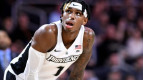
Michigan State

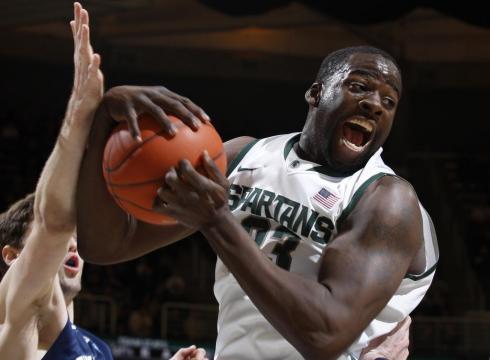
Draymond Green is the Force Behind the Spartans' Strong Attack (AP Photo/A. Goldis)

  • Big Ten Champion (27-7, 16-5)
  • RPI/Pomeroy/Sagarin = #4/#3/#3
  • Adjusted Scoring Margin = +17.3
  • Likely NCAA Seed: #1

Three Bruce Pearls of Wisdom.

  1. After winning the Big Ten Tournament, expect Michigan State to steal the last #1 seed in the NCAA Tournament. There’s nothing that this team hasn’t done to deserve the top line. 27-7 against the #1 strength of schedule, co-champion of the best conference in the country, and Big Ten Champions. This is a classic Tom Izzo team that’s ferocious on the boards and executes efficiently on both offense and defense. The Spartans run through their Big Ten Player of the Year, but this is a deep team that relies on many contributors in different areas. A late season ACL injury to blossoming freshman forward Branden Dawson was horrible news and is potentially devastating. But Dawson was still not much of an offensive factor and the team won the Big Ten Tournament without him, showing an ability to adapt.
  2. Draymond Green is the Big Ten Player of the Year who does everything that you want in a senior star leader. 16.2 points, 10.4 rebounds, 3.6 assists, 1.5 steals, and 1.0 blocks per game is what Green provides. The 45% field goal percentage doesn’t look great until you realize that Green does much of his work on the perimeter, including hitting the most three-pointers on the team. The rest of this team is loaded with strong athletes and defenders, from the interior duo of Derrick Nix and Adriean Payne to the perimeter players Keith Appling and Brandon Wood, and beyond to the reserves. Appling is crucial to this team as the playmaking point guard with explosive agility to make plays for his teammates and himself.
  3. Most things in March Madness are unpredictable, but one of the few guarantees is that Tom Izzo’s teams will play their best basketball in the NCAA Tournament. This Izzo team is loaded and ready to dance with as difficult a combination to beat as nearly anyone in the country. A +17.3 adjusted scoring margin is the fourth best in the nation, led my MSU’s elite defense. The Spartans allow just 37.7% defensive field goal shooting, the second best in the land. Their 89.9 defensive efficiency also ranks in the top 10. Throw in their own 47.7% field goal shooting, and this team’s shooting percentage disparity is fantastic, which is always a top formula for success. Their 55.2% rebound percentage is top 10 in the nation, as well. The numbers look great for Michigan State. But this team just lost its best athlete to the ACL injury and it doesn’t have the amount of elite scorers that a usual #1 seed does. Instead, this team is so efficient defensively that it will be difficult to knock off. Teams that gave Michigan State trouble were those that caught fire from the outside while holding their own defensively, like Indiana. Expect an awesome clash of styles between MSU and its opponent in a Sweet Sixteen matchup, if it can avoid an upset from the 8-9 seed, or 10-7 seed if it receives a #2 seed.

Florida State

Read the rest of this entry »

Bracketology S-Curve Update: 03.11.12

Posted by zhayes9 on March 11th, 2012

Zach Hayes is RTC’s official bracketologist.

  • Last Four In: NC State, Seton Hall, Texas, BYU.
  • First Four Out: Drexel, Mississippi State, Miami (FL), Washington.

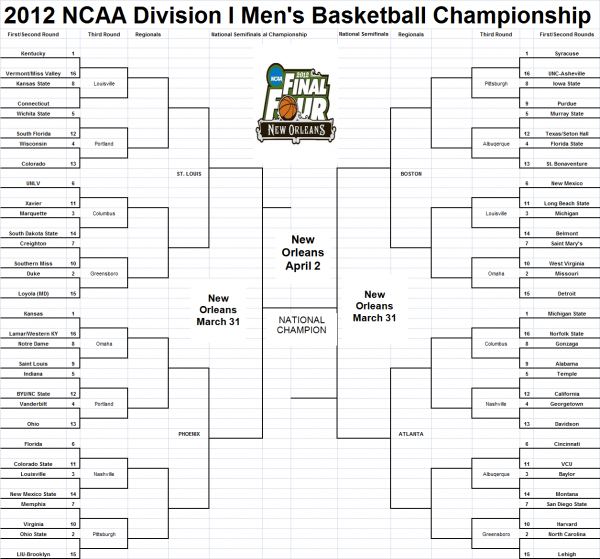
click on bracket to enlarge

3/11 S-Curve

1 Seeds: Kentucky, Syracuse, Michigan State, Kansas

2 Seeds: North Carolina, Missouri, Ohio State, Duke

3 Seeds: Baylor, Marquette, Michigan, Louisville

4 Seeds: Florida State, Georgetown, Vanderbilt, Wisconsin

5 Seeds: Indiana, Wichita State, Murray State, Temple

6 Seeds: Florida, New Mexico, UNLV, Cincinnati

7 Seeds: Creighton, Saint Mary’s, Memphis, San Diego State

8 Seeds: Notre Dame, Gonzaga, Iowa State, Kansas State

9 Seeds: Purdue, Saint Louis, Connecticut, Alabama

10 Seeds: Harvard, West Virginia, Southern Miss, Virginia

11 Seeds: Colorado State, VCU, Long Beach State, Xavier

12 Seeds: California, South Florida, BYU, Texas, Seton Hall

13 Seeds: NC State, Colorado, St. Bonaventure, Ohio, Davidson

14 Seeds: Belmont, New Mexico State, South Dakota State, Montana

15 Seeds: Loyola (MD), Detroit, Lehigh, LIU-Brooklyn

16 Seeds: UNC-Asheville, Norfolk State, Lamar, Vermont, Mississippi Valley State, Western Kentucky

Automatic bids: Vermont, St. Bonaventure, Florida State, Belmont, Missouri, Louisville, Montana, UNC-Asheville, Michigan State, Long Beach State, VCU, Memphis, Detroit, Harvard, Loyola (MD), Ohio, Norfolk State, Creighton, New Mexico, LIU Brooklyn, Murray State, Colorado, Lehigh, Vanderbilt, Davidson, Lamar, Mississippi Valley State, Western Kentucky, South Dakota State, Saint Mary’s, New Mexico State.

Bids per conference: Big East (10), Big 12 (6), Big Ten (6), ACC (5), SEC (4), Mountain West (4), Atlantic 10 (4), West Coast (3), Conference USA (2), Missouri Valley (2), Pac-12 (2).

Bracket Prep: Louisville, New Mexico, Ohio, & Mississippi Valley State

Posted by EJacoby on March 11th, 2012

As we move through Championship Week, we’ll continue to bring you short reviews of each of the automatic qualifiers to help you fill out your bracket. In this post, we have your Big East, Mountain West, MAC, and SWAC conference champions. Here’s what you need to know about these recent bid winners.

Louisville

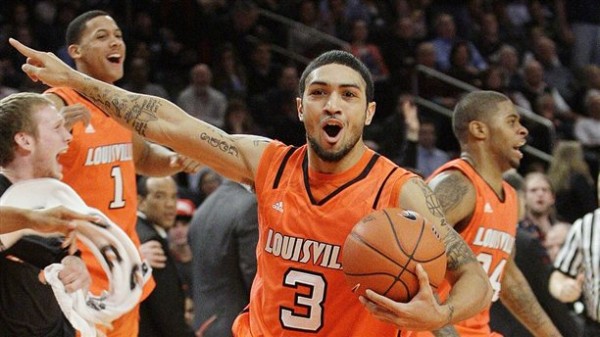
Peyton Siva was Named Big East Tournament MVP (AP Photo/F. Franklin)

  • Big East Champion (26-9, 14-8)
  • RPI/Pomeroy/Sagarin = #18/#20/#18
  • Adjusted Scoring Margin = +11.5
  • Likely NCAA Seed: #4-#5

Three Bruce Pearls of Wisdom.

  1. Louisville might be one of the toughest teams in America to project for the NCAA Tournament, by virtue of the fact that they’ve had such a schizophrenic season full of ups and downs. After winning 11 games in a row to start the season, the Cardinals then dropped five of seven. Then, after going on another hot streak to win six Big East games in a row, Louisville dropped four of its final six regular season contests before its most recent four-game surge to win the Big East Tournament. So which team should we expect to show up next week? The story will be told in the type of opponent that Rick Pitino‘s team draws.
  2. Louisville has almost no offensive firepower to speak of — six players average between nine and 14 points per game, but they can’t shoot straight (48% from two; 31% from three) and have trouble avoiding long scoring droughts — rather, the Cardinals have won 26 games through its exceptionally tough defense (ranked #2 in defensive efficiency). They cause over 15 turnovers per game and force teams into tough shots both on the interior and beyond the three-point line. In the Cardinals’ last 10 games, their opponent has only reached 60 points three times. It’s somewhat instructive, though, that Louisville went 6-4 in those games because they broke the 60-point barrier only four times themselves.
  3. We’d suggest that you be careful in presuming that a Big East Tournament champion is poised to make a deep run in the NCAA Tournament just because they’re the Big East champion. Marquette was the only solid offensive team that the Cards defeated this week, and they’re likely to face teams that can really cause them some problems in the first two rounds. As a potential #4 or #5 seed, Louisville could be matched up against a dangerous team like Long Beach State (and Casper Ware) in the first game and a team like Creighton (and Doug McDermott) in the next round. While Pitino’s defense is likely to keep the Cards in either game, they’ll have significant trouble scoring enough points down the stretch to pull out a victory, while the other teams have players who can make plays. For that reason, this is a team that you’ll want to think carefully about putting deep into your bracket — the Cardinals can be successful playing other offensively-challenged teams, but those teams tend to not play very far into March and will be few and far between.

New Mexico

Read the rest of this entry »

Circle of March, Vol. XII

Posted by rtmsf on March 11th, 2012

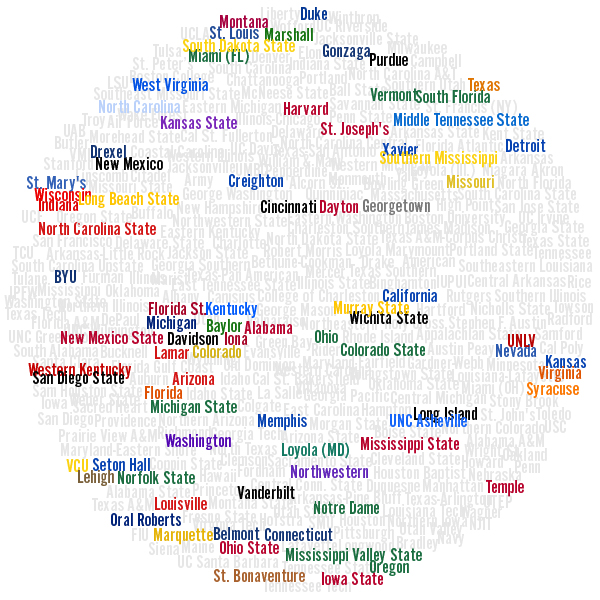
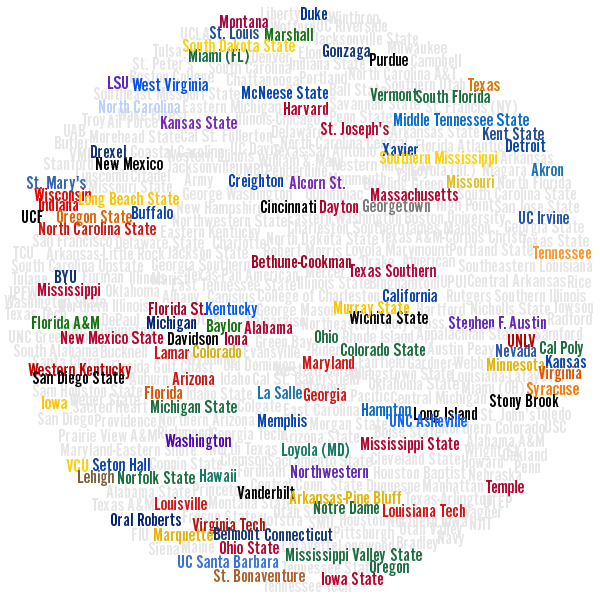
Twenty more eliminations on Friday and 10 more on Saturday means that there are now only 82 teams still alive with hopes and dreams of the 2012 National Championship. Of course, the actual number is somewhat less than that, but we’re not going to get in the business of predicting the whims of the NCAA Tournament Selection Committee here — that’s for the bracketologists and others to do. Tomorrow’s four championship games won’t help solve that problem, but a certain television show that broadcasts on CBS at 6:00 PM ET certainly will. We’ll see you again when we have the 68 locked in…

Bracket Prep: Missouri, Colorado, Memphis, Vermont, Norfork State & Lamar

Posted by rtmsf on March 10th, 2012

As we move through Championship Week, we’ll continue to bring you short reviews of each of the automatic qualifiers to help you fill out your bracket. In this post, we have your America East, Conference USA, MEAC, Southland, Big 12 and Pac-12 conference champions. Here’s what you need to know about these recent bid winners.

Missouri

  • Big 12 Conference Champion (30-4, 17-4)
  • RPI/Pomeroy/Sagarin = #11/#8/#7
  • Adjusted Scoring Margin = +16.0
  • Likely NCAA Seed: #1-#2

The Big 12 Champions Will Be a Very Tough Out

Three Bruce Pearls of Wisdom.

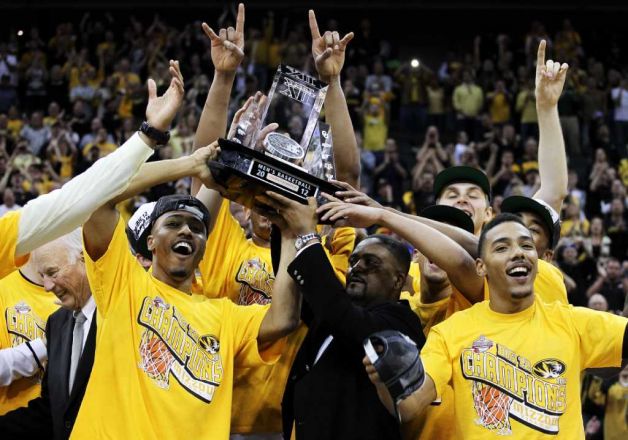
  1. It goes without saying that a 30-win season where Missouri won the Big 12 Tournament is already one of the best years in program history. Whether the Tigers end up as a #1 or #2 seed in next week’s NCAA Tournament, the elephant in the room is that despite 24 NCAA appearances and five trips to the Elite Eight (as recently as 2009), Mizzou has never experienced the grandest stage of a Final Four. Whether this is the year that the program finally breaks through depends on a number of factors, but there’s no question that Frank Haith‘s group has tremendous ability, experience and team chemistry. It will take an exceptional opponent to knock this team out of the Dance.
  2. Missouri’s biggest strength is that it owns the most efficient offense in college basketball, scoring over three more points per 100 possessions than the second best team (Kentucky). In playing a solid non-conference and Big 12 schedule, the only team that proved capable of slowing down the Mizzou attack was Kansas State, who beat the Tigers twice by beating them up on every cut, drive and rebound attempt. The Wildcats held the seasoned group of Marcus Denmon, Kim English, Phil Pressey, and Michael Dixon to 11-36 from the field in the first game, and 19-47 in the second game for a total shooting display of 36.1% (they group shoots 47.4% on the season). If Missouri is to be upset in the NCAAs, it will be by a team who plays a similarly bruising, defensive style — trying to run with this oft-spectacular offensive squad will not work.
  3. The Tigers’ weakness is its pedestrian defense (ranked #77 in efficiency), but their offense is so explosive that it rarely faces a situation where it has to make a stop to win the game. You might think that its lack of interior size other than Ricardo Ratliffe is another issue, but that’s not been much of a problem for them this season. Ratliffe only fouled out once all year (against Baylor’s huge front line Saturday, incidentally), and with the exception of those two K-State games, the Tigers’ experience and savvy usually allows them to dictate the style and pace of the game. In order to knock this team out, it’s going to take a tremendous defensive effort that can keep up with all of these talented guards. There are only a handful of teams in the country capable of doing that. As a result, this might finally be the year where Missouri faithful experience the wonders of the Final Four.

Colorado

  • Pac-12 Conference Champion (23-11, 15-7)
  • RPI/Pomeroy/Sagarin = #70/#81/#83
  • Likely NCAA Seed: #13-#14

Read the rest of this entry »

Bracketology S-Curve Update: 03.10.12

Posted by zhayes9 on March 10th, 2012

Zach Hayes is RTC’s official bracketologist.

Last Update: Saturday, March 10, 11:14 PM ET.

  • NC State drops two spots on the S-Curve out of the NCAA Tournament field, moving Seton Hall in. The reason: NC State’s neutral court win on Friday over Virginia and sweep of Miami decreased in value in the last 24 hours. Virginia plummeted to a #52 RPI and Miami dropped out of the projected field following their loss to Florida State and Durand Scott’s ineligibility.
  • Colorado wins the Pac-12 automatic bid and will likely be a #13 seed in the field. Arizona is not on the bubble. Ohio replaces Akron as the MAC auto bid.
  • The final #1 seed will come down to the Big Ten Tournament final, so the committee may have two different brackets prepared in case either Michigan State or Ohio State emerge victorious. I believe the winner will surpass Kansas for the last #1 seed in the Phoenix region as the champion of both a share of the regular season title and the tournament title of the top conference in college basketball. Kansas beat Ohio State, but that game was played in Lawrence without Jared Sullinger, a fact the committee should consider.
  • New Mexico jumps to a #6 seed with a share of both the regular season MWC title, conference tournament title and two wins against UNLV and San Diego State. On the back of a solid RPI/SOS and the huge win over North Carolina, the Rebels are also a #6 seed.
  • Last Four In: Mississippi State, Seton Hall, Drexel, Texas.
  • First Four Out: NC State, Miami (FL), Washington, Oral Roberts.

3/10 S-Curve

1 Seeds: Kentucky, Syracuse, North Carolina, Kansas

2 Seeds: Michigan State, Ohio State, Duke, Missouri

3 Seeds: Baylor, Marquette, Michigan, Georgetown

4 Seeds: Louisville, Florida State, Wisconsin, Indiana

5 Seeds: Wichita State, Murray State, Temple, Vanderbilt

6 Seeds: Florida, New Mexico, UNLV, Cincinnati

7 Seeds: Creighton, Notre Dame, Saint Mary’s, Memphis

8 Seeds: San Diego State, Gonzaga, Iowa State, Kansas State

9 Seeds: Purdue, Saint Louis, Connecticut, Alabama

10 Seeds: Harvard, West Virginia, Southern Miss, Virginia

11 Seeds: Colorado State, BYU, VCU, Long Beach State

12 Seeds: California, Xavier, South Florida, Texas, Drexel

13 Seeds: Seton Hall, Mississippi State, Colorado, Davidson, Belmont

14 Seeds: New Mexico State, South Dakota State, Montana, Ohio

15 Seeds: Loyola (MD), Detroit, Lehigh, LIU-Brooklyn

16 Seeds: UNC-Asheville, Norfolk State, Lamar, Vermont, Mississippi Valley State, Western Kentucky

Automatic bids: Vermont, Xavier, North Carolina, Belmont, Missouri, Louisville, Montana, UNC-Asheville, Michigan State, Long Beach State, VCU, Memphis, Detroit, Harvard, Loyola (MD), Ohio, Norfolk State, Creighton, New Mexico, LIU Brooklyn, Murray State, Colorado, Lehigh, Kentucky, Davidson, Lamar, Mississippi Valley State, Western Kentucky, South Dakota State, Saint Mary’s, New Mexico State.

Bids per conference: Big East (10), Big 12 (6), Big Ten (6), SEC (5), Mountain West (4), ACC (4), Atlantic 10 (3), West Coast (3), Conference USA (2), Missouri Valley (2), Colonial (2), Pac-12 (2).

Bracketology S-Curve Update: 03.09.12

Posted by zhayes9 on March 9th, 2012

Zach Hayes is RTC’s official bracketologist.

Last Update: Friday, March 9, 11:59 PM ET.

Changes:

  • Kentucky clinches the #1 overall seed following Syracuse’s loss to Cincinnati. The Orange only drop one spot to #2 overall on the S-Curve and will still be headed to the Boston region. Kansas drops behind North Carolina on the S-Curve following their loss to Baylor and could drop behind Duke or Michigan State depending on the results of their respective conference tournaments.
  • Baylor had one glaring void on their resume: the lack of an RPI top-25 win. That’s no longer the case following their breakthrough win on Friday over Kansas. The Bears still may have trouble jumping up to a #2 seed even if they emerge victorious in the Big 12 Tournament championship because of two previous losses to Missouri and Ohio State’s run in the Big Ten Tournament.
  • Cincinnati jumps to a #6 seed following their win over Syracuse. The Bearcats have a host of quality wins: Syracuse, Marquette, at Georgetown, Louisville, at Connecticut, Notre Dame. They’re also anchored by a horrid RPI/SOS and non-conference SOS. Where they’ll be seeding is really difficult to pin down.
  • Xavier remains in the field after edging Dayton in the A-10 Tournament. That result also eliminates the Flyers from at-large consideration.
  • Marshall jumps into First Four Out territory but tomorrow is still a win-and-in, lose-and-out scenario.
  • Miami barely stays in the field despite their loss to Florida State and only three top-100 wins. The Canes are carried by their huge victory at Duke and a home triumph over FSU. Their RPI/SOS is also superior to Seton Hall, whose best wins all came at home against Georgetown, Connecticut and West Virginia, plus a neutral win over VCU. Also a determining factor: the Pirates lost to Villanova, Rutgers (home) and at DePaul in blowout fashion in Big East play. This could change if Durand Scott’s availability is still up in the air into Selection Sunday.
  • Last Four In: Miami (FL), Drexel, NC State, Mississippi State.
  • First Four Out: Seton Hall, Washington, Marshall, Northwestern.

3/9 S-Curve

1 Seeds: Kentucky, Syracuse, North Carolina, Kansas

2 Seeds: Duke, Michigan State, Missouri, Ohio State

3 Seeds: Baylor, Marquette, Michigan, Wisconsin

4 Seeds: Georgetown, Indiana, Florida State, Louisville

5 Seeds: Wichita State, Murray State, UNLV, Temple

6 Seeds: Vanderbilt, Cincinnati, Florida, Notre Dame

7 Seeds: Creighton, Saint Mary’s, San Diego State, Gonzaga

8 Seeds: Memphis,  New Mexico, Iowa State, Kansas State

9 Seeds: Purdue, Saint Louis, Connecticut, Alabama

10 Seeds: Harvard, West Virginia, Southern Miss, California

11 Seeds: Colorado State, Virginia, BYU, VCU

12 Seeds: Texas, Long Beach State, South Florida, Xavier, Mississippi State

13 Seeds: NC State, Drexel, Miami (FL), Nevada, Akron

14 Seeds: Davidson, South Dakota State, Belmont, Montana

15 Seeds: Loyola (MD), Detroit, Lehigh, LIU-Brooklyn

16 Seeds: UNC-Asheville, Norfolk State, Lamar, Stony Brook, Mississippi Valley State, Western Kentucky

Automatic bids: Stony Brook, Saint Louis, North Carolina, Belmont, Missouri, Cincinnati, Montana, UNC-Asheville, Michigan State, Long Beach State, VCU, Memphis, Detroit, Harvard, Loyola (MD), Akron, Norfolk State, Creighton, San Diego State, LIU Brooklyn, Murray State, California, Lehigh, Kentucky, Davidson, Lamar, Mississippi Valley State, Western Kentucky, South Dakota State, Saint Mary’s, Nevada.

Bids per conference: Big East (9), Big 12 (6), ACC (6), Big Ten (6), SEC (5), Mountain West (4), Atlantic 10 (3), West Coast (3), Conference USA (2), Missouri Valley (2), Colonial (2).
Circle of March, Vol. XI

Posted by rtmsf on March 9th, 2012

It certainly wasn’t the most compelling day of basketball we’ve ever seen on a Thursday of Championship Week, but sexy or not, 38 more teams were eliminated from national title contention yesterday. This now leaves us with 111 total teams remaining, and from here on through the weekend, we’re going to tend to be over-inclusive when it comes to bubble teams. You just never know what the Selection Committee will do (see: UAB, 2011), and for that reason alone we’re going to keep most any team in the bubble discussion on our Circle of March. Still, over the next 72 hours, we’d expect to drop another 25-30 schools to get to a healthy 80 or so going into the unveiling of the brackets Sunday night.

Another huge day of games awaits us today, but no championship games until tomorrow, when 12 will be played…

Morning Five: 03.09.12 Edition

Posted by nvr1983 on March 9th, 2012

  1. Just a few days after we dismissed a Charles Robinson report as being rather mundane, he comes back with a big story on the FBI investigation into Varez Ward and alleged point-shaving at Auburn. Ward, who was suspended prior to the team’s game on February 25, reportedly attempted to convince members of the team to shave points. According to the report, at least two games (a January 25 loss to Arkansas and a February 7 loss to Alabama) are drawing the most interest as potentially suspect games. Based on Robinson’s reports of those games, Ward’s play seems to be more problematic in the second while the first is a little less clear. We have not reviewed the game tapes and have not have any access to the FBI report, but this is certainly a story worth following.
  2. It probably should not be a newsworthy decision, but given all of the dumb early entries we have seen over the years it is worth noting that LeBryan Nash announced yesterday that he will be returning to Oklahoma State for his sophomore season. Coming into the season, Nash was projected to be a potential one-and-done player with his athleticism and the potential to shine on a stage devoid of another elite NBA talent, but Nash’s season was hindered by several nagging injuries. While Nash still projects as a potential late first round pick, his game is still rough around the edges and he needs work both shooting (39.4% FG and 23.5% from 3) and becoming a consistent defender. Cowboys fans may have been somewhat disappointed in Nash’s performance this year, but they should be thrilled to have him for at least one more season.
  3. Connecticut‘s main focus for next season is the pending decision by the NCAA on whether or not the team will be allowed to play in the 2013 NCAA Tournament, but it appears that it is not that clear if they would even be allowed to play in next year’s Big East Tournament. According to the conference, they need to address their conference championship across all sports to create a conference-wide policy, but in the case of the Huskies there is also the underlying concern that the conference would award its automatic bid to a team that would not be able to use it. It is extremely unlikely that the Big East would be a one-bid conference, but all the same it would be fairly embarrassing to a conference that has received a lot of negative publicity recently with all of the schools defecting from it.
  4. Over the years there have been plenty of organizations that have worn patches to honor a fallen colleague. They are typically for an injured or deceased individual or in rare cases a disenfranchised individuals. We are guessing the patch worn by officials during the ACC Tournament to honor Karl Hess falls under the latter category. Hess, who has long been a controversial official, declined to participate in the ACC Tournament following his decision to remove NC  State legends Tom Gugliotta and Chris Corchiani from the stands last month during a game and Hess was removed from his next ACC assignment. When he was offered an opportunity to officiate the ACC Tournament, Hess, a regular at the ACC Tournament opted to work the Big East Tournament instead. While at some level we can appreciate the solidarity of the officials here, it does seem like a rather idiotic statement to make and the officials in the latter games removed the patches after being instructed to do so by the conference.
  5. Over the past two years, we have read plenty of articles about the rise of Harvard basketball, but this piece in The Harvard Crimson is probably the most exhaustive we have seen on the subject so far. If you haven’t been keeping up with Harvard basketball and want to know pretty much everything there is to know about how the program was overhauled, this would be a very good place to start. One of the more interesting aspects is that the writers (all Harvard students) do not hold back with any of the criticisms of the school including questionable recruiting practices and objections to lowering academic standards to bring in the players to create a basketball of this caliber.