



Replacing Maurice Watson Hasn’t Come Easy For Creighton

Posted by Chris Stone on January 26th, 2017

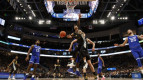
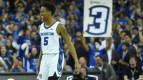
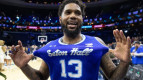
As if the college basketball world needed yet another reminder, this week has emphasized just how difficult it is to win on the road. On Tuesday night, Kansas, Kentucky and Villanova all came up short in away conference battles, followed up last night with Georgia Tech blowing out Florida State and USC outlasting UCLA, both on the road. Perhaps the most concerning loss of the week — because replacing talent is more difficult than adjusting tactics — may have taken place in the nation’s capital where Creighton suffered its second straight defeat, 71-51 to Georgetown, without injured point guard Maurice Watson, Jr. The senior’s absence is being felt across the board. “He made the game easier for coach [Greg McDermott], me and all my other teammates,” freshman center Justin Patton said after the game.
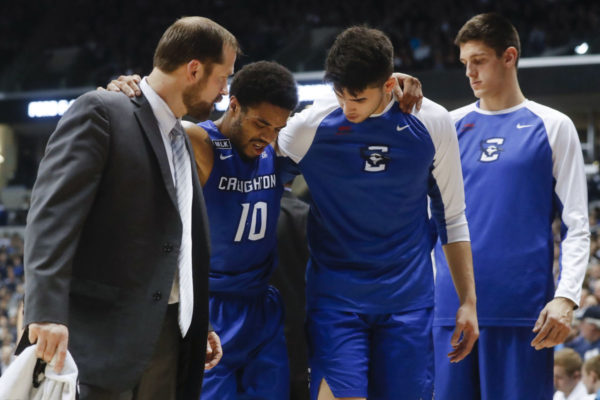
Creighton is still working out how to play without Maurice Watson Jr. (AP Photo/John Minchillo)

Watson’s injury created a large offensive void for the Bluejays — in addition to using 24.5 percent of the team’s possessions, he also assisted on 43.0 percent of its made baskets while contributing 17.3 points per 40 minutes. As his head coach noted, that translates to a massive statistical impact. “We’ve lost a big part of our offense,” McDermott said, while also noting that many of his players will need to step into roles they may have never played before. In some ways, that may not prove too difficult. Creighton — one of the fastest per-possession teams in college basketball — continued to push the pace against the Hoyas last night, often throwing a pass ahead to whichever guard was available. Those players need to improve their decision-making in those quick-hit scenarios, but that will come with time and repetition. There are other areas, however, where it’s simply not clear if the Bluejays can replace Watson. Read the rest of this entry »

Share this story

ACC M5: 01.26.17 Edition

Posted by Matt Patton on January 26th, 2017

morning5_ACC

  1. The Players’ Tribune: Every year there’s at least one story out of the league that puts everything into perspective. Basketball, after all, is just a game. Sure, there’s future money and fame at stake, but stories like this from TPT highlight the contradiction of the game’s impact on those who play it while also shedding light on how little a win-loss record means next to personal relationships. Duke interim head coach Jeff Capel‘s post on his father’s ALS diagnosis is beautiful, funny and gutting.
  2. Raleigh News & Observer: Welp, it was good while it lasted. Florida State was in pole position to take the ACC regular season crown until the Seminoles suffered a hideous loss at Georgia Tech on Wednesday night. Florida State isn’t the first team to get caught slumping in Atlanta this season, but a drubbing by 22 points will raise eyebrows for those who are rightfully labeling the Seminoles as legitimate ACC contenders. Andrew Carter’s article here is still worth highlighting since Leonard Hamilton‘s team has a favorable schedule from here on out (at least compared with the other contenders). For the record, I probably would put my money on North Carolina or Virginia, but Hamilton arguably has his best team ever in Tallahassee.
  3. Winston-Salem Journal: So close to equaling his predecessor’s ACC road win total in just one season, Danny Manning‘s team came up just short of knocking off Jim Boeheim’s roller coaster team at Syracuse. The improvement Manning’s team has shown this year might be more impressive than what Hamilton has done at Florida State (even if the Demon Deacons are fighting an uphill battle to get to a .500 conference record). Bottom line: Wake Forest is good. A lack of quality non-conference wins will hurt their chances on Selection Sunday, but they may ultimately find their way on to the bubble thanks to sophomore forward John Collins‘ outstanding efforts.
  4. Pittsburgh Post-Gazette: I hope no parents turned on the Pittsburgh vs. Louisville game on Tuesday night, as it was an X-rated woodshedding by the Cardinals — in Pittsburgh, no less. As Craig Meyer writes, Kevin Stallings publicly called out his team for lacking leadership on Monday, and his team responded in kind by completely quitting on him. Stallings was always something of a head-scratching hire after Jamie Dixon found greener pastures in Texas, but this season is going much worse than even his biggest doubters could have imagined. The Panthers have far more talent than their 1-6 ACC record indicates, but that necessarily falls on Stallings. First years in a new job are always tough, but Pittsburgh can’t afford to slide toward basketball oblivion while the rest of the conference continues to improve.
  5. Backing the Pack: Dennis Smith ended NC State‘s multi-decade losing streak in Cameron Indoor Stadium with a show for the ages on Monday night, capping it off with a dunk that didn’t count but could be heard over the silent Crazies crowd and all around the Triangle. That game could be a serious turning point for both teams. Is this the confidence boost the Wolfpack needed to salvage what was looking like a lost season? Is this the wakeup call for Duke‘s band of talented freshmen who often play much worse than the sum of their parts? Truthfully, I don’t know. The Blue Devils missed a lot of open shots and were probably the better team for much of the night, but NC State had the best player on the floor in Smith (and Abdul-Malik Abu played a tremendous game too). Don’t read too much into one game, but it’s clear that Duke has chemistry issues and Smith is an amazing talent.

EXTRA: The ACC announced its Basketball Legends class for this year, highlighted by late, great NC State coach Jim Valvano.

Share this story

For UCLA, It’s Defend or Die…

Posted by RJ Abeytia on January 25th, 2017

The second game of six between the three best teams in the Pac-12 was an undeniably entertaining epic that left Arizona reinvigorated as a Final Four contender and UCLA with a clear ultimatum: Defend or die. It’s not like the Bruins had convinced anyone that they were a solid defensive team to this point in the season — UCLA entered the game hovering around the middle of the Pac-12 in defensive efficiency. The Bruins’ marquee win in Lexington over Kentucky came on the strength of their offense (1.17 PPP) and their only other loss came to an Oregon team they ultimately couldn’t defend (1.24 PPP). The national spotlight tends to expose and crystallize the flaws of even the elite teams in college basketball, and Arizona on Saturday in Pauley Pavilion exposed UCLA’s middling defense as an Achilles’ Heel that may very well short-circuit a deep NCAA Tournament run.

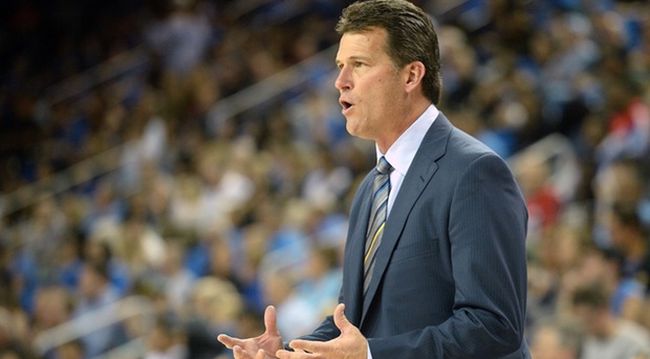
Without a semblance of defense, UCLA’s tourney life might be cut short. (USA TODAY)

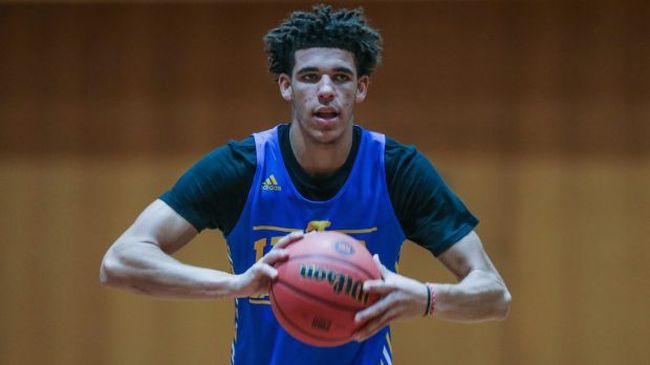
The Bruins’ major issue against the Wildcats was defending the paint via the drive. Kobi Simmons, Kadeem Allen and the newly-eligible Allonzo Trier pounded the paint relentlessly, often singularly focused on their easy target, UCLA guard Bryce Alford. Alford is having an exceptional season playing off the ball next to All-Universe Point Guard Lonzo Ball, but the senior was no match for the physicality and athleticism of Allen, who relentlessly attacked the basket when isolated against him. Arizona’s 34 points in the paint was also a result of mediocre post defense. Dusan Ristic contributed 11 points; Chance Comanche 10; and Lauri Markannen, he of the skyrocketing draft stock, repeatedly took TJ Leaf well outside his defensive comfort zone in nailing 3-of-4 from behind the three-point line as well as grabbing the offensive board and ensuing dunk that effectively ended the contest. Read the rest of this entry »
Share this story

It’s Time to Modernize Georgetown’s Offense

Posted by Justin Kundrat on January 25th, 2017

On the heels of a 15-18 season in 2015-16 and currently in the midst of a 10-10 campaign featuring a 1-6 record in conference play, the criticisms of Georgetown‘s offense far outweigh the viable solutions. Yes, the Hoyas do not have a true point guard, but their assist to field goal ratio (60.7%) ranks among the top 30 in college basketball. Sure, Georgetown is lacking in high volume shooters, but its three-point field goal percentage of 36.9 percent ranks in the top 100. John Thompson III‘s team might not be a very good defensive rebounding team this year, but the 28th-tallest team nationally did not simply forget how to rebound (the Hoyas were much better at cleaning the defensive glass last season). Is the Princeton offense broken? No, but without player buy-in, understanding, cohesiveness or whatever you want to call it, the pieces at Georgetown will not fit into the greater puzzle. Without good team chemistry and trust in the process, all those backcourt cuts that require a heavy reliance on spacing and timing will become a turnover-fueled hodgepodge. So, what are the Hoyas to do?

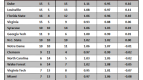
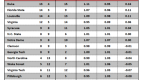
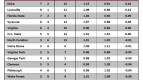
One of Thompson’s first initiatives in the offseason was to instill a faster offense — as a result, the Hoyas’ average length of possession this season has fallen from a middling 17.3 to a top-quintile 16.0 seconds. But this strategic shift hasn’t made Georgetown’s offense more efficient — it’s actually worse — and its transition rate of scoring is only marginally higher. In effect, the “faster pace” scheme can be distilled to “taking shots earlier in the shot clock,” which, if anything, runs against the overarching theory of finding the best shot. There’s nothing wrong with the way Georgetown’s lineup is constructed. It generates plenty of firepower from the backcourt, has floor-stretching, big wings, and experienced big men. The attack instead needs to be focused on improved shot selection and methods of scoring. Currently, as the above table shows, an outsized proportion of Hoyas’ offense comes from the free throw line (14th nationally). It’s a plausible strategy in theory, but it is also one that relies heavily on the whimsy of officiating. Read the rest of this entry »

Share this story

Is Kansas Ready For the Gauntlet Ahead?

Posted by Justin Fedich on January 24th, 2017

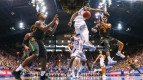
Starting tonight in Morgantown, the owner of the nation’s second-longest winning streak (18) in college basketball begins as tough of an eight-day stretch of games as we can remember with West Virginia, Kentucky and Baylor on the menu. To this point, Kansas appears destined for another No. 1 seed — perhaps the No. 1 overall seed — in this year’s NCAA Tournament, but Big 12 play has revealed some blemishes. In fact, only two of the Jayhawks’ seven Big 12 games to this point — against Texas Tech and Texas — have been wire-to-wire blowouts. With games pending against KenPom‘s #2, #4 and #5 ranked teams (Kansas is #8), the next week of basketball should determine just how prepared Bill Self‘s team is to be considered a National Championship favorite. While Kansas hasn’t shown the overall consistency of a team poised to leapfrog the field, it has all the tools necessary to win these three upcoming games and catapult itself to the mantle as the team to beat. Let’s take a snapshot look at each game heading into tonight’s battle with West Virginia.

The cohort of long range bombers, led by Frank Mason, is a big reason why Kansas is red hot. (KU Sports)

  • West Virginia (Morgantown) – Tuesday, January 24. West Virginia’s defensive success is well-documented, and a hot Kansas team will face a hungry unit at home ready to end a two-game losing skid. While it’s easy to see Kansas falling at the same arena that produced Baylor’s first loss of the season, the Jayhawks’ strengths match up well against West Virginia’s weaknesses. The most vulnerable part of West Virginia’s defense is in preventing offensive rebounds, where the Mountaineers rank 327th nationally in that metric. Kansas, meanwhile, is a very good offensive rebounding team. The Jayhawks have three players — Landen Lucas, Josh Jackson and Carlton Bragg, Jr. — who average more than five rebounds a game, while Nathan Adrian is the only player from West Virginia with that distinction. If Kansas can dominate West Virginia on the offensive glass, it will counteract much of the pressure brought on by the pesky Mountaineers’ defense.

Read the rest of this entry »

Share this story

ACC Stock Watch: January 24

Posted by Mick McDonald on January 24th, 2017

Each week during the ACC season, RTC will review the last seven days to discuss the teams, players, and anything else trending across the league.

STOCK UP

  • North Carolina State. Yes, the Wolfpack lost a close one at home to Wake Forest on Saturday. But NC State needed a statement win to get its season on track and there aren’t many bigger statements than a victory over Duke at Cameron Indoor Stadium. There has never been a question about the level of talent in Raleigh, but effort and defensive lapses have been recurring issues throughout the year. NC State brought its best effort on Monday night, with freshman point guard Dennis Smith Jr. (32 points; six assists) leading the way. In eight ACC games, Smith is averaging 20.4 PPG, 5.5 RPG, 6.9 APG, and 2.6 SPG in what could be an ACC Player of the Year campaign. The Wolfpack have a long way to go, but the future lottery pick is exactly the type of player who can carry NC State all the way from a 2-5 ACC start to the NCAA Tournament.

Jonathan Isaac has become exactly what Leonard Hamilton hoped he would become, a legitimate second superstar next to Dwayne Bacon. (David Allio/Icon Sportswire)

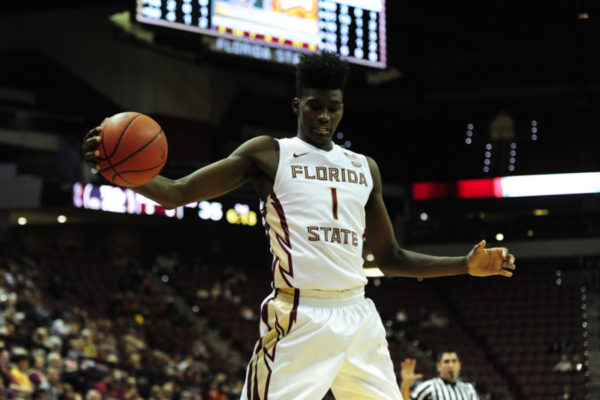
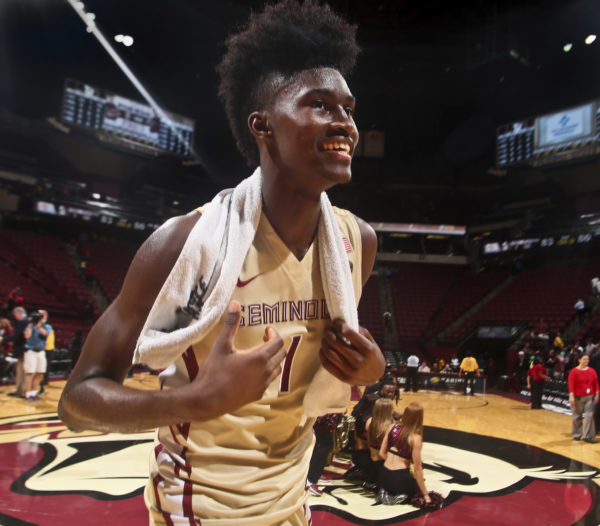
  • Jonathan Isaac, Florida State. The Seminoles’ pair of wins over Notre Dame and Louisville last week cemented their status as ACC title contenders as well as a legitimate candidate for a top-two seed in the NCAA Tournament. We know how terrific Dwayne Bacon has been this year, but the emergence of freshman Jonathan Isaac has taken Florida State to another level. Over the team’s last five games, Isaac is averaging 16.0 points and 9.0 rebounds per game while shooting a scorching 61 percent from the field, 45.5 percent from three-point range and 89 percent from the free throw line. Isaac is quickly joining teammate Bacon in the superstar category, and given all of the depth Leonard Hamilton can readily place around the pair, it’s easy to envision Florida State paying a visit to Arizona in early April.

Read the rest of this entry »

Share this story

Duke’s Lineup Change: Beginning of Something Special?

Posted by Brad Jenkins (@bradjenk) on January 23rd, 2017

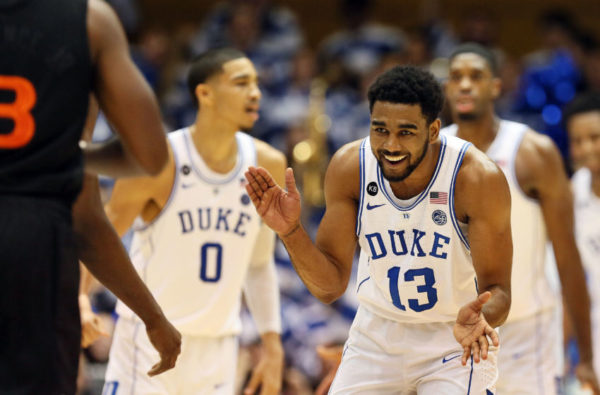
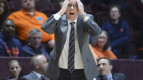
With Duke down 11 points after a listless first half against Miami on Saturday night, acting head coach Jeff Capel decided some personnel changes were in order. Starters Grayson Allen, Luke Kennard and Harry Giles began the second half on the bench as Duke turned around the game — and maybe its season — with an overwhelming comeback performance to beat the Hurricanes by 12 points. Capel is now 2-2 in his new role, and it already appears that he is willing to shake things up to get his team’s attention. Capel was asked about the lineup change afterward, saying, “We just went with guys that we felt were going to give us energy.” It was something of a gamble for the interim coach — benching two of the team’s three top scorers and an elite freshman — but the results, both from a viewers’ as well as a statistical perspective, were dramatic.

Senior Matt Jones led Duke in its big comeback win over Miami. (Mark Dolejs-USA TODAY Sports)

To begin the second half against Miami, regular starters Amile Jefferson and Jayson Tatum were joined by senior Matt Jones and freshmen Frank Jackson and Marques Bolden. As a result, the tone of the game immediately changed. Over the first five minutes of the half, the Blue Devils converted five steals into 12 points, the beginning of a 20-0 run that shocked the confident Hurricanes and ultimately finished off the game. Jones was the catalyst, setting the pace defensively and scoring all 13 of his points in the first eight minutes. Jackson was also effective in finishing with 10 points and four assists versus zero turnovers. And with eight points, four rebounds and some impressive defense against Miami’s guards on the pick-and-roll, it was the breakout game from Bolden that Duke has been waiting for. Of course, it didn’t hurt to have Jefferson back (especially on the defensive end) after missing the last two games with a bruised foot.

Read the rest of this entry »

Share this story

Michigan’s Defense is the Difference Between NCAA and NIT

Posted by Tommy Lemoine on January 23rd, 2017

It doesn’t take a hoops junkie to recognize that a good, balanced effort on both sides of the ball generally equates to success. And maybe it would be overly simplistic to offer an unbalanced team such advice as “be better on defense.” For this year’s Michigan squad, however, there may not be a more apt prescription. The Wolverines—the Big Ten’s most efficient offensive unit—simply haven’t had a defense to match this season, ranking dead-last in conference play on that end of the court. On nights when they have defended well, the offense has taken a step back. Put simply, the pieces have rarely come together. After an inspired wire-to-wire victory over Illinois on Saturday, however, John Beilein’s group appears to be taking some steps in the right direction. Michigan was stout defensively, received contributions up and down the lineup, and—for perhaps the first time since November—played a complete game against a quality opponent. With a crucial five-game stretch coming and an NCAA Tournament berth still far from guaranteed, the Wolverines’ newfound balance has arrived just in the nick of time.

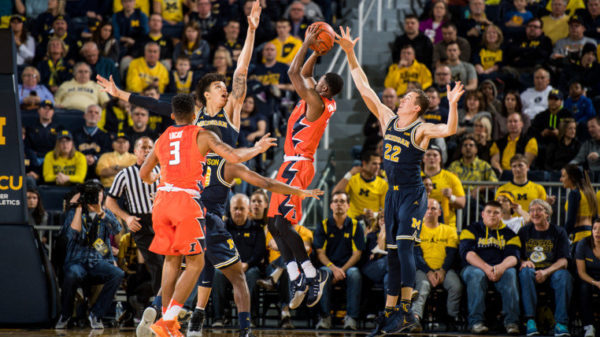
On Saturday, Michigan looked like the team that pounded SMU and Marquette back in November. (mgoblue.com)

“Blue-collar” defense. Following Illinois’ 85-69 thrashing of Michigan on January 11, Illini center Maverick Morgan referred to the Wolverines as a “white-collar team,” a comment which—at least at the time—seemed completely on point. Due to a mixture of lax perimeter defense and some bad luck, Michigan entered the weekend surrendering an astounding 52.4 percent from three-point range (53-for-101) against Big Ten opponents, including a 9-of-14 effort against the Illini in that first meeting. On the whole, Beilein’s team after came into Saturday’s game surrendering more than 1.2 points per possession, and yet, on the heels of an encouraging effort at Wisconsin, the defensive tide shifted drastically. Michigan held Illinois to just 0-of-5 from three-point range in the first half, and 2-of-12 for the game. Illini ball-handlers were forced into a Big Ten-high 17 turnovers, and Morgan, who made all but one shot from the field in the first meeting, was held in check underneath the basket. “We were active, we were in gaps, swarming to the ball, flying around,” Beilein said after the game. “That was as hard as we’ve played on defense all year.” Before the weekend, Wolverines’ guard Zak Irvin lobbied his team to wear its road blue jerseys to represent the “blue-collar” attitude with which it intended to play. And Michigan didn’t disappoint, holding Illinois to 0.86 points per possession in its strongest defensive effort since the calendar turned to 2017.

Read the rest of this entry »

Share this story

ACC Weekend Review: 01.23.17 Edition

Posted by Brad Jenkins (@bradjenk) on January 23rd, 2017

We entered the weekend with a three-way tie at the top of the ACC standings and that is still the case as all three leaders were victorious on Saturday afternoon as North Carolina won a tight one at Boston College, Notre Dame handled Syracuse in South Bend, and Florida State held off visiting Louisville. In other action, Duke ended its two-game skid by coming back from a double-digit halftime deficit to defeat Miami on Saturday night. Then on Sunday evening, Clemson dropped its fifth straight–this time at home by a single point to Virginia Tech–putting the Tigers’ postseason hopes in major jeopardy. Here are the highlights from the weekend around the ACC.

Freshman Jonathan Isaac has been on fire lately for Florida State. (Phil Sears/AP)

  • Best Win: Leonard Hamilton‘s team has taken on all comers to begin ACC play and has done more than hold its own – going 5-1, all against ranked opponents. Saturday in Tallahassee, Florida State finished the tough opening stretch in style by beating Louisville by a score of 73-68. It wasn’t the prettiest contest as there were a total of 45 fouls whistled and both teams shot under 40 percent from the floor. Freshman Jonathan Isaac has ramped up his play recently. After finishing with 16 points and 10 rebounds, Isaac now has posted three consecutive double-doubles. After navigating that front-loaded conference slate, the Seminoles will probably only face two more ranked opponents when they meet Notre Dame and Duke in return games on the road in February. So even though Florida State now hits the road for three straight contests, they are primed to contend for the league regular season title.

Read the rest of this entry »

Share this story

Should We Care About Who Shares? Offensive Efficiency vs. Assist Rate

Posted by RJ Abeytia on January 21st, 2017

If you grew up in the ’80s and you loved the game of basketball, Magic Johnson and Larry Bird changed the way you watched it, judged it and maybe even played it. One of the cornerstones of their impact was the elevation of the assist both as a highlight play and as a marker of a player’s impact. In today’s game, there is no better criteria for evaluation than efficiency. Assists make basketball the beautiful game, providing gasps in appreciation and awe at the sport played in its most fluid and selfless form. However, when it comes to college basketball — a game which has undergone a tectonic shift or 10 since the days of Bird and Magic — the question becomes, how valuable is the assist?

Lonzo Ball is one of many high assist/high efficiency standouts in the conference this season. (Getty)

To answer that question, the first place to start is by cross-checking team offensive efficiency with assist rate. Here is how the Pac-12 looks.

Offensive Efficiency Assist Rate
1. Oregon Oregon
2. UCLA Arizona
3. Arizona UCLA
4. Arizona State Washington State
5. Utah Stanford
6. Colorado Oregon State
7. California USC
8. Washington Colorado
9. Washington State Utah
10. Stanford Arizona State
11. USC California
12. Oregon State Washington

The eyeball test clearly shows a strong correlation between Pac-12 teams in terms of their assist rates and efficient offenses. There’s no room at the top without great ball movement, but the line between offensive success and assists gets somewhat obfuscated at the bottom. Stanford, Oregon State and USC all rank among the top half (okay, USC is seventh) in assist rate, yet each team still struggles offensively. Conversely, Arizona State has a proficient offense this season without the services of a great assist rate. If assist rate turns out to be an important metric, we would expect the Sun Devils to regress offensively while the Cardinal, Trojans and Beavers should ascend. If we simply resign ourselves to this unscientific snapshot, it’s fair to say there’s a light correlation between offensive efficiency and assist rate, but the two metrics are not collinear.

Read the rest of this entry »

Share this story