July 31st, 2007
As we mentioned yesterday, Team USA’s Pan Am squad got off the plane in Rio and promptly found itself down 0-2 with losses to Uruguay and Panama, which effectively ended any chance for a medal at the tournament. Let’s say that again – Uruguay… and… Panama. If you thought losing to Serbia was bad… Uruguay? This small nation of 3.3M people stuck somewhere in South America between Brazil and Argentina is best known in hoops circles for putting only one player in its history, Ernesto Batista (Atlanta Hawks), into the NBA. As for losing to Panama, what else can be said? They’re known for a corrupt former dictator and an important canal – not exactly backdoor cuts and alley-oops.
This is All We Care to Know About Uruguay
At least Team USA rallied to win their next three games vs. Argentina, the US Virgin Islands and Panama (revenge is ours, Noriega!) to take 5th place at the tournament. (FYI – Brazil was the champion.) The more things change, the more they stay the same… Sigh… Doug Gottlieb writes today that “we stink” when it comes to international basketball, and he’s absolutely, positively, most definitely and completely right on that count:
We are Team USA, and we can not win the gold in any competition. The Pan Am team has not won gold since 1983. The Under-19 team has not won gold since 1991. The men’s national team has not won the world championship since 1994. The last Olympics gold came in 2000. We are the standard bearers for hoops across the globe, but in comparing our own image of how good we are to our overall performance, we stink.
He blames our international woes on the different styles of play and officiating, and no doubt that explains some of it. But from the non-player side of things, we still believe that our AAU-bred emphasis on 1-on-1 play over basic fundamentals such as passing, shooting and help defense is a more significant factor. When we were winning every international competition 20+ years ago, we were still more athletic than everyone else – that part hasn’t changed. What has changed is that the world has gotten significantly better (obviously), but more importantly, the US players have not. More athletic – definitely. More talented at one-and-one play – assuredly. More talented at team basketball – not even close. As Gottlieb suggests and we agree, this problem isn’t going away.

Gottlieb is a Doppelganger for an Intl. Hoopster
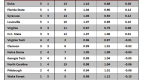
With that tirade over, we wanted to take a moment to look at the stats from the players on this Pan Am team to get some idea of whether any might have breakout seasons in college next year.
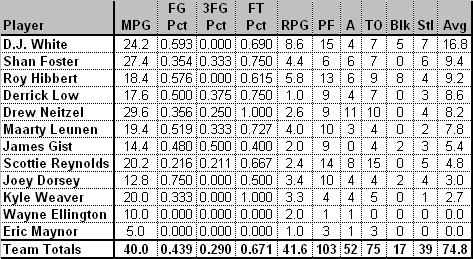
According to the numbers and coach Jay Wright:
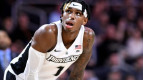
- DJ White (Indiana) was the class of this team, nearly averaging a dub-dub, shooting 59% and leading the team in steals in only 24 minutes per game. If Eric Gordon is worth half of his hype next year, IU could really turn some heads in the Big Ten and nationally.
- Wright slurped Roy Hibbert (Georgetown) for his mobility, but we were a little surprised he only managed eight blocks in five games.
- And what the hell happened to Scottie Reynolds (Villanova)? We could be looking at a second coming of the Human Cannon (aka Dion Glover) here – 21% (8-37 FG; 4-19 3FG) shooting and a boatload of turnovers to boot. Memo to Reynolds – you had a nice freshman year, but just b/c the coach of your school coaches the team does not mean you have the green light on every possession.
- Speaking of shooting, Drew Neitzel (Michigan St.) and Shan Foster (Vanderbilt) both shot poorly in the tournament, which is unsurprising considering neither is a pure shooter.
- A pair of Pac-10 players, Derrick Low (Washington St.) and Maarty Leunen (Oregon) seemed to act as solid versatile “glue guys” that are so important for any team, according to Wright.
- Joey Dorsey (Memphis) made a name for himself when he called out a Uruguayan center named Gregorio Odento and was summarily dunked on (or maybe we’re getting that confused with something else).
- Guards Wayne Ellington (UNC) and Eric Maynor (VCU) both got hurt early, so we never really got to see what they could do.

DJ White Ponders His Senior Year
All in all, it sounds like another uninspiring performance from Team USA. We’re definitely going to be keeping a closer eye on DJ White this upcoming season, though.
3 Comments |
international basketball | Tagged: derrick low, dion glover, dj white, doug gottlieb, drew neitzel, eric maynor, ernesto batista, georgetown, indiana, international basketball, jay wright, joey dorsey, maarty leunen, memphis, michigan st, oregon, pan am games, panama, roy hibbert, scottie reynolds, serbia, shan foster, team usa, unc, uruguay, usa basketball, vanderbilt, vcu, villanova, washington st, wayne ellington |
Permalink
Posted by rtmsf
July 30th, 2007
A few different thoughts today, but none enough for its own post:
- Circling back to the Donaghy saga, TrueHoop uncovered an academic paper on the NBA by a Stanford undergrad named Jonathan Gibbs that echoes the findings of the Wharton study on college basketball by Prof. Justin Wolfers that we mentioned last week. In summary, Gibbs found that there are a number of statistical outlier NBA games each season where heavy favorites beat the spread less often than they should, which, when controlled for confounding factors, is suggestive of pointshaving. This certainly comports with our prior stance that it happens more often than we all think. It seems that the only way to truly combat this problem is for the NBA and college conferences to use rigorous statistical analyses such as these to isolate anamolous game performances with respect to the spread (something that neither is likely doing at present), and then systemically review the games isolated for any funny business on the part of the players and/or officials. Freakonomics at work, baby!
- As the Wake Forest Nation continues to mourn the tragic loss of Skip Prosser, preparations are being made to say goodbye:
- A public viewing will be held on Monday, July 30 from 2 p.m. until 9 p.m. at Holy Family Catholic Church in Clemmons, N.C.
- The funeral mass will be celebrated at 6 p.m. on Tuesday, July 31 at Holy Family Catholic Church. The mass will be simultaneously televised in Wait Chapel. Members of the Wake Forest University and Winston-Salem communities are invited to view the mass live in Wait Chapel.
- The Wake Forest assistant coaching staff will serve as pallbearers. The current and incoming members of the Demon Deacon basketball team will serve as honorary pallbearers.
- Burial is tentatively scheduled for 11 a.m. on Saturday, August 4 in Cincinnati.
- Finally, we’d also like to point out that the US Pan Am Team lost its first two games at the competition in Rio de Janeiro and was out of medal contention pretty much as soon as they stepped off the plane. We’ll have a more detailed report later with respect to who played well and who didn’t, but for now, suffice it to say that fifth place with our best collegians is simply unacceptable and indicative of a much larger problem with USA hoops, as we discussed here.
1 Comment |
randomness | Tagged: jonathan gibbs, justin wolfers, nba, pan am games, pointshaving, skip prosser, sports gambling, tim donaghy, truehoop, usa basketball, wake forest |
Permalink
Posted by rtmsf
July 27th, 2007

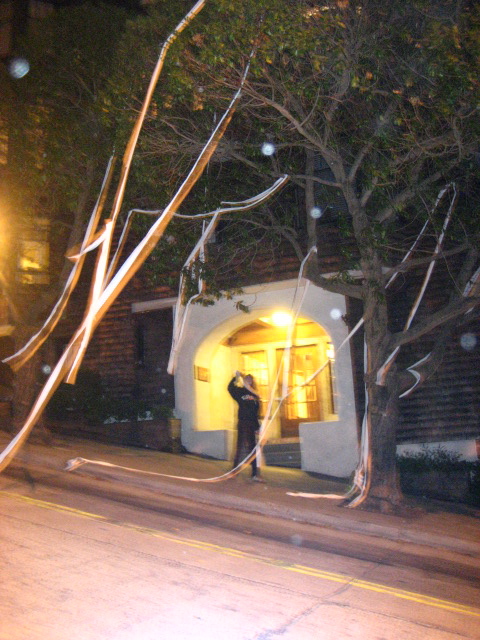
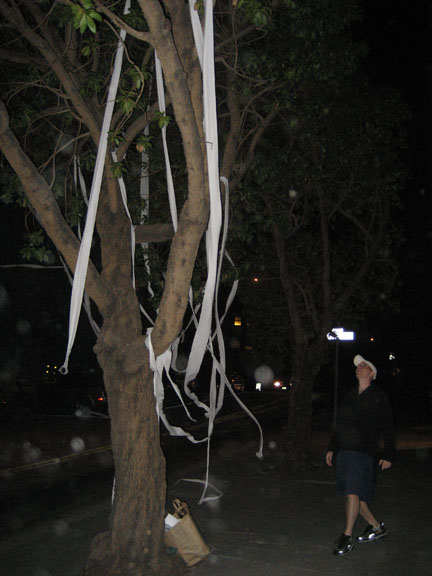
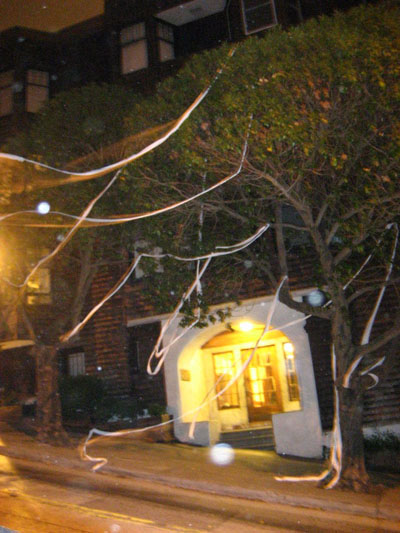
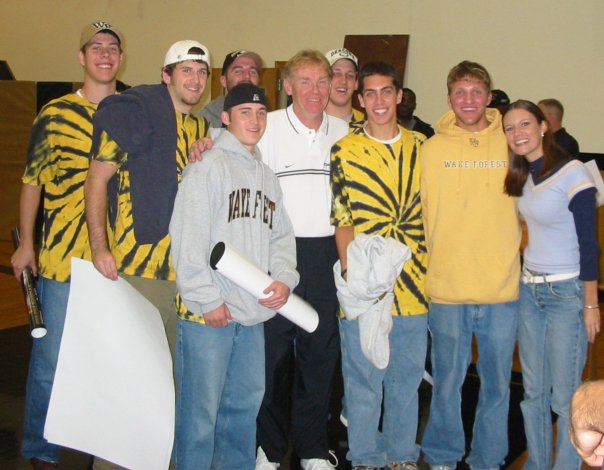
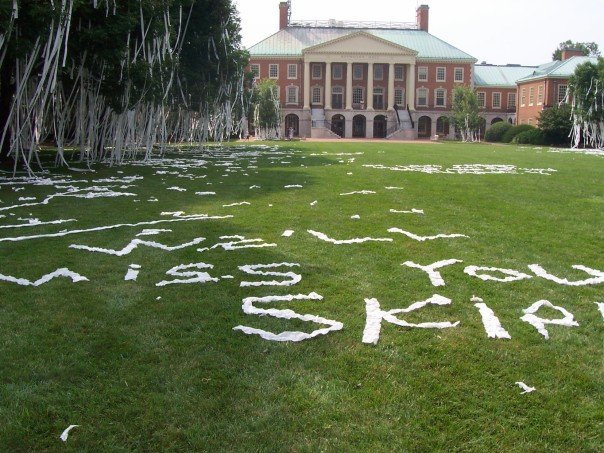
As promised, and much to the surprise of the various scavengers and other denizens of the night, we went outside our apartment building at midnight and paid our respects to Coach Prosser by TPing the trees out front. You can see above (h/t to Adam Dovico for the the great pic) some of the work done on campus last night as well. We were only two people with limited rolls of spare TP, so the result looks a little sad, but the effect on our souls was cathartic and we ultimately felt that Skip would be proud of our efforts. Here is our contribution:


(apologies for the blurriness – we’re bloggers not photographers)…
2 Comments |
obituaries | Tagged: roll the quad, skip prosser, wake forest |
Permalink
Posted by rtmsf
July 26th, 2007

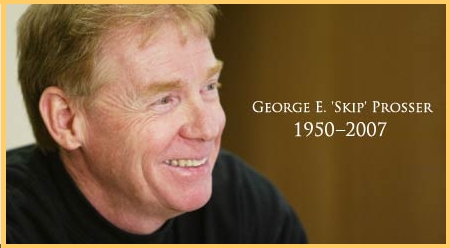
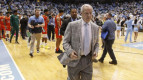
With the news today of the passing of Skip Prosser, Deacon Nation and the rest of the college basketball world is coming to terms with what many people have described as a loss of “one of the good guys” in the game. This hits us a little harder than most, as although we’ve tried to keep our biases and fanship quiet for the sake of the objectivity of this blog, we too are a Demon Deacon (class of 1995). Today we drop our professional facade and give the man his proper dues and respects.
We’ve been no stranger to criticism of Skip as a coach over the last few years, but make no mistake, we always believed in our heart that Coach Prosser was an excellent teacher, person and family man in addition to being an exceptional coach. Not once have we ever heard anyone within the college basketball community question the man’s passion, his ethics, or his character. And most of all, in only six short years at Wake Forest he had completely morphed into a true Deacon, a fan of not only his own players but of the entire university’s sports program and, most of all, the student body.

A friend of ours reminded us that Skip never lost sight of the fact that he always, first and foremost, considered himself the same high school history teacher that he was back in his hometown of Pittsburgh. To that end, he graduated every one of his players who stayed all four years at Wake Forest. Always the academic, he would often sprinkle quotes from Tennyson and Shakespeare into his discussions of team defense and free throw shooting. There was a certain eloquence in the way he spoke that reminded you that he had more than just basketball on his brain twenty-four hours a day.
Despite that fact, Skip’s passion for the game could never be questioned. As a fellow Deac, we could read the pain on his face over the last couple of mediocre seasons as he struggled to keep the program afloat. But as if by cruel fate, last week it seemed as if he had once again turned the corner – just as he had at Xavier, and just as he had at Wake when he arrived – by receiving commitments from three players who would arguably form the #1 recruiting class of 2008. A recent cnnsi.com article revealed that Prosser was extremely excited about his recent coup, and why wouldn’t he be? Life as a coach in the ACC is hard enough with top talent – considering his haul, the future for Skip’s program could only be described as bright.

We had the good fortune to spend some time as an alumnus back on the Wake campus during Skip’s first two seasons (2001-02 and 2002-03), and the infusion with which he energized the campus was palpable. The previous administration under Dave Odom had left a dispirited pall over what had just years before been a basketball-crazy campus, dating back to the 1990s glory years of Rodney Rogers, Randolph Childress and Tim Duncan. Upon arrival, Skip immediately unleashed Josh Howard onto the rest of the ACC, recruited Chris Paul and Eric Williams, and once again the Joel was rocking. Over the next four seasons under the helm of Prosser, Wake ascended to its first-ever #1 ranking and the Tie Dye Nation at the Joel became a nightmare for most opponents, earning its rightful place among the toughest venues to play in America.

But more importantly, Skip became the Campus Coach, often walking around meeting students, encouraging them to cheer throughout the games and generally making himself a fixture just as notorious as the magnolias on the quad or the noontime bells of Wait Chapel. As an indication of the campus hysteria, at one point the Screamin’ Demon basketball fan group numbered over 2000 kids, more than half of the student body – undoubtedly no other school in the nation can match that level of commitment. Skip engendered this relationship, as he would often email the student body the afternoon of a big game extolling them to “meet me on the quad at midnight,” representing the time-honored Deacon tradition of rolling the quad after a big victory. To that end, a grass-roots campaign has begun today to honor Skip with a quad-rolling tonight at midnight – and although we cannot be there in person, you can rest assured that the tall tree outside our building will turn white tonight.
Rest in Peace, Skip – you will always be a Deacon.
Update: Katz, Decourcy, Seth Davis, Vitale, Parrish, and Wetzel weigh in with their thoughts.
3 Comments |
obituaries | Tagged: chris paul, eric williams, joel coliseum, josh howard, roll the quad, screamin demons, skip prosser, tie dye nation, wake forest |
Permalink
Posted by rtmsf
July 26th, 2007
As a short follow-up to the Donaghy scandal, the NCAA released the following information to espn.com regarding the measures it takes to ensure that its officials are clean (RTC’s comments below in bold):
NCAA (basketball)
• The NCAA produces a video that is provided to each of the officials selected for the NCAA championship. The video warns of the dangers of gambling.
[Wow! A video! Reminds us of 9th grade.]
• All officials eligible to be selected to work the championship are subject to random, thorough background checks.
[Covered this yesterday. How thorough could these checks be? What predictive value do they have?]
• There are security and operational plans for officials, which the NCAA does not discuss publicly.
[This just sounds like "we don't want you to know what we don't know."]
• The NCAA works with law enforcement authorities on the local, state and federal levels in the handling of any inquiries, concerns or issues, should any arise.
[Working with the police? This sounds like measures used ex post facto, not preventive in any way.]
• The NCAA does not bring the referees who work the national title game into the city until the day of the game. The NCAA used to bring them in for the weekend, but they didn’t want the referees to be exposed, visible and have everyone know who they are prior to the title game.
[Was this rule instituted before phones and the internet?]
• Officials are also subject to extensive background checks.
[Just in case you forgot from above.]
Is This the NCAA Instructional Video?
As we stated rather longwindedly yesterday, there are ginormous (new Webster’s word this year – look it up) holes in the controls that ensure the integrity of NCAA basketball officials. Almost everything the NCAA stated above is designed for one purpose and one purpose only – CYA – to be able to say that it performed its due diligence the next (first?) time a Donaghy is uncovered in college athletics.
Perhaps the reason that a Donaghy has yet to be discovered in the NCAA has everything to do with the complete lack of oversight of most of its officials and nothing to do with some pie-in-the-sky notion that the NCAA has things under control. As The Commish said, NBA officials are the most scrutinized referees in the world, and yet Donaghy still eluded discovery through the League’s objective measurements. How on earth would anyone know if a Big West or Atlantic 10 official was doing what Donaghy did (assuming he doesn’t go overboard to tip off the gambling establishment)?
The short answer is that there is no way to know unless the official slips up. Donaghy’s mistake was that he was betting with illegal bookies, which ultimately led him down the primrose path to the inevitable symbiotic relationship that we saw exposed last week. The NCAA certainly doesn’t have the institutional wisdom or resources that the NBA has, but the above measures (and those outlined yesterday by the ACC and Big Ten) leave us asking for considerably more…
No Comments » |
randomness | Tagged: acc, big 10, ncaa, referees, sports gambling, tim donaghy |
Permalink
Posted by rtmsf
July 25th, 2007
Now that we’ve had a few days to mull over our thoughts with respect to this Tim Donaghy scandal, and after watching the Commish and High Priest of All Things Basketball grin and bear it through an excruciating (for him) press conference yesterday, we still find ourselves circling back to our initial thoughts when the news broke.
It happens more than we think.
Yes, it’s horrible and it shows a lack of oversight of its refs by the L and it calls into question the very integrity of the game that Stern and his predecessors have worked so hard for so long to ensure…
And it raises valid questions about the possibility of other officials involved, other leagues involved, other (gasp) players involved, the plausibility of collusion, whether this is an isolated incident, and what, if anything, the lords of professional and amateur sports can do to contain it or snuff it out completely…
And yet, the simple answer is that they can’t.
We like to imagine that this kind of thing can only happen in far-flung places in sports far inferior to ours, the kinds of places where officials have one foot on the field and one in the smoky backroom pub scene that gives rise to the incentive in the first place (are we talkin’ about this or are we talkin’ about this??). The kinds of places where institutional shadiness is the rule for getting anything done. The kinds of places where judges fix Olympic matches and sporting heroes are eliminated for their on-field transgressions. After all, we live in the USA – the land of internal controls and open transparency and due diligence and audit trails and CYA and watchers of the watchers of the watchers, right? Right?
So how much are your Enron or Worldcom shares worth these days?
So where are those shifty WMDs located after all?
So when does OJ come up for parole again at San Quentin?
Does Your Guy Offer Teasers?
This is not to say that we buy into the avalanche of conspiracy theories that were already surrounding the NBA prior to last Friday. All those chirping Suns fans need to pipe down – Donaghy betting the Over didn’t make your team lose. However, we also mustn’t keep our heads in the sand here. Stern told us yesterday and he’s going to preach the mantra again and again that this was an isolated incident of a lone gunman referee. But doesn’t your gut tell you that, while Donaghy probably acted alone here, there have been others in the past? Maybe there are others now?
When we heard that the ACC, attempting to capitalize on the NBA’s bad publicity to tout its own integrity, stated that they spend $135 on a background check of each of its officials, we couldn’t contain our hearty guffaws. The Big Ten makes an identical claim. While kudos are in order that these two leagues are doing something to show that its hired hands possess a modicum of integrity, we know for a fact that a simple background check revealing a very basic civil/criminal and credit history gives minimal information with respect to whether someone is a closet gambler or would become compromised to the point of taking money to impact spreads. How do we know this? Well, as we were formerly under the employ of a company specializing in “security consulting,” we understand that any deliverable under $1000 each for this type of work will be fraught with gaping holes in coverage and generally suspect as a useful tool – it’s simply not enough.

And what about the 29 other D1 leagues and their officials? Is anyone doing background checks on these guys? Is anyone evaluating their calls with the same gusto that the NBA and NFL does (and yet, Donaghy still slipped under the radar until the FBI overheard his name on its mob-related wiretaps). According to Stern, Donaghy (a 13-year veteran) was making a hefty $260k/year (a first-year NBA official will make $85k). MLB umpires start at $88k and range up to $300k/year. As essentially part-timers, NFL referees make between $42k – $121k/year. What about NCAA refs? In college basketball, they work as independent contractors and get paid approximately $2000 per game – as an example, Ted Valentine worked 98 games last season, so his annual salary would have been $196k. In college football, the requirement of more officials equals less pay, averaging around $1100 per game for each.
Is $100k-$200k Enough for NCAA Refs?
Where there’s a vacuum, there is an incentive. At the professional level, the officials on the floor/field make at best 10% of the league average of the players. In college officialdom, the money isn’t as good as their professional peers and the oversight is accordingly weaker. What this means is that, if done correctly selectively, by keeping it completely to yourself (read: online betting using false credentials and third-party transaction services – hello IRS audit!) or with one trusted associate, and appropriately obfuscating the winnings, it is virtually impossible to determine whether a Mountain West or Sun Belt or Big 12 or SEC official is influencing pointspreads and/or outcomes for personal enrichment. He could earn several extra thousand dollars per week (not enough to move the Vegas lines) without so much as an eyebrow raised.
The professional leagues like to claim that this never happens, but we already know that it does. What about the Black Sox scandal of 1919, Pete Rose, Tim Donaghy and even perhaps the sacred cow of the NFL, who according to investigative writer Dan Moldea, at least seventy games were fixed throughout the 1950s-70s? At least nowadays we can rest assured that these leagues are on notice for corruption, even if as in the case here with Donaghy, it is not outed earlier. The NCAA environment, however, is more ripe for corruption of this type, with its witch’s brew of amateur players, not-as-well-compensated officials and an incredible lack of oversight from most leagues. Can the Pac-10, for example, show how each official calling games in its league did ATS and O/U for the last four years to sniff out evidence of possible corruption? Doubtful.

Found in John Clougherty’s Pockets!
A recent statistical analysis from the Wharton School at Penn suggests that one percent (~500) of NCAA basketball games from 1989-2005 fell into an outlier that suggests gambling-related pointspread corruption. This dovetails with a 2003 NCAA report that states that 1.1% of NCAA football players and 0.5% of NCAA basketball players accepted money to play poorly in a game (extrapolating from the sample suggests that this affects ~21 basketball and ~112 football players annually). Somehow the math isn’t adding up (500 games/17 seasons = ~30 affected games/year in NCAA basketball) – what could possibly account for that difference?
While we can’t find an example of an NCAA official becoming involved in a pointshaving scandal like what we’ve seen at Boston College, Arizona State and Northwestern in recent years, we have no doubt that it occurs – much like Donaghy until he got busted, they’re probably just better at hiding it.
4 Comments |
rtc analysis | Tagged: acc, ats, background checks, big ten, black sox, bookies, boston college scandal, dan moldea, david stern, john clougherty, mlb, nba, ncaa, ncaa basketball, ncaa football, ncaa referees, nfl, northwestern scandal, o/u, penn, pete rose, pointspreads, referee salaries, sports gambling, ted valentine, tim donaghy, umpire salaries, wharton school |
Permalink
Posted by rtmsf
July 23rd, 2007
We continue to track the Tim Donaghy saga, and we’re putting together a take on that situation as it relates to sports and basketball in general, but we wanted to make brief mention of the following score from Novi Sad, Serbia: Serbia 74, Team USA 69. Yeah yeah, we realize that the Serbs had home-court advantage and it’s probable possible that there were more than one Donaghy running around in FIBA gear out there, but once again a US team went into an international competition against its peers and came home with something less than the gold medal. In fact, the last time Team USA won the Under-19 competition was 1991, which means that this year’s stars Deon Thompson and Patrick Beverly were still in diapers when we last won this event.

All Hail Serbian Dominance in International Hoops
Is it too much to ask that the United States, a diverse country of over 300 million people where among Gen Y basketball is the most popular participatory sport (over 39M youth participants in 2001) , put together a group of the best 19-year olds in the world? By comparison, Serbia has a total population of just over 10M and a youth population of just under 2.5M (or about the size of the Denver metro area). So, to recap, we have approximately 16 youth basketball players in the USA for every single one of Serbia’s kids, and we still can’t beat them in the game that we invented and honed in our tried and not-so-true-anymore system designed to produce the world’s best players.

How Embarrassing to Lose to These Serbs
If we’re sounding a bit like an old fart, that’s fair. Sometimes we sure feel like one. We certainly realize that the world is catching up in hoops, and the days of any Team USA (from the junior teams all the way up to the Kobe-led Senior Team) rolling roughshod over cowering foreigners (see: Frederic Weis below) are over. But it seems lately that we can’t win any of these competitions, and the same old tired excuses of “different style of play” and “national teams” are falling on our deaf ears.
Rather, we believe that there’s a serious problem with our shoe-company driven AAU youth system that stresses 1-on-1 play over team basketball. To borrow from Rick Barry, it is incredibly frustrating to watch an amazing athletic talent and product of our “star system” like Lebron James play the game at such a high level yet still not know how to properly rub off of a basic screen – nobody ever took the time to teach him how to do it! Unfortunately for the game, fundamentals and team basketball fell by the wayside in the last generation, and we think that fact, more than any other, contributes to our continuing struggles in today’s international competitions. The thing is, much like our health care delivery system, we never hear anyone within the industry say anything good about the broken AAU system, but rare is the man who actually steps to the plate and offers a viable alternative.
Well, at least we know to expect that Michael Beasley, Patrick Beverly and Deon Thompson will have breakout seasons next year.
2 Comments |
international basketball | Tagged: aau basketball, deon thompson, frederic weis, lebron james, michael beasley, patrick beverly, rick barry, serbia, team usa, under-19, youth basketball |
Permalink
Posted by rtmsf
July 21st, 2007
Much is going to be made over the next week over the disclosure broken Friday by the New York Post that Tim Donaghy, a veteran NBA referee, allegedly became heavily indebted through illegal gambling and was using his position as an official to manipulate point spreads by proxy of organized crime. In other words… pointshaving, quite possibly the dirtiest word in sports. The only good news for the NBA was that the news hit on a summer Friday afternoon after a week of wall-to-wall Michael Vick and Barry Bonds-related outrage coverage.

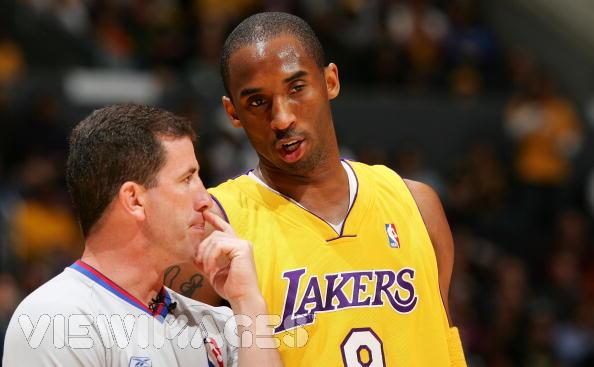
“Kobe, do you think you could help a fellow Philadelphian out here?”
The outcry already predictably ranges from the overtly dismissive from Nate Jones at AOL Fanhouse:
For some reason the ref story isn’t that big of a deal to me. Unless of course it comes out that the ref is 2006 Finals MVP Bennett Salvatore. I feel like there are bad apples in EVERY organization. So it’s not a surprise that one ref out of all of the refs in the history of basketball decided to go down the gambling route.
And Greg Anthony at espn.com:
While some who are critical of the NBA point to this being an organization’s problem, I see this more as probably one man’s human error.
To Bomani Jones of Page 2 accusing NBA brass of negligence for not sniffing this out sooner through its review process:
Should the reports be true, Donaghy worked for a league that couldn’t catch on to what he was doing. For all we know, the NBA couldn’t tell if Donaghy was blind as Jose Feliciano or as connected as Jack Molinas. In spite of having mountains of data on officiating, enough to produce a rebuttal to a scholarly paper about whether foul calls are affected by the race of the referee and the player whistled for the infraction, the NBA apparently couldn’t tell something was awry. That’s all bad for the NBA, and probably worse than it would be for any other league. After decades of cockamamie conspiracy theories and a season that will be remembered more for tanking than playing, the last thing the NBA needs is anything that could give credence to any allegations of shady business. Especially if the shade was brought on by negligence. Absolutely, corruption is worse than incompetence. But what’s worse than both of them? Hiring someone corrupt and not knowing any better.
To using this incident as a proactive agent of change, as Mark Cuban suggests in blog maverick:
Every company of any size has had a problem(s) that its CEO and stakeholders have lost sleep over. Its the law of big numbers. If enough things go on, something is going to go wrong. Products get recalled or are tampered with. There are workplace disasters. There is corruption. No industry is immune. Churches, consumer products, law enforcement, cars, planes, trains and plenty more. No profession is immune. From the CEO who misrepresents corporate numbers or events at the expense of shareholders, to the doorman who tips himself from the cover charge at the expense of the club owner, people of every profession make bad decisions. Shit happens. Bad Shit happens. When it does, there are two options. Cry over it and do nothing or recognize the problem and do the best you possibly can to not only fix it, but make the entire organization stronger.
To the downright apocalyptic from Jennifer Engel at the Ft. Worth Star-Telegram:
Whatever his previous failings, and his handling of that little Suns-Spurs brouhaha immediately jumps to mind, Stern obviously understands what is in danger of being lost. You. The fan. The guy who is left wondering what, if anything, you saw in the NBA was real. He understands this poses a far more insidious danger to his league than Vick does to the NFL or Bonds to Major League Baseball. They can make Vick go away. Bonds eventually will go away. Doubt is far tougher to suspend. Which is why the NBA has scoreboard on every other sport for the worst of the bad weeks.
To the Vegas reaction from NBA aficianado David Aldridge:
There was no detectable change in betting patterns in Las Vegas casinos on NBA games during the last couple of years, according to Jay Kornegay, who runs the sports book at the Las Vegas Hilton and spoke by telephone today. “We usually hear something if there’s some unusual movement or unusual betting patterns. . . . There’s usually some kind of discussions about them. We don’t remember anything like that,” Kornegay said. Kornegay said he wasn’t concerned about taking action on NBA games in the future. Sports book betting makes up only about 2 percent of all betting action, he said “We are a very well-regulated industry out here, and I have all the faith in the world in our system,” he said. “I’m more disappointed than concerned. It doesn’t just shake the NBA; it shakes the whole sports world.”
To the silly, from freedarko.com:
But in another way, this is really good for the league. Fine, some games–most likely regular season ones, which everyone agrees mean nothing–were competitively tainted. Yet this most ordinary of sports scandals might serve as a reality check on all the stupid shit people say about the NBA. This is how things are weird in a sport; the commish doesn’t write the script for the postseason in advance, the refs are programmed to give close calls to whoever garners the highest ratings, and China isn’t secretly controlling the whole thing from behind the muslin curtain.
To Marty Burns at cnnsi.com discussing the referees’ collective feelings:
“We’re angry. We’re angry. That’s for sure,” he said. “It’s not fair that one guy, one bad apple, brings down the whole officiating [staff]. It’ll trickle down to the college game, too. Every controversial call at the end of a game, somebody will question it… “I am sick of having to defend ourselves. We just got over the IRS thing, and now we have to defend ourselves all over again.”
To the deserving self-aggrandizement of Unsilent at Deadspin for “calling it” (did he have money on which ref it was?):
Just as I predicted Donaghy was identified as the target of the FBI’s gambling investigation. [...] Of all the refs I heckled last year there were only two that could really piss me off. One was a dick (Steve Javie) and the other was either the most incompetent referee alive or a soulless shell of humanity with mob ties. I have no idea whether he had money riding on any of the seven Wizards games I watched him work this season, but it sure would clear things up a bit.
To Jack McCallum at cnnsi.com quoting pejorative attacks on the man’s character:
The league source close to Philly put it this way: “He’s the kind of guy who is always in fights. When he was a kid, you’d see him throwing rocks at cars. He’s just an asshole. No one likes the guy. He’s always in fights on the golf course, that kind of thing. He’s a very antagonistic guy. When you have too many enemies, one of them comes back to bite you.”
In other words, a little bit of everything. Already we’re seeing evidence of every local NBA paper taking a closer look at games in which Donaghy worked. Feel free to interpret “worked” in any way you choose there. We’ll be back tomorrow with a closer look at how we feel sports gambling potentially impacts sports at both the collegiate and professional levels. Our essential conclusion is that this sort of thing happens a lot more than we all think. Unfortunately.
Update: Simmons puts his ten cents worth here while Henry Abbott at TrueHoop and Dan Shanoff call for transparency.
No Comments » |
legal matters | Tagged: aol fanhouse, blog maverick, bomani jones, cnnsi.com, david aldridge, david stern, espn.com, freedarko.com, gambling, greg anthony, jack mccallum, jennifer engel, mark cuban, marty burns, nba, new york post, page 2, pointshaving, tim donaghy |
Permalink
Posted by rtmsf
July 17th, 2007
The real dog days of summer are here, and that can only mean one thing to hoopheads - international basketball. Yes, we know that you’ve all missed the trapezoidal lane and goofy emblazoned unitards preferred by our international friends. Harkening back to the days of our youth when we trotted amateurs out there and still actually won these events, we should take solace in the knowledge that, even though the world has indeed caught us in team basketball, we still own the patent on And1-style showmanship. If only there was an international competition that allows four steps after picking up your dribble followed by random acts of dancing with the crowd.

A Team USA Led by S2ML Could Win This Competition
The Senior Men’s National Team will get most of the hype this summer (will Kobe play? will Team USA qualify for the Beijing Olympics?), but there are two other international teams filled with collegians that we’re keeping an eye on – the Pan Am team and the Under-19 World Championships team (see rosters below).
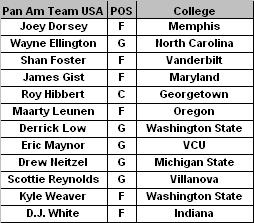
Pan Am Team USA Roster

The Pan Am team (coached by Villanova’s Jay Wright) begins play in Rio de Janeiro on July 25, and at least half of the roster is filled with players who will be NCAA All-Americans next season. What’s most interesting about this roster is the names of some of the players who were left off the squad. Preseason first-teamer Chris Lofton apparently counterbalanced global warming all by himself as he froze up the gym with his shooting stroke during the trials and was left home, as were Kansas guards Sherron Collins and Mario Chalmers and Duke sharpshooter Jon Scheyer. It was also peculiar that Wisky’s Brian Butch was left off the team, as it leaves Roy Hibbert as the only true center available – let’s hope he stays out of foul trouble. Jay Wright realizes that the four-guard offense that he employed at Villanova was out of necessity, yes? Nobody asked us, but this team seems heavy on shooters and wings and extremely light in the middle. That’s probably not a strong recipe to win in international competition against stronger, older and more experienced players. We’ll see…
Seth Davis gave his insights after watching the trials here.
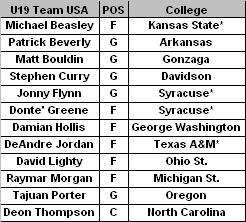
Under-19 World Championships Roster

The Under-19 Worlds team, coached by the Undertaker, has already won its first five games in pool play heading into a showdown with 4-1 France tomorrow. K-State’s incoming freshman Michael Beasley (14 ppg; 6 rpg; 70% fg in only 17 mpg) and Davidson guard Stephen Curry (11 ppg; 3 apg; 61% fg) have led a balanced attack for the high-scoring (99 ppg) American squad. Arkansas guard Patrick Beverly is the only Team USA member earning more than 25 mpg thus far, while Donte’ Green and Damian Hollis appear to be the only two Americans not getting substantial minutes. From what we’ve seen so far, it appears that Beverly, David Lighty and Deon Thompson are poised for breakout years at their respective schools, while Big 12 fans should just hang on for the one-year ride watching Beasley and DeAndre Jordan perform. The eight-team medal round begins on Friday in lovely (especially as compared to Rio) Novi Sad, Serbia.

Michael BEASTley
We’ll be checking back in periodically with these teams to see how they finish in their respective competitions and, more importantly, whether any particular player(s) shows what to expect next season.
2 Comments |
international basketball | Tagged: all-americans, and1, arkansas, brian butch, chris lofton, damian hollins, david lighty, davidson, deandre jordan, deon thompson, donte green, duke, georgetown, international basketball, jay wright, jerry wainwright, jon scheyer, kansas, kansas st, mario chalmers, michael beasley, ohio st, pan am team, patrick beverly, roy hibbert, seth davis, sherron collins, skip to my lou, stephen curry, syracuse, team usa, tennessee, texas a&m, unc, under-19 worlds team, wisconsin |
Permalink
Posted by rtmsf
July 16th, 2007
For some reason, we don’t recall summers growing up as this boring…
- Mizzou players Kalen Grimes (accused of assault with a shotgun in, of all places, a Jack in the Box) and DeMarre Carroll (shot in the ankle outside a nightclub) were involved in separate incidents within five days of each other. Mike Anderson’s honeymoon is apparently over in Columbia.
- Bad Luck in Durham: Duke’s Brian Zoubek broke his foot in a pickup game; and Demarcus Nelson broke his wrist at the Pan Am trials within the last week. No word on whether Greg Paulus’s mishap with autoerotic asphyxiation will affect his play next year.
- The Big East moves to an 18-game conference schedule for 2007-08, so each team will play at least once next year. We like this trend.
- SEC Commish Mike Slive will head the NCAA Selection Committee in 2009 – Ole Miss and Vandy are already making hotel reservations to reward their 18-10 records.
- New Ohio St. President Gordon Gee says that he will not tolerate bad behavior on his watch within the Buckeye program… we’re still waiting on the punchline here.
- The 2007 HOF Challenge on December 1 is set with two solid matchups: UConn vs. Gonzaga and BC vs. Providence.
- Cal assistant Joe Pasternack takes the head coaching job at the University of New Orleans. Bears fans lament that Ben Braun didn’t take the job.
- The Fanhouse put together its admittedly premature top 20 for the summer. Georgetown is too low on their list and Indiana is too high.

- UCLA’s incoming frosh Kevin Love is the Gatorade POY. Still not sure how we feel about him – is he another Psycho T or Aaron Gray?
- Wake got 2008 verbals from the #3 and #18 players last week (to go along with already committed #10), but is the Class of 2008 any good? Speaking of Wake, TrueHoop unearthed a fantastic introspective piece into the mind of the greatest Deac of all, Tim Duncan.
- Seth Davis gives his takes from the road on the summer circuit.
- Apparently Steve Lavin knows how to throw a party.
1 Comment |
fast breaks | Tagged: aol fanhouse, ben braun, big east, boston college, brian zoubek, california, class of 2008, commissioner, connecticut, demarcus nelson, demarre carroll, duke, gatorade poy, gonzaga, gordon gee, greg paulus, hall of fame challenge, joe pasternack, kalen grimes, kevin love, mike anderson, mike slive, missouri, ncaa selection committee, new orleans, ohio st, ole miss, pan am games, providence, recruiting, sec, seth davis, steve lavin, tim duncan, truehoop, ucla, vanderbilt, wake forest |
Permalink
Posted by rtmsf
July 11th, 2007
Today we’re ready to unleash the last installment of our analysis of NCAA Tournament stats of the 65 (64) team era… that is, unless we decide to analyze the coaches too… well, it is over three months until Midnight Madness, so ok, hold that thought. Anyway, as you hopefully recall, during the weekend we took a look at the raw numbers of the era by conference, and essentially concluded that the ACC has been the most successful conference of the last 23 years, the Pac-10 SWAC/NEC the worst, and that the mid-major conferences may not have been as consistently good as we had hoped over the years.
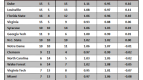
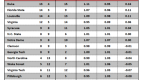
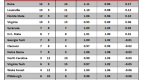
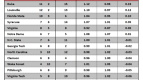
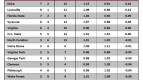
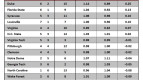
Now let’s take a look at the conferences who have overachieved and underachieved over the 65 (64) team era. In our analysis of this measure by school, you may remember that we looked at two different models – a Standard Model of expected wins by seed (e.g., a #1 seed should win 4 games per appearance), and a Historical Model of expected wins by seed (e.g., a #1 seed has actually won 3.36 games per appearance from 1985-2007). We concluded then that the true value lies in considering the Historical Model foremost because the Standard Model places too unrealistic of an expectation on high seeds and not high enough of one on low seeds, which ultimately skews its results in favor of lower-seeded schools and conferences. Given that condition, we now show the Overachiever and Underachiever conferences of the 65 (64) Team Era using the Historical Model. See Table A below.
Table A. Historical Model applied to 65 (64) Team Era
Notes: the table is sorted by “+/- per App,” which represents the number of games won above or below the expected number of wins for that seed per NCAA appearance (1985-2007). The conferences whose names are in bold are BCS conferences. The conferences whose names are in red are conferences that no longer exist.

Not Just George Mason. The first thought everyone will have (because we had it too) is that George Mason’s miraculous run in 2006 accounts for the Colonial Conference’s rather aristocratic pedigree at the top of our list. But looking a little further inside the numbers somewhat mitigates this idea. Sure, the Masonites (as a #12 seed) won 3.52 games beyond its expected value of 0.48 wins per appearance in 2006, but that only accounts for half of the Colonial’s wins beyond expectation during this era. So where are the rest of the wins coming from? Thank David Robinson’s Navy squads of the mid-80s and Dick Tarrant’s Richmond Spiders in the immediate aftermath for the CAA’s perch as the biggest overachiever on our lofty list.

George Mason isn’t the only CAA School to Overachieve
BCStriation. Unlike our previous posting that used standard objective measures (wins, F4s, titles, etc.) to show that the six BCS conferences were without question the top six leagues of the era, today’s posting paints a substantially different picture. A league can be very successful objectively and still considerably underachieve, as in the strange case of the Pac-10 (and to a much lesser extent, the Big 10). Although the Pac-10 was clearly the weakest of the BCS conferences by the raw numbers, we certainly didn’t expect that it would be the second-worst underachiever of the 65 (64) team era – but it unquestionably is. The Pac-10 has won sixteen fewer games than it should have during this period, which dwarfs the negative output of any other conference – next in line for public shaming are Conference USA (7.6 wins fewer) and the Big 10 (6.5). Looking back at our list of chronic underachieving schools, we note that Stanford, Arizona and Cal all fall into the frequent NCAA underachievers list, which should have tipped us off that this was coming.
High Achievers. On the other side of things, the ACC and the Big East fall in line behind the CAA as the biggest overachievers of the era, which proves that you can get great seeds, have tremendous objective success in terms of wins and titles, and still overachieve as a conference. The ACC has won a whopping 22 games and the Big East 18 games beyond expectation; and the SEC isn’t far behind with 13. We also want to nod a tip of the hat to the Mid-Continent (+4.5 wins), MAC (+4 wins) and Horizon (+4 wins) conferences, each of which shows that leagues with consistently low seeds can do some damage on a regular basis in the NCAA Tournament.

Missouri Valley Teams Need to Do More of This
What About…? If anything, these last two posts have opened our eyes to just how traditionally overrated the Missouri Valley Conference has been. For a so-called mid-major who gets multiple teams invited every year, its performance leaves a lot to be desired (4 wins below expectations). We realize that things change – conferences get better and worse over the years – but the MVC is going to have to really start producing in the next 5-10 years to lose our proffered overrated tag. As a comparison, the Horizon and West Coast conferences have performed nearly as well (19 wins each) as the MVC (22 wins) despite earning far fewer NCAA bids and having a slightly worse average seed.
Ivy League Paradox. We suppose that if you asked a hundred college basketball fans whether they believed the Ivy League traditionally overachieves in the NCAA Tournament, 99 of them would likely agree. This is probably due to a memorable upset or two over the years in addition to a common perception that the Ivies are a “tough out” every year. But looking above, we see quite starkly that the Ivy League has been one of the biggest underachievers of this era, earning only three wins versus an expected total of seven. This is largely because the Ivy champs (usually Penn or Princeton) have consistently earned seeds ranging from #11-#13 over the last decade, but haven’t been able to earn a single win during that period. The lesson here, we suppose, is to never take an Ivy team in your brackets (we’ve heard that taking an Ivy team against the spread in the first round is a good bet, however).
3 Comments |
ncaa tournament (general), rtc analysis | Tagged: acc, arizona, bcs, big 10, big east, bradley, caa, california, conference usa, david robinson, dick tarrant, george mason, horizon, ivy league, mac, mid-continent, midnight madness, missouri valley, navy, ncaa tournament, northeast conference, overachievers, pac-10, penn, princeton, richmond, stanford, swac, underachievers, west coast conference |
Permalink
Posted by rtmsf
July 7th, 2007
Hope everyone had a great 4th of July holiday… although we gotta say this midweek holiday thing kinda sucks. Give us the three-day (or four!) day weekend instead.
Anyway, we’re now ready to unveil the conference follow-up to our June analysis of the Top NCAA Performers of the 65 (64) Team Era. Once again, we’re going to take several different views of the world here. Today we’ll just look at the raw statistics and make some obvious insightful observations. In the next post, we’ll take a look at how conferences have performed versus its seeds during this era, and whether we can draw any broad conclusions from the data about overachieving and underachieving conferences.

What Kind of Conference is This?
A couple of notes before rolling out the data. First, with only one notable exception, we counted a team’s performance in a given year toward the totals of its conference at the time. For example, Louisville’s 1986 national title counts toward the Metro Conference totals (the Metro disbanded in 1995), not the Big East totals. The notable exception is that all Big 8 totals were subsumed into the new Big 12 conference, since every member of the Big 8 ultimately became Big 12 members. See Table A below.
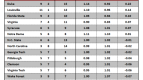
Table A. NCAA Tournament Success by Conference (1985-2007)
Notes: this table is sorted by winning percentage. The conferences whose names are in red are conferences that no longer exist.

BCS Conferences. This won’t surprise anyone, but we wanted to show the numbers in context. The following represents the percentage of each category achieved by the six BCS conferences from 1985-2007.
- 46.4% of all NCAA Appearances
- 60.9% Winning Percentage
- 72.5% of all Wins
- 76.6% of all Sweet 16s
- 87.0% of all Final 4s
- 90.2% of all #1 Seeds
- 91.3% of all Titles
If you’re writing a paper on the correlation between resources, exposure, talent and success in NCAA basketball, the above numbers should be included in your first paragraph. It matters.

Best in Show?
Best in Show. Over this 23-year period, there can be no question that the ACC has been the strongest performer in the NCAA Tournament. This conference leads in every objective category except for appearances, which actually makes their hard numbers with respect to S16s, F4s and Titles look even more impressive. The most shocking finding for us regarding the ACC’s success was that more than half (52.5%) of its participants during this era won at least two games (i.e., made the Sweet 16). This is phenomenal, especially considering that the next-best major conference is the Big East at 42.6%. Of course, when you’re winning greater than two-thirds of your games as a conference, then it shouldn’t be that surprising.
Next Best. From our view, the next tier of conferences include the Big East, SEC and Big Ten – you can pretty much throw them all in a pot and pick any of the three as second behind the ACC. The Big East leads in S16s and winning percentage; the SEC leads in titles and mostly has middle-of-the-pack numbers otherwise; and the Big Ten leads in appearances and F4s. We rate the Big 12 slightly below this group because there seems to be a drop in most categories from the above three, most notably in winning percentage and titles (ouch – only one). But the Pac-10 clearly performs worst over this era, earning the fewest bids, having the worst winning percentage and owning by far the least wins, S16s and F4s.
Mid-Majors. From the numbers, we only recognize four true mid-major conferences during this period – the Metro/Great Midwest/CUSA and WAC/Mountain West hybrids, the Atlantic 10 and the Missouri Valley. What’s interesting is that only the Metro/GM/CUSA teams have a winning record during this period, while of course all of the BCS conferences easily have winning records. This shows once again just how large of a disparity there is between the three levels of college basketball. Remember when during the mid-90s, the A10 was supposedly overtaking the Big East in talent and performance? – the lesson here is to not believe the hype. Within that group, Metro/GM/CUSA has had the most success, led by Louisville, Cincinnati and Memphis. Now that two of those three are in the Big East, we don’t expect CUSA’s success to continue. We were also a little surprised at how low both The Valley and the Mountain West performed here – they have poor winning percentages and the Mountain West in particular has only put two teams (of 18 bids) into the Sweet Sixteen since its inception in 2000 – pathetic for an annual multi-bid league.

Tark Has This Effect on Everyone
UNLV and Gonzaga Effect. The Big West and West Coast Conference exhibit how one very successful school can make a league look better than it actually is. By the numbers, the Big West looks like a mid-major league, but when broken down further, you quickly realize that the Rebels account for 21 of the conference’s 28 wins over this period. Excluding UNLV, the Big West is only 7-23 (.233) in the NCAA Tournament, which would put it on par with the Sun Belt and the Mid-Continent. The same is true with the WCC – when Gonzaga is excluded, the league is 7-21 (.250) during this period.

Stay Away from the NEC if you Want to Win in the NCAA Tournament
Low Majors. Picking a best conference among the low majors is a little like picking the prettiest ugly girl in the bar (not that we know anything about that, mind you), but if we have to choose, we’ll take the Southland Conference (note: we consider the conferences on the list above between the Great Midwest and the Sun Belt mid-majors, although the Sun Belt’s one S16 appearance with 32 bids is strong evidence that we might be giving that league too much credit). We choose the Southland because it’s one of only two of these conferences to put a team into the Sweet 16 (Karl Malone’s Louisiana Tech in 1985), and it has a better winning percentage than the others. We realize, of course, that all of these low majors are virtually equal in their NCAA ineptitude – only the Ohio Valley and the MAAC have ever received at-large bids (1987 – Middle Tennessee St.; 1995 – Manhattan) – but that’s our pick here. Our vote for the worst conference in D1 is a tie – the SWAC and the Northeast Conference. Each has the unenviable distinction of only winning one game in the NCAA Tournament during this period. Of course, maybe we’re looking at this the wrong way, and instead we should be celebrating the fact that every single conference has managed to win a game in the Dance during this period.
Final Thoughts. Can anyone catch the ACC? The Big East has a chance to tally significant gains if it continues to put eight teams into the NCAAs, as it did in 2006. But numbers alone probably isn’t enough – after all, the Big 10 has put the most teams in the Tournament since 1985. Rather, the ACC gives the obvious recipe for success by having two dominant programs that over the long haul consistently go deep into the NCAA Tournament (Duke and Carolina). Looking ahead, the Big East has an aging Calhoun at UConn and Boeheim at Syracuse so we’re not sure about its prospects. The Big 10 has Thad Matta the Recruiting Machine at OSU, but Michigan St. has regressed in recent years, and who else can rise up (Weber at Illinois? Beilein at Michigan? Tubby at Minnesota?). We’ll keep looking. The Pac-10 has an obvious supernova developing in Westwood at UCLA, but where else? Arizona will be in what kind of shape after Lute retires? Our choice for the conference to challenge the ACC in the next decade is the SEC. Billy Donovan at Florida has already proved his mettle; and with Billy Gillispie at Kentucky and Bruce Pearl at Tennessee challenging anyone to outwork them, it almost makes up for the coaching lightweights over in the SEC West (you know who we’re talking about). The youthful exuberance of these coaches at several programs willing to put forth the resources for success may give the SEC the best shot at catching the ACC, but the truth will ultimately lie in what happens to Duke after Coach K retires. If Duke manages to keep its dominance intact with their next coach, then it won’t much matter what happens with the other conferences – they’re not going to catch the ACC.
Coming Next: a look at how conferences overachieve and/or underachieve relative to their seeds over the years. Should be interesting stuff. Check back early next week.
2 Comments |
ncaa tournament (general), rtc analysis | Tagged: acc, atlantic 10, bcs, big 10, big 12, big east, big west, conference usa, conferences, gonzaga, great midwest, low majors, maac, metro, mid-majors, missouri valley, mountain west, ncaa tournament, northeast, ohio valley, pac-10, sec, southland, sun belt, swac, unlv, wac, wcc |
Permalink
Posted by rtmsf
July 3rd, 2007
Quite a bit of stuff we’ve missed over the past week or so…
- Iowa transfer and Tennessee native Tyler Smith will be eligible to play at UT next season, as his appeal was approved by the NCAA. UT just moved into our Top 5 for 2007-08.
- Florida guard Brandon Powell’s arrest for possession of a little ganja results in a transfer – expect to see him at Oklahoma St. or WVU next year.
- Cliff Ellis resurfaces at Coastal Carolina – we guess there are worse places than Conway, South Carolina.
- Apparently the NCAA will revisit its recently-enacted text messaging ban after 34 schools asked for a review.
- Indiana will tear down Assembly Hall (the House that Knight built) and Auburn will tear down Beard-Eaves Coliseum (the House that… um… Barkley? The Rifleman? built?) in favor of new barns.
- New Mexico St. coach Reggie Theus alighted for the Sacto Queens and the golden opportunity to coach Spencer Hawes, opening the door for Louisville assistant coach Marvin Menzies to take over in Las Cruces. Former UK & Celtic favorite and longtime crooner Walter McCarty will take the open position on Pitino’s staff.
- John Hollinger at espn.com (Insider, but if you look around you can find it copied/pasted elsewhere) has a tremendous article on evaluating college players before the draft.
- It’s never too early. Chad Ford’s Top 10 for the 2008 Draft. While we’re at it, here’s the projected mocks on NBADraft.net (2008 and 2009).
- Seth Davis has an interesting piece on the Under-19 USA team. Looking at Sunday night’s box score – Stephen Curry continues to impress.
- UK has signed just about everyone lately, as Billy Gillispie has the Wildcat fans giddy over his recruiting prowess during his first three months on the job. Oh, and he hasn’t found a place to live yet (has he looked?).
- Duke Dorks feigning comedy. Jon Scheyer
acting walking around campus with a camera nearby.
No Comments » |
fast breaks | Tagged: assembly hall, auburn, beard-eaves coliseum, billy gillispie, brandon powell, chad ford, cliff ellis, coastal carolina, duke, florida, indiana, iowa, john hollinger, jon scheyer, kentucky, louisville, marvin menzies, nba draft, ncaa, oklahoma st, reggie theus, rick pitino, seth davis, spencer hawes, stephen curry, tennessee, text messaging, tyler smith, usa basketball, walter mccarty, west virginia |
Permalink
Posted by rtmsf