Ray Floriani of College Chalktalk is the RTC correspondent for the MAAC and NEC conferences.
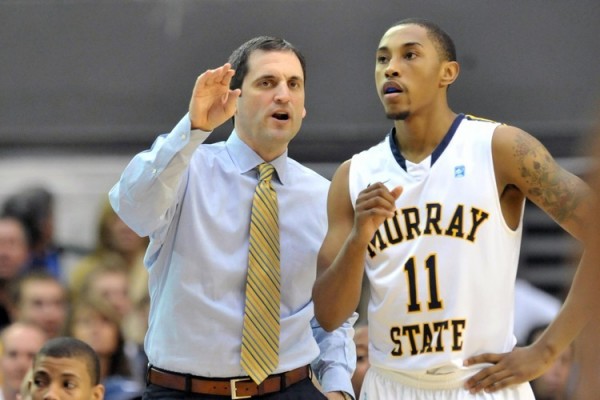
LYNDHURST, NJ – The MAAC tournament begins on the men’s side on Friday at the Times Union Center in Albany. The distinction has to be made as the women tip off on Thursday. The MAAC showcases both the men’s and women’s events at the same locations giving fans the opportunity to see the respective programs of all ten members. Siena is a clear cut favorite. The homecourt advantage and rabid following doesn’t hurt but Siena is a talented, battle tested and well-coached club. They have one loss in the MAAC, a late season setback at Niagara which might have been a blessing in the long run.
Damion James Makes an Early Case for POY. #2 Texas 79, #9 Michigan State 68. Four days and two games against top ten opponents for Rick Barnes. No sweat, right? Texas passed yet another difficult test prior to the winter break by imposing their hellacious perimeter defense into 22 Michigan State turnovers and allowing the future Big 12 all-time rebounder Damion James to put up 23/13 on 10-18 FG in a statement victory at home. The dynamic defensive duo of Dogus Balbay and lengthy freshman Avery Bradley confused star point guard Kalin Lucas (3-11 FG and 2:6 A:TO ratio) all night while also forcing guards Chris Allen and Korie Lucious into a combined nine turnovers of their own. In a key stretch late in the second half, reserve forward Gary Johnson drained a difficult shot and forced two consecutive Michigan State miscues around the halfcourt line that were converted into easy buckets. But the real story is the utter dominance of Damion James. He’s now been clearly the best player on the floor against two national title participants in a matter of four days, making a case ahead of Sherron Collins, Cole Aldrich and Craig Brackins for the favorite to win Big 12 POY (and perhaps more). Texas also received four treys from freshman Jordan Hamilton and did most of their damage with center Dexter Pittman on the bench with foul trouble. One could certainly make a case for the Longhorns as the #1 team in the land. They play Kansas, right?
Texas is Good Enough to Do the Florida Twin-Title Thing
Down to Seven Unbeatens.Arkansas 66, Missouri State 62 (OT). The undefeated run came to a bitter end in Fayetteville for Missouri State as the enigma that is the Arkansas basketball team edged the Bears in overtime. Regulation ended in crazy fashion with a wide-open Caleb Patterson layup at the buzzer to send the game into overtime. With 18 seconds left in the extra frame, three-point mastermind Rotnei Clarke nailed a clutch trey and then sealed the game with two free throws afterwards. Missouri State struggled from the field all night, shooting just 32% from three and 31% overall in a rare positive showing for the Razorback defense. Kyle Weems led the way for the Bears with 24 points.
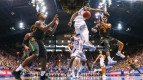
Cal Challenges Kansas for a Half.#1 Kansas 84, California 69. Maybe the Pac-10 is improving? The much-maligned league got three wins over BCS conference teams in the same evening; and considering that coming into tonight’s games, the league was a combined 6-20 against the other five power conferences this season, three more wins in a single night is something to be excited about. This was not one of those three wins. For about twenty-five minutes tonight, though, Cal hung right there with the nation’s #1 team on its home court, but eventually the superior talent of KU won out, as the Jayhawks hit a scorching 73% for the second half and used a 15-3 run to open some distance and ultimately put the game away. All five Kansas starters scored in double figures, led by Sherron Collins’ 17/5 and Cole Aldrich’s 10/10/5 blks. Patrick Christopher had 21 for the Bears, picking up for the struggling star Jerome Randle (3-15 FG), who had trouble finding open looks against the Jayhawk defense (including seven turnovers).
Texas Tech Loses More Than a Game.#19 Washington 73, Texas A&M 64. UW got 25/13/3 blks from Quincy Pondexter, who is putting up all-america numbers this year, but more importantly the Huskies’ defense was superb, holding A&M to 30% shooting and handling the Aggies on the boards (+10). The overarching story of this game, though, was the terrible injury that TAMU guard Derrick Roland suffered when he came down awkwardly and broke his leg after jumping under the basket in the second half. Those who saw it live compared it to the gruesome broken leg that Joe Theismann once endured on national television a generation ago. If you’re the type of person who does not handle seeing injuries well, you probably shouldn’t make the jump today (we put the video up, but you don’t have to watch it; seriously, it’s bad).
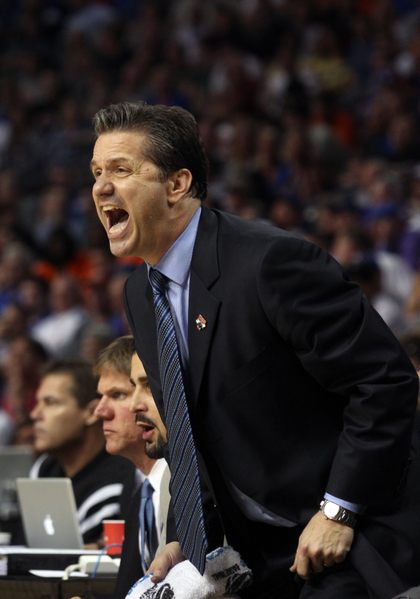
Ray Floriani of College Chalktalk is the RTC correspondent for the NEC and MAAC conferences. Click here for all of our 2009-10 Season Preview materials.
The MAAC is a ten member conference that hosts games from cozy campus locales to public arenas as Madison Square Garden, Arena at Harbor Yards and Times-Union Center to name a few.
Once again the conference will host the Old Spice Classic. The eight team event is November 26 through 29 at the Milk House Arena located in the Walt Disney World Resort Complex. Iona represents the MAAC with Alabama, Baylor, Creighton, Florida State, Marquette, Michigan and Xavier rounding out an impressive field.
Rivalries are huge. The charter membership gave us two games in the classic ‘Battle of the Bronx’ with Manhattan and Fordham. Iona and Fordham also got the pulse beating quicker. Membership has altered over the years but rivalries, largely due to geography and tradition, still are a big part of the MAAC. There’s Iona-Manhattan. Upstate is Niagara-Canisius, a ‘holy war’ from the old Little Three Days. Then there’s Marist-Siena. The latter has the upper hand of late but that’s another meeting where you throw the records out the window. Bragging rights are at stake.
Iona captured the first title in 1982 with an overtime victory over St.Peter’s. The semis and finals were at Meadowlands arena (now Izod Center) in East Rutherford, NJ.
Jeff Ruland did not play in the MAAC. The 1979-80 was his last in a Gael uniform but he is a part of MAAC history having returned to coach his alma mater and leading them to three MAAC championships.
Predicted Champion.Siena (NCAA #9). The Saints return four starters from a club that went to the second round and gave Louisville fits before exiting in a close contest. It was the second straight year the Saints earned a first round win in the NCAA Tournament. The lone loss was 6′3 guard Kenny Hasbrouck. Beside being MAAC Player of the Year and a double digit scorer, Hasbrouck provided outstanding leadership and inspiration to Fran McCaffery’s club. Filling in his spot will be Clarence Jackson, a dangerous three point shooter who can create his own shot. Ronald Moore, an outstanding lead guard, triggers the attack. The Ryan Rossiter, Edwin Ubiles, Alex Franklin backcourt is hands down the conference’s best. McCaffery has a habit of scheduling higher level opponents, usually on the road. It’s paid off as the Saints are a confident, battle tested group. Come tournament time they enter a game planning to win not just hoping. The mix of returning talent, recent success and proactive attitude make Siena the MAAC favorite. Given their recent NCAA success and strength of schedule Siena could be a #6 or #7 seed if things go right.

Last week we took a look at the five impact players in the Northeast Region, so now we’re ready for the second installment of our ten-week RTC 2009-10 Impact Players series. Each week we’ll pick a geographic area of the country and break down the five players who we feel will have the most impact on their teams (and by the transitive property, college basketball) this season. Our criteria is once again subjective – there are so many good players in every region of the country that it’s difficult to narrow them down to only five in each – but we feel at the end of this exercise that we’ll have discussed nearly every player of major impact in the nation. Just to be fair and to make this not too high-major-centric, we’re also going to pick a mid-major impact player in each region as our sixth man. We welcome you guys, our faithful and very knowledgeable readers, to critique us in the comments where we left players off. The only request is that you provide an argument – why will your choice be more influential this season than those we chose?
Mid-Atlantic Region (NYC, NJ, PA, WV, MD, DE)
Scottie Reynolds - Sr, G – Villanova. There might be players in this region who can score more points or dish out more assists or shoot a higher percentage from the floor than Reynolds. There might be more physically imposing and athletically gifted players than the 6′2 guard from Northern Virginia. There could even be a few ‘upside’ guys you’d pick before him if you were starting an NBA franchise. But is there any player as capable of putting his team on his back and doing this (ok, maybe Vasquez, but he hasn’t done it yet)? Is there another player on this list who you’d prefer to have the ball in his hands as the clock is ticking down, knowing that he’ll give your team a superb chance to win? Reynolds is the player that every coach loves to have on his team – he plays heavy minutes, never misses a start, shows great leadership and clearly has a calming effect on his team whenever he’s on the floor. This is a long way removed from the early days of his career, where the ‘Nova legend has stated that he had trouble seeing the ‘big picture’ due to trust issues with coaches and other players. There are no such issues now, as everyone in the Big Five (and the Big East, for that matter) understands who the top dog in the Philadelphia area is. If things come together right for Reynolds and VU in 2009-10, he could look back on a collegiate career that includes three all-Big East nods, an all-american selection, the second-most number of steals (he needs 58), and the most points (Kerry Kittles) in the long history of the Villanova program (he needs 624). Considering all that, Reynolds will captain the best team in the Big East and may also have another Final Four appearance in his sights.
Da’Sean Butler - Sr, F – West Virginia. If there’s a team that should challenge Villanova (on paper) as the class of the Big East in 2009-10, it should be West Virginia. The biggest reason for that is Butler, the 6′7 wing set to replace Pitt’s Sam Young as the most multi-dimensional player in the conference. Butler scores (17.1 ppg), rebounds (5.9 per game) and even finds time to play the passing lanes (1.7 spg). Last season he seemed to really find his groove in the conference slate, as his numbers all rose, culminating in his 43-pt explosion during a blowout win against Villanova on Friday the (Feb.) 13th. But it was his performance over the summer at the World University Games that really caught our eye – on a team with shooters such as Robbie Hummel and James Anderson, it was Butler who led the squad in three-point percentage (55%) by nailing nearly two per game. His perimeter shooting has always been solid (~35%), but if his shot improves next season to the 38-40% range to replace Alex Ruoff’s deadly range, Butler’s ability to get to the rim and finish becomes even more of a threat. With sophomore Honorable Mentions Devin Ebanks’ size and rebounding, Truck Bryant’s scoring and playmaking, plus the addition of two five-star recruits to the roster, it’s clear why WVU looks to improve on last year’s 23-12 record and first round NCAA exit. Mountaineer fans have an expectation of a top ten team in Morgantown and it’s understandable why they think so – it’ll be up to their star Butler to deliver on those expectations.
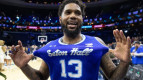
Jeremy Hazell - Jr, F – Seton Hall. Jeremy Hazell’s inclusion on our Mid-Atlantic all-region team was the toughest decision we had to make. There’s absolutely no question that the 6′5 guard/forward who blew up on the Big East last season has talent. You don’t score 20+ against sixteen Big East defenses without the ability to score the ball from every which way (22.8 ppg). The primary issue was that it’s difficult to claim to be an impact player if your team isn’t very good, and last year, the Hall finished 7-11 in the conference with all seven of those wins against fellow bottom-feeders. Nevertheless, we recognize that past results do not necessarily predict future outcomes, and with three impact transfers arriving (Herb Pope, Jeff Robinson and Keon Lawrence) amidst a much leaner Big East landscape, it wouldn’t surprise us if Seton Hall, led by Hazell, made a run at the NCAAs this year. Getting back to Bobby Gonzalez’s star player, his scoring numbers might actually decrease this season depending on how well the new players orient to North Jersey, but with fewer shots (he took 32% of SH’s shots last year) he could become a more complete player by improving his shooting percentages (43%/36%) and offensive efficiency (28th in the Big East). Regardless of how this season goes, Hazell is undoubtedly one of the most talented players the nation has yet to hear about.
Talor Battle – Jr, G- Penn State. While the electric Penn State point guard Talor Battle may have been known within Big Ten circles and around Happy Valley, national attention wasn’t forwarded his way until one performance on February 1 in East Lansing, MI. The heavily favored top-ten ranked Spartans, a team that would reach the championship game just months later in Detroit, fell to the underdog Nittany Lions, who were 0-16 in their Big Ten history at the Breslin Center. During that game, Battle emerged as one of the top scorers in the conference and the nation. In a league where hard-nosed defense on every possession is the norm, Battle averaged 16.7 ppg, including seven 20+ point performances in conference play. And on that night in East Lansing, Battle scored 29 points on 11-19 shooting and 6-12 from three, leading Penn State to a 72-68 upset win. Battle certainly has some areas to improve – namely shooting 34% from deep and hitting just 70% of his free throws – but the scoring guard truly has the capability to put up 30+ points on any given night. With Jamelle Cornley and Stanley Pringle no longer at PSU, the onus lies almost completely on Battle to lead the way for Penn State and coach Ed DeChellis if they have any hope of reaching postseason play again. Considering such a lackluster supporting cast, one could argue Battle will have the most singular impact of any player in this entire region, as on many nights Penn State will completely rely on Battle’s scoring potential to win basketball games.
Greivis Vasquez – Sr, G- Maryland. Love him or despise him with every bone in your body, there’s no denying the talent of Greivis Vasquez. There’s also no denying that Vasquez’ decision to stay at Maryland for his senior season rather than enter the NBA Draft had the greatest impact of any April decision in the country, vaulting the Terrapins from a likely-NIT team to a possible top-six seed and ACC contender. Much like Battle’s performance against Michigan State, one 2008-09 performance from Vasquez defined his season and launched the fiery Venezuelan into Maryland basketball lore – a 35-11-10 triple-double in an 88-85 overtime win against #3 North Carolina in College Park when Maryland was lingering around the bubble. Vasquez backs up his never-resting mouth with impressive play on the court, notably being named to the all-ACC second team for the second straight campaign and, in Oscar-like fashion, leading his Terps in scoring, rebounding, assists, steals and minutes, becoming just the sixth player in ACC history to accomplish said feat. The main knock on Vasquez during his first two seasons in College Park was a recurring propensity to commit foolish turnovers, but that criticism is quieting after Vasquez finished third in the conference in assist/turnover ratio a season ago. There’s no argument against Vasquez making a tremendous impact for Maryland and Gary Williams once again this season.
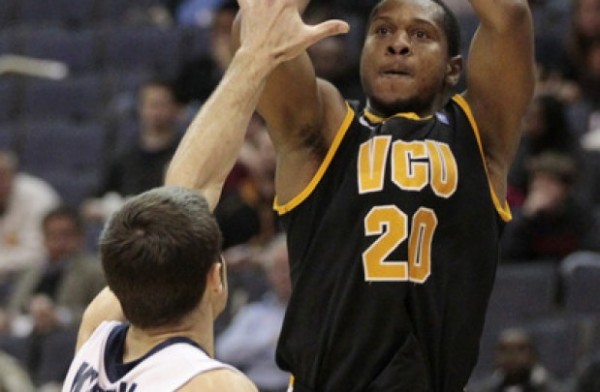
Ryan Thompson (MM) – Sr, G- Rider. In doing research for this feature, I have yet to find one thing that Ryan Thompson does not do well on the basketball court. The younger brother of Kings forward and fellow Bronc Jason Thompson, Ryan is surely creating his own identity as a bona fide NBA prospect. A first team all-MAAC performer a season ago as a junior, Thompson did it all for Rider: ranking second in the conference in scoring, first in minutes played (he played 40+ minutes in nine games), second in three-point percentage, seventh in assists, eighth in field-goal percentage, eighth in free-throw percentage and eighth in rebounding. That’s right, Thompson can shoot from deep, score inside, rebound, pass and play nearly every minute. While the competition doesn’t always rank with other elite performers in college basketball, one could argue Thompson is the top all-around player in the game this season. He also plays his best when the stakes are high, totaling 57 points and 17 rebounds in two conference tournament games for his Broncs, including a bucket with 3.4 seconds left to knock off Siena last year. The sky’s the limit for Thompson in 2009-10, an already immensely talented individual playing with motivation as Rider has yet to reach the NCAA Tournament in his three seasons in Jersey, and coming off of a rare and disappointing seven points on 2-13 shooting against Liberty in his season finale.
Honorable Mention. Lavoy Allen, Temple. Sean Baptiste, FDU. Jamal Barney, Loyola (MD). Darryl Bryant, WVU. Jermaine Dixon, Pittsburgh. Devin Ebanks, WVU. Corey Fisher, Villanova. Darrin Govens, St. Joseph’s. Rodney Green, Lasalle. Charles Jenkins, Hofstra. Anthony Mason, Jr., St. John’s. Herb Pope, Seton Hall. Mike Rosario, Rutgers. Damian Saunders, Duquesne. Corey Stokes, Villanova. Devin Sweetney, St. Francis (PA).
Indiana & Kelvin Sanctions (cont.). The big news of the day was of course that Indiana managed to avoid postseason sanctions even though they’ll formally be on probation for the next three seasons. Kelvin Sampson, to his credit, took responsibility for the complete lack of oversight at Indiana ‘while on his watch,’ but at least once Tom Crean gets this program moving in the right direction again, the Hoosiers won’t also be burdened by the crimson scarlet letter of postseason sanctions. Recruits can still be sold on the basis of playing in the postseason at Indiana (although admittedly, that seems farfetched at this point, even within three years). Sampson is now working for the Milwaukee Bucks as an assistant, but he’s now effectively barred from coaching in the NCAA for the next five years as part of a ’show cause’ restriction (a school would have to show cause for the NCAA to allow it to hire him). Frankly, this seems to us like a penalty that was ‘easy’ for the NCAA to prove, but one that doesn’t necessarily fit when we know of so many other obvious recruiting violations that are simply untidy for prosecution and therefore ignored.
Games of the Night. We had two great games today, for the first time all season.
Notre Dame 81, Texas 80. This game was nearly everything we expected, and a little more (featured by Justin Mason, below). Notre Dame was led by Luke Harangody’s 29/13 and a 40-footer at the shot clock expiration to what seemed like a solid win with a minute to go, up 79-71. Then the bricks started – Tory Jackson missed two from the line; Zach Hillesland missed two from the line; then Harongody missed both with five seconds left, leaving the door open for Texas to win the game with a two (ND was only up 81-80 at that time). Luckily for Notre Dame, AJ Abrams’ 60-footer at the buzzer was just a bit short (but right online). Good performances abound – ND’s Kyle McAlarney had 19/5 including five threes, and Texas’ was led by AJ Abrams’ 23/5 and Damion James 11/12. Both of these teams are top ten worthy, in our opinion, and we expect Notre Dame to give Carolina all they want tomorrow evening.
Syracuse 89, Kansas 81 (OT). This was a phenomenal game with enough eye-popping plays to cause Beetlejuice to take notice. Kansas appeared as if they were going to blow the game open in the mid-second half until Jim Boeheim changed his trapping defense up and seemingly stole the ball a dozen straight times for dunks and layups. This 13-2 run led to a tight game down the stretch which was capped by Jonny Flynn’s (25/5 assts) dagger three with 6.4 seconds remaining (see below) to effectively send the game to overtime. Cuse continued its hot shooting in the OT – Andy Rautins and Eric Devendorf combined for six threes in the game – and KU appeared to lose its confidence in the extra period. KU’s Cole Aldrich (15/14) and SU’s Arinze Onuaku (19/12) both showed a strong skill set in the post as each tried to one-up the other during the game. Both of these teams are going to be very good this season.
What’s Wrong with Steph Curry?Davidson 78, Loyola (MD) 48. Nothing, that’s what. As in Steph Curry put up a donut tonight in the points column (get a good look below because we doubt you’ll ever see it again). The word is that Loyola head man Jimmy Patsos strategized to take Curry completely out of the game by double-teaming him on every offensive possession, anywhere he went on the court. Curry, happy to let his teammates play every possession 4-on-3, stood in the corner and watched as they got open look after open look (14 threes went down). Remember, Jimmy Patsos is the coach who decided to leave the bench last week during a game to sit in the stands. We’re starting to seriously worry that he could be losing his mind. We’re not sure if a player averaging over 35ppg has ever had a scoreless game, but jeez, Steph, what happened on the three shots you missed?
Amidst the rancor of all the games last night, we missed what might have been the most bizarre incident of the evening, and quite possibly, the new season. During Loyola (MD)’s game with Cornell, Loyola head coach Jimmy Patsos got into a dispute with referee John Gaffney and earned himself a tech. Later in the game, Patsos claimed that he was attempting to avoid a second technical foul when the following occurred. From the AP report:
Gaffney then “yelled at me and my assistants,” Patsos said. Patsos had no idea how to react. “I didn’t want to get tossed out. I had my hands up in the surrender position,” he said. Patsos said video of the scene shows Loyola athletic director Joe Boylan in the stands, placing his hands on his head in astonishment. Seconds later, Patsos climbed about two rows into the seats to sit behind Boylan and ask for some advice. “I didn’t want to hurt the school or the program, but at that point I really didn’t know what to do,” Patsos said.
Didn’t know what to do? This may be way out on a limb, but how about… continuing to coach your team without regard to the referee? You said that you didn’t want to get thrown out, but weren’t you effectively throwing yourself out with this maneuver? Patsos eventually came back down from the stands and sat with his team on the bench, but he let his assistant continue to call the plays. Apparently, this was just one of several bizarre decisions that Patsos made during the game (according to Jeff Goodman). Cornell, incidentally, won the game 82-72.
We old-timers immediately recalled when then-Northwestern coach Ricky Byrdsongpulled a similar stunt in a 1994 game with Minnesota. This led to a 12-day, four game absence for Byrdsong (and persistent questions about his sanity prior to his death in 1999) and we wonder if Patsos is heading down the same path in dealing with the stresses of coaching. To his credit, he’s rebuilt the Loyola (MD) program from a 1-27 disaster in the year prior to his arrival to three consecutive winning seasons. We just hope that this incident was an isolated one and not a signal that larger issues are facing Patsos than simply how to beat a zone press.
Ron Wellman’s decision to elevate Dino Gaudio to the head coaching position at Wake Forest has been universally lauded by the hoopsnascenti over the last couple of days as a great hire. Nobody will dispute that this decision makes sense in terms of continuity for the program, the players and the university. But if you’ll indulge our playing of devil’s advocate for a moment, we ask the question – is this a good hire from a basketball standpoint?
This is a significantly tougher question to address, largely because Gaudio will be evaluated on games yet unplayed. We can point to his unimpressive records at Army and Loyola as evidence of coaching mediocrity; or, we can just as easily dismiss those situations as tantamount to coaching graveyards, where only the truly special of the business can succeed.
So we thought it could be interesting to see how elevating an assistant from within a program tends to work out, historically speaking. We took a look at all the mid- and high-major programs the last three offseasons (2004-06) that elevated an assistant from within its shop to the head coaching position. FYI – there have been six such examples in 2007 – Butler (Brad Stevens), Frank Martin (Kansas St.), Randy Peele (Winthrop), Jeff Reynolds (Air Force), Bob Nash (Hawaii), and Dino Gaudio (Wake Forest).
In 2004, there were four such instances. Three of those new head coaches have gone on to great success at their programs, and the fourth had a solid first year at his before moving on up the ladder the following offseason.
Mark Fox – Nevada (following Trent Johnson) : rode Nick Fazekas to an 81-18 record the next three seasons, including two NCAA second round appearances. Contrastingly, his predecessor Johnson has largely struggled over on The Farm.
Doc Sadler – UTEP (following Billy Gillispie) : Sadler continued the Texas Western renaissance for two seasons there, going 48-18 with one NCAA and one NIT appearance.
Sean Miller – Xavier (following Thad Matta) : Xavier has continued to flourish under Miller, going 63-32 with two NCAA appearances, including the can you top this game vs. Ohio St. in the second round of 2007 that XU should have won.
Chris Mooney – Air Force (following Joe Scott) : in his only season at AF, he was 18-12 (a slight drop from 22-7 the year prior) before taking a new job at Richmond.
Can Mark Fox continue his Reno Magic w/o Fazekas?
In 2005, there were only two instances. Here too both could be fairly qualified as successful transitions.
Dave Rose – BYU (following Steve Cleveland) : in two seasons, Rose has taken the Cougs to one NCAA appearance and one NIT appearance, going 45-18 over that period.
Andy Kennedy – Cincinnati (following Bob Huggins) : Kennedy enjoyed a 21-13 season in his only at the helm after Thuggins was fired, but what’s most telling is the utter collapse in the season after Kennedy was released by UC. The Bearcats were an atrocious 11-19 overall and dead last in the Big East (2-14) in 2006-07. Great decision there.
Last offseason there were four instances, and in a weird coincidence, two of those assistants were coach’s sons who had been formally groomed to take over the program. In one case, the new coach far exceeded his predecessor; in the others, it was largely status quo.
Sean Sutton – Oklahoma St. (following Eddie Sutton) : Sean’s first year at the helm for the Pokes was up-and-down. OSU started strong, winning 16 of its first 17 games, but limped into the finish with an overall record of 22-13 (6-10) and losing in the first round of the NIT at home. This was still an improvement over his dad’s final season (17-16) (6-10), however.
Tony Bennett – Washington St. (following Dick Bennett) : this was the feel-good story of the year, as son Tony updated his dad’s offense and took the Pac-10 and nation by surprise, going 26-8 (13-5) – a fifteen win improvement – and making the program’s first NCAA tournament since 1994.
Ben Jacobson – Northern Iowa (following Greg McDermott) : this very solid mid-major program had its first non-NCAA appearance in four years during Jacobson’s first season at the helm, as his team sputtered to a pedestrian 18-13 campaign in the very competitive MVC.
Fred Hill – Rutgers (following Gary Waters) : Hill’s first season is one he’d like to forget, we’re sure. The Scarlet Knights were 10-19 (3-13) and battled with Cincinnati for the distinction as worst team in the Big East all season long. Waters’ final season ended at 19-10, which was a cause for celebration with Rutgers basketball.
Tony Bennett is the Model for Gaudio
Obviously, it’s tough to draw a persuasive conclusion from this sample size, and we also realize that every situation involves different factors. Nevertheless, we find it striking that in seven of the ten instances above, the assistant coach who was elevated either outperformed his predecessor or kept the program at the level of success it already enjoyed (or not enjoyed, as with Oklahoma St.). In two cases, there was a slight dropoff from previous levels, and in only one case of a single season sample there was a significant decrease.
The problem with analyzing Gaudio’s situation at Wake in this light is that status quo means that he’ll be regularly finishing in the cellar of the ACC. With the recruits he has arriving one year from now, he’ll be expected to significantly outperform what Prosser accomplished during the last two seasons. Put another way, Deacon faithful will be satisfied with nothing less than challenging for the ACC title and annual NCAA appearances – much like the first four years of Prosser’s tenure. This is a high bar, but if the recent history of Gaudio’s peers is any indication, he may have a great shot at clearing it.