Monday, March 22 (all NIT)
6pm - Nevada @ URI (ESPNU)
7pm - UConn @ Va Tech (ESPN)
8pm - Kent St @ Illinois (ESPNU)
9pm - Dayton @ Cincy (ESPN)
 

Patriot League Tournament Preview

March 3rd, 2010


Michael Hurley is the RTC correspondent for the Patriot League and America East Conference.

Patriot League Tournament

In a league in which the first five teams finished within three games of each other any team could win three games in a row to secure the NCAA bid. Lehigh was the best team throughout the year with a 10-4 record. If they face Navy in the semis there could be problems posed after dropping both against the Midshipmen this year. American could also beat Navy and ride the hot hand of Vlad Moldoveanu as far as he will take them. Holy Cross has a lot of skill for a #7 seeded team, but who knows if Coach Kearny can get them to perform. Lafayette faded huge down the stretch, but started out 5-1 in conference. Any of the teams could end up hosting the Patriot League trophy at the end of the tournament, but I will go with Lehigh, the favorite, to win it. Tune in for the league championship on ESPN2 on March 12 at 4:45 pm.

First Round Matchups

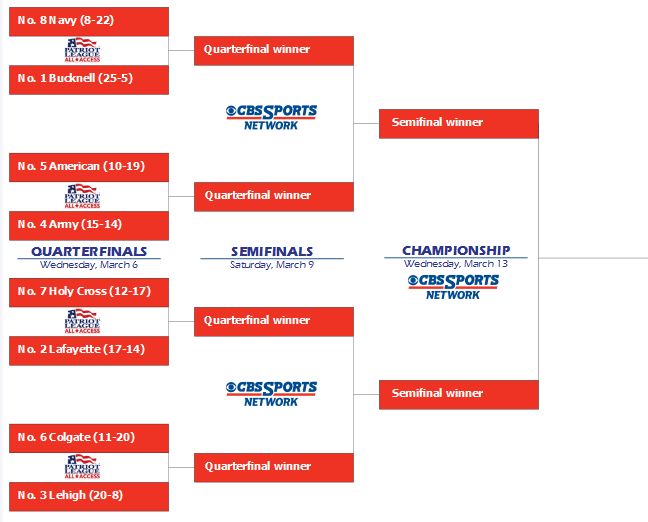
  • #8 (14-14, 4-10) Army at #1 (19-10, 10-4) Lehigh – 03/03/10 Wednesday 7 pm.  Lehigh should roll in this game against Army. Every victory Lehigh has had this year has been by double figures including both over Army. The matchup problem comes in the second round. If Navy manages to beat American, Lehigh will not be pleased. Navy beat Lehigh as many times this year as the rest of the league combined.
  • #7 (8-21, 5-9) Holy Cross at #2 (14-16, 9-5) Bucknell – 03/03/10 Wednesday 7 pm.  If Holy Cross can put together some defense this game they stand a good chance. The Crusaders beat Bucknell once at home, but lost in mid-February on the road. It seems that the Crusaders just never bought into Kearny’s system, so it will be hard to start in the playoffs. Especially after dropping four of the last five in the regular season.
  • #6 (10-18, 6-8) Colgate at #3 (17-12, 8-6) Lafayette – 03/03/10 Wednesday 7 pm.  The away team came away with a victory in each of the games this year between these two teams. Colgate’s win over Lafayette was only one of three home losses on the year for the Leopards. It was also only one of three home victories on the road for the Raiders. I can see Lafayette continuing their second half swoon and dropping this first rounder.
  • #5 (13-16, 7-7) Navy at #4 (10-19, 7-7) American – 03/03/10 Wednesday 7:30 pm.  American came out on top of both matchups during the regular season including a 80-77 overtime victory at Navy during the last week in February. Moldoveanu hit the go ahead layup, but a huge game out of Stephen Lumpkins won the Eagles that game. Moldoveanu scored 37 points the first time the two teams met. Navy is only 3-10 on the road this year, so the home court advantage was huge for American. The Eagles come in having won three out of their last four while Navy has dropped three in a row. American, 8-0, has never lost in a first round matchup since joining the league in 2002. Expect the Eagles to continue to live on.

Award Winners

Read the rest of this entry »


RTC Live: Cornell @ Harvard

February 19th, 2010

RTC Live is back for a rare Friday night edition. Normally we “take the night off” given the relatively light slate, but tonight is a special occasion. Tonight the unofficial playoff for the Ivy League title and first official NCAA tournament bid commences when Cornell travels to Cambridge, MA to take on Harvard.

When these two teams met on January 30th, it was one of the most highly anticipated Ivy League match-ups in years. Cornell came in 17-3 having won 15 of 16 with its only losses coming against Seton Hall (10 points) and on the road against a pair of top-5 foes in Syracuse(15 points) and Kansas (5 points). Harvard came in 14-3 having won 7 straight with its only losses coming on the road against Army (3 points), UConn(6 points), and Georgetown (16 points). Many were expecting one of best games of the season featuring a match-up of Ivy League Player of the Year favorites Ryan Wittman and Jeremy Lin. Wittman and the Big Red lived up to their billing, but Lin and the Crimson apparently forgot to bring their game with them to Ithaca as they were embarrassed 86-50 while Lin managed to outscore Wittman (19-11), but committed a season-high 8 turnovers (of the team’s 25) with only 1 assist. With Wittman having a relatively quiet game the Big Red were led by seven-foot senior center Jeff Foote, who had 16 points, 9 rebounds, 4 assists, and 3 blocks. Following the blowout, it appeared as if the two teams were headed in opposite directions as the Crimson lost their next game to a surprisingly good Princeton team before bouncing back with 3 straight wins. The Big Red appeared poised to run the table in the Ivy League before stumbling in a shocking loss at Penn before bouncing back to win a hard-fought game at Princeton the following night. All this left the Ivy League with 3 teams sitting near the top of the conference: Cornell at 7-1, Princeton at 6-1, and Harvard at 6-2. The game is being billed as the biggest in the history of Harvard basketball (please, no snickering) and the athletic department is going to try to use a “Fade to Black” theme where the fans wear white shirts in the first half then taking them off to reveal black shirts in the second half [Ed. Note: Another benefit is layering for the New England winter night.] while the audio system will play Jay Z’s “Run This Town” and AC/DC’s “Back in Black” before the start of the 2nd half when the fans will reveal their black shirts in an attempt to throw off the Big Red (who happened to almost win at Kansas, which we think would be slightly more daunting than the visual “hallucination” of having the fans in the stands change their shirts from white to black at halftime).

Read the rest of this entry »


Weekly Bracketology: 01.04.10

January 4th, 2010

Zach Hayes is RTC’s  resident bracketologist.  He’ll regularly be out-scooping, out-thinking and out-shining Lunardi over the next three months.

The biggest note: this is the most subjective bracket of the process. With RPI still evolving into a tool worth considering substantially, I had to construct this bracket primarily on 1) quality wins and bad losses in non-conference play, 2) non-conference SOS and 3) simple W-L record. Even conference RPI can’t be factored in yet because teams have played, at most, three conference games. With RPI rounding into form as January progresses, the bracket will switch from a more subjective process (had to use the eye test a few times, which I despise) to a more objective compilation.

  • The #1 and #2 seeds were fairly straightforward. Due to Syracuse tripping up at home to Pittsburgh Saturday, the process became much easier and the four undefeated teams remaining earned the #1 nod. Three Big East teams earned nods as a #2 seed, all with one loss: West Virginia, Villanova and Syracuse. Duke was the other obvious choice for the second line.
  • One of the more interesting cases was Ohio State. How much do I penalize them for the loss of Evan Turner? I was fairly harsh in the opening bracket following a discouraging defeat to Michigan and a blowout loss at Wisconsin. I’m fairly sure the Buckeyes will be moving further up the bracket when Turner is back in the fold a few weeks from now, but a #11 seed at 0-2 in the Big 10 and wins over California and Florida State seemed appropriate.
  • USC will not be included in any of my brackets this year. It’s a shame because they have strong computer numbers and are building a handful of quality wins including Tennessee and UNLV. Like the Pac-10 needed to be hurt any further.
  • Some notable snubs were Miami, Oregon and Saint Mary’s.  The point is pretty straightforward: I’m not going to reward you for playing a soft schedule. Miami is 14-1 but has the #85 RPI and #328 SOS in the nation with only notable wins against Minnesota and South Carolina. Oregon may be 2-0 in the Pac-10 but they have some BAD losses and need to do more to find their way into the bracket. The win at Oregon is looking stronger for St. Mary’s, but they still need to do more.
  • Since we’re so early, I did factor in “quality” losses for some teams. For example, Dayton lost by under 10 to both Villanova and Kansas State (both top-10 teams) and by 2 at New Mexico (top-20 team). They deserve some credit for those close losses.
  • Since we’re early in conference play, I determined the automatic bids among undefeated squads by which team had the highest RPI. I figured I should stay consistent with this throughout the season.

Last Four In: Northwestern, Richmond, Missouri State, Vanderbilt.

Last Four Out: Oklahoma State, Miami (FL), Saint Mary’s, Oregon.

Automatic bids: Vermont, Temple, Duke, East Tennessee State, Kansas, West Virginia, Weber State, Radford, Purdue, Pacific, William & Mary, UAB, Butler, Cornell, Siena, Western Michigan, Morgan State, Northern Iowa, New Mexico, Quinnipiac, Murray State, California, Army, Kentucky, Western Carolina, UT-San Antonio, Texas Southern, Oakland, Western Kentucky, Gonzaga, Louisiana Tech.

Bids per conference: ACC (7), Big East (7), SEC (6), Big 12 (6), Big 10 (6), Mountain West (3), Atlantic-10 (3), Pac-10 (2), Missouri Valley (2).

Next bracket: January 18


Brackets, Braces & Parentheses – Part 1

December 23rd, 2009

Because sometimes, playing with the numbers is more fun than watching the actual games.  This is the first of a three-part series on height and college basketball.

“You can’t teach height.” – Frank Layden, Utah Jazz Basketball Coach

More so than in any other sport, height plays a huge role in determining a player’s fate on the court.  My wife’s jaw drops when I tell her I’m the same height as Steve Nash.  However, as a friend once told me, “being tall does not necessarily correlate with ability to play basketball.”  For example, growing up in Charlottesville, the late nineties saw a man by the name of Chase Metheny suit up for the Cavaliers.  Chase was an astonishing 7 feet 4 inches tall and he was… terrible. He just didn’t have the body coordination necessary to compete with other bigs in the conference and proving the point that being tall doesn’t mean you can dominate everyone.

So, then, what does it buy you?  How does being taller help the average college basketball team?

Ken Pomeroy looked at this last year, but I’d like to take it a bit further. I’ve gone to kenpom.com (where else?) and downloaded the statistics for the effective height of each team.  A team’s effective height is the sum of the height of each player on the team weighted by the percentage of minutes played (assuming the player has played at least 10% of the teams minutes).  Thus, a team’s effective height can change depending on who they put on the floor.  If Texas gives Dexter Pittman (6′10) more minutes relative to Dogus Balbay (6′1), they become a taller team in effective height terms.

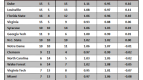
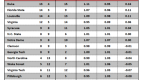
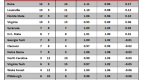
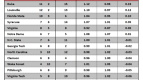
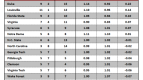
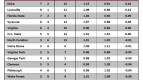
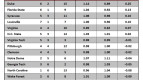
I’ve separated the data out into offensive and defensive efficiency and plotted it versus effective height.  (Note that redder is better.)

Read the rest of this entry »


10.08.09 Fast Breaks

October 8th, 2009

Like the first trickles of a flash flood, the verbal barrage about our beloved sport really started picking up this week.  There’s a lot more previewing, interviewing, writing, talking and salivating going on around the college hoops blogosphere.  Let’s take a look at some of the items that are catching our interest…

  • Dissecting Duke’s Recruiting.  Gary Parrish wrote an interesting article last week about Duke’s recruiting over the past five seasons and we had to comment on it because it fairly accurately depicts what the substantive problem with Duke has been in the postseason (i.e., away from CIS).  We’re on record as saying that Duke hasn’t had a true game-changing stud since Luol Deng graced the gothic campus with his presence for one season in 2003-04.  This is not to say that Duke has been without very good players during that time.  Shelden Williams, JJ Redick and Gerald Henderson all come to mind as great collegians.  But none of those players, and certainly none of the laundry list that Parrish mentions as some of K’s other ’top’ recruits (McBob, Singler, etc.), are the kinds of elite NBA-level talent that gets teams through the regionals and into the Final Four.  There are of course notable exceptions (George Mason in 2006 is the most obvious), but this is Duke, and Duke is always taking a team’s best shot.  They’re going to be very well coached, but Coach K and his staff know that well-coached moderate talent will lose out to elite talent more often than not.  This is why when Parrish says that Duke needs to secure commitments from Harrison Barnes and Kyrie Irving in order to compete with UNC, Kansas and now Kentucky on the national stage again, he’s right.  The Jon Scheyers of the world are great to have on your team, and will win you a lot of games over four years; but they’re not the players who can carry a team through rough spots en route to the Final Four.  If you don’t believe us, check out who was the MOP of the 2004 Atlanta Regional, leading the team in scoring in both regional games and literally saving the team on more than one occasion with clutch buckets (hint: it wasn’t the more celebrated upperclassmen).    Box scores here and here.  If Duke is serious about getting back to the big stage again before Coach K retires, he needs players like Barnes and Irving to get it done.  Fundamentally, Duke fans probably realize this, which is why each of these visits makes for tense moments in Durham.
  • Midnight Madness.  So we’re only eight days away from the start of basketball practice, and thankfully the NCAA closed the loophole that meant we were having these things all month of October, like last year.  But ESPNU will be back with coverage from 9pm to 1am EDT next Friday, with a simulcast from 8:30-9pm EST on ESPN.  There will be coverage from nine schools this year, including Kansas’ Late Night in the Phog, Kentucky’s Big Blue Madness, UNC’s Late Night With Roy, and several others (Michigan St., Duke, Washington, Georgetown, UConn and North Dakota St.).  RTC will hopefully provide live coverage in some fashion, but we’re still working out what that will be.  Make sure to check back early next week for more details. 
  • Prodigious Previews, Batman.  From Goodman, the Big Ten, the SEC, the ACC and Big East.  From Parrish, his final Top 25 (and 1) and his preseason all-americans.  Some players getting early-season pub are Gani Lawal, Isaiah Thomas, Alex Stepheson, Lance Stephenson, and the entire Mississippi St. frontline.  Mike DeCourcy answers five questions about his season preview.   
  • Quick Hits.  Patrick Patterson: his junior year at UK will be his last.  Kevin Laue:  great to see things working out for him at Manhattan (RTC flashback).  Contract Extensions: Ed DeChellis at Penn St. and Louis Orr at Bowling Green (Parrish calls BS on these).  Zach Spiker: the new head Cadet at Army.  James Keefe: UCLA F injured shoulder, out 4-6 weeks.  Len Elmore: has UNC, Michigan St., Kansas and Michigan in his F4BinghamtonNancy Zimpher was listening to us after allCAA: silver anniversary teamSeth Davis: an interesting read on overworked college officialsChris Taft: remember himRivals Team Recruiting Rankings: early list for 2010 is out


2009-10 Conference Primers: #29 – Patriot League

October 7th, 2009

seasonpreview

Michael Hurley is the RTC correspondent for the Patriot League and America East ConferenceClick here for all of our 2009-10 Season Preview materials..

Predicted Order of Finish:

  1. Holy Cross  (11-3)
  2. Lehigh  (10-4)
  3. Army  (9-5)
  4. Navy  (7-7)
  5. Bucknell  (6-8)
  6. Colgate  (6-8)
  7. Lafayette  (4-10)
  8. American  (3-11)

All-Conference Team:

  • Marquis Hall (G), Sr., Lehigh
  • R.J Evans (G), Soph., Holy Cross
  • Andrew Keister (F), Jr.,  Holy Cross
  • Zahir Carrington (F), Sr., Lehigh
  • Patrick Behan (F/C), Jr., Bucknell

6th Man. Chris Harris (G), Sr., Navy

Impact Newcomer. Jeff Holton (F), Fr., American

patriot logo

What You Need to Know. American’s dominance it seems will come to an end this year after back-to-back Patriot League championships.  The “American” have seven freshman on the 2009-10 team, and the current team has zero combined starts between them, so they will experience a steep learning curve. With the most well known coach in the PL gone (Ralph Willard at Holy Cross), we will have to see if Sean Kearney can carry the torch with a squad full of talented returning players in Worcester.  With his experience coaching at this level, I am willing to bet he can, which is why they are my pick for the conference champions.  As a whole, the entire league returns more talent this year than any year in recent memory.

Read the rest of this entry »


09.30.09 Fast Breaks

September 30th, 2009

You know what tomorrow is, right?  Yeah, October.  Us too. 

  • Scare at Tennessee.   A very frightening story out of Knoxville earlier this week was that Vol sophomore forward Emmanuel Negedu collapsed while lifting weights on Monday and reportedly had to be revived by UT medical staff prior to his transport to the hospital.  He’s spent the last two nights there under watch, and doctors continue to perform tests on him to make sure that he’s not suffering from something deadly.  We all know the stories over the years, from Len Bias to Hank Gathers to Reggie Lewis, and these are always scary incidents.  RTC wishes Negedu the best of luck and wishes for a full recovery. 
  • Cleaning up at Binghamton...  Two ugly incidents put an early stain on the 2009-10 season, as we discussed in separate posts when they happened last week.  Both were stories capable of sending shock waves through college basketball this week, though, as Binghamton yesterday fired an adjunct lecturer who claimed in a NYT article last February that basketball players were receiving preferential treatment in the classroom (grade changing, independent study, and the like).  The Binghamton program is now in shambles on the court, but we continue to be shocked and amazed that Kevin Broadus, the recruiter of all the problem children who ended up dismissed (and arrested), is skating on this one.  Seriously, think about this - Binghamton cans the whistleblowing prof but not the coach who orchestrated the entire mess?  How is this possible?  Isn’t the SUNY chancellor now the same woman who stood on the library steps and shouted “no more” to the Cincinnati faithful when she 86ed Bob Huggins four years ago?  And yet she’s curiously silent (along with BU’s president, Lois B. DeFleur, for the most part).  Something’s not right here, and we figure there’s more to come.  If there is, we can rest assured the NYT’s Pete Thamel will figure it out.     EDITED TO ADD: Yep, the AD is gone, can Broadus be far behind?
  • …and Kansas.   Perhaps the uglier incident last week was the three fights between members of the KU basketball and football teams.  Much was written about how embarrassing this was to the university, the athletic department, the coaches and players involved, and Thursday’s public, formal apologies did little to defuse the PR hit that Bill Self’s program took last week.  The word is that players were fighting over (what else?) girls and rep, but KU football players shouldn’t be fooled into thinking that just because they’ve had a nice run in that program the last few years that Kansas will ever be anything but a basketball school.  The question now is what will Bill Self do to punish the guilty parties?  We already know that Tyshawn Taylor was involved due to his dislocated finger that’ll hold him out of workouts for around a month.  We also know that one of the Morris twins pushed a football player down the stairs, a very dangerous act of battery (this would be Markieff’s second, btw) that was mitigated by another player catching the falling player as he made his way downward.   News outlets all report that there were some other hoops players involved as well.  We think that, for the sake of his program, Bill Self has to take a very serious stand on this one.  You simply cannot have the players on a preseason #1 team running around campus fighting indiscriminately with players from the football team.  Not only can your own players get hurt, but with so many big bodies involved, run-of-the-mill students can also get hurt.  Luckily, that didn’t happen here, but Self needs to show that he’s totally in charge of his program.  Anything less than a several-game suspension for all of the players involved would reveal that early-season Ws are more important to him than discipline.  If it were us, we’d sit the Morris who threw the player down the stairs for ten games and the others for five each.  No questions asked.  If Kansas loses an early game or two versus Memphis and/or UCLA because of it, well, too bad.  The good will that Self engenders as a no-nonsense coach will provide far greater benefits over time in terms of recruiting and public reputation than it will by letting these players off easy.    
  • Non-BCS Schools Receive Harsher Penalties Than BCS Schools – No Way!!  This jewel made it into our inbox last week from the Orlando Sentinel.  The Michael Buckner Law Firm performed an analysis that showed that the average years of probation meted out to non-BCS programs was longer than those handed out to BCS programs over a 4+ year period in the late 2000s.  The average amount of probation time for a non-BCS program was 2.74 years versus 2.58 years for BCS programs.  There’s no accounting for whether the difference is simple error or actual bias, but what is more damning from this study is the finding that the HBCU schools (historically black colleges and universities) were given 3.83 years of probation versus the aforementioned 2.58 for BCS schools.  That seems a little ridiculous to us.  Of course, the NCAA predictably dismissed the study on statistical grounds, and we understand their complaint.  So here’s our suggestion to the NCAA: hire an independent researcher to examine your enforcement policies and practices for consistency and bias, and get back to us.  Something tells us we’ll be waiting on that for quite some time.
  • Quick HitsBlue Ribbontop 25 and all-americansJames Ischgood luck, sir.   Billy Clyde: offered a plea bargain in Ky.  Gary Williams: one-year extensionNolan Richardson: the descent continuesMVC Nonconf Schedulestremendous analysis.   Gonzaga:  are they reloading or rebuilding in Spokane?  Luke Winn: charting peaks and valleys of the offseason.  Avery Bradley and Jared Sullinger: get to know themCvC: pushing for healthcare reform on Capitol Hill.  Goodman: top 20 backcourts and top 20 frontcourts AND his Big 12 previewTyler Smith: who will be the first person he follows on TwitterJim Crews: fired at Army after 7 years.  Herb Sendek: busily not gloating in TempeDemetrius Jemison: Bama forward out for the season with a ruptured Achilles.   Shocker: Derrick Rose says he took his own SATA Decade Ago: Harold “The Show” ArceneauxRay McCallum, Sr.: walking the fine line between parent and recruiter


Buzz: Bad Behavior

September 23rd, 2009

I’m not sure if it is just because it is the preseason and there is nothing else for the media to focus in on, but it seems like a lot of people are getting in trouble lately. Outside of the ongoing Rick Pitino circus, which everyone is familiar with, and the Tyshawn Taylor incident (with reportedly multiple other Jayhawk basketball players involved) that exploded across the web today, there were 3 other recent stories that caught our eye:


Notes from the East Region Open Practice

March 25th, 2009

Because of the NCAA’s refusal to give us a media credential (or discuss the issue and our side of the case), we were forced to go to today’s open practice to get an up-close look at the teams. As an aside, if anybody has extra tickets for the games in Boston for the Sweet 16 or the Elite 8 (in case your team gets cheated by the refs), send me an e-mail at rushthecourt@gmail.com and I might be able to take them off your hands.

The guys who don't want me covering the game

The guys who don't want me covering the game

Let’s get one thing out of the way. The East Region open practice might have been the most boring 5 hours of my life (not counting lectures). There’s a reason the NCAA makes this event free (outside of the fact that they more than make up for it through the $8 programs, $5 Cokes, and $23 baseball caps). The crowd was 95% white males in their mid-30s or above along with a handful of kids chasing autographs from players who they were looking up during the practices checking to see which ones had the best stats. My favorites were the old guys sitting behind me who kept on commenting on how good Gary McGhee and Brian Zoubek were (the tallest guys on the court) and what outstanding pros they were going to be. Anyways, here are my thoughts and pictures (some pictures are from my iPhone because I forgot to charge my digital camera) from each team’s “practice”.

Read the rest of this entry »


Boom Goes the Dynamite: 03.08.09

March 8th, 2009

dynamiteWe are finally here. Today is the last day of the college basketball regular season. What’s that? St. Mary’s didn’t get the memo? Ok, after today 99.99999% of the programs will be done with the regular season. After we attempted to write the college basketball version of War and Peace for yesterday’s Boom Goes the Dynamite, we get a little break as there aren’t quite as many high quality games today, but the ones that we do have look like they will be pretty entertaining. Here are the games that we will be following today:

  • Noon: #20 Purdue at #8 Michigan State on CBS
  • 2 PM: Virginia Tech at #24 FSU on Raycom, ESPN Full Court, and ESPN360.com
  • 2:05 PM: Illinois State vs. Northern Iowa on CBS
  • 3 PM: Old Dominion vs. Virginia Commonwealth on Comcast, ESPN Full Court, and ESPN360.com
  • 4 PM: #7 Duke at #2 UNC on CBS
  • 5 PM: Northwestern at Ohio State on The Big Ten Network
  • 6 PM: #19 Clemson at #10 Wake Forest on FSN
  • 6 PM: College of Charleston vs. Davidson on SportsSouth and ESPN360.com

There are a couple of big story lines here. Outside of the obvious ones happening in Chapel Hill (Tyler Hansbrough’s last game in the Dean Dome, UNC’s quest for a #1 seed, Duke’s last gasp effort for a #1 seed, and all the injuries including the under-reported–not by RTC–injury to Ty Lawson), we’ll be looking in on East Lansing where the Spartans will be looking to solify a #2 seed (forget all the talk about them getting a #1–not happening), Saint Louis where the Missouri Valley will award a ticket to the NCAA tournament, and Chattanooga where Stephen Curry and his Davidson teammates will be battling for their NCAA tournament lives as they will not get in if they don’t win their conference tournament.

There are also some great games out in Las Vegas for the West Coast Conference tournament with Gonzaga vs. Santa Clara, which will be featured as our RTC Live event, that will be followed by Saint Mary’s vs. Portland (aka “The Return of Patty Mills“). Unfortunately, that’s past my bedtime on the East Coast (tips at 9:30 and 11:30 PM ET respectively) although if you’re really nice you might be able to talk rtmsf into staying up late for you since he’s on the West Coast.

11:30 AM: It looks like we only have 2 games (Purdue-Michigan State and Alabama-Tennessee) worthy watching in the noon time slot. Unfortunately, they’re both on CBS so most of the nation will only be able to follow one on television. Luckily, I’m getting the better of the two games (Purdue-Michigan State), but I will be following the game in Knoxville on GameCast as well. If any of you are in Tennessee or Alabama, feel free to send in your thoughts in the comment section so the rest of us will know what’s going on in the game beyond the box score.

While we’re waiting, I wanted to pass along a photo I found on Deadspin this morning featuring Erin Andrews, who found something in Freedom Hall a little disturbing (probably Rick Pitino’s yelling).

Read the rest of this entry »


Patriot League Wrapup & Tourney Preview

March 4th, 2009

Marty Leon is the RTC correspondent for the Patriot League. 

Patrtiot League Playoff Preview

#1 American vs #8 Lafayette - Lafayette took American to overtime last week at home. American is 21-7 overall and 13-1 in league play. This is their second year in a row as #1 seed. They won 11 road games, tied for tops in the country. Like all Patriot games this will be a battle, and anything could happen but most likely will not.

#2 Holy Cross vs # 7 Bucknell – Holy Cross smoked Lehigh by 15 to end the season and are playoff sharp. Bucknell has overachieved all year but just had a tough 17 point loss to Army.  Ralph Willard’s team will march on, right into a title game with American.

#3 Navy vs #6 Colgate – This veteran Navy squad has a legit shot at a title run. Kaleno Kena had 23 as the midshipmen just beat Colgate to end the season.  Colgate too young, Navy too experienced.

#4 Army vs. #5 Lehigh – We thought Lehigh would have a better year.  They will not go to West Point and beat a determined Army team on their home turf.  Kudos to Jim Crews for a great year and the #4 seed.

Read the rest of this entry »


A Trip to West Point for Army-Navy

January 26th, 2009

Ray Floriani of College Chalktalk is an RTC correspondent for the NEC and MAAC Conferences.  He took in the Army-Navy game at West Point yesterday.

WEST POINT, NY – Everyone is familiar with the tradition, pageantry and intensity of Army-Navy. When these two distinguished service academies get together, even if its backgammon, it’s something special. On Sunday the two met for the 109th time. Navy entered Christl Arena 14-5 (3-1 Patriot League) while Army was 4-13 (0-3). It is a cliché but when these two meet you can throw out the records.

img_0067

On Sunday you could have assumed both clubs entered 0-0. Army established an early seven point lead on a pair of Julian Simmons three pointers. The remainder of the first half the Cadets kept the lead around double digits thanks to some good old fashioned Army defense. The Midshipmen shot 26% the first half and had only seven field goals as they trailed 33-26 at intermission. Shades of Bobby Knight.  And why not as Army coach Jim Crews played for the ‘General’ at Indiana.

The second half saw Army expand the lead to seventeen points. Offensively the Cadets were in a good groove on both ends. The offense ran well and defense shut down Navy. Until late.  Down the stretch the Midshipman found the range from three and made a run. They got it down to a two possession game with under a minute left. Those final seconds saw Army get enough stops and hit enough free throws to seal the 76-71 victory.

Cleveland Richard of Army led all scorers with 17 points. Adam Teague of Navy started strong and finished strong. For a better part of the game he was defended but still wound up hitting five treys and leading Navy with 16 points.  “Army played a great game,” Navy coach Billy Lange said. “They defended great which is traditional Army basketball. I think by the end of the year Army will prove to be a very good basketball team and challenge the upper echelon of our (Patriot) league.”

Crews was pleased with the offense, which had been dormant, and the defensive effort over the course of the contest. “We sustained,” Crews said in reference to the tight finish. “They (Navy) can score in bunches and when you go out to stop their three point shooters they can go right around you.”  Crews noted that Army-Navy is a rivalry ”known around the world.” He also made a very good point noting that the basketball rivalry becomes more intense because both schools share the same conference affiliation.

img_0066

A good hard fought rivalry such as Army-Navy is something special to behold. The neatly attired Cadets and Midshipman cheering their teams. Both institutions bringing bands, a mascot and cheerleaders. The post game playing of the alma mater of  both schools, with a packed house silently standing in reverence and respect. The epitome of good sportsmanship with not a verbal obscenity to be heard. Even the drive to Cristl Arena as you pass famed Miche Stadium along the winding hill with the majestic Hudson in your rear view mirror.

Yes, Army-Navy is special. Anytime. Everytime.


2008-09 Season Primers: #23 – Patriot

October 19th, 2008

Marty Leon is the RTC correspondent for the Patriot League.

Predicted Order of Finish:

  1. American  (24-5,  14-0)
  2. Navy  (19-10, 8-6)
  3. Lehigh  (18-11, 7-7)
  4. Colgate  (17-11, 7-7)
  5. Holy Cross  (16-14, 7-7)
  6. Lafayette  (13-15, 7-7)
  7. Army  (13-15, 6-8)
  8. Bucknell  (5-23, 0-14)

What You Need to Know (WYN2K).  The Patriot League is the second cousin of the Ivy, with academic standards for student-athletes tougher than 90% of the rest of the country.  Bucknell and Holy Cross have been the historical kings of this league until American emerged last year.  With four starters returning led by Garrison Carr, they are a lock to win the league again.  Navy’s Kaleo Kina and Lafayette’s Andrew Brown are two of the league’s best returnees.  Here’s a clip from American’s clincher last year versus Colgate (love the RTC footage). 


Predicted Champion.  American (#14 NCAA) should repeat as champions.  Colgate, a conference tourney finalist last year, was set to challenge until 1,000 point scorer Kyle Roemer went down for the year with an ACL tear.  The experience of American and the program’s momentum after last years great season will lead them to Selection Sunday again.  A possible #14 seed, Jeff Jones’ squad gave Tennessee all they could handle for 35 minutes in last year’s first round of the NCAA Tourney. 

Others Considered.  Navy, Lehigh, and Colgate shore up the middle of the pack.  The Midshipmen return nine of their top ten scorers.  Marquis Hall and Zahir Carrington of Lehigh are both potential all league performers and they could be a sleeper.  Emmit Davis’ Colgate five were primed for a title run until Roemer went down, but still will be a tough out.  Holy Cross is striving to return to its glory days under Ralph Willard.  Jim Crews’ Army team had a nice year in 07-08 and will compete.  Bucknell, with new mentor Dave Paulsen, has been crushed by preseason injuries and only has ten healthy bodies at this time. 

Key Games & RPI Boosters. 

  • American @ Oklahoma  (11/14/08)
  • American @ Georgetown  (12/6/08)
  • American @ Maryland  (12/22/08)
  • Colgate @ American  (2/14/09)

Neat-O Stat.  Patriot League coaches have sigificant experience at multiple levels of college basketball.  American’s Jeff Jones has been head coach at Virginia, Holy Cross’ Ralph Willard has been head coach at Pitt, and Army’s Jim Crews has been head coach at Evansville.  On the flip side, Bucknell’s Dave Paulsen has been head coach of D3 Williams and St. Lawrence, and Emmit Davis of Colgate and a member of his staff played at St. Lawrence.

65 Team Era.  The Patriot League didn’t come into existence until the 1991-92 season, but despite its pedstrian record (2-15, .118), in its short time it’s managed to make some NCAA Tournament noise over the years.  Everyone of course remembers the Bucknell upsets of 2005 (Kansas) and 2006 (Arkansas), as the Bisons made it to the second round in consecutive years.  But from 2001-03, Ralph Willard’s Holy Cross team seemed to live on throwing major scares into top-tier seeds, losing by only four to #2 Kentucky (2001), eleven to #1 Kansas (2002), and four to #3 Marquette (2003). 

Final Thoughts.  When evaluating this league, the word that comes to mind is parity.  These teams are all evenly matched so rarely do you get a blowout in any conference games.  This is a great coach’s league.   Winning at home is crucial to having a successful season.   Anyone but American emerging this season would be a huge surprise, and AmU has a chance to break through the first round and make some noise in the NCAA tournament.


Breaking Down ESPN’s Prestige Rankings

August 4th, 2008

Ed. Note:  Don’t like ESPN’s Prestige Rankings?  Provide your comment on how to improve them here.  We’re going to take this information and create a new set of rankings based on additional factors (and getting rid of the moronic NIT appearance = NCAA appearance (1 point) criterion). 

A couple of weeks ago I noticed that ESPN was trying to fill the dead space between the NBA Finals and the Olympics with yet another list. Normally I wouldn’t have even bothered to look at it because ESPN’s lists have been getting progressively more ludicrous (hitting its peak–or nadir–when John Hollinger put Dwayne Wade’s 2006 “Fall down 7 times, shoot 14 free throws” performance above every single one of Michael Jordan’s masterpieces). However, when I noticed that ESPN was trying to rank the most prestigious programs for college basketball in the 64-/65-team era, I was intrigued and figured it was worth some analysis.

Your #1 team of the era

The first thing I always do when looking at any list is to see the scoring system used and ESPN sure picked an interesting system. I’ll break it into segments with some analysis:

• National title … 25
• Title game loss … 20
• National semifinal loss … 15
• Elite Eight loss … 10

- All four of these things seems pretty reasonable. I think that most fans would value the post-season performances in a way that is pretty close to the points awarded although it seems like a Final 4 berth is considered a great accomplishment for any program (even for the Duke’s and North Carolina’s of the college basketball world). I probably would have bumped up the national title, title game loss, and national semifinal loss by 5 points to give a 10 point spread between an Elite 8 loss and a national semifinal loss.

• Best W-L record in conference’s regular season … 5
• 30-plus wins in a season … 5
• Sweet 16 loss … 5

- This is where the scoring starts to get questionable. I’m assuming the “Best W-L record in conference’s regular season” is lawyerspeak for regular season conference champion. I’m glad that ESPN has decided that the America East regular season champion deserves more points for their in-conference performance than the regular season runner-ups in the ACC, Big East, and SEC. The 5 points for the 30-plus win season may seem like a lot, but in fact they are very rare (Duke leads with 9 such seasons and I could only count/remember 16 programs with any 30-win seasons since the start of the 1984-85 season) so that seems reasonable (as does the 5 points for a Sweet 16 loss although 16 programs achieve are awarded this each season while approximately the same number have achieved it for a 30-win season during the entire era). My main question with the 5-point awards is if they really consider all regular season conference titles the same as it is easier to win certain titles than others. One interesting note about this methodology is that Princeton with 10 regular season Ivy League titles is awarded 50 points with this methodology while Duke with 9 30-plus win seasons is only awarded 45 points for that feat (ignoring the fact that Duke probably won the regular season conference title most of those years).

• Conference tournament title … 3
• AP first-team All-American … 3
• Losing in NCAA second round … 3

- I’m assuming that the Ivy League regular season champ automatically gets the 3 points for winning the conference tournament title since they don’t have a post-season tournament. This only further skews the points Princeton and UPenn get in this system as they receive 80 points and 96 points respectively for their Ivy League titles not to mention the 20-win seasons they racked up beating up on Cornell, Columbia, Harvard, and Brown. I’m perfectly fine with the AP 1st-team AA points as at most 5 teams a year will have a player earn that distinction. Perhaps they should have thrown in a National POY bonus as that player is the one who usually defines the season (Ralph Sampson, Christian Laettner, etc.). Likewise, I’m in agreement with the 3 points for the 2nd round NCAA tournament loss.

• Player in top 10 of NBA draft … 2
• NCAA first-round win as a 12-16 seed … 2
• NIT title … 2
• AP second-team All-American … 2

- This is where it starts to get really weird. Let’s get the reasonable things out of the way first. Top 10 pick worth 2 points? Ok. That seems fine even if the draft was dominated by high schoolers and Euros for a few years. In the future, the one-and-done rule might make this benefit the schools that are willing to take the one-and-done guys even if it does hurt their APR. That is unless those guys start going to Europe. Cinderella getting 2 points for a 1st-round upset? Fine with this too even if we will all remember the Hampton upset of Iowa State more than we will remember the annual 5-12 upsets. AP second-team AA worth 2 points? Ok with this one too even if I think once you start getting to the 2nd team the players selected start getting more dependent on the voters. I’m too lazy to check this out (perhaps rtmsf can do it), but I’d be willing to venture there is a lot more variation in the guys selected to the 2nd team by various publications/groups than there is with the 1st team. Now for the crazy one. . .Awarding 2 points for a NIT title? Maybe in the 1950s, but today winning the NIT only makes you the butt-end of every more successful team in your conference. How many message board threads have trolls made mocking the 65th (now 66th) best team in country? I’ll admit that the NIT champs would probably beat the 13-16 seeds most of the time, but is there really any pride in being the small fish (mediocre team) in the big ponds (power conference) that can beat up on the plankton (13-16 seeds)? I’d give the NIT champ 1 point overall, which leads into the next big problem. . .

• 20-29 wins in a season … 1
• NCAA tournament berth … 1
• Postseason NIT berth … 1
• AP third-team All-American … 1

- Let’s get the easy ones out of the way. No problems here with the 20-29 wins or AP 3rd team AA getting 1 point. I would probably differentiate between 20-24 wins, which is usually a solid season, and 25-29 wins, which usually will put you into consideration for a top 4 seed if you’re from a power conference. Like I said before the further down the AA list you go, the more variation you will have by publication/group, but it’s not really worth arguing about for 1 point. The thing worth arguing about is giving the same number of points for a NCAA tournament berth and a postseason NIT berth. To borrow an over-used phrase from John McEnroe, “You cannot be serious!” While I recognize that in this system the NIT team can only receive 2 points from the tournament (if they win), it is ridiculous to even consider invitations to the 2 tournament similar when the entire selection special is based on camera crews camping out in rooms with bubble teams to see if they got into the NCAA tournament. Maybe the ESPN stat whizzes have access to different camera feeds than I do, but it seems like the players, coaches, and families are happier when they get into the NCAA tournament than when they find out they are going to the NIT (even if Madison Square Garden is a slight upgrade from Boise, Idaho–unless we’re talking NBA). That’s just one man’s interpretation of the reactions I see although I could probably point out that a few years ago Georgetown declined an invitation to the NIT because they wanted to give their players more time to study for exams. . .in March. I wonder why Georgetown didn’t turn down its #2 seed this year. Do John Thompson III and the Georgetown AD not care about those same exams any more?

• NCAA first-round loss to a 12-16 seed … -2
• Losing season … -3
• Ban from NCAA tournament … -3

- No problem with the first two although I wonder if a losing season is counted against you if you have it expunged from your record and throw your long-time assistant coach under the bus? Also, I’d consider a 15-16 season a disappointment while I would consider 8-20 a complete embarrassment, so I’d probably make the less than 10-win season a significantly bigger penalty. I think the NCAA tournament ban should be a much larger penalty in this scoring system as the public (and press) reaction tends to be pretty bad (see below).

This is only a 3 point deduction per year?

>> Minimum 15 seasons in Division I
** Ties are broken by overall winning percentage since the 1984-85 season

- After all the issues with the scoring system, I’m not going to complain about these minor qualifiers and tiebreakers. Both of them seem reasonable and none of the top 50 teams were tied.

Now that we’ve looked the methodology it’s time to pick apart the rankings to see what ESPN got right and what they screwed up. Duke is the run-away winner as even the most ardent Duke-hater (feel free to chime in here rtmsf) would agree that Coach K’s Blue Devils have been the most dominant program of the era even if their results have been underwhelming the past few years. The Blue Devils are followed by the Jayhawks in 2nd and the Tar Heels in 3rd. I’m not going to argue much with this although I would have UNC in 2nd just because I consider Kansas a team that historically underperforms in the tournament (Mario Chalmers’ shot and Danny and the Miracles not withstanding). Now onto the rankings I am utterly confused by.

Overated:
- UNLV: 8th?!? I loved Jerry Tarkanian’s Runnin’ Rebs, who may have been one of the best college teams ever even if they lost/threw the 1991 national semifinal against Duke, but there is no way this has been the 8th most prestigious program in the country over the past 20+ years just like Memphis isn’t in that category. ESPN provides a pretty clear summary of why UNLV shouldn’t be in the top 10: “2 NCAA sanctions; 10 coaches since 1984-85; 0 NCAA tourney wins between 1992 and 2007″. I’d keep UNLV in the top 20, but they definitely don’t belong in the top 10 with that track record.
- Xavier: The Muskeeters (at #17) have a nice Atlantic-10 program, but the fact that they have never made a Final 4 should automatically keep them out of the top 25. The Musketeers are buoyed by 21 combined conference titles, but have not really been a threat in the NCAA tournament having only racked up 15 NCAA tournament wins. Interestingly, Xavier came in 2 spots ahead of Cincinnati even though Xavier is widely considered the red-headed stepchild in the city.
- Temple: I don’t mean to sound like Billy Packer ripping on the mid-majors (sorry, if you’re not a BCS conference, you’re a mid-major in my eyes), but the Owls never made the Final 4 despite five trips there under John Chaney. I think they’re a very good program, but like Xavier, Temple shouldn’t be in the Top 25 without a Final 4 appearance.
- Murray State: Now this is the point where I rip the little guy. I was absolutely stunned when I saw this one. The Racers always seem to be one of those teams you see at the bottom of the bracket and maybe every once in a while you decide to take a chance on them to pull off the huge upset. Unfortunately, if you’re one of those people, you’ve only been rewarded once (1988 against 3rd-seeded NC State). The Racers piled up the points by dominating the Ohio Valley Conference racking up 22 (or 24 depending on your addition skills) conference titles and twelve 20+ win seasons (thanks to an easy conference schedule). Somehow this manages to put them above Villanova, Oklahoma State, Georgia Tech, and Wake Forest.

Underrated:
- Maryland: The Terps (28th) are killed by the fact that they play in the ACC and have lost out on a ton of points thanks to playing in the same conference as Duke and UNC. Although Gary Williams hasn’t had good teams the past few years, the Terps run especially in the Juan Dixon era should have been enough to propel them into the top 20. How does this program only rank 2 spots ahead of Murray State?
- Utah: I don’t think the Utes would be able to move up much higher, but it would be interesting to see how high they would be on this list if they didn’t have the misfortune of playing Kentucky so many times in the 1990s. While the Utes benefited playing in a softer conference than some of their peers on the list (SEC and ACC), the Mountain West has been a fairly strong conference in recent years.
- Florida: I’m not sure how much higher the Gators could move up because of their relative lack of success (not counting Lon Kruger’s 1994 Final 4 run) before Joakim Noah and company ran off back-to-back titles, but it seems like that alone should be enough to crack the top 20 especially when programs like Xavier and Temple are ranked ahead of them despite not making a single Final 4 appearance. The Gators probably belong in the top 15 although that may be more of a recency effect, but it just seems that there recent run puts them at a level that isn’t that much different than UNLV with its run with Larry Johnson.

Other points of interest:
- Coach K’s current program (Duke) ranks #1. The program he left (Army) comes in tied for 298th, or as it is more commonly referred to “DFL”. Hopefully the Duke athletic department program has a better succession plan in place than Army did when Coach K decides to leave the sidelines.
- I found this rather amusing from personal experience. Boston University comes in at 108th ahead of programs such as Clemson, Providence (with a Final 4 appearance), Washington, and USC.
- In the current SportsNation voting, Kentucky is in the lead (good work out of the Sea of Blue crowd) with Duke in 4th even though they have the most #1 votes (something tells me they were left off a lot of ballots or voted 25th). The three teams I singled out as being overrated in the top 25 were moved down quite a bit. Note: I thought they were overrated even before I saw the online voting.

No bonus points for Dream Teamers?

ATB: OJ Mayo’s Debut – “Mercer Mercer Me!”

November 11th, 2007

ATB v.4

11.10.07

Story of the Night. Is the A-Sun the best conference in college hoops this season? Three nights after Gardner-Webb shocked the hoops world against Kentucky, and one night after Belmont whacked Cincy… the Mercer Bears went into LA and pushed around #25 USC and OJ Mayo. That’s three road wins against three BCS teams in the span of about 72 hrs (remember: the A-Sun was 0-34 v. BCS teams last year!) As for this game, sure OJ got his numbers (32/7/4 assts on 12-27 FG + 8 tos), and isn’t that really why he’s there? In shooting 59% for the game (led by James Florence’s 30), Mercer rode a 17-pt halftime lead into an easy win. We have a bad feeling that more of this is on the horizon for USC with Mayo running the show. We’re just sayin… (Mercer 96, USC 81)

Things We Didn’t See. #5 Georgetown appears to have had a shaky opening game against Bill & Mary tonight, leading by only 2 pts with under 10 mins to play. When the Hoyas finally realized they have something nobody else in CBB has – a skilled 7′2 center named Roy Hibbert (23/8/3 blks) – they put the game away. We love the Hoya backcourt of Wallace and Sapp (combined for 33/10 assts), but we’ll continue to have a lingering concern over the long-term prospects of this year’s version until we see if Dajuan Summers or someone else can adequately fill the departed role of Jeff Green (Georgetown 68, William & Mary 53). Staying in the Big East, Pitt is a team we never know what to make of from year to year game to game. Tonight they throttled a solid NC A&T team, with a big contribution from Sam Young (career-high 24/11/4 stls). We’re sure they’re on their way to another 20-25 win season and a top 4 seed, where we’ll either pick them to go to the E8 and they’ll lose in the first round; or, the reverse (Pittsburgh 86, NC A&T 61). Tubby Smith’s debut today at Minnesota went much as his debuts at Kentucky (88-49 v. Morehead St.) and Georgia (91-71 v. W. Carolina), with a blowout win versus an overmatched team. In typical Tubby fashion, the Gophers held Army to 35% shooting and forced 23 turnovers. One Gopher blog lauded the hustle and dedication from players that has been missing in recent years (Minnesota 84, Army 52). Over at Oregon, we were interested to see how the Ducks would respond to the loss of Aaron Brooks, and so far, so good, as a balanced attack quickly overwhelmed Pepperdine tonight. Malik Hairston, Tajuan Porter and Bryce Taylor all had 17 pts each as the Ducks raced out to a 30-pt lead at halftime and cruised the rest of the way – we likey (Oregon 100, Pepperdine 70). Vandy is an SEC team that we probably have overlooked this year, but the Dores picked up a solid win over a mid-major tonight by beating Austin Peay. Showing just how tough it is to beat Vandy in Memorial Gym once again, the Commodores shot 55% from the field and 52% from three in keeping AP comfortably at bay most of the night. Shan Foster (21 pts) and AJ Ogilvy (18/9/2 blks) led the way for Vandy, while AP star Drake Reed had a rough night (12/7 on 3-16 shooting) (Vanderbilt 81, Austin Peay 67). There was a great game tonight in Milwaukee when Marquette took on another talented mid-major, IUPUI. Marquette’s 8-pt halftime lead was quickly erased by a second-half 17-2 run by IUPUI, but spurred by Jerel McNeal’s 20 pts, the Warriors came storming back with a 23-8 run of their own to ensure victory (Marquette 76, IUPUI 68).

Score of the Night. Unbelievably, we’re going back to The Farm. For the second consecutive night, Stanford had a 30+ pt halftime lead over an opponent, and again, no starter played more than 20 minutes. Tonight’s beneficiary was Northwestern St. – what’s TJ giving those boys (Stanford 97, Northwestern St. 58)?

Upset Alert. Other than the above USC game, there were no big upsets today.

Joey Dorsey Award. OJ Mayo (USC). Not for his game tonight, but for his quote that hearing his name called in the starting lineup “was a lot of fun. I wish we would’ve won.” Maybe we’re being nitpicky here, but after getting thumped by Mercer, we’re not sure any part of the night should be remembered as fun.

On Tap Today (all times EST). 47 games on tap, several of which are worthwhile (assuming Comcast doesn’t screw us again and gets FC working).

  • Loyola (MD) (-5) v. Pennsylvania 12pm – our favorites in the Ivy and the MAAC.
  • Rutgers (NL) v. North Dakota St. 1pm - NDSU gave Florida trouble; they can do more than that with Rutgers.
  • Seton Hall (NL) v. Monmouth (ESPN FC) 1pm – um, we’ll be washing our hair at that time.
  • Virginia (NL) v. Vermont 2pm – don’t understand why this isn’t FC worthy but the garbage game above is.
  • Florida (-17.5) v. Tennessee Tech 3pm – really would like to see if Calathes can keep it up.
  • Gonzaga (-12.5) v. Montana 4pm – we’re very high on Gonzaga this year, but Montana is no slouch.
  • Stanford (NL) v. UCSB 6pm – if Stanford is up 30+ at half of this game, we’re putting them #1 in Monday’s blogpoll ballot.
  • Pittsburgh (NL) v. St. Louis (ESPN FC) 6pm – we’re tuning in just to see Majerus back on the sidelines.
  • Kansas (NL) v. UMKC (ESPN FC) 8pm – let the Kansas Kremations continue.
  • Oregon (NL) v. Pacific (ESPN FC) 9pm – both of these teams had great first games.

Does Elevating an Assistant Work?

August 12th, 2007

Ron Wellman’s decision to elevate Dino Gaudio to the head coaching position at Wake Forest has been universally lauded by the hoopsnascenti over the last couple of days as a great hire. Nobody will dispute that this decision makes sense in terms of continuity for the program, the players and the university. But if you’ll indulge our playing of devil’s advocate for a moment, we ask the question – is this a good hire from a basketball standpoint?

Gaudio press conf

This is a significantly tougher question to address, largely because Gaudio will be evaluated on games yet unplayed. We can point to his unimpressive records at Army and Loyola as evidence of coaching mediocrity; or, we can just as easily dismiss those situations as tantamount to coaching graveyards, where only the truly special of the business can succeed.

So we thought it could be interesting to see how elevating an assistant from within a program tends to work out, historically speaking. We took a look at all the mid- and high-major programs the last three offseasons (2004-06) that elevated an assistant from within its shop to the head coaching position. FYI – there have been six such examples in 2007 – Butler (Brad Stevens), Frank Martin (Kansas St.), Randy Peele (Winthrop), Jeff Reynolds (Air Force), Bob Nash (Hawaii), and Dino Gaudio (Wake Forest).

In 2004, there were four such instances. Three of those new head coaches have gone on to great success at their programs, and the fourth had a solid first year at his before moving on up the ladder the following offseason.

  • Mark Fox – Nevada (following Trent Johnson) : rode Nick Fazekas to an 81-18 record the next three seasons, including two NCAA second round appearances. Contrastingly, his predecessor Johnson has largely struggled over on The Farm.
  • Doc Sadler – UTEP (following Billy Gillispie) : Sadler continued the Texas Western renaissance for two seasons there, going 48-18 with one NCAA and one NIT appearance.
  • Sean Miller – Xavier (following Thad Matta) : Xavier has continued to flourish under Miller, going 63-32 with two NCAA appearances, including the can you top this game vs. Ohio St. in the second round of 2007 that XU should have won.
  • Chris Mooney – Air Force (following Joe Scott) : in his only season at AF, he was 18-12 (a slight drop from 22-7 the year prior) before taking a new job at Richmond.


Can Mark Fox continue his Reno Magic w/o Fazekas?

In 2005, there were only two instances. Here too both could be fairly qualified as successful transitions.

  • Dave Rose – BYU (following Steve Cleveland) : in two seasons, Rose has taken the Cougs to one NCAA appearance and one NIT appearance, going 45-18 over that period.
  • Andy Kennedy – Cincinnati (following Bob Huggins) : Kennedy enjoyed a 21-13 season in his only at the helm after Thuggins was fired, but what’s most telling is the utter collapse in the season after Kennedy was released by UC. The Bearcats were an atrocious 11-19 overall and dead last in the Big East (2-14) in 2006-07. Great decision there.

Last offseason there were four instances, and in a weird coincidence, two of those assistants were coach’s sons who had been formally groomed to take over the program. In one case, the new coach far exceeded his predecessor; in the others, it was largely status quo.

  • Sean Sutton – Oklahoma St. (following Eddie Sutton) : Sean’s first year at the helm for the Pokes was up-and-down. OSU started strong, winning 16 of its first 17 games, but limped into the finish with an overall record of 22-13 (6-10) and losing in the first round of the NIT at home. This was still an improvement over his dad’s final season (17-16) (6-10), however.
  • Tony Bennett – Washington St. (following Dick Bennett) : this was the feel-good story of the year, as son Tony updated his dad’s offense and took the Pac-10 and nation by surprise, going 26-8 (13-5) – a fifteen win improvement – and making the program’s first NCAA tournament since 1994.
  • Ben Jacobson – Northern Iowa (following Greg McDermott) : this very solid mid-major program had its first non-NCAA appearance in four years during Jacobson’s first season at the helm, as his team sputtered to a pedestrian 18-13 campaign in the very competitive MVC.
  • Fred Hill – Rutgers (following Gary Waters) : Hill’s first season is one he’d like to forget, we’re sure. The Scarlet Knights were 10-19 (3-13) and battled with Cincinnati for the distinction as worst team in the Big East all season long. Waters’ final season ended at 19-10, which was a cause for celebration with Rutgers basketball.


Tony Bennett is the Model for Gaudio

Obviously, it’s tough to draw a persuasive conclusion from this sample size, and we also realize that every situation involves different factors. Nevertheless, we find it striking that in seven of the ten instances above, the assistant coach who was elevated either outperformed his predecessor or kept the program at the level of success it already enjoyed (or not enjoyed, as with Oklahoma St.). In two cases, there was a slight dropoff from previous levels, and in only one case of a single season sample there was a significant decrease.

The problem with analyzing Gaudio’s situation at Wake in this light is that status quo means that he’ll be regularly finishing in the cellar of the ACC. With the recruits he has arriving one year from now, he’ll be expected to significantly outperform what Prosser accomplished during the last two seasons. Put another way, Deacon faithful will be satisfied with nothing less than challenging for the ACC title and annual NCAA appearances – much like the first four years of Prosser’s tenure. This is a high bar, but if the recent history of Gaudio’s peers is any indication, he may have a great shot at clearing it.