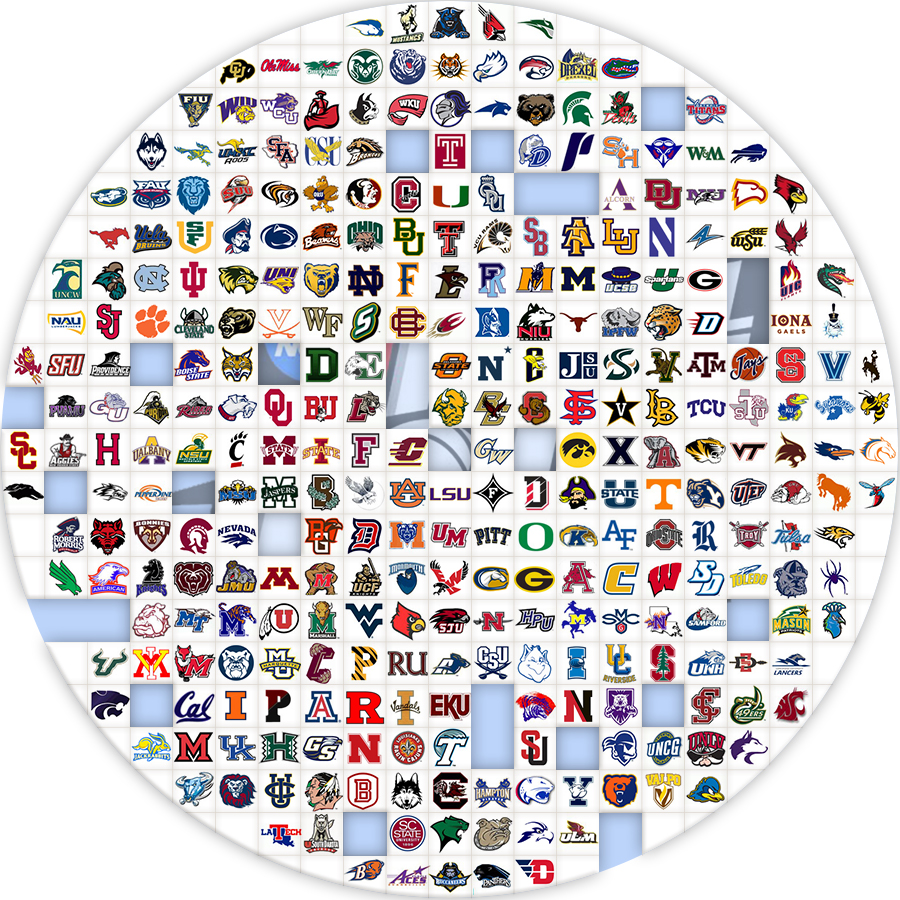
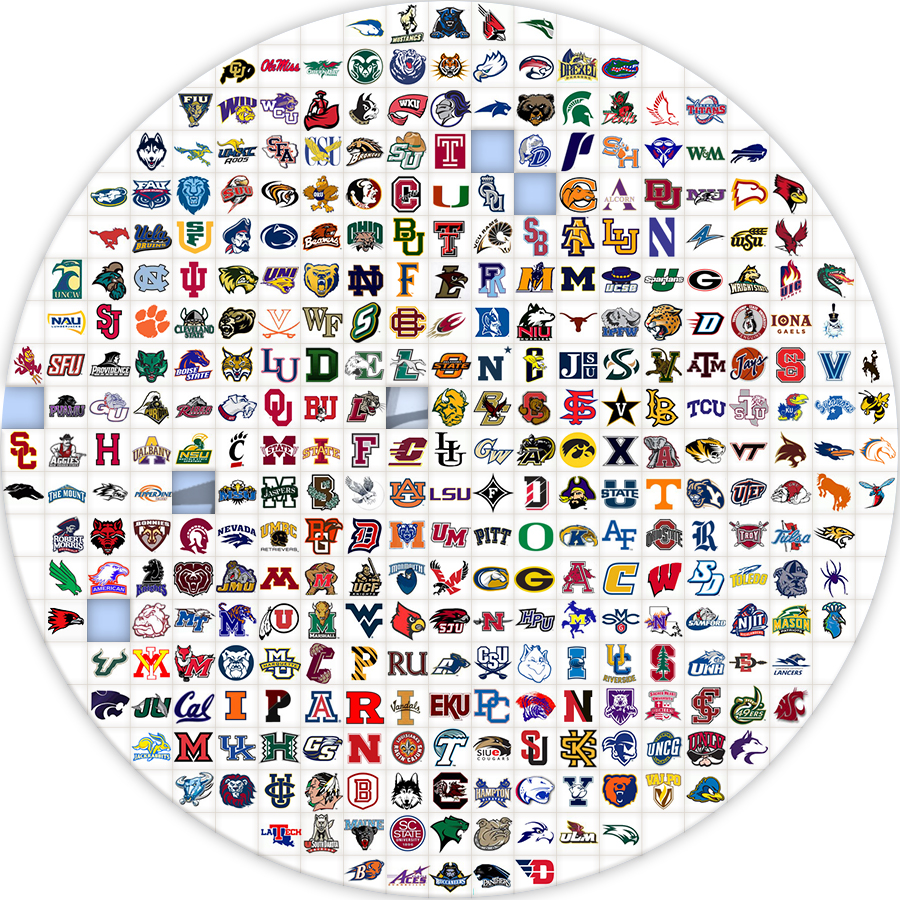
As we head into the first weekend of Championship Fortnight, the holes in the Circle of March are already becoming apparent. Starting with 333 eligible teams, we’re now down 293. Nine conference tournaments have already tipped off, and three more — the Colonial, Southern and WCC Tournaments — get things started today. Another 13 teams fell off our CoM last night and we’re really going to start divesting ourselves of the bottom of Division I basketball in the next three days. Note that it’s our standard that we do not remove teams until their seasons are over — therefore many Ivy League squads and several other teams that will not qualify for next week’s conference tournaments will remain with us through the weekend.
There had been hope that Justin Anderson would return this weekend from a broken finger and help make Virginia a legitimate national title threat again (well as much as you can be with Kentucky this year). The Cavaliers still could end up making a run in the NCAA Tournament, but that task just got tougher as Anderson will be out for an undetermined period of time following an appendectomy on Thursday. Anderson, who had been averaging 13.4 points, 4.3 rebounds, and 2 assists per game prior to his injury, will probably miss at least part of the ACC Tournament with Virginia, but it is possible he could return for the NCAA Tournament particularly if Virginia makes it to the second weekend. The question for Virginia is what kind of shape Anderson will be in when he returns if they even make it that far.
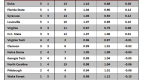
Last week we linked to Luke Winn’s Power Rankings analyzing how the top teams stack up defensively. This week, Luke took a look at how they compare on offense. By this point in the year you know a decent amount about how these teams perform on offense and certainly to a much greater degree than you do about their defensive abilities, but there are still certain aspects of the offenses that Luke takes a look at that you probably missed. One example of this is for Virginia where he looks at where Anderson is most effective (ok, that might not be as relevant any more–see above) as well as how effective they are at getting put-backs ranking first in the nation in tempo-adjusted put-back scoring (still relevant even with Anderson out).
For years people have speculated about which teams were the “first four out”, but this year for the first time ever the NCAA will actually tell us by giving those teams #1 seeds in the NIT. We had assumed that this was usually the case but this is the first time that the NCAA will do so explicitly. The benefit for teams getting these #1 seeds is primarily that they get at least one more home game although we assume that they would have been highly seeded in the NIT under any seeding format.
The coaching carousel started on Wednesday with Libertyfiring Dale Layer after an 8-24 season. Layer, who was 82-113 in six seasons at Liberty, led the Flames to the NCAA Tournament in 2013 with an automatic bid despite going 6-10 in the Big South regular season. Prior to his time at Liberty, he had served as the coach at Colorado State from 2000 to 2007. Given the relative anonymity of the position we suspect that this will probably be filled by a mid-major assistant or a retread since we can’t see a high-major assistant going here for his first job.
Indiana fans hoping for Brad Stevens a step in to save their failing program received some bad news yesterday and it wasn’t just that Stevens will never be coming to Bloomington. Athletic Director Fred Glass issued a statement in support of Tom Crean, which would seem to indicate that Crean’s job is safe for the time being. We are not going to call for Crean’s job like some columnists who don’t follow the sport and just write to get attention, but we do think that the coach of a top 10 program should be doing more than what Crean has done thus far. So although Glass may have voiced his support for Crean we wouldn’t be shocked if he looked at other big names if those names are put out there.
Four more conference tournaments got under way yesterday, resulting in 14 more eliminations (listed below) from the 2015 Circle of March. That leaves us with 306 eligible teams on the CoM, noting that it’s our standard that we do not remove teams until their seasons are over — therefore many Ivy League squads and several other teams that will not qualify for next week’s conference tournaments will remain with us through the weekend. Two more tournaments get started today — the Missouri Valley‘s Arch Madness in St. Louis and the MAAC in Albany — while the Patriot League, Atlantic Sun and OVC pick back up with their second days of tournament action.
The wonderful idea of ESPNU turns 10 years old this week. The reason I mention it as an idea is because it hasn’t exactly been what it was originally designed to be — you know, a network dedicated solely to the world of college sports. Now, while it is mostly revolved around everything college athletic competition related, the programming on it sometimes goes off the beaten trail.
ESPNU
All of that did make to do some pondering, though, which is an incredibly dangerous thing. What if ESPNU was scheduled the way it should be booked for a network designed to cover all things in amateur athletics? Don’t get me wrong either. I get why they do some of the things they do. As much as I dislike Colin Cowherd, he is put on that network to generate ratings, attention and other things that something like Katz Korner unlikely provides. I would argue that — if the network truly dedicated itself in a more proper way — that more broadcasts of college-only related material would work. In my opinion, and it may very will be only mine, is is ESPN’s lack of dedicating ESPNU in the correct areas that makes it the non-blood relative of the ESPN family of networks. ESPN is obviously the patriarch, with ESPN2 the spouse. I suppose it also makes ESPN Classic (I honestly don’t even know if that’s still a thing) a distant cousin. ESPN3 and Watch ESPN are like the cool in-laws — you really like them, but that has as much to do with consuming them whenever you want and never being over saturated with their presence. I could go on, but you get the idea.
Here is how we are going to go about booking ESPNU. I am going to go through a random day’s lineup. After each show I will say if it works, why it works, how it can be tweaked and some other nonsense. Now, with that being said, I should also mention that one of my true dislikes is ESPNU’s constant rerun approach, mostly because of its lack of original programming. There might be instances when I will like a program on the network, but when we book a day’s lineup to my suiting later, it will appear less in the day’s programming. For your information and reference I am using an actual 24-hour window of the channel’s broadcast lineup — as pulled from ESPN’s own TV listing section — for the reference of listings. Let’s start at 9:oo AM ET and take a look at their lineup.
Who’s Got Next? is a weekly column by Sean Moran, the RTC recruiting guru. Once a week he will bring you an overview of what’s going on in the complex world of recruiting, from who is signing where among the seniors to discussing the recruitment of the top uncommitted players in the country. We also encourage you to check out his contributions atThe Intentional Fouldedicated to recruiting coverage and analysis. You can also follow Sean at his Twitter account @Seanmohoops for up-to-date news from the high school and college hoops scene. If you have any suggestions as to areas we are missing or different things you would like to see, please let us know at rushthecourt@yahoo.com.
Big Recruiting Weekend in Berkeley Already Paying Dividends
Three-star small forward Davon Dillardcommitted to California Sunday afternoon after watching the Golden Bears take down Oregon State on Senior Night. It was billed as the biggest recruiting weekend in three years in Berkeley and definitely the biggest weekend in Cuonzo Martin’s short tenure. Lacking a recruit in the class of 2015, California played host to its top target in Ivan Rabb, a 6’10” five-star recruit from the Bay Area, five-star power forward Caleb Swanigan, and the three-star Dillard. While Cal didn’t get the coveted commitment from Rabb, Dillard’s commitment keeps the positive momentum moving. In Martin’s first season, a NIT berth most likely awaits for the Golden Bears (17-12 overall; 7-9 in Pac-12 play). They will graduate their third-leading scorer in David Kravish and there is a good possibility that 6’5” junior Tyrone Wallace could leave school early for the NBA Draft. With Dillard locked up, though, the Bears will get a tough-minded and athletic forward who can finish above the rim and is also a threat from outside the arc. With one good commitment now in the fold, Martin can focus on landing a big man to replace Kravish. Rabb has been Martin’s top target from the moment he took the job in Berkeley and he will look to convince the Bishop O’ Dowd star to stay at home and help get his local school get back to the NCAA Tournament. Along with Cal, Rabb is also considering Arizona, UCLA, Kentucky and Kansas. While Rabb is in the mix for the Bears, it might be harder to sign Swanigan, who has visited schools all over the country including Arizona, Kentucky, Duke, Notre Dame and Purdue. In an extremely important weekend for the future of the program, California put together an impressive showing on the court and then locked up an athletic wing with Martin’s first recruit at the school.
Championship Fortnight got under way last night as the Atlantic Sun, Horizon League and Patriot League tipped off their postseason tournaments. Seven more teams were eliminated from contention for the 2015 National Championship, with Army, Jacksonville, Kennesaw State, Loyola (Maryland), Stetson, Wright State and Youngstown State riding off into the basketball sunset. Those three conferences will take a break tonight, but the starts of the America East, Big South, Northeast and Ohio Valley Tournaments will keep us engaged as another group of eliminations are scheduled. As of this morning, there are still 320 schools eligible for the ring. Note that it’s a CoM standard that we do not remove teams from the Circle of March until their seasons are over — therefore many Ivy League squads and several other teams that will not qualify for next week’s conference tournaments will remain with us through the weekend.
In a reminder that no program is immune from scandal, news came out on Monday morning that Rasheed Sulaimon, the only player ever dismissed by Mike Krzyzewski during his time at Duke, had been accused of sexual assault by two female students and that athletic department officials knew of the allegations in March 2014 (10 months before his dismissal). Neither of the women was willing to press charges reportedly for fear of a backlash similar to what Jameis Winston’s accuser experienced. Duke released a statement that essentially saying that federal law prevented it from discussing the case, which is about what we expected them to say while Krzyzewski offered three “no comment”s on a conference call. Duke has also said that the school and athletic department officials have done all that is required of them, which is technically true although they do seem to be using very broad definitions of laws and requirements as a means to not discuss the case. Plenty of people will be quick to attack Duke and Krzyzewski, but they are placed in a difficult situation. Should they have kicked Sulaimon off the team based on allegations from women who did not press charges or should they just let him play? The reported crimes if true are obviously horrific, but it is not much better to brand someone with the label of having sexually assaulted two women if he did not. As we have said before, this case will individually garner quite a bit of attention, but the bigger issue is the culture surrounding sexual assault that leads to women being afraid to press charges.
With its win over West Virginia last night Kansas won the Big 12 regular season title for the 11th consecutive season. The Jayhawks were helped out by Iowa State’s comeback victory (or Oklahoma’s collapse) on Monday that gave them at least a share, but last night’s victory gave them the outright title. The streak, which is approaching the 13 straight Pac-8/-10 titles that John Wooden’s UCLA teams won from 1967 to 1979 (they also picked up a few national titles during that stretch) is probably underappreciated nationally even if basketball writers continue to mention it. While most casual fans remember seasons by what happens in the NCAA Tournament, the consistent excellence that Kansas has shown over the past 11 regular seasons is probably even more remarkable.
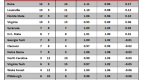
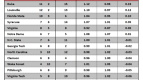
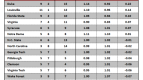
With the season winding down many are focusing on Kentucky‘s place in history, but as John Gasaway notes in his Tuesday Truths there are several other teams having historic seasons. The most obvious of these is Virginia, which is in the midst of a historic 2-year run in the ACC, and if not for Duke scoring on 14 of its final 15 possessions in their comeback win (probably the most improbable run of the season) they would also be unbeaten. There are plenty of interesting figures in here including some teams who have put up better seasons statistically than you might suspect. Even if you aren’t someone who is into “numbers” it is an interesting and fairly simple look at how dominant certain teams have been.
The idea of moving back the start of the college basketball season in order to allow it to start without having to compete with the college football is hardly a new one, but we are always surprised to see the visceral backlash it creates. While we love March Madness moving it back by a month (or more) would not necessarily make it worse. The idea of doing it to allow for more studying by student-athletes or to improve attendance by players leaving for the NBA Draft seems to be a much smaller factor especially since many of these players are on year-round academic plans and a relatively percent are actually involved in the NBA Draft process. The biggest issue involved in moving the NCAA Tournament back a month would be that it would no longer benefit from having little competition from other sports as it does in March. Instead it would be going up against The Masters, NBA Playoffs, and to a lesser degree spring training. If you want to use that as a rationale against moving the college basketball season back, we would be willing to hear that argument, but we don’t buy the idea of sticking to the current schedule just because of tradition.
One of the many criticisms of the NCAA is how it preaches about the education of student-athletes and punishes them for poor academic performance, but typically lets schools slide when they try to circumvent the rules for their own gain. To that end the NCAA has put together a group of 20 college administrators to craft a proposal about how the NCAA should respond to such situations. This probably won’t (and shouldn’t) affect cases that are currently being investigated, but it should provide a warning to schools that they cannot manipulate their academic system just to improve their on-field performance. The actual enforcement of such a policy will be tricky because schools have a lot more to fight back against the NCAA than an individual student-athlete will, but this is at least a start.
The bubble is everywhere. You can’t escape it. Pick any site that covers college basketball, and one word inevitably appears when you visit it: “bubble.” Blind résumés are all the rage; Joey Brackets has taken over our TV screens; coaches inevitably plead with the Selection Committee in postgame press conferences. The bubble consumes us all. But as we hit the home stretch of the regular season, it’s important to not lose sight of what’s going on outside of those 15-20 teams that comprise the globule of uncertainty. Sure, it’s nice to make the NCAA Tournament, but just getting there only to get blown out doesn’t compare to winning championships. Winning the NCAA Tournament is the ultimate goal for any Division I program. Reaching a Final Four is a close second. The third and most attainable in the hierarchy of goals, though, is to win a regular season conference championship.
These Guys Know Something About Conference Championships (USA Today Images)
Regular season championships have become criminally devalued. Conference tournaments get all the buzz and corresponding attention because it is through those that teams punch their tickets to the Big Dance. But anybody can get hot and make a three- or four-game run next week. True champions are crowned over the course of a couple of months of games. This year we enter the final week of the regular season already with three outright champions among the power leagues: Kentucky has locked up the SEC; Virginia clinched an outright ACC title on Monday night; and Villanova is your Big East champion. Kansas has already clinched at least a tie in the Big 12, and barring something unforeseen, Wisconsin and Arizona are on track to win their respective conferences too. There are a few others, however, that should garner some of your attention.
AAC. The watered-down AAC has been pretty poor this year but it could end up with as many as four NCAA Tournament teams. Two of that group — Tulsa and SMU — are in contention for an outright conference title. The Golden Hurricane have been the surprise package, sitting atop the standings at 14-2. SMU, the preseason favorite, sits a half-game back at 14-3. Tulsa hosts Cincinnati on Wednesday before the perfect scenario could play out in Dallas on Sunday: Tulsa at SMU. The winner will be the top seed in the AAC Tournament in Hartford, and if Tulsa falls to the Bearcats in the midweek, this weekend’s game will be for an outright title.
Here’s hoping everyone who gave yesterday’s Circle of March crossword game a whirl yesterday found it exhilarating and it got you into the right mood for the next 35 days of Madness. Monday was all fun and games with the CoM, but today we get serious. Of the 333 teams that are eligible to win the 2015 National Championship, it’s time to start removing names from the list. There are 13 conference tournaments that begin action this week (see full online schedule here) — beginning with the Atlantic Sun, Horizon League and Patriot League tonight — and six teams residing in those 13 leagues were not invited to join the proceedings. They have been removed from today’s edition, leaving us with 327 remaining teams.
Note that it’s a CoM standard that we do not remove teams from the Circle of March until their seasons are over — therefore many Ivy League squads and several other teams that will not qualify for next week’s conference tournaments will remain with us through the weekend. But enough about that. It’s Championship Fortnight — let the Madness begin!
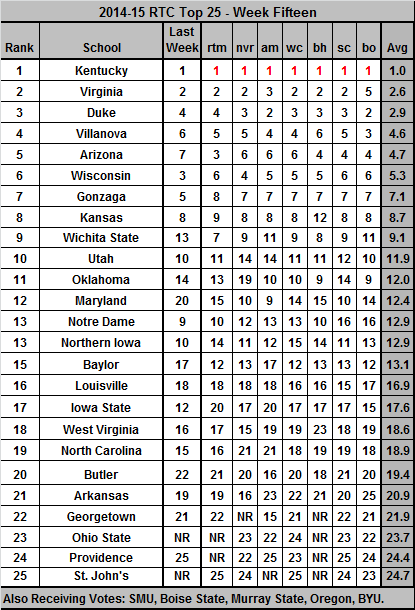
The penultimate weekend of the college basketball regular season gave #1 Kentucky, #2 Virginia, #4 Villanova, #5 Arizona, #6 Wisconsin, and #9 Wichita State an opportunity to either a guaranteed a share of a conference title or the outright crown. Kentucky moved its record to 29-0 and earned the SEC regular season title on Saturday with a dominating 17-point home victory over #21 Arkansas. Virginia guaranteed itself at least a share of the ACC title with a Saturday matinee victory over Virginia Tech in Charlottesville. The Cavaliers will attempt to win the title outright for the second straight year, hitting the road this week for games at both Syracuse and #16 Louisville. Villanova rebounded from a seven-point halftime deficit at Xavier to earn its 10th consecutive win and clinch the outright Big East title for the second consecutive year. Arizona earned itself at least a share of the Pac-12 crown with one of the most impressive road victories of the season. The Wildcats went to #10 Utah and scored a thrilling 63-57 triumph on Saturday evening. Wisconsin wrapped up a share of the Big Ten title Sunday — aided tremendously by National Player of the Year candidate Frank Kaminsky’s season-high 31 points — with a home victory over Michigan State. Finally, Wichita State showed Saturday afternoon that it is still the class of the Missouri Valley with a 74-60 home win over #13 Northern Iowa. With just one week to go in the regular season, it will be intriguing to see if Virginia, Arizona, and Wisconsin can become the outright champions of their leagues as well as what will happen in the crazy Big 12 race.