

Kansas Already Battle Tested Just Five Days Into Season

Posted by Justin Fedich on November 16th, 2016

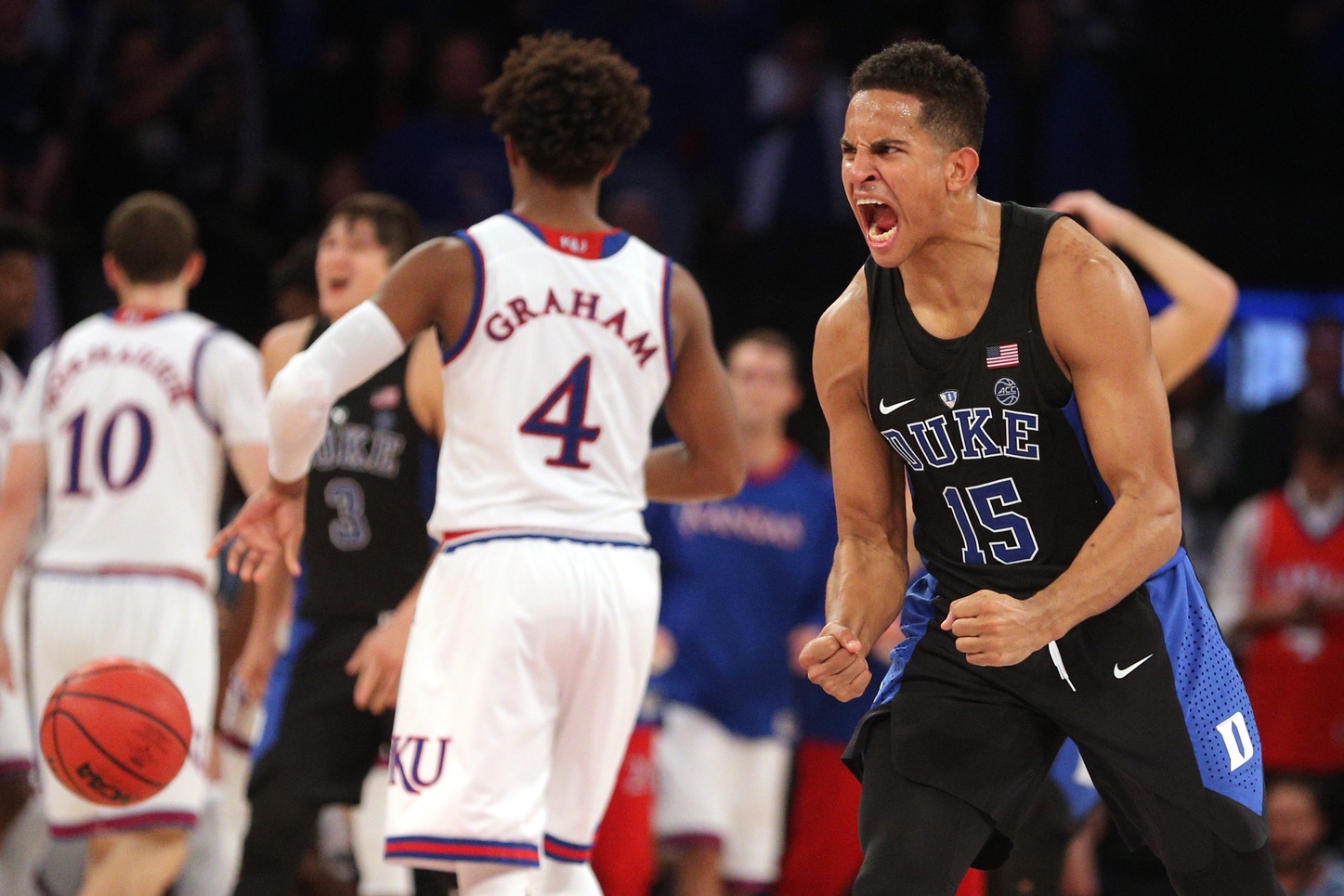
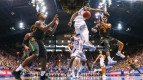
Only two games into the new season, Kansas has already endured one crushing defeat and one thrilling victory. The Jayhawks responded from a 103-99 overtime loss to Indiana on Friday night in Hawaii to outlast top-ranked Duke 77-75 in the Champions Classic at Madison Square Garden last night. No high-major team outside of arguably Michigan State has been challenged nearly as much. Senior guard Frank Mason has stolen the show to this point, scoring 30 points against Indiana and hitting the game-winning jump shot last night against Duke.
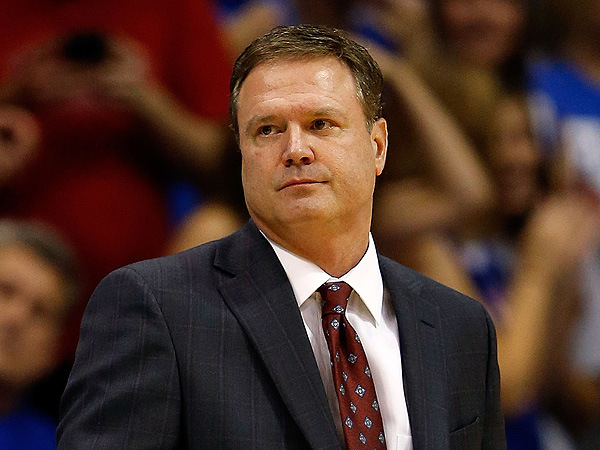
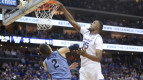
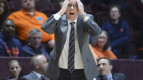
The tourney upsets his Kansas teams have suffered will not be forgotten (Getty).

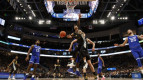
The Kansas program has never shied away from testing itself early against elite programs and this year is no exception. (Getty)

What Adjustments Did Kansas Make? Even with Duke’s three highly-touted freshman sidelined, Bill Self’ needed to make some adjustments from the Indiana game to avoid falling to 0-2. The biggest shift came in the contributions of 6’11” freshman Udoka Azubuike off the bench. After playing only seven minutes and failing to score against the Hoosiers, Azubuike added six points and pulled down 12 big rebounds against Duke. It was clear that Self wanted to expose Duke’s lack of size down low with 6’10” Harry Giles and 6’11” Marques Bolden sitting on the bench. After being the only Kansas starter to not foul out in the game against Indiana, freshman Josh Jackson played much more aggressively for most of last night’s game before fouling out. Still, he scored 15 points on 7-of-9 shooting from the field, putting all three Kansas starting guards into double figures (Mason, 21; Devonte’ Graham, 15). Using Jackson on the wing and Azubuike inside to balance things offensively is the formula Kansas needs rather than relying on Mason, who scored 30 points against Indiana, to consistently contribute such a heavy load. Read the rest of this entry »
Share this story

Bryce Drew’s First Vandy Win Offers Blueprint For Future

Posted by Bennet Hayes on November 16th, 2016

Luckily for Bryce Drew, no memorable coaching tenure has ever been defined by its first game. The good vibes surrounding the Vanderbilt program and its new coach quickly dissipated on opening night last Friday, as Marquette sprinted past the Commodores in the second half of a 24-point rout. The shaky debut raised the stakes for Tuesday night’s inter-Nashville battle between the Commodores and Belmont, as an 0-2 start and a loss to a crosstown little brother would possess the potential to leave a lasting impact on Drew’s first season at Vanderbilt. However, Drew’s veteran outfit responded to the challenge at hand, posting a ship-righting victory that may be more crucial than the calendar and opponent would suggest.

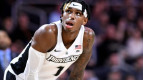
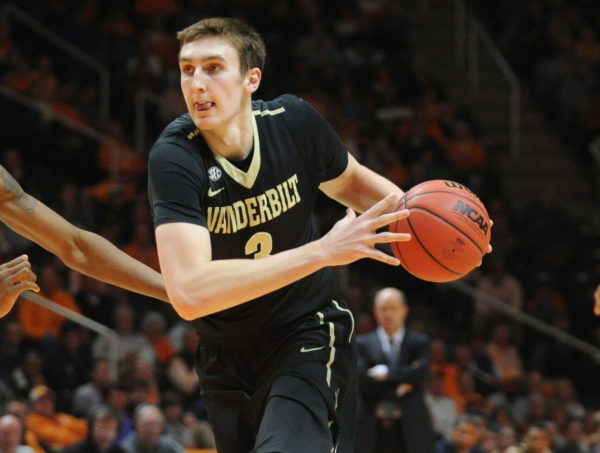
Luke Kornet was the best player on the court Tuesday night. (USA Today Sports)

Luke Kornet was the best player on the court Tuesday night. (USA TODAY Sports)

At this point, no program in America should treat a win over Belmont as a given. The Bruins have proven to be more than just a pesky mid-major for over a decade now, and they pushed another high-major team on its home floor last night. Quite certainly, Drew’s first win is one he didn’t take for granted until his team extended its lead into double figures in the game’s final minute. However, the win revealed a blueprint for how his teeam might win games moving forward. Luke Kornet was the centerpiece, scoring 20 points, grabbing seven rebounds, and harassing 2016 OVC Player of the Year Evan Bradds into an unusually inefficient 6-of-15 night from the field. On a team with little in the way of overwhelming talent, Kornet will need to be this sort of difference-maker on a nightly basis. The four upperclassmen that join him in the starting lineup are all competent complementary pieces, but junior Matthew Fisher-Davis is the only other Commodore starter with the talent to truly concern opposing SEC coaches. Given these limitations, it is not only imperative that Kornet find consistency as a focal point of the offense, but also that the group around him finds a way to make him a successful centerpiece of an elite defense. Read the rest of this entry »
Share this story

Gonzaga’s New Big Men Corps Turning Supposed Weakness Into a Strength

Posted by Luke Byrnes on November 16th, 2016

After a run to the Sweet Sixteen in last year’s 2016 NCAA Tournament, Gonzaga experienced significant roster turnover with Domantas Sabonis, Kyle Wiltjer, Eric McClellan and Kyle Dranginis all graduating and/or leaving for the NBA. The arrivals of transfers Nigel Williams-Goss (Washington), Jordan Matthews (California) and Jonathan Williams (Missouri), along with a freshman class that includes Zach Collins, Killian Tillie, and the return of Przemek Karnowski after a medical redshirt, give the Zags several new pieces to integrate this season. Considering the influx of backcourt talent, Gonzaga’s long-running history of stellar guard play combined with the losses of forwards Sabonis (lottery pick) and Wiltjer (rookie free agent) to the NBA, most analysts predicted Mark Few would return to a guard-oriented offense. And with good reason.

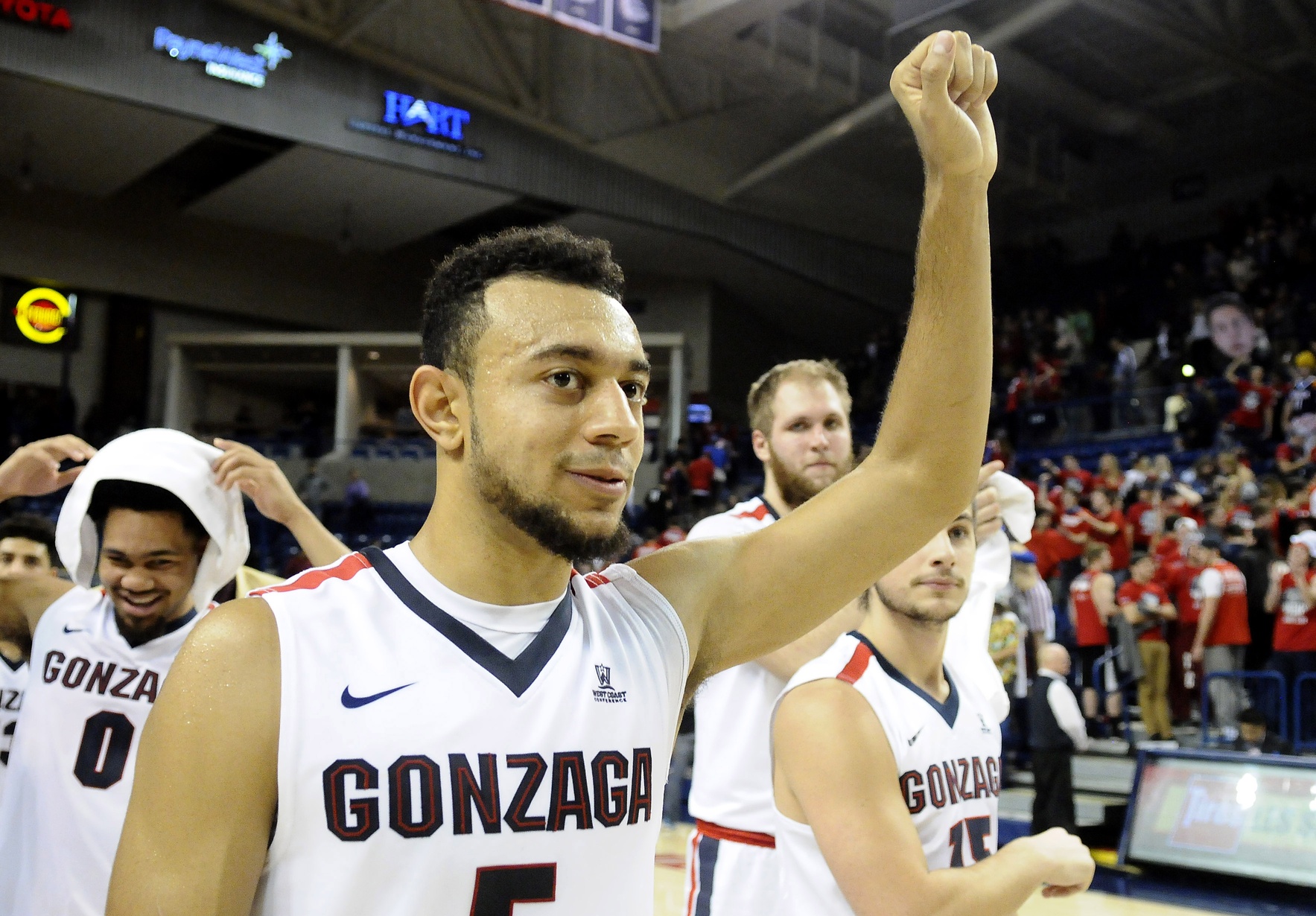
Nigel Williams-Goss (USA Today Images)

Nigel Williams-Goss Looks Forward to Another Great Year in Spokane (USA Today Images)

Williams-Goss, a redshirt junior, was a consensus top-50 recruit in 2013 before playing two seasons at Washington, where, as a sophomore, he led the Huskies in scoring (15.6 PPG) and assists (5.9 APG). Matthews, a graduate transfer, averaged 13.5 points per game and shot 42.7 percent from three-point range in his last two seasons at Cal. Furthermore, the Bulldogs also returned guards Kyle Perkins and Silas Melson. Perkins started all 36 games last season, led the team in assists (4.1 APG) and averaged 10.1 points per game, while Melson saw action in every game and emerged as a key contributor by averaging more than 10 PPG over the final 10 regular season games.

Read the rest of this entry »

Share this story

Duke is Embracing Its Quasi-Point Guard Situation

Posted by Justin Kundrat on November 16th, 2016

There’s a common misconception that every successful offense needs a primary ball-handler. Certainly at the collegiate level, some teams do. But Duke is not one of those teams, especially not this season. Point guards serve two critical roles in traditional offenses: 1) breaking pressure defense, and 2) initiating half-court offense. But in an era where wings and even forwards spend so much time developing “guard skills,” it’s no longer uncommon to see multiple initiators on the offensive end. Whether by choice or by circumstance, Duke has embraced this movement.

Frank Jackson is Duke's Point Guard, But the Devils Really Operate the Position by Committee (USA Today Images)

Frank Jackson is Duke’s Point Guard, But the Devils Really Operate the Position by Committee (USA Today Images)

Following the departure of the team’s last true playmaker, Tyus Jones, in 2015, the Blue Devils have since employed an amorphous offense that lacks a true lead guard. Derryck Thornton attempted to claim this role last season, but the offense ran more efficiently through others and eventually stayed that way. Duke’s motion-heavy offense this season revolves around numerous backcourt scoring threats that are equally capable of creating for teammates. “The Chris Pauls, there aren’t as many,” head coach Mike Krzyzewski recently said. “He’s the old-fashioned point guard, the leader. Now you have a lot of lead guards that score and could run a team, but they may not be the guy that runs the team.”

Read the rest of this entry »

Share this story

Big 12 M5: 11.16.16 Edition

Posted by Brian Goodman on November 16th, 2016

morning5_big12

  1. Another huge game from Frank Mason fueled Kansas’ 77-75 win over Duke last night. Even though the Blue Devils were without three of its star freshmen, the Jayhawks withstood plenty of their own challenges — from foul trouble to ineffectiveness beyond the arc (2-of-16 3FG) to a bad night at the charity stripe (9-of-19 FT). The Jayhawks also blew a late double-digit lead, but it ultimately did not matter as Mason cashed in a game-winning elbow jumper with 1.8 seconds remaining, the last of his 17 second-half points. Beating Duke in any environment is a big deal, but this victory should yield some real dividends come March if the Blue Devils play to their lofty expectations once healthy.
  2. Entering the season, one of the key questions for Baylor aside from point guard play was how the Bears would account for the loss of Rico Gathers. It’s a remarkably small sample size, but through two games including a top-five opponent in Oregon, Jo Lual-Acuil has answered the bell, averaging 15.0 rebounds and 7.2 blocks per 40 minutes  in the young season. The junior will be challenged next week when the Bears head to the Bahamas and again in December when they host Xavier, so stiffer competition should give way to a more confident read on Lual-Acuil, but in the meantime, he’s been one of the big surprises around the conference.
  3. Switching gears from a surprise to a known quantity, how great is it to have Oklahoma State‘s Phil Forte back? I suppose you could ask head coach Brad Underwood, but he was still working for Stephen F. Austin when the senior suffered a shoulder injury last November. He’s probably grateful nonetheless. The Big 12’s new elder statesman has stormed out of the gates, averaging 27.0 points per game and converting each of his first 17 attempts at the free throw line. The Cowboys are still looking for answers inside, but Forte and Jawun Evans (28.5 PPG, 5.5 APG, 4.0 SPG) are showing why they should be mentioned among the conference’s best perimeter tandems.
  4. I’ve thought a little more about Kansas State‘s lax non-conference schedule, and while I still think it has a chance to backfire, it’s worth mentioning the potential benefits as well. Given that Wesley Iwundu and D.J. Johnson are the team’s only scholarship upperclassmen who have been with the program all four years, there’s a big drop-off to the younger core of sophomores Dean WadeBarry BrownKamau Stokes and freshman Xavier Sneed. This isn’t the most analytical viewpoint, but building confidence matters for a relatively young team, especially when its league schedule starts with a road game at Kansas sandwiched between home games against Oklahoma and West Virginia. Steamrolling the likes of Hampton, Robert Morris and Boston College wouldn’t lead anyone to picking the Wildcats to win at Allen Fieldhouse, but it can be helpful in the overall scheme with the league being deeper than it usually is. While I’d be remiss if I didn’t think there was at least a sliver of self-preservation by head coach Bruce Weber at play here as well, the general approach makes sense for a team looking to build some experience and confidence during the non-conference slate.
  5. Texas Tech will be shorthanded for a while as the school revealed over the weekend that big man Norense Odiase broke a bone in his left foot. While the Red Raiders have started 2-0 in spite of Odiase’s absence, it’s still a tough blow since he missed 12 games just last season with a similar injury to his other foot. For what it’s worth, Chris Beard doesn’t anticipate Odiase missing as much time as he did last season, which would be nice. The Red Raiders don’t have much time to adjust, though, with Auburn and a potential game against Purdue’s twin towers looming in next week’s Cancun Challenge.
Share this story

RTC Gametime: Key Questions in Duke vs. Kansas

Posted by Chris Stone & Brad Jenkins on November 15th, 2016

College basketball got underway with a pair of hotly contested Top 25 match-ups on Friday night. The heat will rise tonight as the ESPN Tip-off Marathon reaches its climax with the Champions Classic in Madison Square Garden. Because we’re so excited about what tonight’s headliner has to offer, we’ve gotten the ACC and Big 12 microsites together to preview the event’s evening contest between Duke and Kansas. Questions and answers were provided by Brad Jenkins (@bradjenk) and Chris Stone (@cstonehoops).

Questions for Kansas

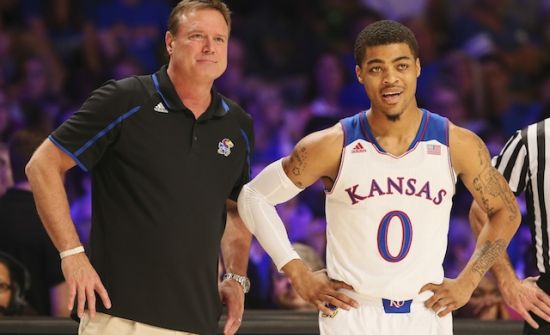
Frank Mason looks like Bill Self's man at point guard. (USATSI)

Bill Self and Frank Mason against a talented Duke team? Sign us up. (USATSI)

The Blue Devils look vulnerable in the paint given all their current injuries. Bill Self teams have traditionally been dominant in the post, but is Kansas equipped to take advantage of Duke’s depleted frontcourt?

Unless something surprising happens, probably not. This game should ultimately be a battle of the backcourts. Although the Jayhawks have historically feasted on the interior by utilizing Self’s high-low offense to find open looks near the rim, Kansas doesn’t have the frontcourt players required to do that this season. Big men accounted for just 19.7 percent of Kansas’ total field goal attempts against Indiana last week, even as starters Landen Lucas and Carlton Bragg shot a combined 9-of-11 from the field. Don’t expect that pair to suddenly become high usage players tonight. Lucas is fundamentally sound and more than capable of sealing off defenders for easy looks, but he lacks the post game necessary to be a go-to option. Bragg’s repertoire of post moves is considerably more complete, but his best offense is still played in the mid-range. With a full complement of talented perimeter players, look for Self to base his offense tonight around the likes of Frank Mason and Devonte Graham rather than Lucas and Bragg. Read the rest of this entry »

Share this story

Villanova’s Offense Already Looks Fantastic… Again

Posted by Michael Austin on November 15th, 2016

En route to the National Championship last season, Villanova went 13-0 in games in which the Wildcats shot fewer than 20 three-point field goal attempts. In fact, in four of the five times Villanova lost a game last season, they shot more than 25 three-pointers (going 13-4 in those games).  Yes, an undersized team playing a 4-Out Offense with a huge focus on guard play actually played its best ball when it limited its overall number of long-range shots.

Villanova Scores on Shots of the Non-Three Point Variety? Who Knew? (USA Today Images)

Villanova Scores on Shots of the Non-Three Point Variety? Who Knew? (USA Today Images)

A deeper dive into Villanova’s three-point offense last season reveals that Jay Wright’s squad underwent a dramatic shift in philosophy when Big East play began — a shift that continued all the way through six games of the NCAA Tournament. The Wildcats won 14 of their first 15 conference games by shooting no more than 25 three-pointers only twice during that run (31 in a loss at Providence and 29 in a win against Creighton). At some point, it seemed to click that simply firing three-pointers isn’t the formula for success; rather, creating more-efficient, high-percentage, uncontested perimeter shots is where Wright wanted his team. The Wildcats finished the season eighth in the nation in effective field goal percentage (eFG%) at a very healthy 56.1 percent. This focus on good shot-taking (and making) translated into a championship run. Look at Villanova’s total number of three-point attempts in its six NCAA Tournament victories: 28 (vs. UNC-Asheville), 10 (Iowa), 15 (Miami), 18 (Kansas), 18 (Oklahoma) and 14 (North Carolina), for an average of 17.2 attempts per game.

Read the rest of this entry »

Share this story

Big 12 Opening Weekend in Review

Posted by Drew Andrews on November 15th, 2016

Opening night of the college basketball season gave nine of the 10 Big 12 programs a chance to begin their seasons with easy wins. Those match-ups went according to plan, as only Kansas played a team inside KenPom’s top 250 and, as a result, took the only loss. However, there was another surprise that could ultimately spell trouble for one of the contenders to the conference title. Let’s take a look at one key takeaway from each team coming out of the opening weekend.

  • Kansas – The Jayhawks came into the season with questions about leadership, scoring in the post, and whether Josh Jackson could make the leap to superstardom. The loss to Indiana in the Armed Forces Classic on Friday night only provided a first piece of an answer to one of those questions. Frank Mason III exploded for 30 points and nine assists in the defeat, making it seem that he might be Bill Self‘s Option A for leadership and scoring this season. In the absence of the graduated Perry Ellis, Landon Lucas and Carlton Bragg will be asked to replace some of his frontcourt scoring load. Lucas proved that he could play the necessary minutes last year, but Bragg rarely saw the floor. After a meager 18-minute outing on opening night, it seems as if Self still has questions about the sophomore forward. Meanwhile, Jackson struggled to find a rhythm on both ends of the floor. Early foul trouble and questionable shot selection meant he saw more of the bench than expected, but it will be interesting to see how Self utilizes him in tonight’s clash with top-ranked Duke.
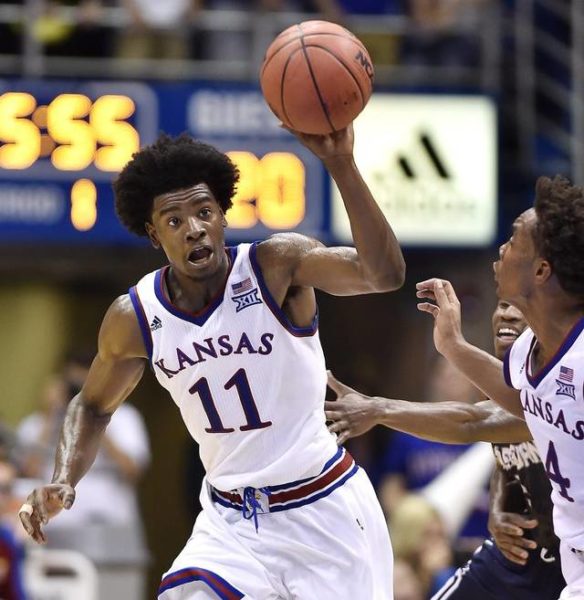
Josh Jackson struggled against Indiana. Can he break out against Duke in the Champions Classic? (Photo: Kansas City Star)

Josh Jackson struggled against Indiana. Can he break out against Duke in the Champions Classic? (Photo: Kansas City Star)

  • Iowa State  Monte’ Morris began his quest for conference and national honors with a bang against Savannah State (21 points and 11 assists), followed by a quieter but efficient outing (18 points and three assists) last night against Mount St. Mary’s. Steve Prohm started five seniors in both games, and if Iowa State hopes to again challenge Kansas for the Big 12 title, it will need every bit of experience and leadership from that group to get there.
  • TexasJarrett Allen certainly looked the part of star in the making in his debut for the Longhorns, but despite his 16 points and 12 boards, Texas was outrebounded on the offensive glass in its first two outings against Incarnate Word and Louisiana-Monroe. Shaka Smart‘s HAVOC defense certainly creates great energy and scoring opportunities via turnovers, but he has to be concerned that his players are giving up so many second chances to teams that were clearly overmatched in talent and size.

Read the rest of this entry »

Share this story

Purdue Enhances Its Reputation Despite a Loss

Posted by Brendan Brody on November 15th, 2016

Aside from not coming away with a hard-fought victory, Purdue‘s Monday night loss at home against the reigning National Champion Villanova went about as well as possible. The Boilermakers proved that they can play at a roughly equivalent level to a top five team in coming back from double-figure deficits twice to tie the game before falling late. Matt Painter would undoubtedly argue that a loss is still a loss, but there are some things that Purdue should take away from this game that represent encouraging signs for the rest of the season.

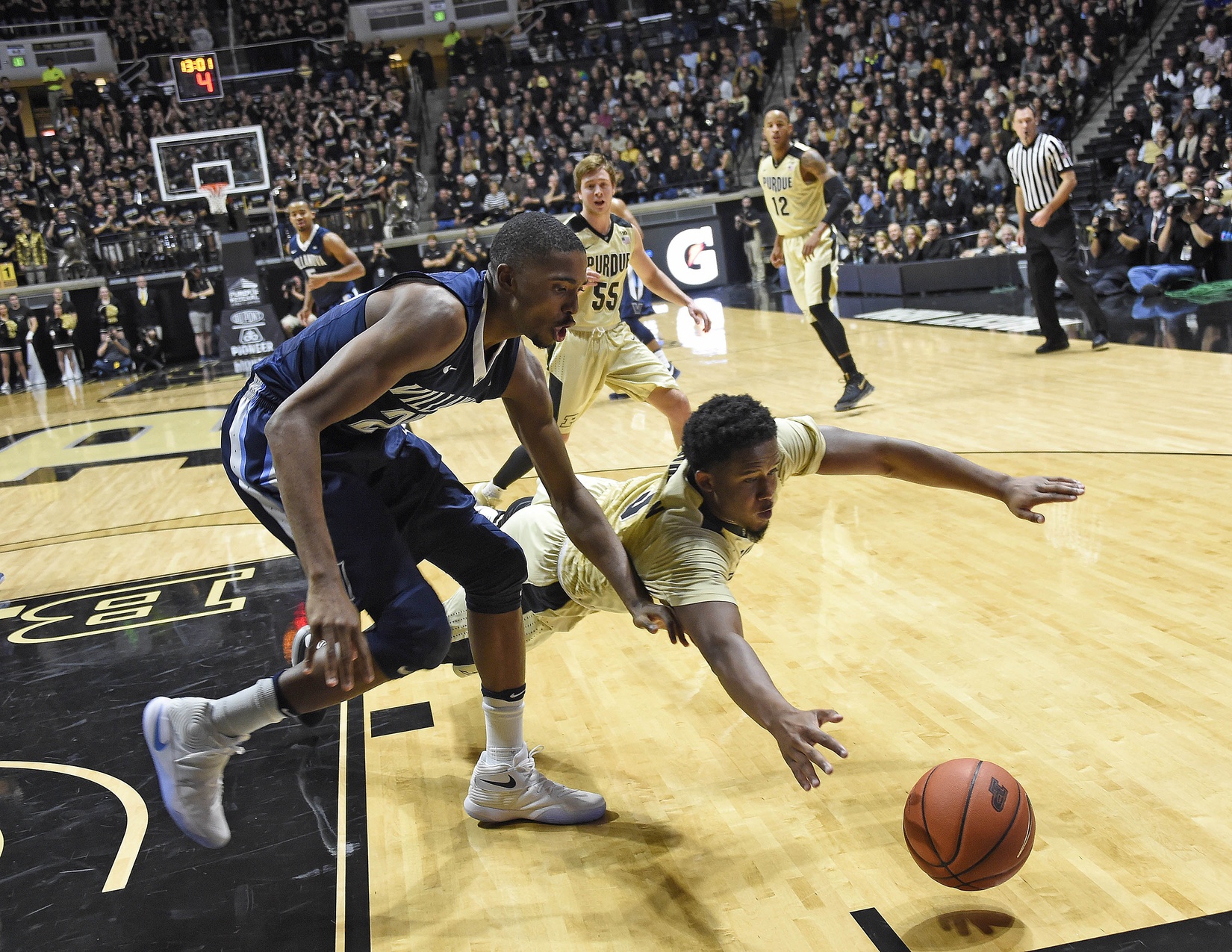
Purdue Gave Villanova Nearly All It Could Handle (USA Today Images)

Purdue Gave Villanova Nearly All It Could Handle (USA Today Images)

  • Physical Mismatches: Villanova is not a big team at all but few teams in college basketball will be able to match Purdue’s size down low. Seeing how the Boilermakers’ front line played against the gritty Wildcats, though, proves that Purdue should be able to run its offense through the paint. When Isaac Haas and Caleb Swanigan are both on the floor together, they can run some beautiful high-low action to take advantage of Swanigan’s exceptional abilities as a passer. Both players can also get to the free throw line at will, so expect many more nights where the pair combines to shoot 70 percent (14-of-20) on two-point field goals as they did on Monday night.

Read the rest of this entry »

Share this story

Freeze Frame: Georgia’s Inability to Avoid Bad Twos

Posted by Brian Joyce on November 15th, 2016

Since Mark Fox’s arrival in Athens seven years ago, Georgia‘s calling card has not been made on the offensive end of the floor. Last season, the Bulldogs didn’t take care of the basketball (19.2% TO rate), weren’t particularly accurate from beyond the arc (36.8% 3FG), and weren’t the strongest offensive rebounding team (32.4% offensive rebounding rate) either. The most alarming statistic, though, was a dreadful 44.8 percent two-point conversion rate, a mark that ranked a horrendous 316th nationally. If Georgia is going to get back to the the NCAA Tournament like it did under Fox in 2015 and 2011, it will have to score more efficiently in large part by avoiding bad two-point jump shots.

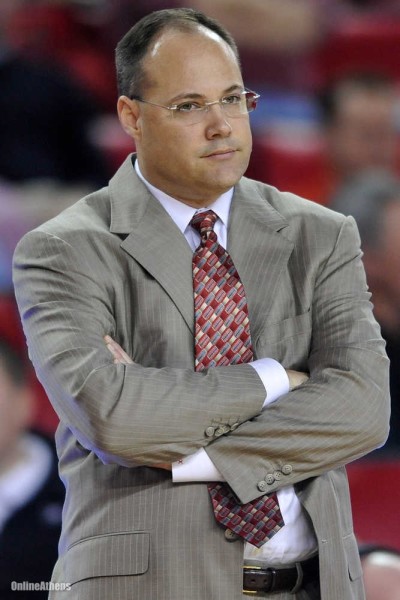
Georgia's Mark Fox would love to see the Bulldogs attack the rim (The Athens Banner-Herald).

Georgia’s Mark Fox would love to see the Bulldogs attack the rim. (The Athens Banner-Herald)

Charles Mann is no longer in a Georgia uniform to get easy points at the free throw line, drawing 6.8 fouls per 40 minutes and scoring 43 percent of his points at the charity stripe. By comparison, backcourt mate J.J. Frazier, the Bulldogs’ primary ball-handler, scores just 27 percent of his points from the line. Where Mann’s game relied on attacking the hoop, Frazier is far more reliant on jumpers. If Georgia’s first couple of games this year are any indication, Fox hasn’t quite broken his point guard from the tendency to settle for too many mid-range jumpers. According to hoop-math.com, Georgia took 41.1 percent of its shots from mid-range last season (27.3% at the rim; 31.6% from three). To frame that number appropriately, the Bulldogs’ percentage of shots that came as two-point jumpers ranked ninth nationally. Conventional basketball wisdom says that long two-point jump shots are terribly inefficient, yet they are clearly a big part of Frazier’s offensive game. Read the rest of this entry »

Share this story