RTC Summer School: West Coast Conference

Posted by rtmsf on August 10th, 2012

Over the next couple of week’s we’ll be checking in with each of the high mid-major leagues as to their mid-summer offseason status. Up next: the WCC.

Michael Vernetti is the RTC correspondent for the West Coast Conference.

Three Key Storylines

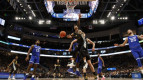
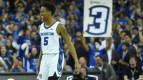
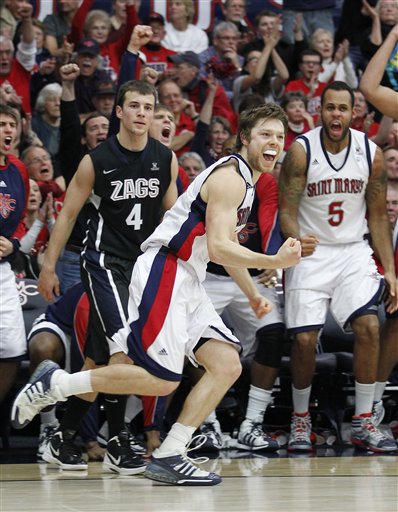
  • Ex-champs Fight Back. Gonzaga’s streak of 11 consecutive seasons with at least a share of the WCC crown came to an end last year as Saint Mary’s won both the regular season title and the WCC Tournament. How will the Zags react as a challenger rather than defending champion? Is Saint Mary’s for real or just a pretender? This is the key storyline for the WCC heading into the 2012-13 season. Gonzaga answers with a strong returning lineup boasting conference leaders Elias Harris at strong forward and dual freshmen sensations Kevin Pangos and Gary Bell, Jr. at the guard spots. Rather than miss the graduated Robert Sacre, Zag partisans insist more playing time for Sam Dower will equal more production in the post. Saint Mary’s answers with a possibly even stronger backcourt of Olympics hero Matt Dellavedova and defensive terror Stephen Holt. The Gaels will have a rebuilt front line anchored by redshirt sophomore Brad Waldow and transfer forward Matt Hodgson, and looks forward to proving last year’s title was no fluke.
These WCC Stars Will Determine the Storyline of the 2012-13 Season

  • Revamp or Disaster? San Francisco coach Rex Walters was consistently cool when asked about the unsettling defection of six players from his roster following last season’s disappointing season (8-8, fifth place in WCC). For the most part he knew they were leaving, Walters said, and he has replaced them with players of equal or better value. Maybe, but any time a team loses its top four scorers (Angelo Caloiaro, Perris Blackwell, Rashad Green and Michael Williams) and returns only two players with significant game experience – Cody Doolin and Cole Dickerson – it puts tremendous pressure on the newcomers. Of the many new faces on the Hilltop, former UCLA recruit De’End Parker, recently cleared to participate in the upcoming season, looks to be the Dons’ best bet for stardom.
  • Broncos Healthy Again. Things could not possibly have gone worse for Santa Clara last year – really, they lost all 16 conference games – so maybe karmic forces are aligned to bring the Broncos salvation. Marc Trasolini, the hard-nosed 6’9″ forward who was looked upon to provide senior leadership, instead tore his ACL in the preseason. Outstanding shooting guard Kevin Foster was arrested on suspicion of driving under the influence following a Bronco home loss to Saint Mary’s, and never returned to action. With Trasolini and Foster back this season, Santa Clara coach Kerry Keating should smile more. Keating will also have improving 7-foot center Robert Garrett and slick point guard Evan Roquemore back in the fold, so the Broncos have a solid foundation for success

Reader’s Take

Read the rest of this entry »

Share this story

Morning Five: 08.10.12 Edition

Posted by rtmsf on August 10th, 2012

  1. Years ago when things were still going well for Billy Gillispie at Kentucky, we took him and his supporters to task for the ridiculous and utterly embarrassing notion that offering scholarships to 8th graders was a good idea (Michael Avery, anyone?). Thankfully coaches are no longer allowed to sniff around the junior high schoolyards as much as they used to, but that doesn’t mean that young players still can’t make pie-in-the-sky commitments years before they can even drive. As Gary Parrish wrote Thursday, Indianapolis junior Trey Lyles‘ recent de-commitment from Tom Crean’s flagship state school exhibits exactly why it’s probably not a great idea to listen to what 13- or 14-year olds think they’re going to do four years from now. A top 10 player in the Class of 2014, Lyles no doubt wanted to see what other fish are in the sea, and who can blame him? There’s something to be said for the concept of being wanted — and we’ll give credit to Lyles for the realization that few opportunities in life are as good as the one he has in front of him right now.
  2. A little more recruiting talk today, as Michigan‘s Class of 2013 is shaping up as perhaps the best that the school has enjoyed since Ed Martin was sending bags of hundreds to Ann Arbor on his days off. With the quick ascent of 6’6″ wing Zak Irvin on ESPN.com’s latest top 100 list — he rose more than 20 spots to #21 after a great summer — the Wolverines currently have a three-player class that ranks second only to Florida on ESPN’s list. Keeping in mind that only four of the top 20 players in this class have yet committed, this class led by Irvin gives John Beilein a shot at putting one or even two recruits (depending on how Derrick Walton’s senior season goes) into the McDonald’s All-American game next year for the first time since 2002 (Mitch McGary as a fifth-year senior was ineligible last season). Michigan will start next season in the preseason Top 10 — get used to seeing the Wolverines at or near those lofty heights for many years to come.
  3. Marquette announced yesterday that it was investigating a possible NCAA rules violation involving its men’s basketball program. Very few details were released by the school, but the Milwaukee Journal-Sentinel reported that a source disclosed that the violation may be related to recruiting. It is perhaps unrelated, but already this summer the Golden Eagles have lost a junior college transfer named TJ Taylor after only two weeks on campus. Regardless of what the violation turns out to be, it sounds like a relatively minor violation where any punishment the school suffers will be completely irrelevant.
  4. Three months from now we’ll either have a brand-new president or another term from our existing one. If you listen to the talking heads on television, the decision from the American people on this important civic duty may come down to class warfare — the concept that the rich and poor are in conflict with each other in divvying up the pie. ESPN.com’s Myron Medcalf drills down to the bone on a similar issue: the NCAA’s Academic Progress Rate (APR) has inspired an arms race of sorts on the academic side of the athletic shops. The wealthiest schools can afford to provide computer labs with the best equipment, traveling tutors, language labs, and so forth — anything to help keep academically marginal kids at those schools eligible. However, at a number of the poorer schools (such as, in his example, Mississippi Valley State), the idea of spending $2.6 million on academic support services for athletes (as Texas did in 2011-12) is laughable. If there’s one thing we know from several thousand years of world history, it’s that the poor never actually win the battle no matter how much the rich say that they ultimately will. Good piece by Medcalf, well worth the read.
  5. We mentioned in yesterday’s M5 that UNC’s Roy Williams was listed by his peers as the most “overrated” head coach in college basketball. We also scoffed at the idea that someone who has won two national titles in under a decade at the helm in Chapel Hill could ever be truthfully considered “overrated.” It appears we are not alone with this opinion, as Mike DeCourcy rips the results to shreds with a laundry list discussing all of Ol’ Roy’s achievements. If you can get past the bizarro world reference to Kelly Clarkson and Paula Abdul, DeCourcy’s argument is spot on. The easiest criticism in all of sports is to dismiss accomplishments because of “all the talent” available to a coach (nevermind how talent is determined at the time) — but the fallacy in that stance is that it ignores the countless coaches who also recruit great talent yet never actually produce with it. We pose the question again — if Roy Williams is an “overrated” coach, how many national titles should he have reasonably won by now?
Share this story

Morning Five: 08.09.12 Edition

Posted by rtmsf on August 9th, 2012

  1. International basketball has a number of differences from the US game, ranging from the legal goaltending rule to the trapezoidal lane to a much higher tolerance by officials of cheap shots during game action (see: Anthony, Carmelo vs. Argentina). While Team USA’s core group of players has gotten used to FIBA rules by now, Bill Self’s Kansas Jayhawks are learning on the fly while they’re touring around Switzerland and France. According to this Lawrence Journal-World report, in KU’s first game on Tuesday night, Swiss forward David Ramseier lost his s#&% after a technical foul call went against him in the second quarter. From Bill Self: “He went nuts. He went absolutely nuts. I’ve never seen that. I saw Bill Romanowski do it in football one time, and I saw Roberto Alomar do it in baseball one time. But this guy went and actually did it twice. He’s going after the official and did it twice.” A physical assault that may have resulted in expulsion from the team (or at least a suspension) in America apparently held no weight overseas — Ramseier was back in the Swiss lineup on Wednesday. For what it’s worth, KU won both exhibition games but not without working for it; the Jayhawks outlasted the Swiss team by three points on Tuesday and four points on Wednesday.
  2. Moving stateside to poor treatment of officials, the NCAA on Wednesday publicly reprimanded Cincinnati head coach Mick Cronin for his “profane and abusive language toward a game official” during UC’s Sweet Sixteen loss against Ohio State last March. The NCAA had previously censured Cronin for this same incident, but UC had appealed it on his behalf — that appeal was denied. For the record, Ohio State was tallied with 11 total fouls in that game versus 21 for the Bearcats, resulting in 27 free throw attempts for OSU (making 19) against eight for UC (making five). That 14-point difference in foul shots made essentially accounts for the difference in the game (81-66) — no wonder Cronin was so hot. Does anyone know what he actually said to warrant such a strong reprimand?
  3. CBSSports.com has been crushing it this week with its series revealing what coaches really think about a number of topics. We learned Tuesday that Temple’s Fran Dunphy is considered the most underrated head coach in the land, a fact not too surprising considering how well his teams have done at both Pennsylvania and now Temple. On Wednesday, the most overrated head coaches were listed and the “winner” is a man who 98% of programs around the country would love to have on their sidelines — North Carolina’s Roy Williams. In nine years at UNC, he’s won two national titles and taken the Heels to three Final Fours and six Elite Eights. Everyone knows that he always has great talent at his disposal, but come on… should Williams have gone to six Final Fours and won four titles in the same period — would that make him accurately rated? Rick Barnes, the second-place “winner,” on the other hand…
  4. While on the subject of Roy’s alma mater, ESPN.com‘s Dana O’Neil wrote a piece Wednesday excoriating the NCAA for its seemingly (ok, definite) inconsistency in refusing to further investigate North Carolina for an academic scandal featuring athletes getting pushed into certain courses for easy As. As she clearly writes in the article, it’s certainly no secret that college athletes and students alike know where to find the easiest professors and courses, but there’s a clear distinction between “equal-opportunity baloney classes” and those that exist as fraudulent academic portals for athletes (Jim Harrick, Jr., on line two). She correctly points out that the NCAA would have no problem calling such grades into question at the high school level; but, when it involves its member institutions, it says it has no jurisdiction? It sounds like a really weird mandate, but Robbie Pickeral takes the time to explain in detail how the NCAA defines the issue: If players are clustering in certain classes as a result of academic-related counseling, then the NCAA defers to the university in handling it. If players end up in those courses as a result of the athletic department steering them there, then and only then does the NCAA get involved. What’s left unsaid here, of course, is what happens when there’s an unspoken pressure — even a wink/nod agreement, perhaps — for academic counselors to push players to those classes in the spirit of what’s best for the university (largely influenced by UNC sports).
  5. While we’re piling on the NCAA today, we may as well use this opportunity to check in on the Ed O’Bannon antitrust lawsuit against the organization and its licensees regarding the ongoing usage of his and other players’ names and likenesses in video games, published materials and so forth. The three-year old case is working its way through the system, but on Monday the O’Bannon group of plaintiffs convinced a judge to agree with them that the NCAA must “turn over information relating to revenue that its members receive from broadcast television, radio and Internet rights as well as reports tied to income from sponsorships, licensing, sales of advertising.” Clearly this sort of information is highly sensitive, but it’s a key victory for the athletes in that it shows that their case is meritorious enough for a federal judge to require the NCAA to release such documentation. In a nutshell, this case isn’t going away.
Share this story

Morning Five: 08.08.12 Edition

Posted by rtmsf on August 8th, 2012

  1. For college basketball fans over a certain age watching the Summer Olympics, an oft-repeated nickname uttered by the likes of Bob Costas, Mary Carillo, Ryan Seacrest and others probably grates a little more than it should. The gold medal-winning US women’s gymastics team, as we all now know, has been labeled by someone lacking any institutional sports memory with the nickname “The Fab Five.” The five girls aged between 15 and 18 didn’t memorialize themselves with the name, but others — most notably former Fab Five mouthpiece and current ESPN commentator Jalen Rose — may stand to make bank from the trademarked name as the team rides its 15 minutes of fame on a barnstorming tour throughout the US this fall. As we saw mentioned on Twitter last week, the Olympics are fundamentally sports for people who don’t typically like sports, and there is no better example of the two groups weirdly crossing paths than this one. If anyone’s wondering, nobody will be talking about this ‘new’ F5 two decades from now — we think the iconic maize and blue legacies of Webber, Howard, Rose, Jackson and King are still safe.
  2. It’s taken much of a couple of decades for Michigan basketball to get back to an elite status, as the Wolverines will be a preseason Top 10 team next season. Another local school, Oakland University, has as a matter of fact been to just as many NCAA Tournaments under head coach Greg Kampe in the last decade as Michigan. On Tuesday, Kampe started the first day of a fast where the longtime Golden Grizzlies coach will imbibe nothing but juice for an entire month in support of Coaches vs. Cancer. Um, we just drank a glass of orange juice over here, but, wow. Seriously, though, this is a herculean task for someone no doubt accustomed to eating solid, and undoubtedly, good food — Kampe tweeted last night that his first day of fasting was complete and that “even a yogurt commercial” makes him hungry. To donate to Kampe’s fast in support of CvC, make sure to hit this site. We always make sure to donate around the time of the Jimmy V Classic, but the CvC is getting a double dip from us this year.
  3. Team USA’s men’s basketball team will play Australia this afternoon in the quarterfinals of the Olympic tournament, which will allow one of the two college basketball players in the event to take a shot at a team he no doubt idolizes. As Jeff Goodman wrote yesterday, St. Mary’s guard Matthew Dellavedova is looking forward to the challenge of matching up against NBA All-Stars Deron Williams, Russell Westbrook and Chris Paul. The rising senior and current WCC Player of the Year is one of the two SMC starters in the Aussie backcourt (playing off the ball with Patty Mills), and his 8.2 PPG and 4.6 APG have helped his country reach the medal round. For a complete look at his Olympic statistics, check out the FIBA page on the shaggy-haired star. The only other collegian in the basketball Games, College of Charleston’s Andrew Lawrence, played roughly 18 minutes per game for host Great Britain, but he was only able to convert 4-19 field goals and committed nearly as many fouls (15) as he scored points (16). His Olympic experience — engaging though we’re sure it was — is now over as the Brits did not advance to the medal round.
  4. While on the subject of Dellavedova, his college coach at St. Mary’s, Randy Bennett, was voted by his peers as the second most underrated head coach in college basketball. The most underrated was Temple’s Fran Dunphy, who garnered a commanding 14% of the votes (Bennett got 9%). A couple surprises on the list were two of the most prominent names in college basketball — Kentucky’s John Calipari (7%) and West Virginia’s Bob Huggins (5%). With tomorrow’s release of the most overrated coaches in the game, is it possible that one or both of those two will also show up on that list? Check in tomorrow at CBSSports.com to find out.
  5. Finally today, it is clear that Oklahoma State center Phillip Jurick has little to no interest in playing college basketball again. Just two months after an incident where he was cited for driving on a suspended license, the 6’10” player who was already dealing with recovery from an Achilles tendon tear was arrested over the weekend for possession of marijuana and drug paraphernalia. Predictably, he was suspended by head coach Travis Ford and will not accompany his team on a 10-day exhibition tour to Spain, which begins today. A transfer from Chattanooga State who averaged 17 MPG in 26 games prior to the injury, he’s certainly piling on the hurdles that he must overcome to ever see another day in an OSU uniform again.
Share this story

Morning Five: 08.07.12 Edition

Posted by rtmsf on August 7th, 2012

  1. We mentioned in yesterday’s M5 that Connecticut head coach Jim Calhoun was recovering well after surgery to repair his hip from a cycling accident suffered over the weekend. According to an orthopedic surgeon not affiliated with Calhoun’s treatment, the standard recovery time for this surgery ranges between eight to 12 weeks. Basketball practice begins in earnest in nine weeks, so there’s a strong possibility that the beginning of a rebuilding season in Storrs is already off to a rough start. As Mike Decourcy writes, Connecticut as a program faces a number of long-term issues with the 70-year old Calhoun undoubtedly reaching the end of his career soon — his latest health dust-up only serves to complicate those very important issues.
  2. It’s probably not often that we’ll choose a valuable M5 blurb to write about a player who only averaged a half-point and 1.8 rebounds per contest last season. But UCLA’s Anthony Stover dismissed from the team Monday for academic problems — is a statistical anomaly of sorts — the 6’10” rising junior only saw eight minutes a game in Ben Howland’s system, but he still managed to block shots at a higher rate in limited time (18.2%) than Kansas’ Jeff Withey (15.3%) and Kentucky’s Anthony Davis (13.8%). Of course, for every block Stover registered last season (38), he also recorded a foul (37), so there’s clearly a learning curve he must still conquer. Still, for a mid-major willing to work with the young man in the classroom, the potential (at least on the defensive end) is there.
  3. Quiet among all the other newsworthy things the NCAA has done lately, the governing body has implemented a number of new player eligibility standards that will be phased in by 2016. So why is this important now? As Dana O’Neil explains in this wide-ranging piece, high school freshmen for the Class of 2016 will report to their freshman years at high school in the next few weeks. The new requirements increase the number of core curriculum courses to 16 (10 of which must be completed in the player’s first three years of high school, and seven of those must be in math, science, or English classes), raise the minimum GPA from 2.0 to 2.3, and generally scare the bejeezus out of college coaches everywhere. According to the NCAA, 43 percent of players who entered college basketball in 2009-10 would not have been eligible to play as freshmen under these new standards. Well, that solves the fake coursework problem — now, on to the AAU problem.
  4. More on this later today, but the Legends Classic released its faux-bracket yesterday, and we could be in for quite an early season treat in the new Barclays Arena during Feast Week if things work out. This event is one of those preseason “tournaments” where the semifinal teams are prospectively placed regardless of what happens in the earlier rounds, but if both Indiana and UCLA beat their semifinal opponents (Georgia and Georgetown, respectively), we could be treated with an epic neutral site showdown between two of the nation’s top five teams. Both IU and UCLA boast talent aplenty, and if you believe CBSSports.com’s recent report that IU star Cody Zeller and UCLA star Shabazz Muhammad are the two most coveted players in college basketball by other coaches, then this potential match-up represents the best that November will likely have to offer.
  5. Next season cannot get here soon enough, but SI.com’s Andy Glockner is helping us fill the summer time off with his second annual Twitter-style State of the College Hoops Union piece where he breaks down 53 of the nation’s best teams in 140 characters or less. There’s some good stuff there, so we’d encourage you to stick with the article after reading Arizona’s blurb and his first of more than a dozen awful hoops-related puns. Out like a Lyons in March? Yeah, we meant awful as in good. Somewhere in a lair under a golf course, Jim Nantz is stealing many of Glockner’s better quips.
Share this story

Morning Five: 08.06.12 Edition

Posted by rtmsf on August 6th, 2012

  1. Connecticut head coach Jim Calhoun seemingly can’t catch a break when it comes to his health lately. After suffering through a number of debilitating physical ailments the past few years, the 70-year old wrecked his bicycle while on a ride Saturday and fractured his left hip during the fall. He had surgery to repair the break over the weekend and is expected to make a full recovery. Still, tack this on to Calhoun’s laundry list of health issues — prostate cancer, skin cancer, spinal stenosis, even five broken ribs from another cycling accident in 2009. We certainly wish nothing but the best for Calhoun’s recovery and eventual migration back to the sideline in Storrs, but goodness, it’s getting to the point where we’re not sure he should go anywhere without wrapping himself in bubble wrap first.
  2. We’ve known for a couple of weeks that Minnesota head coach Tubby Smith received a contract extension through the 2016-17 season, but the details of that deal were not released until Friday. Under the terms of this extension, Smith will average a salary of roughly $2 million annually with an extremely generous incentive structure that not only increases his compensation by as much as a quarter-million dollars for a Big Ten championship (regular season or tournament), but also extends the duration of his contract for reaching those same goals. While it’s no doubt true that Minnesota has suffered a number of crucial injuries and bad luck in the last few seasons, it’s still a harsh fact that the Gophers have never — not once — earned a winning record in the Big Ten (6-12, 6-12, 9-9, 9-9, 8-10), nor won a game in the NCAA Tournament (0-2).
  3. Is Class of 2013 super-recruit Jabari Parker down to three schools? His official list still contains 10 suitors, but an article by the Chicago Tribune suggests that BYU, DePaul, Florida, Georgetown, Kentucky, North Carolina and Stanford may already be out of the running. Mike Helfgot covers Chicago-area high school sports, and his sources around Parker are telling him that Duke, Michigan State and Kansas are the clubhouse leaders. The same piece repeated the earlier news that it is increasingly likely that Parker will wait until next spring to make his decision, allowing the family to have full information about the talent surrounding him wherever he chooses.
  4. Recruits are meaningless if they’re not eligible to play and two of the most notable players entering college basketball next season received recent news about that very thing recently. According to his head coach, Kentucky’s Nerlens Noel has finished up his summer coursework and will be on campus next month as a fully eligible player. On the other side of the issue, NC State’s Rodney Purvis has not yet been cleared by the NCAA because his high schools requires an “extended review” by the governing body. His team left for a five-game tour of Spain and the Canary Islands on Sunday without him. The issue with his high school is that Purvis was part of the first graduating class at Upper Room Christian Academy, and therefore the NCAA takes a more thorough approach in vetting the institution. It’s unlikely that his eventual eligibility will be anything other than a mere formality.
  5. The adidas Nations high school basketball event has been going on in Long Beach, California, the last several days, and many of the nation’s top entering and returning collegians are on site acting as camp counselors. NBADraft.net has put together some thoughts from two days of action — the counselors play pick-up games against each other — and perhaps the biggest lesson learned so far is that Nerlens Noel is a long, long way from a finished product. Aran Smith writes about the shot-blocking fiend: “The #1 overall hype needs to be tempered some. He still obviously has top 5 potential but that’s just because of how weak this year’s draft is. Anyone expecting Anthony Davis 2.0 should just stop.” He also breaks down a number of other players, including Ray McCallum, Gorgui Dieng, Nate Wolters and Deshaun Thomas. Here’s the link to day one‘s thoughts followed by the link to day two.
Share this story

Deconstructing the NCAA’s New Penalty Structure

Posted by rtmsf on August 3rd, 2012

Christopher Johnson is an RTC columnist. He can be reached @ChrisDJohnsonn.

After meting out unprecedented sanctions just over a week ago against Penn State’s football program in response to the Jerry Sandusky child sexual molestation scandal and alleged cover-up of high ranking officials within the program, it appears the NCAA is leading a charge to ramp up the severity of future penalties in keeping with the precedent established in this watershed case. NCAA leaders reached a consensus Thursday on a new proposal endorsing a revised four-tier penalty structure that includes many of the same punitive measures handed down last week against the Nittany Lions, including hefty fines, up to four years’ postseason ban, and suspensions for head coaches. Far more significant is the radical shift in both the process used to interpret violations and the culpability of coaches in either concealing or enabling forbidden activity. Under the new punishment structure — which is expected to be voted into approval at the Board of Directors’ Meeting in October — coaches will be held accountable for any violations committed by members of their staffs, with suspensions awaiting any coach unable to prove innocence in any wrongdoing.

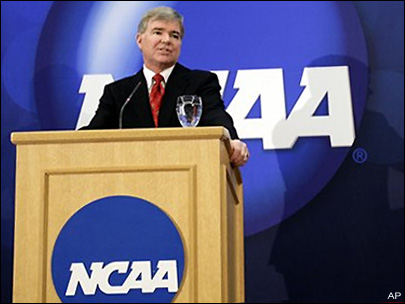
Mark Emmert Seems Serious About Punitive Sanctions, But Will They Stick?

The new guidelines also call for increasing the size of the infractions committee from 10 to 24 members, a modification designed to streamline the enforcement process, which has been widely denounced in recent years for its lumbering proceedings. In the wake of the most heinous and unconscionable scandal in the history of intercollegiate athletics, these changes provide a measure of legitimacy to the NCAA’s handling of the Penn State scandal and pushback for those who criticized the organization for their misplaced priorities throughout the enforcement process. Many chided NCAA president Mark Emmert for overstepping his bounds in bypassing the infractions committee and fast tracking the harsh punitive measures, fearing he was setting a dangerous precedent with the breadth and severity of the sanctions along with the hasty and unprecedented procedure used to deliver those penalties. By legislating a speedier decision in implementing a harsher punitive scale for violations, the new guidelines represent a step forward in support of Emmert’s recent actions. That NCAA leaders were overwhelmingly supportive of similar measures disputes the notion that Emmert operated without the consent and backing of organization members.

Read the rest of this entry »

Share this story

Morning Five: 08.03.12 Edition

Posted by rtmsf on August 3rd, 2012

  1. Thursday was a day of personnel movement around the college basketball landscape, but it was an endorsement of a proposal by NCAA leadership that made the most news. If approved as expected by NCAA presidents in October, a new measure for much more punitive penalties against NCAA rules violators would include “postseason bans of up to four years, fines that could stretch into the millions and suspensions for head coaches.” If these sanctions sound familiar, they should — Penn State’s unprecedented probation meted out by the NCAA just over a week ago included several components of these changes. Perhaps the biggest and most important change is in the shifting of culpability from individuals within the program to the “captain of the ship” — the head coach. Under the new guidelines, head coaches would be presumed vicariously liable for illegal actions performed by members of their staff — the burden would then fall on the head coach himself to prove that he was completely unaware of those transgressions (and was not negligent in doing so) to avoid responsibility. We haven’t had time to give this a lot of thought just yet, but in the era of ensuring plausible deniability among top dogs everywhere, this is a sea change in the way the NCAA views its expectations of conduct.
  2. Kelsey Barlow was last seen getting booted off of Purdue’s basketball team in late February after his second disruptive incident in a year, when he and teammate DJ Byrd became involved in some kind of confrontation at a West Lafayette bar. A tremendous perimeter defender with ideal size for the position at 6’5″, Barlow left his team high and dry for the second straight year during March Madness — in 2011, he was suspended for “conduct detrimental to the team,” and while VCU thoroughly ripped Purdue in that year’s Round of 32, he surely could have helped the Boilers in their tight game with Kansas at the same spot last year. Illinois-Chicago announced on Thursday that Barlow will resurface in the Loop, sitting out next season as a transfer to become eligible to play as a senior in 2013-14. Barlow started 22 games for Purdue last season, averaging 8/4/2 APG in a key glue guy role while also helping to lock down opposing guards in Matt Painter’s sticky defense. This is a talented pickup for a program that was absolutely terrible last year — 3-15 in the Horizon League, 8-22 overall — let’s hope that Barlow uses his second chance wisely.
  3. USC basketball received excellent news on Wednesday when doctors cleared its star point guard Jio Fontan to begin full contact practices again. It was a little over a year ago when the Trojan playmaker tore his ACL during an exhibition trip to Brazil, effectively torpedoing USC’s season before it even got started. A 19-win NCAA Tournament team from 2010-11 drooped to a disastrous six-win group without Fontan’s floor leadership as injuries mounted and hope was lost. Next season, though, Kevin O’Neill has a much higher ceiling for his squad — with Fontan back to join the intriguing prospect of seven-footer DeWayne Dedmon and a host of talented D-I transfers, the Trojans may be poised to leap back toward the top tier of the Pac-12 in a hurry. For comprehensive coverage of USC basketball, check out our Pac-12 microsite’s USC Week from back in early July.
  4. Going from the national championship game to an interim tag in the SWAC is a precipitous decline for a single decade of work, but that’s exactly where former Indiana (2002 national finalist) and UAB head coach Mike Davis finds himself this Friday morning after accepting the interim head coaching job at Texas Southern. According to local reports, the school “plans […] on keeping” Davis on board permanently as soon as it figures out how to handle the abrupt resignation of its previous head coach, Tony Harvey. Davis, along with Matt Doherty (UNC) and Billy Gillispie (Kentucky) represents one of the holy trinity of hires at elite programs in the last decade who were way, way in over their heads at that level. The race to the bottom knows no bounds.
  5. There’s no shortage of bizarre arrest stories in sports, and this one won’t move the broader society needle. But the weird “clerical error” involving Kentucky assistant Rod Strickland that resulted in his arrest during a routine traffic stop on Thursday is borderline absurd. First of all, he was reportedly stopped for “failure to signal” at a turn near the UK campus in Lexington. In most situations, this is otherwise known as a pretext to profile someone — seriously, who gets stopped for a turn signal violation? But it appears that in stopping him, a whole new can of worms was opened in that it turns out that Strickland’s license is currently suspended in Tennessee (which, through reciprocity with Kentucky, showed up in the national criminal database). That suspension stemmed from another arrest in October 2007 when he was pulled over while intoxicated and at the time was driving on a suspended license from Maryland! He also has a DUI conviction from Kentucky in 2010 which temporarily suspended his license there (it was reinstated in 2011). Good grief, man. It sounds like Strickland has a problem — whether with poor decision-making or something more sinister. Regardless, he just needs to leave the car at home.
Share this story

Morning Five: 08.02.12 Edition

Posted by rtmsf on August 2nd, 2012

  1. USA Today‘s Eric Prisbell published a piece on Tuesday with some rather inflammatory quotes about the status of big-time college basketball recruiting. Everybody already knows that agents and runners representing the interests of high school stars with their hands out is a big problem — but is it a 70%-of-the-elite-prospects problem? If you believe Michigan State head coach Tom Izzo‘s math, it is. “I am not saying that cheating is 80 percent of the game. It’s probably 20 percent. But it’s probably 70 percent of the top 20 percent [of player recruitments].” Izzo went on to say that he has “absolutely” lost recruits to other coaches because he was unwilling to play the agent/runner AAU game (which even Sonny Freakin’ Vaccaro says has gotten worse). In the same piece, North Carolina’s Roy Williams also made some interesting comments about stepping away from recruits who were ‘handled’ by AAU influences, saying, “Will I have a legitimate chance if I do it the right way?” There’s a lot of eyebrow-raising information in the article, and we highly suggest you read it — but the obvious question if Izzo’s numbers are anywhere near correct is… who exactly is landing all of these elite recruits if every major coach is on record blasting the system and doing it the right way? It’s not just Central Florida, that’s for sure.
  2. Team USA‘s men’s basketball squad is now 2-0 in round robin play with a game against always-dangerous Tunisia later this afternoon. Although there are no guarantees in a knockout tournament situation, we’re all too aware, it appears that the team led by LeBron James, Kobe Bryant and Kevin Durant are well on their way to another gold medal. Jeff Goodman writes that NBA owners are pushing so hard for a 23-year old age limit on the men’s team in future Olympiads that there is “little doubt” as to its eventuality [memo to owners: how about another age limit — one that limits inclusion in your league to players 20 years old and older]. If USA Basketball decides to go this route with the 2016 team, most of today’s elite high school and young college stars would be eligible — Goodman takes a stab at putting together a potential team, and would you believe that a player nobody outside of Columbus, Ohio, and Ann Arbor, Michigan, had heard of this time last year is designated as the starting point guard? Basketball can be a funny sport that way.
  3. While on the subject of Olympic teams, A Sea of Blue put together an interesting analysis reviewing what the six men’s basketball teams in the “Dream Team” era might have looked like if USA Basketball had never ditched the amateur model. The cream of the crop is very clearly the 1992 squad, a team filled with players on in an era on the cusp of moving to a prep-to-pro mentality (Kevin Garnett began the trend in 1995). A starting lineup of Shaquille O’Neal, Alonzo Mourning and Chris Webber may have even crowded out 1992 NPOY and two-time NCAA champion Christian Laettner. In the backcourt, do you run with Penny Hardaway and Jim Jackson over the dominant Duke duo of Bobby Hurley and Grant Hill? It’s really an unbelievable team. Conversely, the 2000 team — led by Kenyon Martin? Shane Battier? — is a joke. That team, decimated by the prep-to-pro era, may have finished dead last in the Olympics that year. It’s an interesting thought experiment, and we encourage you to visit ASoB and check it out.
  4. Going back to 1992 — was it the greatest year of basketball in American history? — former Duke star Bobby Hurley raised some major burn late Tuesday night after tweeting the following in reference to the gold medal-winning USA women’s gymnastics team (dubbed a modern-day “Fab Five”): “Proud 2 watch the “Fab Five” perform & bring home the gold! Who would have thought that the “Fab Five” could it get it done.” Of course, the Michigan group of Chris Webber, Jalen Rose, Juwan Howard, Jimmy King, and Ray Jackson not only lost the 1992 national championship game to Hurley’s Blue Devils, but they also lost two other regular season games to Duke during that era, giving the point guard the easy upper hand when it comes to taking those shots.
  5. With the exception of a notable tweeter, the Penn State story has died down in the national media as a result of the Olympics. And even though the long moribund basketball program was not implicated in the scandal or penalized by the NCAA in any way, it’s incomprehensible that Pat Chambers’ program will not be negatively impacted among the collateral damage to the Nittany Lion brand. In response to this piece by Jeff Borzello at CBSSports.com, it may very well be true that a recent de-committed recruit was already on the fence about heading to State College and another Class of 2013 recruit says he has no intention of backing out, but the issue will become more apparent in future classes where the semi-permanent negative message about Penn State has had sufficient time to stick. An argument that PSU will continue to recruit non-elite talent in the same way as before is not really an argument at all — the point is that every aspect of that university, from the chemistry lab to the jai alai club team to the local Penn State chapter of PETA, will be associated with this horrific situation for years to come. Whatever each group had to do to earn recognition prior to this fiasco, they’ll have to do so that much more in the future. This goes for basketball too.
Share this story

Morning Five: 08.01.12 Edition

Posted by rtmsf on August 1st, 2012

  1. The NCAA on Tuesday hammered Central Florida with a one-year postseason ban as a result of the dreaded “lack of institutional control” violation in both its football and men’s basketball programs. The penalty is effective next season, which means that UCF’s last round in Conference USA before moving to the Big East will not contain the possibility of a league championship. For all the nitty-gritty details of the findings and what the probation means to the program, individual players and coaches, read Jeff Goodman’s piece on the matter, but the nutshell is that the athletic department allowed at least one agent to run roughshod through the program even though only one of the players involved (AJ Rompza) ever suited up at UCF. Comically, and as the Orlando Sentinel‘s Mike Bianchi writes: “The most tragically comical part of the whole ordeal is this: The Knights were cheating to get recruits, but none of those recruits ended up playing for the school. It’s one thing to be a cheater; it’s another to be an incompetent cheater.” We’re sure that this makes Ohio State, USC, and all the rest feel much better.
  2. This has been quite a transitional week for a number of college basketball media personalities, as CBS Sports, ESPN, and Sports Illustrated all announced the signing of new talent on Tuesday. The biggest mover was perhaps ESPN’s Doug Gottlieb, who signed on with CBS to serve as a college hoops studio and game analyst, host his own drive-time radio show on CBS Sports Radio and a television show on CBS Sports Network, and provide exclusive online content for CBSSports.com. Gottlieb is one of our favorites in the business because his devotion to research is impeccable and, even when we disagree with his points (which is uncommon), he cuts through all the typical pandering you see on television to make them. This announcement came on the heels of ESPN’s Monday announcement of its own new hires, with former head coaches Bruce Pearl and Seth Greenberg joining the college basketball studio as analysts, and NBA analyst Jalen Rose slotted to replace the departed Hubert Davis on College Gameday. We don’t have much of an opinion on the coaches at this point, but generally feel like Rose’s transformation from Fab Five knucklehead to a solid NBA analyst is one of the greatest we’ve ever witnessed. Others are less impressed with these hires. Finally, SI announced internally on Monday night that the New York Times‘ rabble-rouser Pete Thamel is moving over to its writing lineup. For those wondering, your RTC editors have not yet been contacted by the Times for Thamel’s open position, but we expect the call at any moment.
  3. UNLV basketball has bounced in and out of the Top 25 the last few seasons under Lon Kruger and Dave Rice, but a jump into the national consciousness like the Runnin’ Rebels enjoyed two decades ago with Larry Johnson, Stacey Augmon, Tark the Shark and the rest has remained elusive. But, as Jeff Goodman writes about Rice’s 2012-13 Rebs, the upcoming team will be the most talented that Vegas has seen just off strip since that monstrous team some 20 years ago. With elite talent such as Mike Moser, Anthony Bennett and Khem Birch available to him on the front line, and an athletic backcourt including Anthony Marshall, Bryce Jones and Katin Reinhardt, Rice is realistically talking about pushing tempo to put the “Runnin'” back in the Rebels nickname. If the pieces all come together and UNLV gets past its road woes, this team is a group worth watching all season long.
  4. Speaking of Sin City, Seth Davis is working hard this week, with a two-part piece he calls “Summer Springs Eternal” over on SI.com. The article breaks down his July trip to Las Vegas where he no doubt wore a nice white golf shirt and pow-wowed on the bleachers with the top coaches from around the nation. In the first installment published on Monday, he relates anecdotes from Harvard’s Tommy Amaker, Colorado’s Tad Boyle, Pittsburgh’s Jamie Dixon, Illinois’ John Groce, UCLA’s Ben Howland, Memphis’ Josh Pastner, DePaul’s Oliver Purnell, and Butler’s Brad Stevens. Part two published on TuesdayVir includes stories and quotes from Virginia’s Tony Bennett, Gonzaga’s Mark Few, San Diego State’s Steve Fisher, USC’s Kevin O’Neill, Purdue’s Matt Painter, Kansas’ Bill Self, and Georgetown’s John Thompson, III. Even if your team’s coach isn’t on this list, it’s well worth the read to see which guys are willing to drop hints of truth about their players and teams, and those who are completely full of coachspeak.
  5. Lists like the one that Athlon Sports just released naming the top 30 coaches in college basketball are a bit of an exercise in futility because the topic is so completely subjective that everyone has a complaint. Still, you don’t release such a list without asking for attention, so here are the top three problems we have with it: 1) It’s very hard to believe that any list of best current college coaches would have anyone other than Duke’s Mike Krzyzewski at the very top. Four national titles, 11 Final Fours, countless wins and accolades… but perhaps most importantly, he saved USA Basketball from the abomination it had become. 2) Roy Williams at #7 is astonishing as well. He has his issues, but is he behind Jim Boeheim and John Calipari? 3) Even if Jim Calhoun retired today, there is no way on this earth that there are 21 better college basketball coaches than him. And definitely not Mike Montgomery, Tom Crean or Mike Brey. Get over there and leave your comments on their list.
Share this story