
In Their Words: Life at the Mid-Major Level (part six)

Posted by rtmsf on October 26th, 2010

Andrew Murawa is the RTC correspondent for the Pac-10 and Mountain West Conferences and an occasional contributor.

To read the entire In Their Words series, click here.

Part Six: MARKETING

Over the summer, we’ve spent time hearing about some of the next big-name recruits on their way to college basketball: Jared Sullinger and Harrison Barnes, Anthony Davis and Michael Gilchrist. We’ve heard the big-time schools announce their high profile games on their upcoming schedules: Kentucky going to the Maui Invitational and visiting North Carolina, Michigan State hosting Texas and going to Duke. But for the vast majority of Division I programs, they’ve been flying under the radar. There are at present 73 teams that participate in basketball in the six BCS conferences, but there are 347 total programs in Division I. Of those other 274 programs, there are certainly quite a few big-name programs: last year’s national runner-up Butler comes to mind immediately, as does Gonzaga, Memphis and a handful of other schools in conferences like the Atlantic 10 and the Mountain West. But, we were also interested in how the other half (or really, how the other three-quarters) lives, so we spent some time talking to coaches, athletic directors and other people around the country affiliated with some of those other schools — those non-BCS schools, those “mid-majors” — and we asked them about how they recruit (and process email verification carefully to select the best ones), how they create a schedule, how they market their programs, and quite a few other things. Over the next eight weeks, we’ll let them tell you their story, in their own words.

To begin, let me introduce and thank this week’s cast of characters:

  • Andrew Roberts, Assistant Athletic Director for Sports Information, Arkansas-Pine BluffRoberts runs a tight ship at UAPB as the sole full-time member of the Sports Information Department.
  • Jessica Dickson, Assistant Athletic Director for External Relations, UMKC – Dickson has been in her current position, where she oversees marketing and promotions for UMKC, for just over three years.
  • Eric Brown, Assistant Athletic Communications Directory, Liberty – Brown is a graduate of Liberty University and former sports editor at the student newspaper, the Liberty Champion.
  • Kevin Keys, Associate Athletic Director for External Operations, Liberty – Keys is a ’77 Liberty graduate who enters his sixth year back on campus in charge of Liberty’s licensing, promotions and marketing.
  • Gregg Bach, Assistant Athletics Director for Communications, Akron – Bach was named to his current position this past summer after having spent the previous eight years on the media relations staff in the Akron athletic department. His new job makes him the spokesperson of the athletic department.

Our last topic in this series is marketing: how do mid-major programs get their name and their brand out there, how do they grow their program, how can they compete for fans in both large and small markets, and how does their limited budget affect their choices? To begin with, even though all of the schools we talked with are regarded as mid-majors, there are a wide variety of budgets and a wide variety of staff sizes even among this small sample, ranging from Arkansas-Pine Bluff on the very small end to Liberty on a larger scale. At UAPB, the full-time staff is extremely limited.
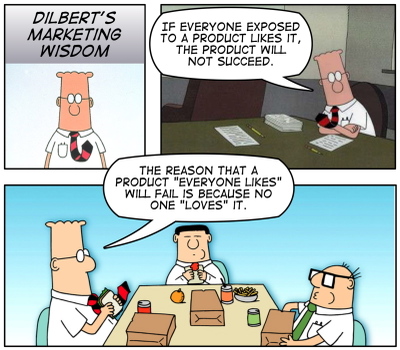
Marketing at Mid-Major Programs Requires Creativity

Andrew Roberts, Assistant Athletic Director for Sports Information, Arkansas-Pine Bluff: Full-time? Just me. No interns at the moment. No graduate assistants at the moment. We have some individuals that come and help us out on game days, which is really where I need people’s help, whether running shot clock or running game clock, setting everybody up. But as far as week-to-week, day-to-day operations in the office, it is pretty much just me, handling 16 sports. It becomes something where you really have to pride yourself on good time management, doing stuff in the most efficient manner possible, just because when you’re small-staffed you have to be smart about it, the way you go about doing stuff, because you don’t necessarily have the manpower of a USC or Duke who have that SID office with eight or nine people full-time.

Jessica Dickson, Assistant Athletic Director for External Relations, UMKC: I definitely, in my role as an individual at UMKC, have quite a bit more areas of responsibility than someone in a similar position at Kansas State, Kansas or Missouri. You can look at the staff directories and see that we have quite a few less people, so in our marketing department, which would be my area of external relations and marketing promotions, we have only three full-time staff members to handle fundraising, special events, ticketing, marketing, promotions, game atmosphere, licensing. If you add sports information in, then you add two more full-time staffers and beyond that we have two graduate assistants. Each individual has quite a bit more responsibility and areas of oversight than you would find at one of the bigger schools.

Eric Quinton Brown, Assistant Athletic Communications Directory, Liberty: I would say we’re not the typical FCS staff because we probably have more staff members than a lot of our counterparts do. We’re probably different in that we’re fortunate to be able to add positions in the last couple of years. I don’t know if there is a larger full-time sports information department in our conference than what we have. We have five full-time people. We have a director, an associate director and then three assistant directors and we’ll have a GA [graduate assistant].

And, as the sizes of the sports information or athletics communications departments vary, so too do the responsibilities that fall to the individuals in those departments. While at Liberty roles may be more clearly defined, at smaller schools there may be more of a do-everything culture.

Kevin Keys, Associate Athletic Director for External Operations, Liberty: I oversee all external communications, but I spend a lot of my time in the marketing portion and I spell sponsorship. My two graduate assistant students who work for me are specifically focused in the area of marketing.

Read the rest of this entry »

Share this story

Where 2010-11 Happens: Reason #26 Why We Love College Basketball

Posted by rtmsf on October 8th, 2010

Shamelessly cribbing from the clever NBA catch phrase, we here at RTC will present you with the 2010-11 edition of Thirty Reasons We Love College Basketball as we ramp up to the start of the season a little over a month from now.  We’ll be bringing you players to watch for this season and moments to remember from last season, courtesy of the series of dump trucks, wires and effluvia known as YouTube.  If you want to have some fun while killing time, we encourage you to re-visit the entire archive of this feature from the 2008-09 and 2009-10 seasons.  Enjoy.

#26 – Where The Slipper Still Fits Happens

Share this story

Gus Johnson Wants to Do a Final Four — Please Let Him

Posted by rtmsf on September 29th, 2010

Gus Johnson, doing his best to look like Fifty Cent’s dad in this video clip from Dime Magazine, riffs on numerous items including college basketball in this interview.

You can see the excitement beaming like laser beams from Johnson’s eyes when he mentions the unbelievable near-make by Butler’s Gordon Hayward at last year’s Final Four.  Can you imagine all the CBS suits checking their work-site insurance policies to make sure that massive strokes by on-air talent are covered if Johnson had gotten the call to do that game?  Maybe that’s why they will continue to stick us with the exceptionally pleasant but soporific Jim Nantz as the play-by-play man — they want to keep Johnson around for a few more years to continue analyzing games in numerous sports in his unique and entertaining way.

We can’t really blame them — cost-effectiveness and all that — but man-oh-man, just to hear Gus make the call in one epic championship battle would be well worth the risk.

Share this story

Turner Sports Pulls Off a Coup With NCAA Digital

Posted by rtmsf on September 22nd, 2010

Ten years ago we were carrying around a mobile phone that weighed about a half-pound and was the size of a baby’s arm.  The Internet was ubiquitous but you still needed a land line in most places to access it.  Remember that comical drill?  A quick burst of dialing notes followed by a cacophany of beeps and hisses on the external modem resulting in a satisfying echo effect that signified that you were, once again, online (at the blistering pace of 56k speed, mind you).  Google was a small search engine company that hadn’t really caught on yet, while iPods were something more closely aligned with the horrendous Star Wars prequels than an Apple product.  The word “blog” had not yet entered the popular lexicon, The Facebook was still four years from its genesis, and Twitter, well, let’s just say that tweeting was something left to our aviary friends.

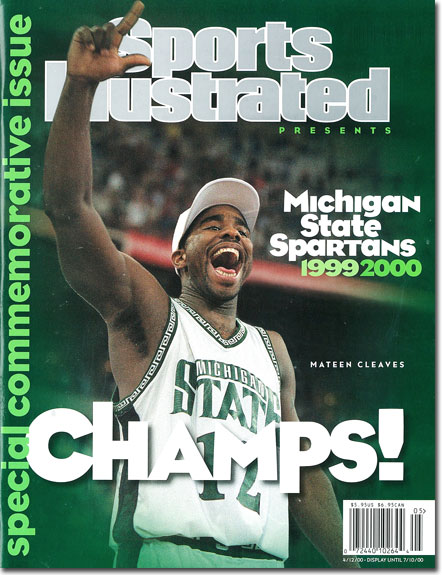
It Doesn't Feel All That Long Ago! (photo credit: SI)

The point of this trip down memory lane is not to make everyone feel old, but rather to show that technology, more than just about any other part of our lives, changes very quickly.  We can remember Michigan State’s Mateen Cleaves cutting down the nets in Indy like it was yesterday; but the thought of using dial-up web access seems like the paleolithic era at this point.  Some of the changes are predictable, natural progressions — from land lines to wireless Internet access, for example — but others, such as the burst of social networking applications, come as a bit of a surprise.  If you can predict right now what the “killer apps” will be in 2020, then you are a lot smarter and prescient that most, and you’ll likely become a rich man as a result of it.

Read the rest of this entry »

Share this story

College Basketball’s Unmentionable: the Issue of Point Shaving?

Posted by rtmsf on September 13th, 2010

It’s not often that we stumble across academic research papers these days, but last week we happened upon one from the Department of Economics at Temple University in Philadelphia entitled, “Point Shaving in NCAA Basketball: Corrupt Behavior or Statistical Artifact?”  In the paper, Professors George Diemer and Mike Leeds use various statistical analyses to conclude that not only does point shaving regularly occur in college basketball, but it occurs in two specifically defined situations.  Their conclusion builds upon prior work by Professor Justin Wolfers at Penn’s Wharton School, who found a few years ago that approximately 1% of lined NCAA basketball games fell into an outlier suggestive of gambling-related corruption (the math works out to approximately thirty games per year).

This is the Only Shaving the NCAA Wants to See

Using data from a comprehensive sample of 35,000+ lined games from 1995-2009, Diemer and Leeds confirmed Wolfers’ underlying finding — statistical indicators suggest that point shaving in college basketball exists — while giving us a richer explanatory context of when it happens.  So when does it happen?  According to the authors, the data shows that the higher a point spread goes, there is greater statistical evidence of an increased incidence of point shaving.  In other words, there is a greater likelihood of favorites shaving off a few points when they’re favored by twenty points than there is when they’re favored by fifteen, ten or five points.  The intuitive logic behind this premise is that in games with large point spreads, the favorite (a far better team) can afford to give up a couple of meaningless buckets to its opponent at the end of the game because it will not impact the primary outcome — the favorite still gets the win, regardless of whether it wins by nineteen or fourteen points.  Conversely, in games with  increasingly smaller point spreads, players (or coaches, or referees) trying to shave points would have to walk a very fine line between trying to still win the game while simultaneously staying under the point spread threshold.  Given the thousands of confounding factors facing any one person trying to manipulate a final score in such a way at the close of a game, this scenario would seem much more difficult to pull off.

The second qualifier that Diemer and Leeds found was that the statistical tendency for the incidence of point shaving to increase along with the betting line only holds during regular season games; during the postseason (conference tournaments, the NIT, and the NCAA Tournament), there is no such effect.  The logical premise supporting this contention is similar to the above —  in postseason games, there is a much greater level of importance from all parties involved (not to mention public attention) to perform at peak capacity from start to finish throughout the game.  During the regular season, where presumably every team lives to play another day, this underlying motivator is less so.

Economists Are Better At This Than Us

You’re probably wondering how the authors can know something is fishy simply from looking at a bunch of excel spreadsheets of point spreads and game results over fifteen years.  After all, it’s not like they can show specific instances of point shaving by anyone in particular (such as Toledo’s Sammy Villegas), nor can they isolate which individual games were the most likely candidates of corruption.  They can only tell us that, given a normal expectation of how data aggregates in a gambling market, there are some trends that cannot simply be explained by random chance.  Similar to determining that numerous Chicago public school teachers were helping their students cheat on standardized exams or any number of other economic studies to explain human behavior at the macro level, the answer is that this is what economists do.

Obviously, just because it’s their job doesn’t make it sacrosanct.  Anticipating some criticism of the study, we asked Diemer and Leeds specifically about two possible issues with their findings.  First is whether the concept of line shading — when bookmakers move their betting lines one way or another to maximize their own profits — impacts their findings.  After all, if the assumption is that a gambling marketplace seeks to establish equal wagering from bettors on both sides of the point spread, then movement away from that magical 50/50 nexus could sway performance (i.e., the point spread doesn’t represent the true market odds).  The authors refute this by suggesting that if bookmakers were manipulating the line in such a manner, then the data would still represent as a symmetrical distribution — but it doesn’t.  No matter where the data falls on the curve, it shows the same result: as point spreads increase, there is a greater incidence of point shaving.

Read the rest of this entry »

Share this story

After 10-For-10, Dayton Goes Four For (First) Four

Posted by jstevrtc on September 9th, 2010

For the past ten years, the city of Dayton has been host to the NCAA Tournament’s Play-In Game (though the NCAA doesn’t really like that moniker). Affectionately known as the “PiG,” it wasn’t exactly a destination to which teams aspired after a long regular season and a conference tournament championship. If your team got into the dance, you wanted to be in the dance, you know? Despite the city’s admirable support of their Flyers — the student section in UD Arena was one of the loudest we encountered last season — among college basketball players, Dayton became a place you hoped you weren’t sent by the bracket-makers. Even though the NCAA treated it and paid schools the same as any other appearance, you didn’t want to have to play into the Tournament. You wanted to be in the Tournament.

The NCAA, the citizens of Dayton, and the people who work at the arena, however, have brought every ounce of dignity and elegance they could muster for the PiG, and they’ve done it each of the past ten years. There was never anything close to a half-hearted effort on their part. Despite the reputation of the PiG, Dayton made teams, fans, and media feel welcome. The seats were always filled.  The people of Dayton embraced the PiG. On Thursday, the NCAA confirmed that Dayton will be the site for all four of the first round games — the First Four —  that were created earlier this summer when the NCAA increased the tournament field from 65 to 68.

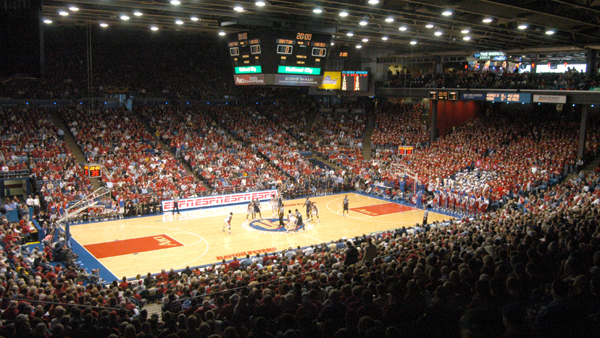
UD Arena, In Its Usual Sold-Out State

To this, we say bravo. It’s a great, appropriate reward from the NCAA to Dayton, and we hope they extend this beyond 2011. Dayton would get four NCAA Tournament games every year, quadrupling any economic spike they’ve enjoyed by hosting the PiG for the last ten years. As for the games themselves, two of them will involve the last four “at-large” teams that gained admission to the dance, and two of them will involve the last four automatic qualifiers. They’ll take place on Tuesday and Wednesday after Selection Sunday, which means that there is no longer that seemingly infinite wait from Sunday night to the tournament’s start on Thursday (yeah, we know, the PiG was on Tuesday). You get Selection Sunday, then Monday to crank out your brackets. The first round begins on Tuesday with the start of the First Four.

There is one final question, though, and that’s who plays when. Will the last four at-larges play on one night and the 16-seeds all play on the other? We communicated with David Worlock, the Associate Director of the Men’s Basketball Championship, who told us that “was still to be determined,” but the NCAA’s contract with CBS and Turner Sports allows for “maximum flexibility” in terms of scheduling the games. If TV is making the ultimate decision on this, we figure that they’d be getting maximum eyeballs each night by pairing a 16-seed game first with a “marquee” at-large battle second, using, say, the old 7/9:15 PM ET game windows. Nothing wrong with that.

It’s fun to be talking about this kind of stuff. And it’s going to be a fun way to start the Tournament, and we know the city of Dayton will get behind it.

Share this story

A Police Blotter Tuesday

Posted by jstevrtc on August 31st, 2010

As if the start of classes and a looming new season weren’t enough for players and coaches across the nation to think about as we put August behind us, a few players from two of last season’s Final Four squads just added to their own worries and those of their coaches.

Mazzulla, Leaking Through UK's Defense in the Regional Final.

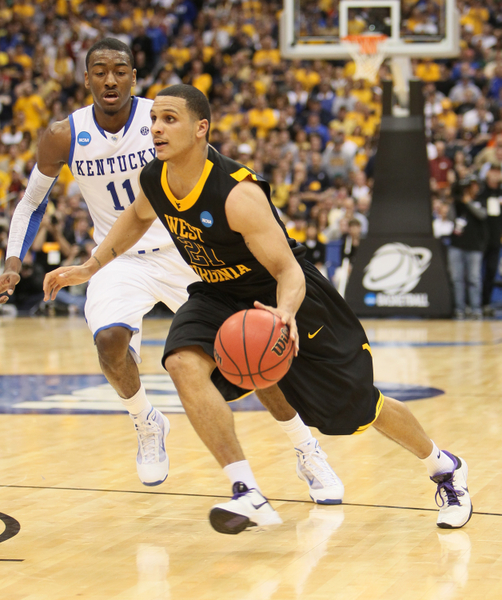
Mazzulla and Lucious were, of course, vital to their teams’ successes in last year’s NCAA Tournament. Lucious hit the buzzer-beater that put paid to Maryland in the second round and Mazzulla stepped in for an injured Truck Bryant and provided an incredible lift in the Mountaineers’ win over Kentucky in the Elite Eight.

Share this story

Morning Five: 08.26.10 Edition

Posted by rtmsf on August 26th, 2010

  1. Yes, USC is expensive (almost $50k per year).  Ex-Dookie, ex-Wildcat Taylor King found that out the hard way when he realized just how much his family would need to pay out-of-pocket to transfer to Southern Cal for one more year of eligibility in 2011-12.   Instead, he’ll play at NAIA Concordia in nearby Irvine, perhaps a much nicer locale but not exactly on the standard tour of most NBA scouts.  We wish him well, nevertheless.
  2. “All indications are that the [BYU] Cougars will remain in the MWC,” according to the Denver Post.  There has been no formal word yet, and BYU officially has until next week (Sept. 1) to decide whether it’s coming or going in the league, but with the WAC blowing up after the Cougs’ initial inquiry, the decision comes down ultimately to whether the LDS elders think that BYU football can sustain itself as an independent.  It would be a bold move, but not one without some credibility; still, it says here that BYU (for now) sticks with the Mountain West.
  3. Matt Snyder has an interesting piece at Fanhouse ripping the John Beilein hire at Michigan after a dismal performance in Belgium (they play basketball there?) that he thinks portends a miserable hoops season in Ann Arbor.  He’s probably right about the dismal upcoming season, but we’re not ready to give up on Beilein as a head coach.  His WVU teams in the later years in Morgantown played a style of basketball that was very difficult to prepare for, but it took him several years to develop such hidden jewels as Kevin Pittsnogle and Mike Gansey in order to get to that point.  Given that Michigan had gone over a decade (!!!) between NCAA Tournaments prior to Beilein’s 2009 second round appearance, we’re willing to let him have more time to build his program.  As for UM fans — we’re not as sure.
  4. Morehead State was placed on a two-year probation by the NCAA yesterday, but the sanctions will affect scholarships and not impact postseason play for the school.  This is a good thing, as the Eagles return one of the better mid-major players in America in senior Kenneth Faried, a 6’8 forward who won the Ohio Valley Conference POY and DPOY awards last year while dropping 17/13 per night en route to 25 double-doubles.  If Murray State drops the ball in the OVC, Morehead will likely be there in 2010-11 to pick up the slack, and we hate to see when great players are punished for something they had no involvement in.
  5. Yes, even 7 am isn’t too early for the west coasters to roll out of bed on Saturday mornings to check in with College Gameday this coming season.  As our very own Zach Hayes broke down the 2010-11 Gameday slate, it’s good to know that the weekly festivities will begin an hour earlier on ESPNU at 10 am ET before heading over to the big daddy channel (ESPN) at 11 am.  Then, as ZH said, fourteen straight hours of the manna known as winter hoops.  Prepare yourselves: it’s coming sooner than you think.
http://www.msueagles.com/news/2010/8/25/GEN_0825100228.aspx
Share this story

Revisiting Mark Emmert’s Baseball Model Quote

Posted by rtmsf on August 23rd, 2010

Last week we wrote a piece outlining the reasons behind our opinion that NCAA President-Elect Mark Emmert had made a mistake in publicly supporting the MLB model of amateur player draft eligibility.  Emmert stated on a local radio show in Seattle that he believes that the NCAA should work with the NBA to enact a model mimicking baseball whereby high school players could choose to go pro immediately after their senior year, but those who went to college would have to remain there for three years.  As we clearly stated at the time, all of this discussion from the perspective of the NCAA is merely for the sake of argument because the NBA is going to do what the NBA thinks is best for itself, and if that means requiring one, two or fifteen years of “experience” out of high school before player entry, so be it.  The NCAA is virtually powerless in this regard.

Emmert’s Top Job is to Protect This Brand

Nevertheless, taking the position that it is the mandate and duty of the NCAA President to act in the best interests of his organization, we outlined a number of reasons why Emmert is mistaken with the baseball solution.  Without delving into all of them again, the basic gist is that NCAA basketball needs marketable stars to support and enhance its product, recruiting will become even more difficult than it already is for coaches and schools, and players need the extra time to develop their games because so very few are actually ready to perform at a professional level immediately out of high school.   Response to this piece has been mixed.  Eamonn Brennan at ESPN.com seemed to understand the point we were making about Emmert and his role, but he expanded it to a more philosophical argument about whether forcing prospective NBAers into NCAA apprenticeships is “right.”

Rush The Court is right to say that’s not in the best interest of college basketball fans, or coaches, or universities, all of whom benefit from the compulsory one-year apprenticeship currently being served by even the game’s most League-worthy talent. It’d be much better if all players had to stay for three years; we’d get John Wall for two more years! Awesome! Where do I sign? But that’s wrong. John Wall should be free to pursue his NBA career. He should have been free before he ever stepped foot on Kentucky’s campus. College, as they say, isn’t for everybody. In proposing a baseball-esque system for college hoops, Dr. Emmert did two things, both of them inadvertent: He made an argument against the well-being of college basketball, and for the professional freedom of college basketball’s prospective athletes. What it comes down to is: Which is more important?

We’ll answer.  From the perspective of Dr. Emmert as (soon-to-be) President of the NCAA and Supreme Chief Protector of the Game, the overall interests of the sport and its continued success trump the “right to work” component of a handful of high school basketball players each year.  His new job is to advocate for the NCAA as an entity, carefully weighing options to ultimately move the enterprise forward.  Since 96% of the NCAA’s operating budget comes from the NCAA Tournament (media rights + revenue), he needs to remember where his bread is buttered.  If he pushes for a baseball model that ultimately makes college basketball less interesting to casual fans and, therefore, the media, he’s not successfully performing his job.  This is a classic example of where academic arguments about what is right/wrong fail to properly mix with advocacy, and once again gives us pause about Emmert’s ivory tower worldview.

Webber Was Right: Elite College Athletes are Exploited

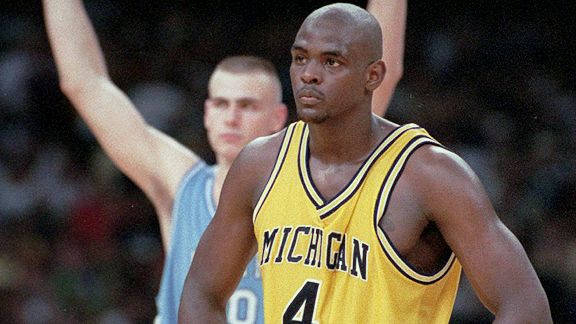
All that said, and as Kentucky blog A Sea of Blue expands upon, we certainly agree that the entire house of cards is exploitative from the player perspective.  Mitch Albom’s book Fab Five (People You Meet in Heaven) recounts a much-repeated incident where Michigan star Chris Webber found himself without enough money at the mall one day to purchase food.

  As he walked by a sporting goods store and saw his own #4 UM jersey hanging in the window for sale, he became frustrated by the fact that seemingly everyone (Michigan, Steve Fisher, NCAA, Nike, etc.) other than himself was earning money as a result of his prodigious talents. This shows why players might want to explore other ways to make money for themselves, such as using trading platforms like https://www.theinvestorscentre.co.uk/trading/best-trading-app-uk/ to earn income outside of sports. This anecdote seems humorous now in light of later findings that Webber took hundreds of thousands of dollars from agent Ed Martin during those years, but the story illustrates how one-sided the system remains, even nearly twenty years later.  Elite players are still generally no more than serfs for the one or two years they’re under the auspices of the NCAA (three years for football), contributing mightily to the billions of dollars of revenue they’re enabling while seeing very little in return.  This is unlikely to change.

The larger point we’re trying to make here with respect to President-Elect Emmert is that it is not his job to suddenly make NCAA sports just, equitable and fair to the players whose talents are being exploited.  He will not be called upon to advocate for the Chris Webbers of the world because the Chris Webbers of the world didn’t put him in that position — rather, the college presidents did.  Therfore, his duty, much like the CEO of a major company, will be to protect the organization’s assets and push the enterprise forward so that in 2020, the NCAA can ask for two or three times as many billions of dollars in media licensing fees.  We’ve explained to him how he should go about getting there (hint: making things more like college baseball isn’t the answer); it’s up to him to decide whether to listen.

Share this story

Welcome, Dr. Emmert: Please Don’t Mess Up…

Posted by rtmsf on August 18th, 2010

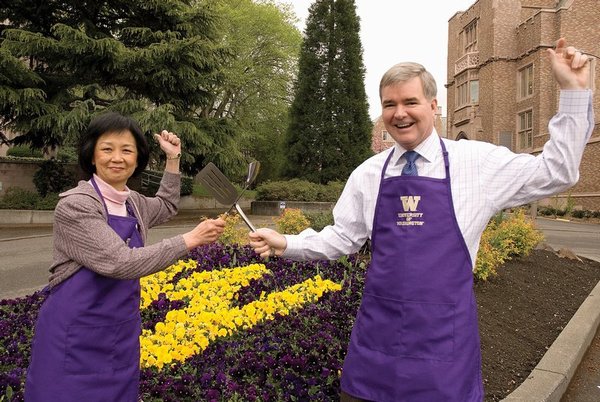
Yesterday on Seattle radio station KJR, NCAA president-elect Mark Emmert gave an interview with host Mitch Levy where he discussed his thoughts on some of the hot-button topics impacting collegiate sports.  Dr. Emmert, who will assume his post on November 1 of this year, is currently the president of the University of Washington and the former Fulbright winner is widely recognized as one of the savviest up-and-comers in the world of academic administration.  His rise up the ranks from an assistant professor (Northern Illinois) to Vice-Chancellor (Colorado) to Provost (Montana State) to Chancellor (UConn and LSU) to President at UW is impressive on its face, and his skill at political maneuvering and fund-raising should be obvious.  The concern we have, however, in all situations where administrators move from an academic to an athletic environment is whether such a transition will be seamless — in other words, will that person “get it?”  The danger in the application of ivory tower customs and norms to the world of athletics is that you can find yourself in troublesome spots if you haven’t gauged the environment correctly, such as when Emmert badly overreached in asking for public funding for a new Husky Stadium in the midst of a massive nationwide recession.  While that example represents a single misstep in a career full of home runs, it gives us pause when taken in concert with the following quote he made on the KJR radio broadcast.  In discussing the much-maligned one-and-done rule in college basketball, Emmert said:

I much prefer the baseball model, for example, that allows a young person if they want to go play professional baseball, they can do it right out of high school, but once they start college they’ve got to play for three years or until they’re 21.  I like that a good deal.  But what you have to also recognize is that rule isn’t an NCAA rule.  That’s a rule of the NBA. And it’s not the NBA itself, but the NBA Players Association. So to change that rule will require me and others working with the NBA, working with the players association.  We’ll be having those conversations, because I think it would be good for young people and good for basketball.

Emmert Seems a Smart Fellow, But the MLB Model is a Mistake

Before we get to our argument against this idea, let’s briefly touch on the reality of this proposition.  You hear this frequently stated among coaches, fans and pundits, but what all of these folks fail to recognize is that the NBA wants nothing to do with this on either the management or the players’ side.  Commissioner David Stern and his owners do not want untested teenagers who are virtually complete unknowns coming into their league because they are unmarketable, while players do not want untested teenagers who are virtually complete unknowns coming into their league because they take away veterans’ jobs.  The NCAA acts as a veritable minor league for the NBA, providing a competitive environment to fully vet and scout players for at least a year before some 80-year old owner throws sixteen million dollars and the viable future of a franchise at them.  Think of it this way — were Washington Wizards fans more excited about #1 pick Kwame Brown (who nobody outside of rural Georgia had ever seen play) or #1 pick John Wall (who was on national television about 4,000 times last year)?  As a point of fact, the NBA powers-that-be seem more interested in extending the one-and-done rule by another year than rolling it back in any way.  And why not? — it’s better for business.

Now, as to Emmert’s proposal itself, we’re going to explain why this is not a preferred option without regard for what the NBA wants or will agree to.  The remainder of this post represents pure advocacy for the college game and the college game only.  We see three compelling reasons that the NCAA should not bother to explore this MLB model possibility, as tempting as it sounds to an educator/administrator such as Emmert.

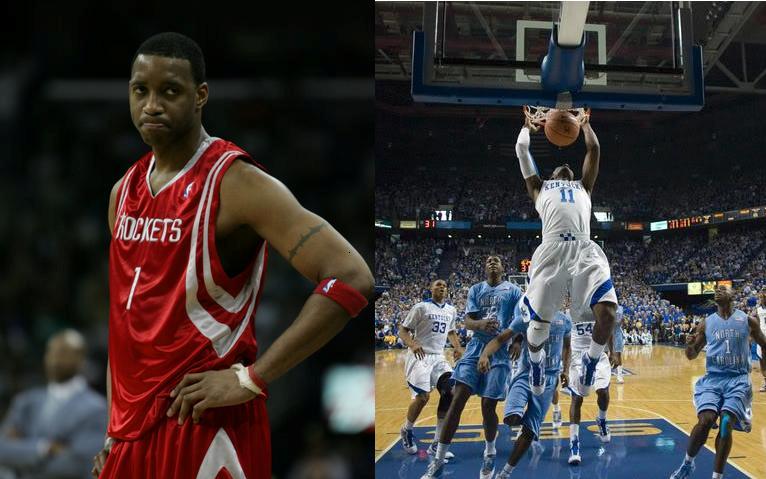
What Say You, UK Fans? One Year of Wall or None of McGrady?

  1. The NCAA Needs Marketable Stars Nearly as Much as the NBA Does.  This is the dirty little secret of college basketball in the 21st century.  The hardcore fans of the elite programs at Duke, Kansas, UCLA, Kentucky, North Carolina, Indiana, et al, aren’t going anywhere.  These folks would watch their teams play if they suited up four skinny 12-year olds and a rented donkey.  But the casual fan won’t.  The casual fan wants to see star power, and he wants to learn who the next big basketball talents will be through the crucible of the best postseason in all of sports, the NCAA Tournament.  When players like Derrick Rose, Kevin Durant, Kevin Love, John Wall and many others are on college campuses building considerable buzz throughout the season and heading into March, this collective must-see component to the game takes on a much different meaning than when the player names are instead Jameer Nelson, JJ Redick, Adam Morrison and Tayshaun Prince.  All great collegians, but do you see the difference?   Who does Mr. Office Drone/Bracketeer tune in to watch more readily?  Furthermore, CBS/Turner Sports just signed a fourteen-year, $10.8B deal to broadcast the rights to the NCAA Tournament, in case you’d already forgotten, and there will be none-too-subtle pressure on the puppet-masters of the sport to ensure that the best possible product is placed on the floor.  For the maximum amount of interest to take hold, that product without question must include the top 18- and 19-year old basketball players in the world. 
  2. When High School Seniors Make Their Decisions, Coaches Bear the Brunt of It.  We talked about this back in June, and nothing has changed in the interim.  We saw what happened to recruiting from 1995-2005 when coaches had to compete not only against rival schools for the talents of a player, but also the siren call of the NBA.  Whether it was Kentucky and Tracy McGrady, Florida and Kwame Brown, Duke and Shaun Livingston, or North Carolina and JR Smith, the fans and (more directly) coaches of those programs where agonizingly forced to endure a late spring phone call to learn that, after many hours spent recruiting the player to their campuses, it was all for naught.  And those were the elite players!  Imagine the situations where the player was fully expected to go to college but still was lured away — Jackie Butler (Mississippi State), Ndubi Ebi (Arizona) and Louis Williams (Georgia) all come to mind.  How does a coach go about finding a suitable replacement for a star recruit so late into the signing period?  Short answer:  he can’t.  We certainly understand that it’s frustrating to a lot of people (coaches included) to have to lose a star player as a one-and-done, but to have spent the same amount of time recruiting him and not receive even a single season of his talents is far worse, isn’t it?  That’s what would happen if the MLB model were implemented — recruiting would once again become a two-phase process.   
  3. For Better or Worse, NCAA Basketball is the NBA’s Minor League.  It’s not the NBDL (although it has found a nice niche as a training ground for older players), and it’s not Europe (similarly).  Rather, college basketball remains the NBA’s minor league, and where the MLB example fails is that college baseball is not.  Each professional baseball franchise has several levels of minor league teams beneath it by which to develop its prospects, whether they come directly from high school or after three seasons of college.  This is a HUGE difference.  The reason is that, as Mark Stein notes in this article, the vast majority of prep-to-pros players during that ten-year period were nowhere near ready to impact the professional game on a regular basis, and there remains no true professional minor league in basketball available by which to develop them.  NCAA hoops is it.   The list of players who came right into the NBA and contributed immediately is much shorter (Dwight Howard, LeBron James) than the list of those who took a few years to develop (nearly everyone else, including superstars Kobe Bryant, Kevin Garnett, Jermaine O’Neal and Amare’ Stoudemire).  If Mark Emmert is worried about the players (and his quote above seems to imply that he is), then he needs to push for an environment that will foster player development for the next level, in much the same way as he would inspire any student with soaring dreams.  This tact dovetails nicely with what we described above that college basketball should be selling — Watch the greatest sporting spectacle on earth — the NCAA Tournament — where the stars of tomorrow are on stage today. 

We obviously recognize that there are no easy answers here.  Any model implemented will have someone complaining.  But beginning in November, it will be the obligation of Emmert to push the game of college basketball forward in popularity and interest.  After all, NCAA Tournament dollars fund nearly the entire operation there in Indianapolis.  The way to do this is not to push college hoops down a path that makes it even more like college baseball, a sport that nobody cares about in large part because there is no direct connection between those players and the pros; but instead,  Emmert should work with the NBA to pursue a model more like college football, an incredibly popular sport where everyone knows that today’s Heisman Trophy candidates are tomorrow’s NFL all-Pros. 

Share this story