

Pac-12 Burning Questions: Is UCLA Any Good?

Posted by Adam Butler on November 3rd, 2016

This is easily the most basic of any of our burning questions but it feels completely legitimate. UCLA finished 15-17 last season and we could stop right there to qualify the question. Steve Alford returns much of the roster that played selective defense last season and ultimately led the hand of its coach into a formal letter of apology. Sure, there might have been some injuries, but this is UCLA basketball – something fans have been squawking about since mid-to-late-Ben Howland – and as Steve Alford noted at Pac-12 Media Day, there are consequences in failing to uphold what it means to be a UCLA basketball player, coach or team. The nice thing about an offseason is that it allows you get healthy. The nicer thing about an offseason is it allows you to bring in new players. The nicest thing about an offseason is that your last season ends. The Bruins will welcome back their frontcourt depth with Gyorgy Goloman and Alex Olesinski being veteran returnees who will start the season (and hopefully finish it) healthy. They’ll also introduce Ike Anigbogu (hulking center) and TJ Leaf (skilled power forward) as freshmen. Of course, Thomas Welsh also returns his well-developed skill set to the starting center role.
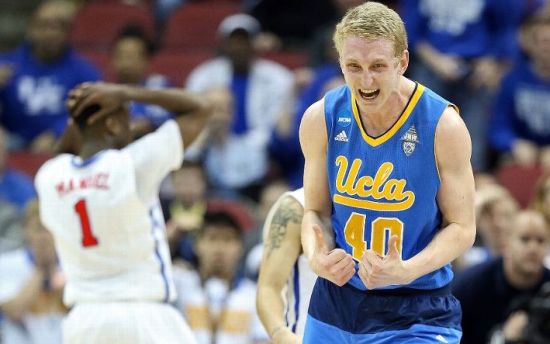
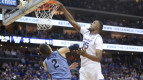
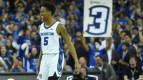
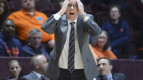
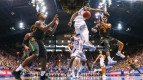
Regardless of how they did it, Thomas Welch and UCLA are one step away from the Sweet 16. (Andy Lyons/Getty Images)

Thomas Welch is UCLA’s top returning standout. Is he enough? (Andy Lyons/Getty Images)

But as this is UCLA basketball and there’s much to like about Welsh’s offensive game, the Bruins’ question marks center around the defensive end. Does a team improve its defense with freshmen? Not usually. Furthermore, UCLA has spent the last few seasons masking their defensive flaws with an opportunistic zone that has been headed by some unique talents (if not bodies) in Kyle Anderson, Kevon Looney and Jonah Bolden (trying early departure from last year’s team). Each of these players was a lengthy forward with ball skills. This roster lacks that player. What this roster doesn’t lack is guards. Alford returns a veteran lot but it is also the same lot that didn’t play defense last year and a reminder of why the Bruins played zone defense. Bryce Alford and Isaac Hamilton are both very talented scorers, but will their senior campaigns lend itself to a defensive renaissance? Adding Lonzo Ball to the mix is something any coach would want to do but another talented passer and shooter isn’t necessarily what this team needs. Of course adding talent is never a bad thing, and to that extent the Bruins should absolutely be expected to improve (which, granted, is not hard to do from two games under .500).

What I see on this roster are improvements at positions that didn’t necessarily need improving. And while I can agree that the previous sentence is oxymoronic (when you’re sub-.500, you absolutely need to improve), I would prefer that this group show me why they’re a top 20 team in the preseason national polls. The depth chart over UCLA’s final five games last year (per KenPom) was Bryce Alford, Aaron Holiday, Isaac Hamilton, Jonah Bolden and Thomas Welsh. How much better can that group defend when you toss in some pups?
Share this story

SEC Hoops Would Do Well to Follow Big 12 Roadmap

Posted by Keith Hatfield on November 3rd, 2016

SEC basketball has long suffered from the perception that the league consists of Kentucky and a group of schools waiting for spring football to begin. While the league has begun to attack its image problem, there is still work to be done. If the SEC needs a blueprint for how to flip the script on the current narrative, it can look at the Big 12’s recent resurgence. While Kansas has been the unquestioned lodestar in that conference, the other schools have taken action and helped create a college hoops monster. Since many of the schools in the Big 12 are also football powers, their experiences have particular relevance to the pigskin-mad members of the SEC. Here are four steps the SEC can take to replicate the basketball success of their Big 12 counterparts.

SEC

SEC Basketball Should Look to the Big 12 for a Roadmap to Success

  1. Sell the Chase. Too often it seems as if the other 13 SEC schools are resigned to Kentucky’s dominance. That is not the case in the Big 12, a league that has done a great job in capturing fan interest by making sure everyone knows the worthy challengers to the Jayhawks (winners of 12 straight conference titles) each season. Sports fans love to see dynasties pushed to the limit. The SEC has to become more proactive in marketing that possibility to its core audience.
  2. Stay the Course. One of the main reasons the Big 12 has been able to improve its basketball brand is with its aggressive hiring of quality coaches. When half or more of your league coaches have been to a Final Four, you are on to something. The SEC has followed suit in the past couple of hiring cycles. Names like Ben Howland, Bruce Pearl, Rick Barnes, and Avery Johnson resonate with fans. The conference will benefit if every school with an opening makes a similar commitment to hiring a coach with some professional cachet. Doing that allows for the type of top-to-bottom strength that has served the Big 12 so well. Read the rest of this entry »
Share this story

The Five Best Non-Conference Schedules in the Big Ten

Posted by Brendan Brody on November 3rd, 2016

The exercise to choose the five best non-conference schedules always involves a decent amount of speculation because we currently only know which Big Ten opponents we think are going to be good. We also don’t know how the various holiday tournament brackets will work out, but we can give it our best guesses. Here are the best five.

5. Purdue: The Boilermakers ease into things for exactly one game before they will play the reigning National Champion Villanova at Mackey Arena in their Gavitt Games match-up. Purdue will also be tested with a trip to Louisville in the ACC/Big Ten Challenge, followed by a contest against Notre Dame in the Crossroads Classic. Furthermore, a potential showdown with Chris Beard — the head coach last seen leading Little Rock to an upset over Purdue in the NCAA Tournament — and his new team, Texas Tech, could be tasty if the bracket holds in the Cancun Classic.

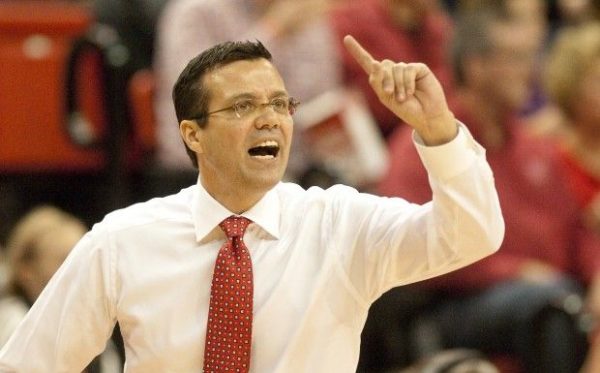
Tim MIles and his Nebraska team will have a rough early schedule in 2016-17. (Getty).

Tim Miles and his Nebraska team will have a rough early schedule in 2016-17. (Getty).

4. Nebraska: This schedule might be a bit on the ambitious side for a team picked to finish near the bottom of the Big Ten standings. Start with a road game against former Big 12 foe Kansas followed by a home game against their intrastate rival Creighton. They also have to visit the newly renovated Littlejohn Coliseum at Clemson, a team that could very well be make the NCAA Tournament this season. The Cornhuskers also play Dayton in the First Round of the Wooden Legacy Tournament, with a bracket path that could involve games with some combination of UCLA, Virginia Tech, or Texas A&M.

3. Indiana: The Hoosiers play their usual slate of easier games where they don’t leave Bloomington (UMass-Lowell, Mississippi Valley State, Houston Baptist, etc.), but they also play three teams currently ranked among the top 15 of the preseason AP Poll, including two tough neutral site games against Kansas and Louisville. National runner-up North Carolina visits Assembly Hall for this year’s ACC/Big Ten Challenge, and Indiana will also play a solid Butler team in Indianapolis as the second part of the Crossroads Classic. An interesting road game to Fort Wayne could trip up Tom Crean’s group as well.

Read the rest of this entry »

Share this story

Previewing Tight Races in the Mid-Majors: Part II

Posted by Will Ezekowitz on November 3rd, 2016

Yesterday we published Part I examining the tight races at the top of the WCC and Atlantic 10. Today in Part II we will take a closer look at projected two-horse races of the Ivy League and MAAC.

Ivy League—Princeton vs. Harvard

Princeton

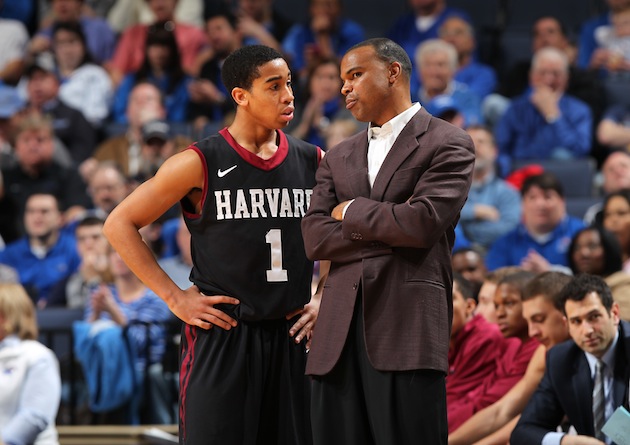
Can Freshman Phenom Siyani Chambers And Harvard Head Coach Tommy Amaker Turn The Crimson Into Tournament Darlings? (Joe Murphy/Getty)

Heading into his final collegiate season, Siyani Chambers, who has been one of the pillars of Harvard’s resurgence, arguably leads Tommy Amaker’s most talented team ever. (Joe Murphy/Getty)

  • Who they are: Last year’s very good Princeton team lost only two Ivy League games. The only issue for the Tigers was that Yale, which lost only one Ivy League game, was even better. But while the Ivy League champion loses many of its best players and should fade from the title picture, Princeton returns every key contributor plus Hans Brase — a player who averaged 11.0 points and 7.5 rebounds in 2014-15 before an injury caused him to sit out last year. Henry Caruso is a potential Ivy League POY, Spencer Weisz isn’t far behind him, and sophomore Devin Canady had the best offensive rating in the conference last year. Princeton is not a difficult team to project: the Tigers will run smart, efficient offense with good outside shooting, play sound defense, and certainly won’t beat themselves.
  • Why they will win: Because teams that go 10-2 in conference play and come back even better the next year generally win their conferences. Consider this: KenPom ranks Princeton 35th nationally, ahead of the likes of Connecticut and Texas. The Tigers are going to be really good. Head coach Mitch Henderson has been building toward an NCAA Tournament berth for a few years now, and this is the season where he will make it happen.
  • Why they will lose: If the Tigers don’t win, it will probably have more to do with Harvard than with Princeton. The only team to which Princeton lost that was ranked outside of the KenPom top 100 was — you guessed it — Harvard. Which brings us to…

Harvard

Read the rest of this entry »

Share this story

ACC Burning Questions: Duke Blue Devils

Posted by Matt Auerbach on November 2nd, 2016

This team preview is part of the RTC ACC microsite’s preseason coverage.

Burning Question: Will injuries stand in the way of Duke’s run at history and a sixth National Championship for Mike Krzyzewski? 

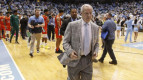
A large part of the charm and allure of college basketball is its unpredictability. Grand proclamations and bold predictions made in October rarely see themselves all the way through, and the well-heeled equity a team builds up during an elite regular season isn’t worth a darn when getting pushed to the brink in the NCAA Tournament. That said, with the roster that Duke head coach Mike Krzyzewski has assembled in Durham, there is very little doubt that his Blue Devils are the odds-on favorite to cut down the nets next April in Phoenix. And while a random one-game sample could derail the team in its quest for a second title in three seasons, it is a mortal lock that this squad will finish a tad higher than fifth place in the ACC standings last year. By its own astronomical standards, Duke’s 2015-16 campaign was a disappointment. Losers of 10 or more games for the first time since 2007, the 25-11 Blue Devils were unceremoniously extinguished by #1 seed Oregon in the Sweet Sixteen. And while Duke found its defensive deficiencies too difficult to overcome, the team returns a tremendous amount of perimeter firepower from the fourth most efficient offense in the country.

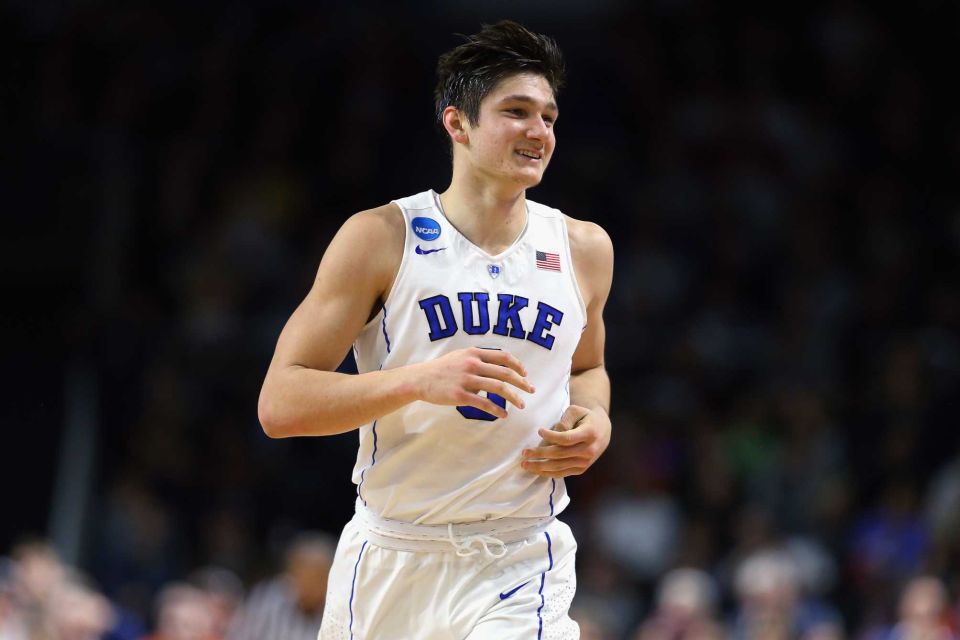
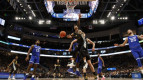
Grayson Allen led the way for Duke with 29 points. (Credit: Getty Images/ Jim Rogash)

Grayson Allen, one of the nation’s top returnees, will be bolstered with the nation’s top recruiting class. (Getty)

Grayson Allen is the headliner. The junior burst into our consciousness during the 2015 Final Four and translated that momentum into an explosive sophomore season. In averaging an impressive 21.6 points, 4.6 rebounds and 3.5 assists per game, Allen earned first-team All-ACC and third-team All-American accolades. Combining with freshman star Brandon Ingram to form one of the country’s most dangerous offensive duos, Allen was college basketball’s 44th-rated offensive player, according to KenPom. His rare combination of elite athleticism with dead-eye shooting make him a consensus preseason All-America selection heading into his third campaign in Durham. Read the rest of this entry »

Share this story

Previewing Tight Races in the Mid-Majors: Part I

Posted by Will Ezekowitz on November 2nd, 2016

In this NCAA Basketball preview season, we are bombarded with lists. One common list is that of the trendy mid-major ready to wreak havoc on an unsuspecting college hoops world. Unfortunately, some of these high-quality teams find themselves in the same conference staring each other down for scarce March Madness bids. No mid-major is ever guaranteed an invitation to the Field of 68, of course, no matter how impressive it looks in November and December. Just ask the 2015-16 iterations of Monmouth and St. Mary’s about that. In this preseason post we will analyze several mid-major conference races that should be two-horse races, with details on each team, why they will (or not), and a bonus sleeper who isn’t yet in the conversation. Part I covering the WCC and Atlantic 10 will publish today. Part II on the Ivy League and MAAC will release later this week.

West Coast Conference—Saint Mary’s vs. Gonzaga

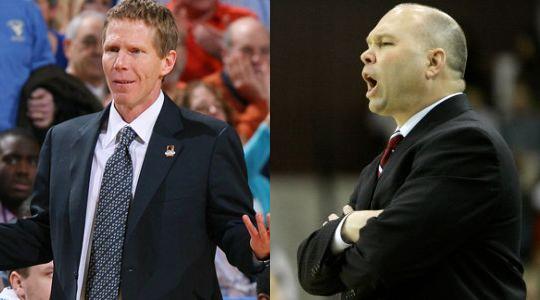
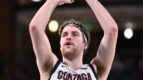
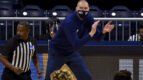
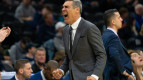
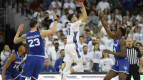
It's always fun when these two guys get their teams together

It’s always fun when these two guys get their teams together. (AP)

St. Mary’s

  • Who they are: Randy Bennett’s team came out of absolutely nowhere last year to become an offensive juggernaut, and the Gaels return every important piece from that 29-6 team. All six returning perimeter players are above average three-point shooters, with junior Aussie guard Emmett Naar looking an awful lot like the next Matthew Dellavedova and Joe Rahon acting as a capable secondary playmaker. On the inside, Dane Pineau is ruthlessly efficient and productive, and his backup Jock Landale is no slouch either. The Gaels play at a glacial pace and they don’t beat themselves.
  • Why they will win: This is going to be one of the most efficient offenses in college basketball once again. Last year’s team went 29-6 and last year’s team is essentially this year’s team with another year of experience. The Gaels could be second weekend good.
  • Why they will lose: If we learned anything last year, it is that St. Mary’s has no margin for error with Gonzaga also in the conference. The defense has to be good enough to compete and the outside shots have to fall. Otherwise, the Gaels may be on the outside looking in once again.

Read the rest of this entry »

Share this story

Pac-12 Burning Questions: Is Ivan Rabb an NPOY Contender?

Posted by Adam Butler on November 2nd, 2016

It’s been floated around the league that California‘s Ivan Rabb could contend for the National Player of the Year award (more on that and other Pac-12 prognostications later). From what we saw last season, however, the Bay Area big man is wildly efficient and offensively underutilized. To quantify: 120.0 offensive rating; 62 percent inside the arc; top-100 (nationally) eFG% and true shooting percentage. From a utilization standpoint, Rabb played 70 percent of the available minutes (a bit above average for most big men) with a very pedestrian 20 percent usage rate during his time on the floor. His lack of involvement with the offense last season was at times heartbreaking. Meanwhile, teammates Tyrone Wallace and Jaylen Brown hovered around the herculean usage mark. For context against Rabb’s 70/20 minutes/usage ratio, Wallace and Brown were 68/32 and 65/28, respectively. Seriously, the two Bears finished first and second in Pac-12 usage, respectively, one of just three pairs of teammates to lead a conference in such. Naturally this becomes a numbers game — Rabb will get more touches and a corresponding increase in usage, and his scoring efficiency suggests that he will thrive when he gets that opportunity. Consequently, the talk of a National Player of the Year effort.

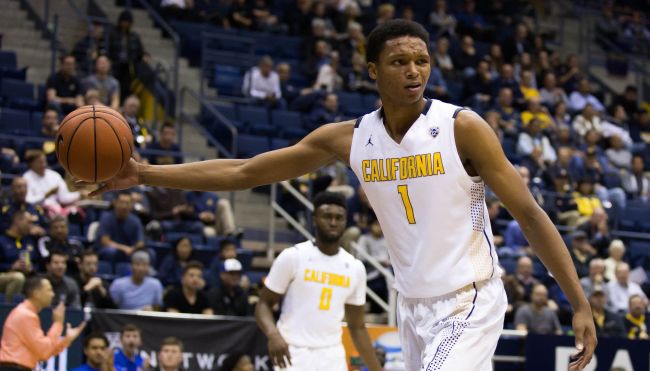
Ivan Rabb for player of the year? Only if his teammates help him. (Pac-12 Networks)

Ivan Rabb for Player of the Year? Only if his teammates help him. (Pac-12 Networks)

And yet two thoughts immediately come to mind: 1) Cuonzo Martin knows how to milk his stars for all they’re worth and he isn’t afraid to give the ball to those individuals. In which case, Rabb could get all of the touches for seemingly every minute he’s on the floor (something akin to Brown’s one-and-done experience); or 2) Martin’s strength is on the defensive end and he won’t necessarily optimize the offensive end. This dichotomous thinking is the fodder to Cal’s burning hot fire question. If we look at Martin’s teams historically, they’ve generally followed the pattern of riding two horses to their best success. Last year it was Brown and Wallace (at not particularly high efficiency). During his 2014 Tennessee campaign (24-13, Sweet Sixteen appearance), it was Jordan McRae and Jarnell Stokes (28.9% and 25.9% usage rates, respectively) yet at very efficient numbers (each greater than 115.0 offensive ratings). At Missouri State in 2011 (26-9), it was Kyle Weems (25.2%) and Will Creekmore (25.7%) who logged greater than 110.0 offensive ratings. All of which leads us to a third (perhaps fourth) question: Can Jabari Bird be that second guy? He’s played his entire California career somewhat in the shadows after arriving to considerable hype. Gone are Wallace and Brown, but so too is sharpshooter Jordan Mathews, who chose to grad-bolt for Gonzaga. This ultimately feels like a Bears’ roster that is thin on high-major bodies and talent — two critical pieces not only to earning a teammate the highest individual hardware, but also for making another NCAA Tournament. Consider the last four NPOYs:

  • 2016 – Buddy Hield, Oklahoma – #2 seed
  • 2015 – Frank Kaminski, Wisconsin – #1 seed
  • 2014 – Doug McDermott, Creighton – #3 seed
  • 2013 – Trey Burke, Michigan – #2 seed

Does Rabb have the talent to be an NPOY? Absolutely. Does he have the teammates? It’s going to take more than just a strong senior year out of Jabari Bird. Which is a long-winded and politically correct way of saying: No.

Share this story

One Burning Question: How Can West Virginia Replace Its Lost Talent?

Posted by Chris Stone on November 2nd, 2016

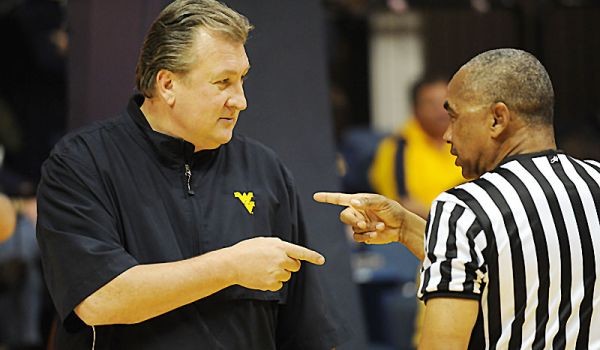
The idea of building around a system or a specific style of play is not a new one in college basketball. Villanova’s Jay Wright, for example, has historically succeeded by playing a four-out, one-in offensive system that features guards who can shoot and take advantage of mismatches. The Big 12 also has its share of programs with a knack for finding players and fitting them into a largely predetermined system of play. Kansas head coach Bill Self has been notoriously stubborn about his high-low offense, even going so far as to suggest there is a target number of three-point field goals the Jayhawks look to take each season. At VCU, Shaka Smart earned his reputation by regularly recruiting players best suited to succeed in the system he dubbed “HAVOC.” Over the past several seasons, another Big 12 program has made waves by instituting a similarly successful, if not somewhat unorthodox, system.

With a revamped press philosophy, Bob Huggins and West Virginia are climbing their way up the college basketball mountain. (USA TODAY Sports)

With a revamped press philosophy, West Virginia is climbing its way back up the college basketball mountain. (USA TODAY Sports)

West Virginia has developed a fast-paced, in-your-face press — Press Virginia, if you will — that has turned the Mountaineers from a merely average defensive team into one of the very best in the country., Bob Huggins’ team has ranked among the top two nationally in defensive turnover percentage the last two seasons, causing a miscue on over a quarter of their opponents’ offensive possessions. All those giveaways in turn led to easy buckets and spurred West Virginia on to consecutive NCAA Tournament bids after several years of middling efforts. The question now is whether the proven system can withstand a significant shock to its personnel. West Virginia no longer has the services of either of their two double-figure scorers from a year ago — Jaysean Paige is out of eligibility and big man Devin Williams declared early for the 2016 NBA Draft. The pair provided the Mountaineers with something of an offensive safety net when the turnovers weren’t coming. Jonathan Holton is also finished. The 6’9″ forward –one of the signature pieces in Huggins’ pressing defense — was the type of versatile athlete who excelled atop the press. Holton could defend smaller players coming upcourt with time to quickly recover and battle with some of the league’s best in the post. He was also the team’s second-best rebounder, helping to close out defensive possessions after opponents had gotten through the pressure and taken a rushed shot. Read the rest of this entry »

Share this story

One Burning Question: Will Steve Prohm’s Big Bet Pay Off?

Posted by Brian Goodman on November 1st, 2016

On the surface, the changes that Steve Prohm is asking Monte’ Morris to make this season seem rational. The Cyclones are coming off of a Sweet Sixteen appearance, but lost the Big 12’s fourth all-time scoring leader in Georges Niang and two other effective scorers in Abdel Nader and Jameel McKay. The thinking goes that someone has to pick up the slack, and who better to do so than a Preseason All-American and potential first round pick? Furthermore, recent history on both sides of the equation supports the notion that Prohm and Morris can pull this off. In 2014, Prohm’s offense turned Cameron Payne into a lottery pick at Murray State. The season before that, DeAndre Kane soaked up 27 percent of Iowa State’s possessions on the way to leading Iowa State to its first Sweet Sixteen in 14 years. So this should work too, right? I’m not so sure. In fact, there are a few reasons to be skeptical of how far Morris can carry this team, though admittedly, Prohm doesn’t have much choice.

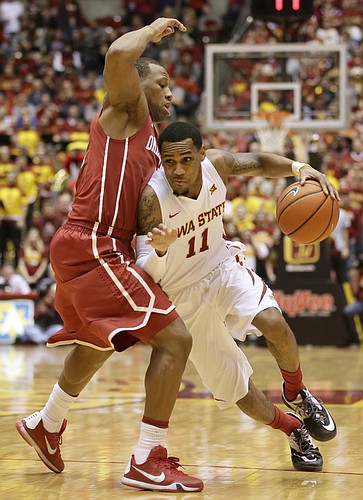
Can Iowa State ride Monte' Morris back to the Big Dance? (AP/Charlie Neibergall)

Can Iowa State ride Monte’ Morris back to the Big Dance? (AP/Charlie Neibergall)

Perhaps the biggest difference between this Iowa State team and the last few versions is that opposing defenders will be locked in on Morris from the start. Matt Thomas and Naz Mitrou-Long are legitimate scoring threats who will divert some attention away from Morris, but defenses won’t be motivated to stay on them if they aren’t hitting their threes. Even if Thomas and Mitrou-Long pick up where they left off, though, it doesn’t necessarily mean that Morris — despite sporting an improved physique — will be able to successfully absorb the kind of volume the Cyclones hope to extract from him this season. Read the rest of this entry »

Share this story

ACC Burning Questions: Clemson Tigers

Posted by Brad Jenkins (@bradjenk) on November 1st, 2016

This team preview is part of the RTC ACC microsite’s preseason coverage.

Burning Question: Is this the year that Clemson returns to the NCAA Tournament?

Clemson head coach Brad Brownell has a swanky remodeled home arena, a returning All-America candidate and three talented transfers ready to join a group that finished last season at 10-8 in ACC play. After five consecutive seasons without an NCAA Tournament appearance, the Tigers may finally be poised to crash the Big Dance once again. Brownell’s job security may or may not depend on an invitation to the NCAA Tournament this year, but history shows that it is an extremely rare situation for an ACC coach to remain in his post after six straight years of missing the games premier event.

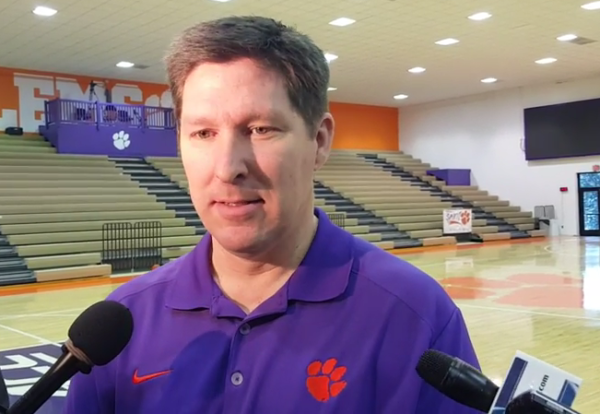
Brad Brownell hopes this is the year that Clemson makes it back to the NCAA Tournament. (sportstalksc.com)

Brad Brownell hopes that Clemson makes it back to the NCAA Tournament after a five-year hiatus. (sportstalksc.com)

In his six seasons at the helm, Brownell has developed a deserving reputation as a coach who maximizes his available talent. With a six-year 50-54 conference record, the Tigers have become a consistent middle-of-the-pack ACC program. Early in Brownell’s tenure, road wins were scarce — he logged only five such victories during his first three years at the school. But lately, the Tigers have improved in that regard by claiming 10 road wins over the past three seasons. Last year Clemson was very competitive in most of its away losses, dropping three games by three points or fewer and winning three others. Speaking of playing on the road, the Tigers also return to a remodeled Littlejohn Coliseum this season after spending 2015-16 at Greenville’s Bon Secours Wellness Arena — a 45-minute trip from campus. Capacity at the new Littlejohn is slightly lower now, but 9,000 wild fans should be plenty to recreate the electric home court atmosphere that students at Clemson have historically provided. Read the rest of this entry »

Share this story