
What is Miami’s Problem?

Posted by KCarpenter on October 28th, 2011

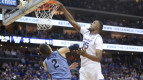
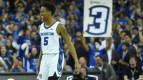
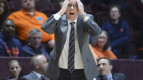
Jim Larranaga is facing a harsh reality check. At George Mason, the coach was adored. The school’s students, band, and fans are a lively bunch who really love basketball, and a great deal of credit for that goes to Larranaga for building up the school’s program. At the University of Miami, however, things are different. Well, in Miami, things are different.
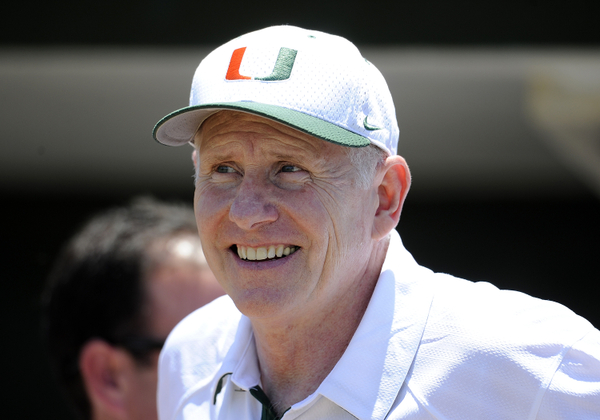
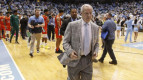
Can Larranaga Get Apathetic Miami Fans to Support His Program?

As Larranaga has pointed out several times in the preseason, Miami was the focal point of one of the most publicized basketball seasons in recent history: The debut of LeBron James and Chris Bosh with Dwyane Wade’s Miami Heat. With the NBA players currently locked out and the professional season in jeopardy of partial or even full cancellation, assuming that Miami’s passion (?) for basketball would transfer to the Hurricanes seems like a fairly reasonable idea. In the right light, it seems reasonable when Larranaga says things like:

I heard that Miami loves star power, that if stars come and sit courtside then fans will think it’s a worthwhile event and show up, so we’re reaching out to those guys, and we’ll be inviting LeBron and Dwyane Wade to our games.

Read the rest of this entry »

Share this story

ACC Morning Five: 10.28.11 Edition

Posted by mpatton on October 28th, 2011

  1. Tracking the Terps – Baltimore Sun: Maryland assistant coach Dalonte Hill was named as a third party in a lawsuit by Michael Beasley that could have major ramifications for college basketball. Hill coached Beasley on the AAU circuit with the DC Assault before moving on to an assistant coaching position at Kansas State. While I don’t think the lawsuit will affect Hill directly, it could expose some ugly realities about his role in Beasley’s recruitment (see Dave Telep’s article from two days ago for possibilities). I don’t expect Hill to make any comments on the case, but this is definitely something to keep an eye on.
  2. Terrapins Insider – Washington Post: Although Beasley’s lawsuit is bigger news for college basketball, Pe’Shon Howard‘s injury is bigger news for Maryland. Howard broke his foot and is expected to be out for around ten weeks. If it’s much longer than ten weeks, Mark Turgeon will consider redshirting Howard to keep his eligibility intact. But Turgeon also sounds focused on this season, and Howard’s presence would be a big boost for a team that will have major depth issues. While Howard is sidelined, Terrell Stoglin will have to handle the point guard position. This could go either way, but my guess is Stoglin will take some time to adjust to the new role.
  3. Boston Herald: Boston College freshman Patrick Heckmann wasn’t surprised with the team’s last place conference selection at Operation Basketball: “It’s kind of understandable. We lost pretty much all of our scoring options from last year […] We should surprise a lot of people how good we can actually play [sic].” My only revision would be to remove the “pretty much” from his first sentence. But the Eagles haven’t given up (and are “scrappy as heck,” according to Steve Donahue), which should serve them well in a conference where a lot of teams are rebuilding or have major flaws.
  4. ESPN: Mitch McGary is nearing a decision (ETA next week). He’s trimmed his list to three: Duke, Michigan and Florida (he claims North Carolina is still in the race, but it sounds like a combination of not hearing from them and Brice Johnson’s recent commitment to the Heels has them off the list). Maryland was the other school to get axed. His latest blog post also reminds fans that the recruiting process isn’t all fun and games: “To be honest, it’s been really stressful and, at times, it’s been hard on my family.” As a top power forward in the Class of 2012, McGary would be a huge get for the Blue Devils.
  5. Recruiting Insider – Washington Post: The NCAA has finally caught up with the 21st Century and will allow coaches unlimited calls and texts to high school juniors and seniors. Although the summer evaluation period has been tightened up a little, an April evaluation period will be re-opened. One of the less-reported points that seems like a bigger deal is that coaches will now be able to give an on-court evaluation of players during official visits.
Share this story

The “Secret” Scrimmage Schedule and The Best Games We Won’t See

Posted by KCarpenter on October 27th, 2011

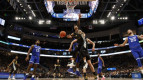
College basketball teams play each other before the season starts. It’s not really a secret. Over the years it’s become increasingly public knowledge that teams will often travel to other schools to test their mettle in private, away from the prying eyes of the curious public and hungry media. It makes sense, and I think it’s kind of a great thing. Wouldn’t you want your team to play a game in private before you took to a big public stage? I know I would. Jeff Goodman has rounded up a list of these private scrimmages and there are more than a few ACC teams taking part.

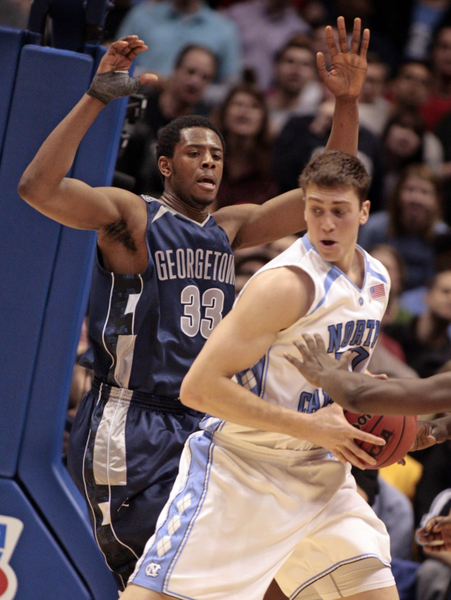
Georgetown And North Carolina Played An Amazing Game in 2007 And An Even Better One In 1982. Who Wouldn't Want to See Them Play in 2011?

Friday, October 28
East Carolina at North Carolina State.

Read the rest of this entry »

Share this story

ACC Team Previews: Maryland

Posted by mpatton on October 27th, 2011

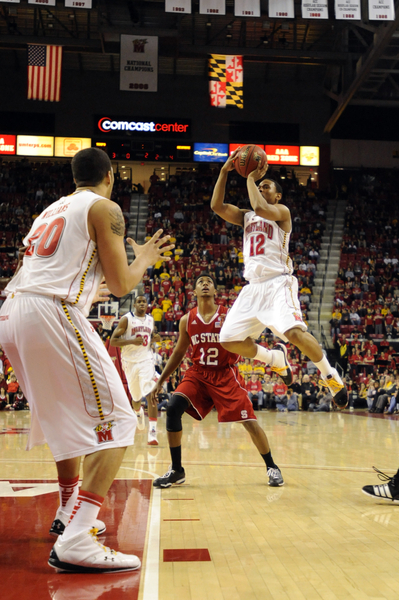
Maryland was very unlucky last season. It ranked 330th out of 345 schools according to Ken Pomeroy’s statistical “Luck” element, falling just in between ACC compatriots Clemson and Georgia Tech. However, the team’s flaws contributed as much to its close losses as anything else. First and foremost, Sean Mosley took a step back from a very promising sophomore season and became a virtual non-factor on offense. Terrell Stoglin‘s brilliant play masked Mosley’s absence for much of the season, but the lack of a consistent third option killed the Terrapins down the stretch. Additionally, Jordan Williams had an Achilles’ heel: poor free throw shooting. Williams was the rock of last year’s Maryland squad, but his inability to shoot foul shots well forced him to take on a reduced role at the end of games.

Terrell Stoglin and Jordan Williams Would've Made a Dynamic Duo at Maryland

Looking back at Maryland’s year is like reading The Little Engine That Could(n’t). Gary Williams‘ squad was competitive, only being blown out twice by a middling opponent (once by Miami and once by Virginia Tech). Those two bad losses, though, were balanced byonly two decent wins (vs. Clemson and Florida State). For whatever reason Maryland couldn’t break into that next tier last year.  The year was so frustrating that after hearing Jordan Williams was departing for the NBA Draft, Hall of Famer Gary Williams departed for the cool breezes of retirement. While inconsistency — especially on the recruiting trail — marked the last few years of his tenure, Williams-coached teams regularly flourished during ACC play in the early 2000s especially the 2002 National Championship team headlined by Steve Blake, Lonny Baxter and Juan Dixon. But the stresses of constantly having to reload from lost players and assistant coaches finally caught up to the head coach after Jordan Williams left his team with very few players and nothing to speak of in the front court. The good news is that the very capable Mark Turgeon was hired away from Texas A&M to take the helm in College Park. Read the rest of this entry »

Share this story

North Carolina Unveils Camouflage Uniforms For Carrier Classic

Posted by mpatton on October 27th, 2011

Last week we mentioned that Michigan State and probably North Carolina could be playing in special camouflaged uniforms for the Carrier Classic next month based on an astute viewer noticing a camouflaged Spartan jersey in a totally unrelated World Series video.

Here are the Camouflaged Uniforms North Carolina Will Wear to the Carrier Classic (Credit: TarHeelBlue.com)

Today TarHeelBlue.com confirmed our speculation, releasing exclusive photos of North Carolina’s jerseys, which are pictured above. The jury is still out on how these will look in person or on the screen of a sixty-inch HDTV, but frankly I think we should wait and judge once we can see the players. Right now the camouflage makes the shorts look like a Hawaiian bathing suit, but I’ll save my final judgment for after the game. I think replacing player names with “U.S.A.” is a classy touch, and the color may even be growing on me.

While nothing has been officially announced, I expect North Carolina and Michigan State to auction these off for charities associated with the armed forces after the game is finished.

Share this story

ACC Morning Five: 10.27.11 Edition

Posted by mpatton on October 27th, 2011

  1. ESPN (Insider): I normally avoid Insider posts, but North Carolina resident Dave Telep gives us a peek under the bleachers at the uglier side of high major recruiting in college basketball that’s really a must-read for college basketball fans. Telep cites Lebron James as the first player who really took advantage of his worth and marketed himself during high school. Without giving too much away, Telep names three types of elite prospects: the clean, the agent/runner-influenced, and the bold, who just directly asks for money. The rest of the post almost reads like a how-to guide for cheating, but the one thing I wish Telep had offered was a solution. It’s no secret that there’s plenty of dirt behind high major basketball recruiting, but informed solutions are hard to come by.
  2. Atlanta Journal-Constitution: In case you haven’t noticed, there’s been quite a bit of turnover as far as ACC basketball coaches go. So much that Georgia Tech junior Mfon Udofia only managed to name five and a half (he knew Mark Gottfried was “the guy from Alabama”) conference coaches, not counting his own. Four ACC coaches are entering their first years and three are on their second. Mike Krzyzewski compared the recent influx of coaches to the early 1980s when he, Bobby Cremins and Jim Valvano joined over the course of two years. Those shoes are pretty big ones to fill (six NCAA Championships, myriad Final Fours and countless ACC titles clutter the three resumes).
  3. Huffington Post: Syracuse professor Boyce Watkins takes on the NCAA’s “funny math.” Watkins points out that while 96% of NCAA revenue does go back to the schools, the NCAA fails to calculate the incredibly high salaries of coaches. Watkins also points out the hypocrisy of paying college basketball players the same as their soccer brethren without factoring in the huge discrepancy between the coaches’ respective salaries. He also lays out policies that would more fairly represent the current NCAA system: for example, no games on school nights (ironic side note: the Ivy League actually adheres to this in conference play for basketball but not for Olympic sports), and coaches shouldn’t be able to sign endorsement deals. The anti-NCAA side of things has really gained momentum over the last six months, and I don’t think this trend will stop at partial cost of attendance stipends.
  4. Searching for Billy Edelin: Nick Fasulo got credentialed to see ESPN Film’s newest documentary, Unguardable. The movie covers Boston College (and later Fresno State) guard Chris Herren, who fell from the top of recruiting rankings to truly rock bottom. If this is anywhere near as good as Without Bias, it’ll be must-see TV. And from Fasulo’s review, it might be even better. Hennen managed to survive his bout with drugs and serves as the storyteller, leaving no middleman narration to distance the audience from the subject. Unguarded airs next Tuesday at 8PM on ESPN.
  5. CBSSports.com: Kyrie Irving is using his NBA lockout time off to help keep a promise to his family and get a degree. The first pick in last year’s NBA Draft is apparently back on Duke’s campus taking courses. This isn’t to say Irving is the only one: According to CBS, 52 current locked-out players (15% of players without college degrees) are using this time to pursue degrees they left for the greener pastures (and paychecks) of the NBA.

EXTRA: This story isn’t basketball related, but Sports Illustrated‘s Andy Staples hits the ball out of the park with his interview with former North Carolina assistant football coach John Blake. Blake’s side of the story has remained largely offstage, so it’s interesting to hear it from the man himself. The Tar Heels’ date with the NCAA Committee of Infractions is scheduled for this Friday. This just goes to show, not all stories are as black and white as they seem.

Share this story

ACC Team Previews: Boston College

Posted by KCarpenter on October 26th, 2011

Usually, replacing the winningest coach in a program’s history is a thankless task. Yet somehow, Steve Donahue came out of the 2010-11 season smelling like roses. Taking over for longtime head coach and flex offense enthusiast Al Skinner, Donahue led Boston College to a 21-13 season and 9-7 conference record, a significant improvement over the 2009-10 season. Donahue was lucky to inherit a veteran team, stocked full of seniors and a first round NBA draft caliber talent in Reggie Jackson. Still, while that season was an improvement over the previous one, it too ended in disappointment: a second-round ACC Tournament exit against Clemson and a March spent watching other teams play basketball.

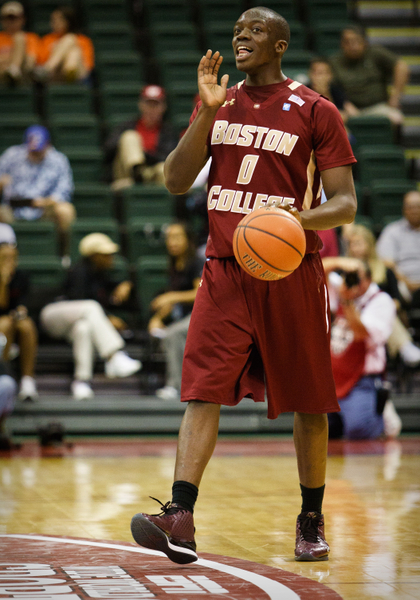
Boston College Will Miss Reggie Jackson This Season

As for the summer turnover, well, it was near-complete. The downside of a team of mostly seniors is that seniors have this habit of graduating. The starting lineup was completely wiped out and the bench was decimated. Calling this year a rebuilding year is an understatement. Donahue is bringing in nine freshmen and two transfers to totally re-fashion a team that barely has anything in common with last year’s team. As for the newcomers? Well, the recruiting services didn’t think too highly of them. Despite bringing in so many players, Rivals rates BC’s 2011 crop as only the 9th best in the ACC. However, Donahue thinks that this is deceiving, considering the recruiting services focus more on raw athletic talent. Donahue got his kind of guys: Guys who can shoot, pass, and dribble even if they aren’t as naturally physically gifted as some of their peers. Years recruiting at Cornell means that Donahue has the potential to be a more wily recruiter than you might expect: Luring a player to a program without the ability to offer athletic scholarships has a tendency to hone recruiting skills. Similarly, the scholarship restriction in the Ivies drove Donahue further abroad, giving him a chance to extensively network and now he has a chance to snag players that might not even be on the radar of other ACC schools. Much has been made out of the heavy California contingent in BC’s freshmen class, but Donahue’s explanation as why he recruits so heavily from the Golden State is cogent and well-thought outUsing Euroleague style ball as his model, it seems clear that the coach is assembling a team that will thrive on open perimeter shots generated by fast and frequent ball movement.

Read the rest of this entry »

Share this story

A Finalized 2012 Recruiting Class For UNC And Déjà Vu For NC State

Posted by KCarpenter on October 26th, 2011

This morning, Brice Johnson, a wiry 6’9″ power forward from South Carolina, confirmed that he is indeed headed for North Carolina.  Johnson is a four-star, top fifty recruit in the class of 2012, and, perhaps more critically, represents the final available scholarship that UNC had to offer. Johnson to UNC has big repercussions for North Carolina State and potentially Georgetown. T.J. Warren, a top 25 recruit and one of the best uncommitted small forwards in the class of 2012 seemed like he was well on the way to being Chapel Hill-bound after a very good visit to Carolina’s version of Midnight Madness. Shortly after the Johnson news broke, however, Warren sent a text to CBS Sports, telling them that he will make his decision next week and that he will be choosing between Georgetown and NCSU.

Did P.J. Hairston and Reggie Bullock Cause UNC To Pass on T.J. Warren?

While it might seem puzzling at first for UNC to pass on what at first glance seems to be the superior talent, taking Johnson over Warren is probably a savvy move that will fit the 2011-12 roster better. While the starting small forward Harrison Barnes has a very good chance to enter the NBA draft next season, the Tar Heels would remain overstocked at the wings with Reggie Bullock and P.J. Hairston both logical candidates to inherit the position when Barnes leaves. At the power forward position, UNC might be more in more trouble: Tyler Zeller is due to graduate and John Henson and James McAdoo are projected NBA lottery picks in 2012. If both were to leave for the pros next summer, North Carolina would find itself with a significant talent void down low. Warren may ultimately prove to be better than Johnson, but for the forseeable future, Johnson fits Roy Williams’ needs more effectively and was probably a better use for North Carolina’s final scholarship spot on the roster.

Read the rest of this entry »

Share this story

Reviewing ACC Basketball Graduation Rates

Posted by KCarpenter on October 26th, 2011

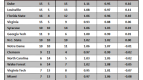
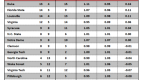
To be honest, on average, the graduation rates for men’s college basketball players have  increased everywhere. To be completely honest, the graduation rates for student-athletes as a whole have improved. Still, let’s take a minute and appreciate how this trend holds up in the Atlantic Coast Conference: All in all, basketball players are graduating at better rates that they once did in the ACC, and at a rate that’s better than the national average for men’s college basketball players. So, that’s something.

But is it the whole story? No, but since the NCAA loves nothing if not thorough documentation, we can get at least get a clearer view of the story. The NCAA Graduation Success Rate (GSR) is a modified version of a rolling measure called the Federal Graduation Rate (FGR). The Federal Graduation Rate for a given year is the percentage of an incoming freshmen class that graduates at that institution within six years of entry, averaged with the three classes that preceded it. The FGR does not count any player who transferred to another university and graduated or otherwise left the university. The NCAA’s measure, GSR, tries to account for the fact that lots of athletes transfer to other universities, and, at least in a few sports, enter the professional leagues. So, in short, the GSR is in some ways, an inflated version of the Federal Graduation Rate, where an athlete can get counted as “graduated” as long as they leave the university in good academic standing. It almost makes sense, but since it’s the NCAA’s preferred metric, we’ll roll with it.  (ed. note: see our previous article this morning for Matt’s take on the value of graduation rates to the NCAA)

Now, because of the six year window that both rates use to count graduation, the numbers that were released this year deal with the players who entered a given university between 2001-02 and 2004-05.  So, while these numbers can give a good indicator in the general direction a program is heading, the data isn’t particularly timely.  Still, looking at the past and looking at how the data is trending can give a useful glimpse into the present.

Read the rest of this entry »

Share this story

Are Graduation Rates and the APR Good Metrics?

Posted by mpatton on October 26th, 2011

As you probably know, the Academic Progress Rating (APR) has made the news a lot lately largely because of a new NCAA rule that would exact postseason bans for teams not up to snuff academically (in the form of a 930 threshold score). Defending national champion Connecticut wouldn’t have made last year’s tournament with the stricter guideline and there was some speculation that the Huskies might not be allowed to defend their title as a result (this has since been resolved; the new threshold and punishments will go into effect next season).

Basketball writer Joe Giglio started tweeting North Carolina schools’ relative graduation rates Tuesday afternoon, sparking quite a conversation on the merit of graduation rate as an acceptable method for evaluating a school’s worth. Duke led the ACC in both general population graduation (94%) and overall athlete graduation (81%), which are phenomenal numbers. However, Giglio’s alma mater NC State only graduated 72% of its general population and 54% of its athletes (worst in the ACC in both categories). All percentages were calculated using a six-year window.

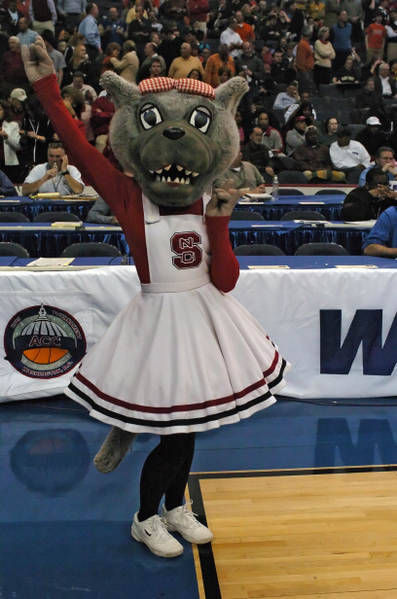
Are NC State's Low Graduation Rates Cause For Concern?

On a national scale, these numbers actually aren’t low. According to a USA Today study from 2009, the national average for four-year colleges is to graduate 53% of its students in six years — which is roughly on par with NC State’s average for athletes and much lower than its overall student body. That number is shockingly low. Even compared with fellow BCS schools, NC State compares favorably (#35 out of 67 schools) and the Wolfpack would be ranked third and fourth in the Big 12 and SEC, respectively.

Read the rest of this entry »

Share this story