Where 2013-14 Happens: Reason #16 We Love College Basketball

Posted by rtmsf on October 30th, 2013

seasonpreview-1

Here we go… headfirst into another season heralded by our 2013-14 edition of Thirty Reasons We Love College Basketball, our annual compendium of YouTube clips from the previous season completely guaranteed to make you wish games were starting tonight. For the next three weeks, you’ll get two hits of excitement each weekday. We’ve captured what we believe were the most compelling moments from last season, some of which will bring back goosebumps and others of which will leave you shaking your head in astonishment. To see the entire released series so far, click here.

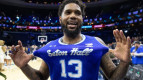
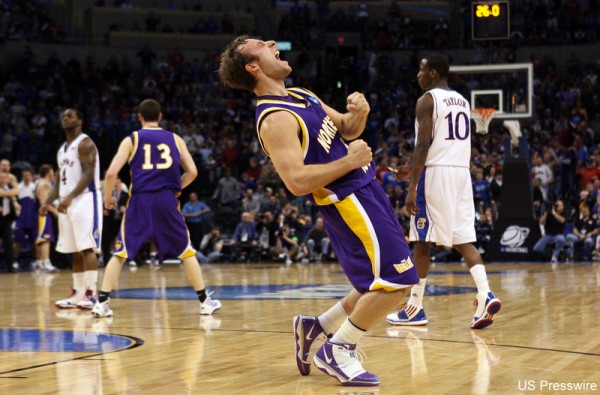
#16 – Where Cinderella Shockers Happens.

We also encourage you to re-visit the entire archive of this feature from the 2008-092009-10, 2010-112011-12, and 2012-13 preseasons.

Share this story

Where 2013-14 Happens: Reason #18 We Love College Basketball

Posted by rtmsf on October 29th, 2013

seasonpreview-1

Here we go… headfirst into another season heralded by our 2013-14 edition of Thirty Reasons We Love College Basketball, our annual compendium of YouTube clips from the previous season completely guaranteed to make you wish games were starting tonight. For the next three weeks, you’ll get two hits of excitement each weekday. We’ve captured what we believe were the most compelling moments from last season, some of which will bring back goosebumps and others of which will leave you shaking your head in astonishment. To see the entire released series so far, click here.

#18 – Where You’ve Got to be Kidding Happens.

We also encourage you to re-visit the entire archive of this feature from the 2008-092009-10, 2010-112011-12, and 2012-13 preseasons.

Share this story

Where 2013-14 Happens: Reason #21 We Love College Basketball

Posted by rtmsf on October 25th, 2013

seasonpreview-1

Here we go… headfirst into another season heralded by our 2013-14 edition of Thirty Reasons We Love College Basketball, our annual compendium of YouTube clips from the previous season completely guaranteed to make you wish games were starting tonight. For the next three weeks, you’ll get two hits of excitement each weekday. We’ve captured what we believe were the most compelling moments from last season, some of which will bring back goosebumps and others of which will leave you shaking your head in astonishment. To see the entire released series so far, click here.

#21 – Where Gettin’ a Little Crafty Happens.

We also encourage you to re-visit the entire archive of this feature from the 2008-092009-10, 2010-112011-12, and 2012-13 preseasons.


Share this story

Where 2013-14 Happens: Reason #24 We Love College Basketball

Posted by rtmsf on October 24th, 2013

seasonpreview-1

Here we go… headfirst into another season heralded by our 2013-14 edition of Thirty Reasons We Love College Basketball, our annual compendium of YouTube clips from the previous season completely guaranteed to make you wish games were starting tonight. For the next three weeks, you’ll get two hits of excitement each weekday. We’ve captured what we believe were the most compelling moments from last season, some of which will bring back goosebumps and others of which will leave you shaking your head in astonishment. To see the entire released series so far, click here.

#24 – Where A Southwest Philly Floater Happens.

We also encourage you to re-visit the entire archive of this feature from the 2008-092009-10, 2010-112011-12, and 2012-13 preseasons.


Share this story

The First Four Doesn’t Need to Leave Dayton, But Maybe It Should

Posted by Chris Johnson on August 20th, 2013

Chris Johnson is an RTC Columnist. He can be reached @ChrisDJohnsonn

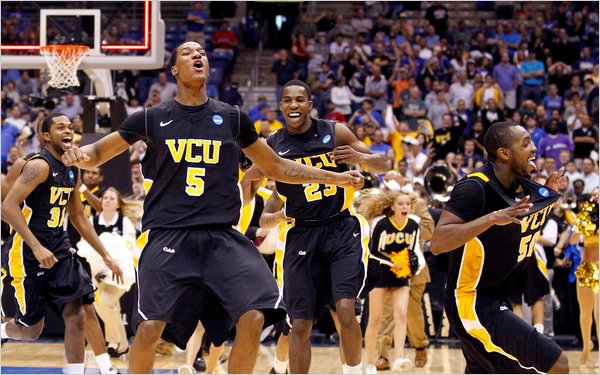
The first thing I think of when reading, writing or listening to anything having to do with the “First Four” is the NCAA’s frustrating semantical insistence that it be referred to as the “First Round.” Technically speaking, it is the first group of games qualified NCAA Tournament teams play, but to imply First Four teams and the other 64 all enter the Tournament needing to survive a “first round” – whether by playing games or not, which is what everyone except First Four teams do – is a confusing mischaracterization casual fans and writers alike could do without. We know what the real first round is, so let’s give it its proper nominal recognition. Sorry, First Four teams, but you can’t merely waltz into a spot in the first round of the NCAA Tournament; you need to earn your way there by winning your – gasp! – play-in game.

VCU

Until the NCAA resolves that issue, I will have trouble looking past any non-branding-related First Four storylines. Today, I’m making an exception. Numerous reports from Dayton Friday brought word that the NCAA rejected the city’s proposal to extend its First Four hosting rights beyond 2015. Dayton, as you probably already know, has hosted the event since its inception, including back when it only involved two teams and was called, whether formally or not, the one and only play-in game. Twelve years later, the NCAA appears to be exploring alternatives. Or maybe it just has commitment issues. The Dayton Business Journal got NCAA spokesperson David Worlock on the record:

Read the rest of this entry »

Share this story

Morning Five: 08.01.13 Edition

Posted by rtmsf on August 1st, 2013

morning5

  1. See that date up there at the top of the post? Yeah, August 1. Also known as the downswing of the summer, and the corresponding slow, gradual ramp-up to the next college basketball season. It’s not yet time to get excited, but it’s definitely worth a nod to the notion of a season getting here sooner rather than later. With that said, how about some super-duper-early preview materials to get the month started? SI.com‘s Andy Glockner gets things going with a look at the new Big East, featuring three new schools and an interesting existential question on whether a basketball-centric conference can survive and even thrive in major college athletics. And in case you missed it from a few days ago, Glockner also did a review of the remnants of that conference — the AAC — with a heavy emphasis on the defending national champions. 
  2. While on the subject of these two non-BCS leagues, Mike DeCourcy examines how a proposed $2,000 “living expenses” stipend that the top football conferences are hoping to add (especially if they pack up for a Divison 4 entity) would impact the likes of these conferences. It’s not an easy question to tackle, nor is it something that the “high-resource” schools populating the Big East and AAC necessarily want to see happen. That said, as DeCourcy notes, there is no realistic scenario where huge basketball schools like Connecticut, Cincinnati or Georgetown would allow regional and national rivals in the ACC, Big Ten, Big 12, SEC and Pac-12 to offer recruitsan additional and legal financial incentive without also doing so on their own. Those schools would simply have to rework their financial sheets to make it happen, which may require some level of creativity among their accountants and senior management, but let’s not pretend that college athletics isn’t awash in money. The issue at most relevant schools is on the expenditures side, not the revenue one.
  3. And what about those revenues? It’s time for your near-daily Ed O’Bannon lawsuit update, and this one is a good one. In a 2-1 appellate decision involving a different case but one that will be instructive to the O’Bannon group’s decision, the US Court of Appeals for the 9th Circuit ruled on Wednesday that video game maker EA must face claims against it for the usage of college players’ likenesses. The video game company had argued that it was protected by artistic license under the First Amendment, but the court rejected that argument. EA, of course, was notorious for using college football and basketball player likenesses to the point of absurdity in its video games, yet still claiming player anonymity because the names were removed from their virtual jerseys. It sounds ridiculous, and it is. As the court stated: the video game likeness had the “same height, weight, skin tone, hair color, hairstyle, handedness, home state, play style (pocket passer), visor preference, facial features, and school year” as the defendant (former Nebraska quarterback Sam Keller). What does this mean for O’Bannon? SI.com sports law expert Michael McCann believes that it means EA will settle its case with that group, leaving its co-defendants the NCAA and Collegiate Licensing Corporation to twist in the wind for the major payouts. Either way, this is another signal that big change is on the horizon.
  4. Stipends, Division 4, huge-dollar lawsuits… the NCAA is taking hits on all sides right now. Still, the prevailing wisdom is that no matter what transmogrified shape major college athletics eventually assumes, everyone’s beloved NCAA Tournament will not be messed with. The positive cash flow of over $700 million per year to the NCAA (and eventually parsed out to the schools) is just too valuable to destroy — so goes the thinking, at least. But, as Gary Parrish notes in one of his best columns in a long while, the potential of the monied schools choosing the nuclear option is at least worth our consideration. If there’s a dollar to be made, this cabal has proven that they’ll pursue it, time and time again, and often in the face of public sentiment. If, as we’ve also argued in this very space, the big-time schools decide that they can run their own version of March Madness resulting in a larger piece of the pie than they currently receive, then, as Parrish says, “smarter people [have done] dumber things.” We cannot disagree.
  5. In the meantime, America is stuck with the Texases and Ohio States of the world sharing postseason basketball space with the likes of VCU and Gonzaga. Arizona, as a member of the burgeoning Pac-12, is closer to the former group than the latter. And with Sean Miller at the helm, the Wildcats are poised to dominate west coast basketball and stay as a national powerhouse for the next decade or longer. This SBNation.com report from Scott Coleman notes that only two schools have ripped off top 10 recruiting classes in each of the last three years: Kentucky, obviously, but also Miller’s Wildcats. This year’s recruiting class will join a strong returning group from last season to potentially vault Arizona to the top of the Pac-12 standings, and if the reports about Aaron Gordon’s performances over the summer are any indication, he may just find himself standing as the best prospect in the country not named Andrew Wiggins this time next year.
Share this story

Rejoice: The NCAA Tournament As We Know It Is Unlikely to Change

Posted by Chris Johnson on July 30th, 2013

Chris Johnson is an RTC Columnist. He can be reached @ChrisDJohnsonn

Nothing means more to college basketball fans than the NCAA Tournament. It is hallowed territory. The one three-week period of the year where college basketball dominates the national sports conversation. The best postseason of any sport in any country on any planet in any universe. Even pretentious NBA fans who typically spurn the college game for 11 months of the year – besides the sliver of college action they forcibly consume on YouTube clips leading up to the draft – usually tune in when March rolls along. As far as sports competitions go, there’s nothing better. So when talks of a new NCAA division surfaced across various football media days over the past couple of weeks, and the Tournament’s existing structure was thrown into the transformative discourse (right along with stipends and recruiting rules and bowl games and, ugh, yuck), it was fair to ask the question: Is the NCAA Tournament going to change? The short answer: probably not. I know, I know — I’m  just as relieved as you are.

We shouldn't see any changes to the Tournament's basic format or structure (US Presswire).

We shouldn’t see any changes to the Tournament’s basic format or structure (US Presswire).

There’s also little chance for significant change to the NCAA tournament. The one thing the NCAA does well is run championships, and unwinding the $10.8 billion CBS-Turner deal would be thorny. The most likely change will be in the NCAA governance structure, and while that isn’t particularly sexy, it’s still significant.

Those words come from Sports Illustrated reporter Pete Thamel’s column last week, and while one informed column doesn’t close the door on Tournament revision completely, at the very least it allows us to move through this period of NCAA tumult with the confidence that our sacred postseason ball is mostly immune to the doomsday transformation that crept into our minds when initial reports surfaced. The existential fears of bracket change will never subside – and not just because of the oncoming changes within the NCAA’s divisional structure. The fears of a 96-team field, particularly with the possibility of athletes earning a cut of the NCAA’s television revenues through the Ed O’Bannon lawsuit, will linger. But at least in the short term, the NCAA Tournament doesn’t appear to be changing. This is good news.

Read the rest of this entry »

Share this story

Watching the NCAA Tournament Remains Popular: Duh

Posted by Chris Johnson on June 24th, 2013

Chris Johnson is an RTC Columnist. He can be found @ChrisDJohnsonn. 

College basketball is an extremely entertaining sport to watch. Starting in November, when non-conference play mashes together different conferences’ best teams in far-flung locations for fun, tropical, typically thrilling elimination tournaments, and on through April at the annual national championship net-cutting ceremony, college basketball is never not awesome. For college hoops diehards, this is one of the most obvious statements of all time. Of course watching college basketball is great. Other North American sports fans will respectfully disagree, instead opting to peek in at college hoops in the early weeks of spring, right as conference tournaments heat up and teams kick into next gear for their last-gasp bubble pushes.
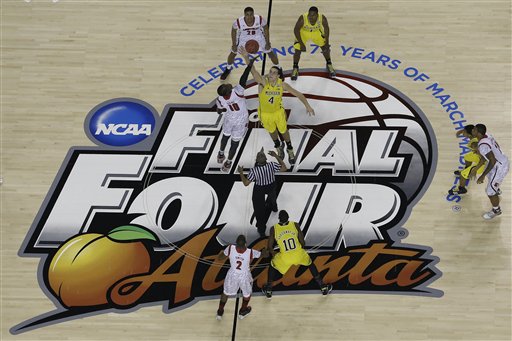
An excellent Final Four brought correspondingly strong TV ratings (AP Photo).

An excellent Final Four brought correspondingly strong TV ratings (AP Photo).

Whether you follow college basketball all year long, or have long since dedicated yourself to becoming a March hoops hanger-on, the fact remains that the NCAA Tournament is unflinchingly popular. No matter your level of interest in the progression of teams and coaches over months of non-conference and conference competition, when the brackets start flying off the copy machine, and C.J. McCollum is leading No. 15 Lehigh to a massive upset of near universally-loathed Duke, you’re TV remote is affixed firmly to your reclining chair arm rest or furniture of choice. When the lights turn on, you’re sitting down, losing valuable time at your day job, anxiously checking scores at every available digital outlet and watching. You’re watching the NCAA Tournament.

Read the rest of this entry »

Share this story

Morning Five: 05.08.13 Edition

Posted by rtmsf on May 8th, 2013

morning5

  1. The biggest news of the day on Tuesday, and a subject on which we’ll have more later this afternoon, is that the NCAA Tournament’s marquee event, the Final Four, is headed to cable giant TBS beginning in 2014. CBS and Turner Sports have jointly held the broadcast rights to March Madness for three years now, and it was well-known that TBS would have the right to begin airing the Final Four next season, but the choice of Turner Sports to exercise that option shows just how valuable the company thinks the property has become. As to specifics, the two entities will split things next season, with each getting two games of the Elite Eight, Turner taking the Final Four, and CBS the national championship game. The same situation will apply in 2015, but in 2016 Turner will take the entire final weekend before rotating it back to CBS the next year and alternating each season after that (the Elite Eights will remain split). At first blush, this seismic broadcasting shift may appear to be a downgrade from network television, but as Mike DeCourcy writes, cable television is nearly as ubiquitous as the networks nowadays, and the additional revenue brought in from the partnership with Turner allowed the NCAA Tournament to avoid the nuclear option of a horrifying expansion to 96 teams.
  2. So the Final Four might be moving to a new broadcast format next year, what about some prominent players hoping to get there? A couple of rising seniors were on the move yesterday, with UNLV’s Mike Moser settling on a destination for his final collegiate season — Oregon — and Tennessee’s Trae Golden seemingly on the outs with his coaching staff as he has decided to leave Knoxville. Moser had been rumored to be considering Washington and Gonzaga, but the Portland product ultimately was swayed by the success that Dana Altman has shown with several of his transfers (most notably Arsalan Kazemi last season). Moser was a preseason All-American at UNLV last year who struggled with injuries and his role in a lineup that featured freshman wunderkind Anthony Bennett as well as a number of other talented players. The Moser transfer makes sense under the graduate exception, but Golden is a lot tougher to figure. After a successful junior season where he had made it publicly known he was pleased with the direction of the program (and why not, he was the only point guard on the team), he has decided to leave Knoxville; and if you read the tea leaves among some of his UT buddies, it may not have completely been his decision. He too will try to employ the graduate transfer option next season, but it’s at this point unknown where he is headed.
  3. From players on the move to programs, two more schools are jumping conferences in the timeless yet endless pursuit of greater glory somewhere up the food chain. Davidson‘s Stephen Curry may own the NBA Playoffs at this point, but he never owned the A-10! At least that’s the logic behind the tiny school’s jump from the SoCon (where it has been a member for the better part of 80 years) to the Atlantic 10 beginning in July 2014. The school has arguably had a move like this on its agenda for a while, because it turned down an invitation to the CAA last year, presumably expecting a bigger and better offer to come soon enough. One of the residual effects of all the football-driven conference realignment nonsense is that there has been a bit of an unanticipated pooling of talented mid-major basketball programs as a result. Along the same lines, Oakland University (remember, it’s in Michigan, not California) announced that it would be joining the Horizon League starting this summer. Even though Butler is now gone from the HL, Oakland brings a solid program to the fold led by Greg Kampe that has been to the NCAA Tournament in two of the last four seasons (2010, 2011).
  4. We missed this one yesterday, but it’s a fascinating piece published by David Steele that looks at the story behind one of this year’s 46 early entries into the NBA Draft — a guy by the name of Joshua Simmons. It’s not newsworthy in the sense that seemingly every year there are a few guys who forgo their eligibility who have no business doing so (and a few others who do so as a publicity stunt), but Simmons’ situation is really one of no other viable basketball options. It’s not that anyone he’s played for thinks he’s a bad apple or couldn’t potentially claw his way onto a professional roster someday, it’s that he simply ended up on a difficult path that led from a Division II school to a junior college to, well… nowhere. That’s why he’s on the early entries list, and that’s why he’s simply hoping for an invitation to the pre-draft camps and ultimately, the summer league. It’s certainly not a well-worn path to the NBA, but it’s the only one he has.
  5. By now we’re all sick of hearing about Andrew Wiggins, right? The precocious Canadian wing who has been compared to everyone from Michael Jordan to Kobe Bryant is the top player in the Class of 2013, and every major school on his list still thinks it has a great shot at landing him. His quartet of suitors are Kansas, Kentucky, North Carolina and Florida State, but according to this article from the Louisville Courier-Journal, the wait should be ending soon. He expects to make his decision within the next “week or so,” which means that the message boards, blogs, and the commentariat at all four schools will be working overtime in the interim. In the meantime, he plans on moving back to Toronto, going to prom with his grade school friends, and generally trying to live the rest of his spring out as a normal teenager graduating high school would — in other words, an impossible feat for someone as closely watched as Wiggins.
Share this story

The RTC Podcast: Season Closeout Edition

Posted by rtmsf on April 13th, 2013

And so it goes, and so it goes. The 2012-13 college basketball season came to a resounding end on Monday night with Louisville cutting down the nets and taking home the hardware. As such, the RTC Podcast is back for a review of last weekend’s Final Four and a last look at the season that was. Our host, Shane Connolly, walks us through some of the highs and lows of the sport’s ultimate weekend before stepping back and reflecting on some of the most memorable images and notable moments of the 2012-13 season. We plan on revisiting the podcast every month or so during the offseason, so keep an ear out for those starting in May. Thanks to everyone who has continued to listen to the RTC Podcast and we hope everyone has a safe and happy summer!

  • 0:00-9:53 – Cards on Top
  • 9:53-13:48 – Beilein’s Blunders
  • 13:48-17:09 – Pitino Reaches Legendary Status
  • 17:09-19:34 – Leadership Came Through For Louisville
  • 19:34-21:39 – Refs at the Final Four – Was the Outrage Warranted?
  • 21:39-23:51 – Crowd Reactions to the Louisville Final Four Deficit
  • 23:51-28:02 – Evaluating the Crowd/Arena Experience
  • 28:02-30:24 – Final Four Memories
  • 30:24-37:09 – NCAA Tournament Wrap-Up
  • 37:09-46:59 – Enjoying 2012-13’s Parity and Other Full Season Reflections
Share this story