Morning Five: 08.07.13 Edition

Posted by rtmsf on August 7th, 2013

morning5

  1. Now that we’re heading over the next few weeks into the start of fall semesters at our nation’s colleges, the intensity of recruiting pitches for the top uncommitted prospects in the Class of 2014 will begin to reach a fever pitch. Prospects coming out of the summer camps have been evaluated and ranked, scholarship offers have been approved and delivered, and on-campus visits are being scheduled and discussed. A little later today we’ll be publishing a fantastic interview with ESPN‘s Dave Telep and CBSSports.com‘s Jeff Borzello breaking down their keen observations of the rising stars in prep basketball, but that won’t stop the wheels from turning on their own. The Sporting News took time Tuesday to list the top 10 consensus uncommitted prospects in the senior class, with each player’s current list of schools and corresponding official visits noted alongside. The top prospect on that list, Jahlil Okafor, announced yesterday that he will visit Kentucky for its September 9 Alumni Game, while the third prospect, Emmanuel Mudiay, narrowed his list down to five schools (including those same Wildcats). John Calipari’s squad, along with Duke, Louisville and Kansas — three of the last four national finalists, as it turns out — appear to be in outstanding position for big-time hauls at this point. The more things change…
  2. The more the NCAA looks like a clown car fire drill. Sometimes an organization simply can’t win for losing, and although nobody would agree that they’re losing in a financial sense, we’ve noted extensively in this space that the stoic institution appears to be reaching a tipping point over amateurism in the court of public opinion from which it simply cannot recover. The latest ignominy comes courtesy of ESPN‘s Jay Bilas, who tweeted that by typing player names into the NCAA’s shop search box (he started with “Nerlens Noel”), the results would show up as that player’s unnamed jersey, such as in Noel’s case, his #3 Wildcats uniform. Bilas then tried a number of other player names, both football and basketball, with similar corresponding results. As later described by Jeff Eisenberg at The Dagger, the NCAA caught wind of it and immediately shut down the search functionality, but the damage was already done. Once again the NCAA has managed to find the sweet spot of hypocrite as well as laughingstock, made especially so by virtue of the fact that they’re embroiled in a high profile case with former and current athletes over the use of their likeness. Unbelievable.
  3. CBSSports.com made some waves earlier this week with its release of the results of an unscientific poll showing that Iowa State head coach Fred Hoiberg was the top choice among coaches in the business in terms of likelihood to jump to the NBA. Coach K, given his ties to all the stars on the US Olympic team, was unsurprisingly second. At third was Billy Donovan — who nearly went League once already — and Kansas’ Bill Self. Self — really? On Monday night at his induction to the Oklahoma Sports Hall of Fame, where he starred in the prep ranks before playing at Oklahoma State, Self at least entertained the notion. Predictably, a firestorm ensued on Tuesday, with everyone from KC to Liberal wondering why the nine-time defending Big 12 champion would ever consider a move to the professional ranks. Self took time to couch those comments on Tuesday, but he made sure to leave the window slightly ajar, stating that he’d made a prior mistake in telling Illinois fans that he was there “for the long haul” before staying in Champaign for a flingish three years.
  4. How about some comings and goings for a hot August hump day? First, Colorado State head coach Larry Eustachy parlayed his excellent NCAA Round of 32 season into a raise and extension to his contract. His new deal now lasts through the 2017-18 season (with options through 2021) and will pay him an average base salary of nearly $1 million per year. Perhaps the most surprising thing in a world where DePaul’s Oliver Purnell clears nearly twice that for doing very little is that Eustachy’s new deal actually puts him at the very top of the heap in the hyper-competitive Mountain West Conference. The Mountain’s powerhouse programs — San Diego State, New Mexico and UNLV — all pay their top guys a salary considerably lower than Eustachy’s contract. Steve Fisher, for example, the national championship coach with a number of Sweet Sixteen runs in San Diego to his name, currently makes $800,000 per year. Maybe he should put in a call to his AD.
  5. Down in the desert, much of the offseason chatter has surrounded the haul of talent that Arizona head coach Sean Miller has in Tucson. But the best player in the state might actually be playing in Tempe for Herb Sendek; at least for one more year, that is. Coming off a very strong freshman campaign in 2012-13, Sun Devils point guard Jahii Carson turned some heads this summer with his play at the Adidas Nations Camp and is poised to become an All-American in his sophomore year. He tweeted on Tuesday that he’s looking forward to that run, but it appears that his next 10 months in the desert will be, as he called it, his last “go round.” The team is about to head to China in a couple of days — it’ll certainly be interesting to track Carson’s progress next season, regardless of how well his team does supporting him.
Congressional Bill Could Accelerate Movement For NCAA Change

Posted by Chris Johnson on August 6th, 2013

Chris Johnson is an RTC Columnist. He can be reached @ChrisDJohnsonn

The scent of change lingers thick in NCAA territory these days. Major conference athletic directors have spoken about the possible creation of a new “Division 4” that would allow a subset of larger Division I leagues to operate under a different governance structure than their small-school counterparts. The Ed O’Bannon lawsuit threatens to undercut the NCAA’s decades-old adherence to amateurism. Shady tactics and egregious errors in enforcement made during the NCAA’s high-profile investigation of the Nevin Shapiro scandal at Miami have been laid bare by various publications. Experienced enforcement staffers are leaving in droves. A new lawsuit alleging a lack of accountability for student-athlete concussions in contact sports has inspired a new strain of ethical debate. Put simply, the NCAA is beset on all sides by various philosophical and legal attacks; a breaking point feels imminent. Over the next year or so, something – whether a massive development in the O’Bannon case, a formal establishment of a new NCAA subdivision, or some other major change – is going to happen. The NCAA cannot exist in its current state. This is widely accepted and rarely denied.

Congress's involvement could force the NCAA's hand on a number of resisted structural revisions

Now Congress wants a say in the matter. Last Thursday, House members Charles Dent and Joyce Beatty introduced The National Collegiate Athletics Accountability Act. The act contains a number of powerful regulations, but the main points can be pared down to the following four: 1) a guarantee of four-year scholarships in contact sports (which, per the legislation’s definition, include the following: boxing, field hockey, ice hockey, football, lacrosse, soccer, martial arts, wrestling and rodeo), eliminating the potential for schools to revoke one-year, renewable grants-in-aid on the basis of injury, skill, or sheer whim (i.e., no more runoffs) – a practice more than one third of the nation’s most powerful athletic programs have yet to abolish, according to the Chronicle of Higher Education; 2) permission for schools to extend cost-of-living stipends to student-athletes; 3) requiring concussion tests for all sports, both contact and limited-contact; 4) formalizing “due process” guidelines for schools and players found to have violated NCAA rules, including an appeals process and administrative hearings. A failure to meet any of these requirements would result in a loss of Title IX funding, which provides institutions with billions of dollars annually.

Read the rest of this entry »

Morning Five: 08.06.13 Edition

Posted by nvr1983 on August 6th, 2013

morning5

  1. Coming into this season we were expecting big things out of Montrezl Harrell. The one-time Virginia Tech recruit played a pivotal role in Louisville’s run to the national championship last season and he showed signs of becoming a star with his play this summer. So when news broke that Harrell had injured his right knee in a collision at the Adidas Nations Camp we are sure that there were plenty of nervous people in Louisville, Kentucky. Fortunately, Harrell merely hyperextended his knee and did not suffer any significant structural damage. All of this should make Louisville fans sleep a little easier tonight knowing that their veteran inside presence should come into the season healthy.
  2. Louisville fans were not the only ones who had a scare come out of the Adidas Nations Camp as Will Sheehey also had his own injury scare. The rising senior sprained his right ankle, which had kept him out of five games as a sophomore, but it appears that the sprain was only moderate. Although Sheehey was largely overshadowed by his Indiana teammates/top-4 picks Victor Oladipo and Cody Zeller as well as seniors Christian Watford and Jordan Hulls, he still managed to average 9.5 points per game and will be expected to carry a much bigger load for a Hoosiers team that will probably spend much of the early season trying to figure out its new identity.
  3. It might seem like an odd time to ask the question with the college basketball season drawing near, but CBS Sports took an informal poll of college coaches asking them which college coach they thought would be the best fit for the NBA. At first we were a little surprised to see Fred Hoiberg ahead of Mike Krzyzewski, but then we realized that these are people who actually know the game and realize the type of personalities that a NBA coach has to deal with. Now we are not going to say that Krzyzewski is not equipped to handle those personalities as he has shown that he can do for a short period of time in the Olympics, but we are not sure how that would hold up over an 82-game season. On the other hand, Hoiberg has more experience at the NBA level and based on these results we would not be surprised to see Hoiberg’s name come up when a NBA job opens up.
  4. Few recruits have had to deal with the adversity that Austin Hatch has. Hatch, a Michigan commit, may not be considered one of the truly elite prospects in this year’s senior class, but his story–having been involved in two plane crashes that took the lives of much of his family. Hatch has managed to come back from that and will be finishing high school in Los Angeles (hopefully Luke Winn will cut him some slack if he finishes as a top 100 recruit). Hatch has not played competitively since the most recent accident (in June 2011) so we will be interested in seeing how he performs, but more importantly to see how he is adjusting to his new life.
  5. With the off-the-court trouble that Wyoming had last season it should not be that much of a surprise that some of its players have decided to create their own club known as “624” to avoid the craziness of Laramie, Wyoming (I know I can’t believe I just wrote that either). The club is not really a club in the traditional night club sense, but is rather a symbol for a place (624 is the address of the apartment of some upperclassmen) where the players on the team can hang out without worrying that people outside of the team will create problems that will break up the team. The entire idea should not be novel although we doubt that many teams do something like this for a variety of reasons, but it seems like something that many programs would benefit from trying.

Morning Five: 08.05.13 Edition

Posted by nvr1983 on August 5th, 2013

morning5

  1. One of the more secretive parts of college athletics (and there are many such areas) is how schools go about looking for coaches and administrators. In the past they were largely just given through what can best be described as an old boys network. Today, these decisions are largely made through executive search agencies. Dana O’Neil was able to go inside Parker Executive Search, the most well-known firm, to see what exactly it is that they do. According to Parker, they simply collect data and help arrange for meetings despite all of the rumors that they essentially pick out who should be the choice. While this is all nice in theory it should be obvious to everybody that they can only search so deeply and occasionally miss things that others might consider fairly obvious like the accusations against new Rutgers AD Julie Hermann.
  2. It will not be “The Decision II” in terms of being a media spectacle, but when Jahil Okafor and Tyus Jones announce where they are committing you can be sure it will be a big day at least in the college basketball world. Okafor, the #1 recruit in the country, and Jones, a top-5 player, are reportedly a package deal and according to Mike Irvin, Okafor’s AAU coach, Duke appears to be the leader for the pair. This is backed up by sources close to Jones saying Duke is the leader for him too. Of course, Okafor’s father denies that anybody is in the lead, but we doubt that he would come out and say that with so many schools in pursuit. The fact that Duke could land such a significant pair of recruits is not really shocking, but it has been a while since Duke landed two such highly regarded players in the same class.
  3. Jeff Goodman may have left CBS for ESPN, but apparently CBS got to keep his transfer list. Although he does not include every single transfer out there Jeff Borzello put together a summary of the biggest transfers separating them into those that can play immediately, those that will have to sit out a year, and those that are in limbo as well as those that just needed a change in scenery. With all the attention paid to the top high school recruits coming in a lot of people gloss over some pretty high-impact transfers and Borzello’s list does a great job at reminding you of the most important transfers so if you are unclear on where everybody transferred (and it is almost impossible to keep track of everybody) this is a great place to start.
  4. He may have not been a successful head coach (honestly, we had almost forgotten he was a college coach) so we cannot say that we are shocked that Corliss Williamson has left Central Arkansas to become an assistant coach with the Sacramento Kings. Williamson is best known as the star of the Arkansas teams that made back-to-back national championship games winning the title in 1994, but he also went on to have a successful NBA career winning NBA Sixth Man of the Year in 2002. Unfortunately Williamson’s college coaching career was not as successful as he went 26-62 in 3 seasons. Still he will have his name to fall back on if and when he decides to move on from his new job in Sacramento.
  5. Normally this space is reserved for fairly light material, but when a former Division I assistant coach is labeled as “Islamic jihadist” it catches our eye. Such is the case of former Northern Colorado assistant Christopher Craig who has reportedly threatened Catholics and Mormons in both Arizona and Colorado. As a result authorities in Colorado are warning churches in the state to be on the lookout for Craig. Now we do not want to get into geopolitical/social issues and a loaded term like “Islamic jihadist” will certainly make this story become a bigger point of discussion than if they had chosen any other religion. Based on the reports it appears that Craig’s threats were limited to primarily verbal, which certainly does not excuse them, but hopefully someone reaches Craig before he goes beyond a point that he cannot come back from.

New Initiative For Seeding Should Create More Stability Within The Madness

Posted by BHayes on August 2nd, 2013

The college basketball news of the day on Thursday came from Ron Wellman, Wake Forest AD and current chair of the Division I men’s basketball championship committee, when he outlined significant criteria changes for how the NCAA Tournament will be seeded in the future. The new method will be put in place immediately for the 2014 NCAA Tournament, and while the change may not be as drastic as say, a 96-team field, it should have a meaningful and productive impact on the dear old event we know and love.

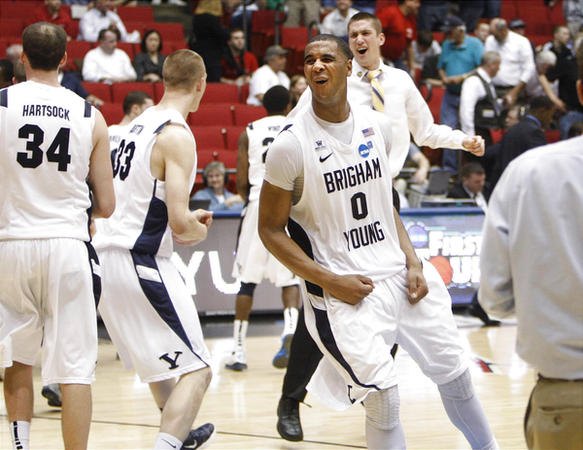
Brandon Davies And BYU Rejoiced After Their Comeback Victory Over Iona In 2012's First Four, But They Were The Only Team Since 2007 To Slip Two Seed Lines As A Result Of Bracketing Issues Elsewhere

Brandon Davies And BYU Rejoiced After Their Comeback Victory Over Iona In 2012’s First Four, But They Are The Only Team Since 2007 To Slip Two Seed Lines (To A #14) As A Result Of Bracketing Issues Elsewhere

Quickly, here’s the nitty-gritty: Conference foes who have only met one time during the season (conference tournaments included) can now play each other in the round of 32; if conference-mates have already played twice, their earliest possible NCAA match-up will come in the Sweet Sixteen. Finally, if teams have played three times throughout the course of the year, it won’t be until the regional finals that they are allowed to rendez-vous for a fourth time. Additionally, the top four teams from a conference must now only be separated by region if they are among the top 16 overall seeds; in the past, only the top three teams from each league were separated, period. If you want the full breakdown from the committee, you can read its press release here.

Read the rest of this entry »

Dereck Whittenburg Back At NC State: Does Player Returning as Coach Work Out?

Posted by BHayes on August 2nd, 2013

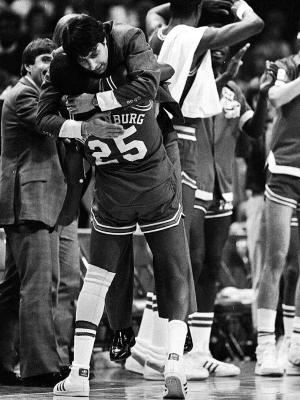
North Carolina State announced earlier this week that Dereck Whittenburg, one of the heroes of the 1983 Wolfpack NCAA Championship squad, would be returning to the basketball program as an assistant coach. On paper, as it almost always does in these circumstances, the move looks great. Whittenburg’s arrival helps maintain a connection to NCSU’s past glory years, with his mere presence on the staff providing a constant reminder to players, fans, and most importantly, recruits, that the NC State program has summitted the mountain before. Pack fans must admit that this all sounds pretty good, but wait — haven’t they heard this one before? And didn’t it actually not go so well? Mark Gottfriend has done his best to erase the memories of the five-year Sidney Lowe era that preceded his hiring, but the half-decade with the former Pack star (and teammate of Whittenburg on that 1983 title team) at the helm was far too ignominious to have already slipped the consciousness of the Raleigh faithful. Now, of course, we needn’t note that Whittenburg is not running the program as Lowe did, which should figure to make this a far lower-risk hire. But with another Pack star returning to the PNC Arena sideline next season, it begs the question: Is the college star-returning-as-coach really the slam dunk hire fans believe it to be?

Can Dereck Whittenburg Lift NC State To Similar Glory As An Assistant Coach?

Can Dereck Whittenburg Lift NC State To Similar Glory As An Assistant Coach?

Lowe’s failures aside, you don’t have to scan the country long to find examples of alums returning to their old program and succeeding – both as assistants and head coaches. Most notable among current head men is Fred Hoiberg, who in 2010 took over the helm of the Iowa State program he starred at in the early 1990s. Early returns have been good for “The Mayor” in Ames, as Iowa State has won an NCAA Tournament game in each of the last two seasons. Other recent successful examples at the head coach level include Bob Huggins (West Virginia) and Sydney Johnson (Princeton).

Read the rest of this entry »

Morning Five: 08.02.13 Edition

Posted by nvr1983 on August 2nd, 2013

morning5

  1. The NCAA Tournament (or more specifically the bracket for the NCAA Tournament) as we know it is about to change. Yesterday the NCAA released information on the changes it is set to make starting with the 2014 NCAA Tournament. The changes revolve around seeding being altered by the conference affiliations. The details involved in the changes goes beyond the normal space of this column, but it essentially boils down to three things: (1) timing of potential NCAA Tournament intra-conference match-ups will be determined by how often teams have played; (2) ease the restrictions on placement of multiple highly seeded teams from the same conference; and (3) essentially eliminating the possibility of intra-conference match-ups in the First Four. These might not seem like huge changes to most observers, but it could have a profound impact by creating more fair seedings rather than unnecessarily boosting/dropping teams because of their conference affiliation to help organize seeding.
  2. One of the NCAA’s proposed reform took effect yesterday with relatively little fanfare. Yesterday was the first day that the NCAA’s new and improved enforcement policies were in place. In theory the idea that the NCAA will be stricter and more expedient with its sanctions seems like a good idea as does the idea that there will be tiered system of handling infractions. However, we remain skeptical of the people who will be carrying out the enforcement. We have already seen that the NCAA is a deeply flawed organization and perhaps the most important factor in governance is whether the populace trusts that governing body is acting in an appropriate manner. With what we have seen over the past few years we doubt that they do.
  3. Over the past three years, Luke Winn has written several articles examining the transfer phenomenon at both the high school and college level. The latest iteration looks at the transfer habits of the top-100 players from the last seven years. Outside of the usual stuff (players who transfer more in high school are more likely to transfer in college, etc) and the rate of transfers in high school is startling, but that was not the most interesting part of Winn’s article. The most interesting part was that while 34.3% of top-100 recruits transfer (a ridiculous number) that number is not that different from the average college student (32.6% of them transfer). So the issues of transferring might be an interesting one for college sports fans it is a much larger academic one.
  4. With all of the outcry over conference realignment one of the things that has been largely overlooked is that it creates some really interesting potential rivalries. One of the biggest if not the biggest new rivalry will be Duke and Syracuse at least in terms of basketball powerhouses. For all of Cameron Indoor’s charm the one thing it cannot do is produce a massive crowd, which is something that the Carrier Dome can certainly do. So while the date for Duke’s trip to Syracuse may not be set yet (at least publicly) there are certainly big plans for it as there are reports that the school is looking at having more than 50,000 fans in attendance. Outside of questions as to how well they could actually fill those 50,000+ seats there are obvious logistical/electrical issues that would likely derail this crazy idea before it gets started. We would be interested to see what kind of buzz a game of this size would create although having seen how far away a court can appear in a huge football stadium we are not sure that increasing capacity to this size would be such a wise idea.
  5. At a time when professional teams in many cities are taking the cities hostage by requesting either improvements or entirely new stadiums largely paid for by tax payers it is somewhat refreshing to see that Wake Forest is going in the other direction. Yesterday the school announced it was completed its purchase of Joel Coliseum from the city of Winston-Salem for a total of $8 million with a plan to spend an additional $10 million on renovations. We are assuming that this $18 million is coming from the athletic department and booster money rather than being diverted from the school’s other funds so it seems like a perfect model for how sports teams and cities should interact.

College Hoops Expanding Global Reach With Armed Forces Game in South Korea

Posted by Chris Johnson on August 1st, 2013

Chris Johnson is an RTC Columnist. He can be reached @ChrisDJohnsonn

For many years, the college basketball season would tip off with a relative murmur, drowned out by the football-crazed environment that consumes November. Changing this dynamic has been one of college hoops’ biggest priorities in recent years. Not only has the sport devised new, innovative, quasi-gimmicky events, the NCAA Tournament selection committee did away with its traditional emphasis on the “final 12 games of the season” in order to give equal weight to the entirety of a team’s campaign. The non-conference season has never meant more in the eyes of the selection committee, and if you don’t perform in November in December (or fill your schedule with small league opponents and other RPI anathema), turning in a merely “decent” league season won’t make amends for your cautious and/or unsuccessful pre-New Year efforts. Non-league games are important, and college hoops has sought to highlight their importance by spicing up its typically mundane season opening with eye-opening events like ESPN’s 24-hour marathon, the compacted Champions Classic and other innovative ventures.

If this year's AFC even comes close to last season's game in Germany, it will be considered a success (AP).

If this year’s AFC even comes close to last season’s game in Germany, it will be considered a success (AP).

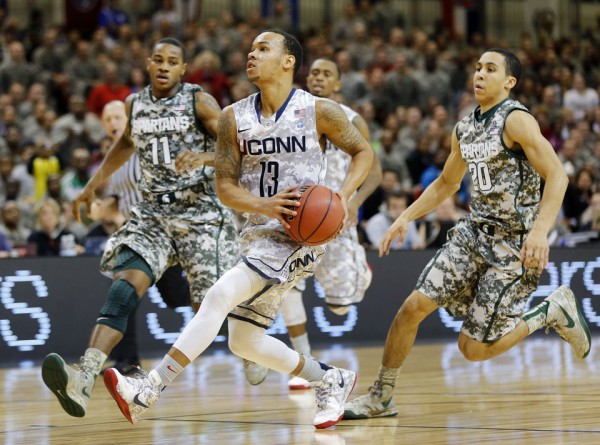
One of the sport’s more successful recent season tip-off undertakings was the Carrier Classic, which conflated patriotism and Veterans Day college hoops in unique and aesthetically enthralling way. The 2011 game was a huge success: President Obama sat courtside with hundreds of troops in uniform aboard the USS Carl Vinson while Michigan State and North Carolina played a “just OK” game in front of some of the more gorgeous vistas of any sporting event I can remember. It felt magical, or something close to it. One year later, the water cycle did its thing, players and coaches alike decried hazardous court conditions, and despite the event’s commendable patriotic intent, most everyone had agreed that whole boat idea wasn’t going to work out any more. The 2012 Armed Forces Classic was a safer alternative, imbued with the same troops-honoring purpose, and staged on far-flung defense bases in a five-year rotating cycle including all five military branches*. Last season, UConn and Michigan State faced off at Ramstein Air Base in Germany; In 2013, the AFC is setting up shop even further away from the Continental United States. ESPN’s Andy Katz dropped the news Tuesday afternoon: Georgetown and Oregon will kick off 2013-14 at Camp Humphreys Army Base, located 45 miles south of Seoul, South Korea.

Read the rest of this entry »

Morning Five: 08.01.13 Edition

Posted by rtmsf on August 1st, 2013

morning5

  1. See that date up there at the top of the post? Yeah, August 1. Also known as the downswing of the summer, and the corresponding slow, gradual ramp-up to the next college basketball season. It’s not yet time to get excited, but it’s definitely worth a nod to the notion of a season getting here sooner rather than later. With that said, how about some super-duper-early preview materials to get the month started? SI.com‘s Andy Glockner gets things going with a look at the new Big East, featuring three new schools and an interesting existential question on whether a basketball-centric conference can survive and even thrive in major college athletics. And in case you missed it from a few days ago, Glockner also did a review of the remnants of that conference — the AAC — with a heavy emphasis on the defending national champions. 
  2. While on the subject of these two non-BCS leagues, Mike DeCourcy examines how a proposed $2,000 “living expenses” stipend that the top football conferences are hoping to add (especially if they pack up for a Divison 4 entity) would impact the likes of these conferences. It’s not an easy question to tackle, nor is it something that the “high-resource” schools populating the Big East and AAC necessarily want to see happen. That said, as DeCourcy notes, there is no realistic scenario where huge basketball schools like Connecticut, Cincinnati or Georgetown would allow regional and national rivals in the ACC, Big Ten, Big 12, SEC and Pac-12 to offer recruitsan additional and legal financial incentive without also doing so on their own. Those schools would simply have to rework their financial sheets to make it happen, which may require some level of creativity among their accountants and senior management, but let’s not pretend that college athletics isn’t awash in money. The issue at most relevant schools is on the expenditures side, not the revenue one.
  3. And what about those revenues? It’s time for your near-daily Ed O’Bannon lawsuit update, and this one is a good one. In a 2-1 appellate decision involving a different case but one that will be instructive to the O’Bannon group’s decision, the US Court of Appeals for the 9th Circuit ruled on Wednesday that video game maker EA must face claims against it for the usage of college players’ likenesses. The video game company had argued that it was protected by artistic license under the First Amendment, but the court rejected that argument. EA, of course, was notorious for using college football and basketball player likenesses to the point of absurdity in its video games, yet still claiming player anonymity because the names were removed from their virtual jerseys. It sounds ridiculous, and it is. As the court stated: the video game likeness had the “same height, weight, skin tone, hair color, hairstyle, handedness, home state, play style (pocket passer), visor preference, facial features, and school year” as the defendant (former Nebraska quarterback Sam Keller). What does this mean for O’Bannon? SI.com sports law expert Michael McCann believes that it means EA will settle its case with that group, leaving its co-defendants the NCAA and Collegiate Licensing Corporation to twist in the wind for the major payouts. Either way, this is another signal that big change is on the horizon.
  4. Stipends, Division 4, huge-dollar lawsuits… the NCAA is taking hits on all sides right now. Still, the prevailing wisdom is that no matter what transmogrified shape major college athletics eventually assumes, everyone’s beloved NCAA Tournament will not be messed with. The positive cash flow of over $700 million per year to the NCAA (and eventually parsed out to the schools) is just too valuable to destroy — so goes the thinking, at least. But, as Gary Parrish notes in one of his best columns in a long while, the potential of the monied schools choosing the nuclear option is at least worth our consideration. If there’s a dollar to be made, this cabal has proven that they’ll pursue it, time and time again, and often in the face of public sentiment. If, as we’ve also argued in this very space, the big-time schools decide that they can run their own version of March Madness resulting in a larger piece of the pie than they currently receive, then, as Parrish says, “smarter people [have done] dumber things.” We cannot disagree.
  5. In the meantime, America is stuck with the Texases and Ohio States of the world sharing postseason basketball space with the likes of VCU and Gonzaga. Arizona, as a member of the burgeoning Pac-12, is closer to the former group than the latter. And with Sean Miller at the helm, the Wildcats are poised to dominate west coast basketball and stay as a national powerhouse for the next decade or longer. This SBNation.com report from Scott Coleman notes that only two schools have ripped off top 10 recruiting classes in each of the last three years: Kentucky, obviously, but also Miller’s Wildcats. This year’s recruiting class will join a strong returning group from last season to potentially vault Arizona to the top of the Pac-12 standings, and if the reports about Aaron Gordon’s performances over the summer are any indication, he may just find himself standing as the best prospect in the country not named Andrew Wiggins this time next year.

Morning Five: 07.31.13 Edition

Posted by rtmsf on July 31st, 2013

morning5

  1. Last year’s Armed Forces Classic between Connecticut and Michigan State on an air base in Germany may not have brought the same razzle-dazzle that the original aircraft carrier game in 2011 did, but it was easily the most compelling opening night game last season for any number of reasons. The weird midnight local time tip, the aircraft hangar setting, the wild military crowd in attendance, Kevin Ollie’s first game as a head coach, the start of UConn’s “lost season,” a Jim Calhoun appearance, and yeah, even a pretty good game. Next year’s event seeks to do us one better, as Andy Katz reported on Tuesday that the 2013 version will be held at US Army base Camp Humphreys in Pyeongtaek, South Korea, resulting in the first college basketball game to be played in Asia since Ralph Sampson’s Virginia group was about to lose to Chaminade. The participants will be Georgetown and Oregon, with both teams expected to be good next season and hoping to get an early non-conference quality win. Georgetown certainly hopes this trip goes a little better than the last time it visited Asia, while Oregon’s representation continues the Pac-12’s ongoing push to marketing its products on to the other side of the Pacific Rim. We can’t wait. 
  2. Speaking of Pac-12 schools in the Beaver State, Oregon’s rival could be coming apart at the seams. Already on the hot seat for a middling 77-88 (31-59 P12) record in five years in Corvallis, Craig Robinson was hoping to have his most talented and experienced team returning intact next season. With the news released on Tuesday that starting frontcourt mates Devon Collier (13/6) and Eric Moreland (9/10) were suspended indefinitely for undisclosed team violations, there is valid reason for concern that the Beavers are facing a meltdown 2013-14 campaign. The good news is that the pair will be allowed to continue their strength and conditioning training as well as summer workouts, so perhaps these suspensions are merely of the ‘send a message’ variety. There’s one thing we can bank on, though. If Robinson doesn’t have Collier and Moreland at his disposal next season, he’d best polish off that financial services resume for a pending move back east.
  3. How about some better news? The National Collegiate Basketball Hall of Fame announced its Class of 2013 earlier this week, and the names include some of the all-time greats in our sport. The headliners are 1968 NPOY Elvin Hayes (Houston) and 1975 NPOY Marques Johnson (UCLA), along with six-time NCOY Gene Keady (Purdue) and Villanova national championship head coach Rollie Massimino. Wichita State superstar Xavier “X-Man” McDaniel was also selected, in addition to Tom McMillen (Maryland), Bob Hopkins (Grambling), and a unique team inclusion: the entire 1963 Loyola (Chicago) national champions. That team was notable in that it started four black players on its title team, some three years before the more-ballyhooed Texas Western squad won its Brown vs. Board of Education game against all-white Kentucky. Former Washington State and USC head coach and Nike representative George Raveling was also chosen to the Hall for his work with the shoe company (a “contributor,” they call it). The ceremony will occur as part of the CBE Classic in Kansas City on the Sunday before Thanksgiving. A deserving group.
  4. Among the latte-sipping class, you’ve pretty much arrived if you’re mentioned in The Economist. The high-brow publication from the United Kingdom has long been considered one of the most cogent analytical voices on international economic matters in the world, and particularly so among US policy-makers and business leaders. Rarely do sports, especially college sports, find space on the magazine’s pages, but last week the rest of the world was introduced to Ed O’Bannon and his lawsuit against the NCAA. Many people reading this kind of material are likely clueless about the history and importance of the NCAA, but the tone of the piece again shows how, as a matter of public perception, the organization has already lost the coasts. People all across America still love college sports — the eastern and western edges of the continent included — but the growing consensus among the educated and wealthy concentrated in those areas is that the NCAA is exploiting 18-22 year olds for its unjust enrichment. The O’Bannon case has a long way to go still, but don’t think that the judge and principals involved didn’t notice The Economist’s wandering eye.
  5. Every once in a while Deadspin comes up with some sort of analysis that doesn’t involve genitalia jokes or athletes (and their wives, sorry, WAGs) doing dumb things on Twitter. Last week Patrick Burns wrote up a comprehensive analysis of watching an entire year (2012) of the 11 PM ESPN Sportscenter to see which sports, teams and personalities received the most coverage. There were no surprises at the top of the list, of course, with the NFL (23.3% of all available minutes) and NBA (19.2%) in dominant positions, followed by MLB (16.8%) and college football (7.7%). But perhaps surprisingly given how pigskin drives all the money-making decisions at the school and conference level, Sportscenter spent nearly as much time talking about college hoops (6.8%) as it did on the gridiron. The most talked-about team, as you can imagine that year, was Kentucky (0.9% of all minutes). True, Sportscenter is but a single proxy for the importance of American sports culture, but it’s an important one nonetheless.