



One and Done (2007) – was it worth it?
Posted by rtmsf on May 14th, 2007In the hypercompetitive world of college basketball recruiting, last year’s new NBA rule requiring a player to be one year removed from his high school class prior to declaring for the draft sent repercussions throughout the game. Coaches at the elite programs generally fell into two camps – you either recruit players who you expect will stick around for more than one season, hoping to keep stability (and consistency) within your program; or, you recruit the very best talent available year over year, hoping to catch lightning-in-a-bottle Carmelo-style without experiencing the program volatility that such a strategy may entail. Now that we have one season of one-and-dones behind us, let’s take a look at how the programs employing that strategy fared. We considered the top twenty players in the Class of 2006 (login required) as the most likely one-and-dones.

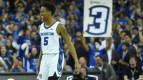
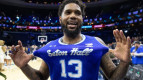
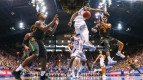
Looks like one and done worked out for Greg Oden.
Ohio State – Well Worth It
This program, along with UNC, had the most players listed (3) in the 2006 top twenty – Greg Oden, Daequan Cook, Mike Conley, Jr. As of today, they’re definitely losing Oden; Conley is likely to leave, and Cook is a tossup. However, even if they lose all three, it would be fair to say that OSU got its money’s worth. A 35-4 (15-1) record, NCAA runner-up, Big Ten championship, and the best season in Ohio State’s post-UCLA history will do that. Essentially, this group of players made Ohio State relevant as a national powerhouse again. For many programs, losing a group like this would equal the NIT or worse next season; but with Matta bringing in another group of blue chippers next season (and the season after), OSU won’t take a terrible hit. This gamble definitely paid off, and will continue to do so, long after these players have moved on.
North Carolina – Well Worth It
Brandan Wright, Tywon Lawson and Wayne Ellington were all potential one-and-dones when they were recruited by Roy Williams to Chapel Hill. UNC dodged a substantial bullet by losing only Wright to the draft. Led by these three rooks (+ Tyler Hansbrough), Carolina played itself into a 31-7 (11-5) record, an ACC championship and a run to the elite eight where they were simply out-executed by a game Georgetown squad. Still, with Lawson and Ellington returning, Carolina’s gamble came in like Ari Gold at the blackjack table – they’re set to be preseason #1 next year.
Georgia Tech – Not Worth It
Thaddeus Young and Javaris Crittenton were the two jewels of Paul Hewitt’s class last year, and both have declared for the draft this year, but neither has yet signed with an agent. It remains to be seen whether one or both of these players will return, but with Young projected in the low lottery and Crittenton in the mid-low first round, it is likely both will stay in the draft. So how did Georgia Tech fare with these guys? Not as well. A maddeningly inconsistent 20-12 (8-8) record with a first-round NCAA loss versus UNLV isn’t the type of season that the teams above enjoyed. Hewitt has a couple of decent players coming into Atlanta next season, but the 2007-08 campaign will be made or broken on the decisions of these two players. This was clearly a tenuous gamble that may actually set the program back if both fail to return.
Texas – Worth It
Of course everyone on Earth knows about Kevin Durant’s reign in Austin, but most people outside of hill country aren’t aware that Texas actually had another top 20 player in that class, Damion James, who averaged 8ppg/7rpg in about 26 minutes per game. James will definitely be back next year; Durant will not. Given the tremendous publicity that Durant brought to the UT program, and a pretty damn good season as well – 25-10 (12-4), Big 12 runner-up, NCAA second round – it’s fair to say that the tradeoff here was well worth it for Rick Barnes’ program, even if Durant was unable to recreate a Syracusean run in the NCAAs. UT should still be in good hands next year with their fantastic rookie point guard DJ Augustin leading the way, even though he wasn’t a top 20 player coming in.

Washington – Not Worth It
This is a tricky one, as every draft board has Spencer Hawes as the second center taken after Greg Oden – he has not yet signed with an agent, but is expected to stay in the draft. Was he really worth the trouble for UW? The Huskies started off very well, but Pac-10 play ruined them, ending in a 19-13 (8-10) record that wasn’t deemed good enough even for the NIT. As for replacements, Washington has a few top 100 players coming in next year, but none of Hawes’ calibre. It says here that the Hawes experiment probably wasn’t worth the trouble for Lorenzo Romar’s program.
Others –
Arizona – Chase Budinger is staying for at least another year in Tucson, so he will likely enjoy an all-american campaign next year, and Arizona will improve on a weak showing (for them) this year.
Stanford – The Cardinal will likely be a top ten team next year in large part because Brook Lopez (and twin Robin) is returning to school.
Kansas, Duke, Syracuse, Oklahoma St., Tennessee – each of these programs had a top twenty player who could have at least tested the waters (respectively, Darrell Arthur, Gerald Henderson, Paul Harris, Obi Muonelo, and Ramar Smith), but none of them chose to do so. All three showed glimpses of their capabilities this year, and should have terrific sophomore campaigns for their teams.
Final thoughts. For the majority of programs employing the strategy this season, the one-and-dones worked out. The truly exceptional talents (the Odens and Durants) led their programs to great successes, while the next tier of talent was largely wise enough to stay in school for another year to build on what they accomplished. You could argue that Ohio St., Texas, Georgia Tech, and Washington may get burned by the one-and-done phenomenon, but in the cases of OSU and Texas, the media circus surrounding those programs this year probably offsets the downside of losing those players. As a long-term strategy, it will probably pay off in droves for Thad Matta and Rick Barnes to have had those players, in terms of future recruiting and media attention. The question is whether this seemingly successful strategy will hold up over the long run.