Sunday, March 21 (all CBS)
12:10pm - Syracuse vs. Gonzaga
2:20pm - Ohio State vs Georgia Tech
2:30pm - Maryland vs Michigan State
2:40pm - West Virginia vs Missouri
2:50pm - Wisconsin vs Cornell
4:50pm - Pittsburgh vs Xavier
5:00pm - Purdue vs Texas A&M
5:15pm - Duke vs California
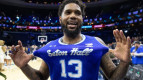
“Born Ready” has decided he’s not quite ready for the NBA, as the NYC prep legend-cum-Cincy guard told Bill Koch at the Cincinnati Enquirer today that he’s strongly leaning toward staying in college another year after (so far) a relatively up and down season. The UC freshman is averaging 11/4/2 assts in just over 27 minutes of action per game, but he’s only scored six points on 2-9 shooting in his last two games and has struggled with turnovers (2.6 per game) and his outside jumper all season long (20%). Here’s Lance Stephenson’s quote on the matter:
“I think I’m going to stay and keep working. I don’t think I’ve had an NBA season this year so the best choice for me is to stay.”
Maybe Born Ready is Wise Enough to Know When He's Ready
Well, at least he’s being honest. According to the article, NBA scouts have stated privately that he would be a low second-rounder at this point, and two draft tracking sites currently have him at #39 at #41, respectively. There’s no shortage of New York City schoolboy legends who failed to live up to their hype, but Felipe Lopez, Sebastian Telfair and Omar Cook immediately come to mind in varying degrees. But perhaps the best decision Stephenson ever made was to get away from the hustle and flow culture of the NYC basketball circuit by moving to the calmer and more reasonable environs of the Queen City. By avoiding the endless crush of wannabe agents and hangers-on endemic to New York telling him how great he is at every turn, he might have just saved his career from an early flameout.
As Cincinnati coach Mick Cronin alluded to in the article, Stephenson’s biggest difficulty as a freshman in the Big East has been learning when to play within the offense rather than taking it upon himself to score every time downcourt. Even the more-ballyhooed John Wall has started to face the reality that playing 1-on-3 or even 1-on-4 isn’t always the best option in a team’s offense, no matter how many ridiculous skills at putting the ball in the basket you possess. When you’ve been The Man for your entire life, this is a subtlety often lost on young players transitioning to both the college and NBA game, but the ones who become great eventually learn it. The first step toward that end is simple recognition of physical limitations, and the above quote from Stephenson signifies to us that he might be getting it.
The “Born Ready” moniker is a humorous one because it portends an arrogance that young players often carry, but maybe in this case, the nickname actually refers to the wisdom to know when you’re ready rather than the actual readiness itself. If so, we’d expect to see Stephenson playing for pay for a very long time. Just not next year.
Well, the 2009 NBA Draft has come and gone, and hundreds of players are waking up to the soul-crushing wreckage that inevitably follows. For thirty players last night, hummingbirds are carrying $100 bills around the hotel room, there’s a case of empty Cristal at the foot of the bed, and the debilitating headache you’re sporting today is a badge of honor – Welcome to the Show. For another thirty players, there’s a melancholy tease of ‘what could have been’ as you realize your dream is only marginally within reach – no guarantees from here on… you’re just a day-to-day wage-slave like the rest of us. For the remainder who were waiting on that siren’s call from D. Stern last night, replace the Cristal with Boone’s and the tease with ‘what went wrong… I thought I was pretty good,’ and you have what we like to call Team Narcissism.
Team Narcissism is filled with players who thought they were something they weren’t: draftable. Or if they were draftable, they thought they were first-rounders when they were really second-rounders. These are players who left college early based on the tenuous premise that they were ready for the NBA, and that the NBA would welcome them into its arms… but… it didn’t quite work out that way. Now they’re left with the option of scratching and clawing their way onto a team for a minimum salary, or heading overseas to try to catch on somewhere else. Some of these players had absolutely no business declaring early, while others were victims of unfortunate timing and stock slippage. Still, Scotty Thurman says hello.
Team Narcissism
Dar Tucker, Depaul(undrafted) – the 6′5 Blue Demon thought because he could score 18 ppg on a terrible FG% (39%) that this made him a draft pick?
Shawn Taggart, Memphis (undrafted) – Taggart should be a gearing up for a senior season as a featured player in Josh Pastner’s new offense. He never had a chance at getting drafted this year.
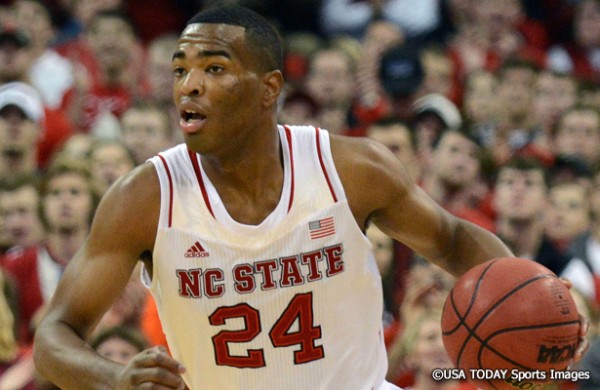
Brandon Costner, NC State(undrafted) – never had a chance, so why not stay in school for one more season and get your degree (see: Taggart)?(correction: stay in school and improve your game?)
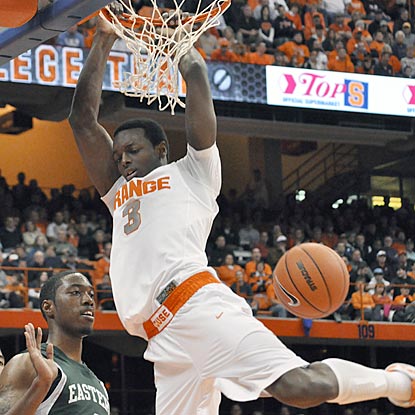
Paul Harris, Syracuse (undrafted) – the first of two Syracuse clowns who were egregiously fooling themselves into believing they had a shot to get selected last night.
Eric Devendorf, Syracuse(undrafted) – it’s true, he probably had nowhere else to go, but given what we know about Devo, he also probably saw himself as a lottery pick.
Daniel Hackett, USC (undrafted) – can’t blame the kid for jumping off a sinking ship, but he probably could have returned and dominated on that team next year (plus get his degree).
Patty Mills, St. Mary’s (#55) - this was a free-fall last night. Mills was a borderline first-rounder but his stock fell significantly in the last month, and he probably should have listened to the right people and returned to SMC for an injury-free junior all-american campaign.
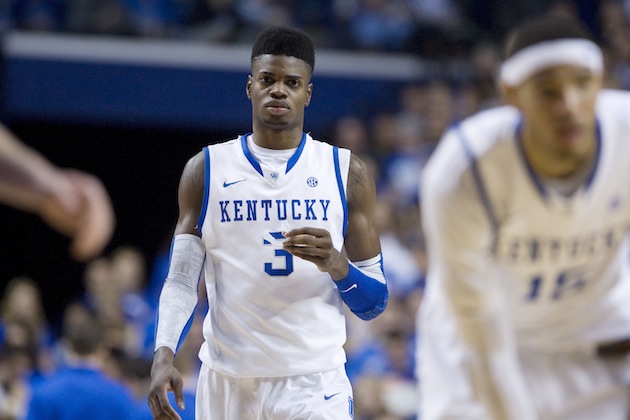
Jodie Meeks, Kentucky (#41) - no surprise here, as Meeks was expected to go in the second round. Still think it was a poor decision, though.
Chase Budinger, Arizona (#44) - another free-fall player, as Budinger was a lottery pick not all that long ago. Don’t really blame him much for leaving early, though, as his fall was swift and recent.
DeJuan Blair, Pittsburgh (#37) – good decision for an undersized Big Baby clone to leave early? Probably depends on whether he makes the team or not, right? Definitely a gamble.
It’s a little less than an hour before tonight’s NBA Draft, and this should have probably been done days ago, but we wanted to use our undeniable RTC expertise when it comes to projecting college hoops talent to the pros so we can say “told ya so” when the one undervalued player we said would be a star pans out (while the other ten we said would be don’t, but let’s not quibble). We’ll use Andy Katz’s final mock draft from this morning, and we’re only going to evaluate college players (because we’ve seen them play for at least one year). The criteria is BOOM or BUST – either that player is undervalued or overvalued based on his selection. That’s it. Here we go…
1. Blake Griffin, Oklahoma - BOOM, although the fact that he’s going to ClipperLand means drug addiction and/or horrific injury. Bill Simmons agrees.
2. Hasheem Thabeet, UConn – BUST, his offensive game won’t develop any further and he’s no Dikembe.
4. Tyreke Evans, Memphis – BUST, not seeing it at this selection; opposing defenses can lay off of him out to 18 feet.
5. James Harden, Arizona St. – BOOM, a Joe Johnson/Monta Ellis clone. Kid can really play.
6. Stephen Curry, Davidson – BUST, limitless range but really, #6? Too many question marks to be this high.
7. Jordan Hill, Arizona – BUST, nice player but he’s not even as good as Big Baby.
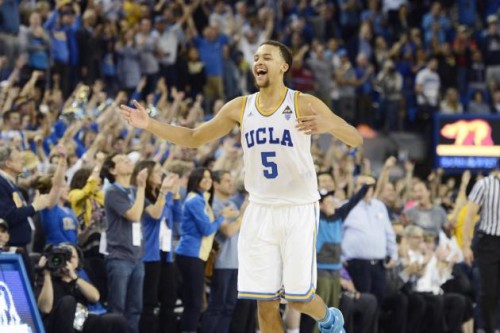
8. Jrue Holiday, UCLA – BUST, classic example of being a better athlete than player.
9. Demar DeRozan, USC – BOOM, DeRozan really came on at the end of the season and appears poised to break out.
10. Jonny Flynn, Syracuse – BUST, is Flynn really the best true point in this draft? No way.
11. Terrence Williams, Louisville – BUST, seems like the kind of player who will be out of the league in 3 years (does everything well, nothing great).
12. Gerald Henderson, Duke – BOOM, second best guard in the draft behind Harden.
13. DeJuan Blair, Pittsburgh – HEDGE, this is about the right position for an undersized beast like Blair.
14. Earl Clark, Louisville – BOOM, should have been higher but has a reputation for being lazy. Will shed that and become an excellent NBAer.
15. Austin Daye, Gonzaga – BUST, we used to love this guy, but he hasn’t shown much improvement in two years of college. We don’t believe in him.
16. BJ Mullens, Ohio St. – HUGE BUST, this is a joke. Either he’ll be washing cars in two years with Patrick O’Bryant or turn into Chris Kaman, who knows?
17. Ty Lawson, UNC – BOOM, he’s proven that he’s a winner and has improved his game substantially. Could be TJ Ford w/o the back problems.
18. James Johnson, Wake Forest – BOOM, has a reputation for being lazy, but he’s silky smooth at his size and will succeed in this league.
19. Tyler Hansbrough. UNC – HEDGE, we all know what kind of player he’ll be. Average at best.
20. Sam Young, Pittsburgh – BOOM, an absolute steal at this pick; Young could end up being a star.
21. Jeff Teague, Wake Forest – BOOM, would have been a lottery pick had he not packed in the second half of the year; the talent and athleticism is apparent.
24. Eric Maynor, VCU - HEDGE, nice pickup for this position.
25. Jon Brockman, Washington – BUST, sorry, but Brockman just isn’t NBA material in the long run.
26. Toney Douglas, Florida St. – HEDGE, could go either way here, but we’d expect Douglas to find a niche in the League.
27. Darren Collison, UCLA – BUST, Collison has always struck us as someone who should have been better than he was.
29. Nick Calathes, Florida – BOOM, Calathes will find a way to make himself a good pro if he decides to play in good ole USA instead of Greece.
30. DaJuan Summers, Georgetown – BUST, but it’s worth a gamble given his natural abilities. Could become a defensive stalwart at some point if he tried.
Other than Jodie Meeks (see post below), we promised to keep an eye on several other all-americans who were considering leaving school early, but who had put off the decision until the very last minute, i.e., today. Here’s a list of their decisions, and how it will impact their team…
Austin Daye, leaving Gonzaga – we said yesterday that we seriously questioned his reported decision to be leaning toward the draft, and it remains so. Someone will take him due to his size, length and shooting ability, but he’s proven softer than Charmin, so we’re not sure about his long-term prospects. As for Gonzaga, this is a substantial blow, as the Zags are already losing Josh Heytvelt, Micah Downs and Jeremy Pargo. It’s never truly a ‘rebuilding’ year for Gonzaga, but Matt Bouldin will have a load to carry in the Pacific NW next season.
Luke Harangody, staying at Notre Dame – this is a good decision, as Harangody stands to have a good nucleus of players surrounding him at ND next season, and with the Big East not as strong as it was in 2009, the Irish will likely be able to ride ‘Gody and Tory Jackson to an NCAA berth after their disappointing campaign last year. He’ll also have a legitimate shot at becoming the all-time leading scorer and rebounder in ND basketball history – he needs 730 pts and 370 rebounds, both totals less than he got this season.
Jeff Teague, leaving Wake Forest – we’re of the opinion that whoever drafts Teague in the late first round will get a steal on par with the Celtics selecting Rajon Rondo several years ago. In much the same way as Rondo at Kentucky, he mentally checked out of college hoops once he decided he was going pro, but the talent and athleticism is there. Wake will still have Ish Smith to run point and a decent supporting cast led by Al-Farouq Aminu, but Teague certainly was a difference maker and he will be missed.
Greivis Vasquez, staying at Maryland – this is another good decision because a more composed senior campaign from Vasquez could easily push the Terp PG into the top twenty of the 2010 draft. This is huge news for Maryland because the Terps have an experienced team returning to College Park, losing only Dave Neal, and Gary Williams’ team should compete for third place in the ACC next season.
Ater Majok, staying at Connecticut – this was a pipe dream to begin with, but Majok may end up playing in Europe anyway due to his peripheral association to the ongoing Nate Miles recruiting investigation at UConn. If he does end up playing for Jim Calhoun next season, there’s no telling how productive he’ll be, so it’s questionable what impact he could have.
Texas A&M Trio – Chinemelu Elonu is leaving the Aggies, but Donald Sloan and Bryan Davis are returning. None of these three leaving made any sense whatsoever, and the 6′10 Elonu was clearly talking to the wrong people because he has no shot at getting drafted. A&M should still be solid with the returns of Sloan and Davis, however.
Taj Gibson, leaving USC- probably a good decision given his age and the apocalypse going on at USC in the wake of the OJ Mayo scandal. Do we really need to rehash how this will impact USC next season? No, we don’t.
We’ll try to do some additional analysis on this year’s draft class later this week, but don’t hold us against it if we don’t.
In one of the more secretly important deadline decisions of the day, Kentucky junior Jodie Meeks has decided to stay in the NBA Draft and forgo his senior year in Lexington. Although many draft pundits would question the decision because Meeks is only projected as a late first to early second round pick (Insider access required), Fran Fraschilla brings up the point that this year’s class is extremely weak and Meeks might not rise any higher even if he comes back for another year. Normally I would agree with the dogma that an underclassman shouldn’t leave without a first round guarantee (I’m assuming Meeks hasn’t received one), but I have to agree with Fraschilla on this one. For all of Meeks’ talent and scoring prowess, NBA scouts just don’t seem that interested in him. He’s unlikely to jump more than a few spots, but could drop as well depending on which players declare next year.
However, since this is a college basketball site we’re more concerned with the effect it will have on next season and John Calipari’s Kentucky Wildcats. When asked about Meeks’ decision Calipari simply said, “We’ll be fine.” Not to go Bill Clinton on Calipari, but I’m curious what he means when he says the Wildcats will be “fine”. The Wildcats will certainly exceed last year’s poor performance, but after the summer they had the folks in Lexington were probably already booking hotel rooms in Indianapolis to watch their beloved Wildcats cut down the nets. While the current iteration of the Wildcats (featuring Patrick Patterson, John Wall, DeMarcus Cousins, Daniel Orton, and Eric Bledsoe) certainly has the potential to do so, but if Calipari had been able to lure Meeks back the Wildcats would have been the prohibitive favorites to cut down the nets. With Meeks leaving the Wildcats are still a top 5-10 team, but the lack of a proven perimeter scorer puts them a level below Kansas. The Wildcats will still have the ability to beat any team in the nation, but the lack of a proven perimeter threat will make them a much easier out in the tournament unless Wall, Bledsoe, or Jon Hood can develop into that threat by next March.
Before we take a look at the stragglers, let’s take a quick peek at a few who made up their minds over the last few days. It should be noted that, by and large, these are good decisions. It will be interesting to see if that holds through Monday’s deadline.
Players Returning to School
Gani Lawal, Georgia Tech – interesting decision, as Lawal was probably a late first round pick. Tech may be this year’s Wake Forest (mucho talent on an underachiever) with Lawal and Iman Shumpert returning with superfrosh Derrick Favors coming in.
Damion James, Texas – another great decision, as James was staring second round or undrafted square in the face.
Tyler Smith, Tennessee – Bruce Pearl has to be thrilled as he couldn’t have expected to have the hard-working Smith back for a third year in Knoxville.
Devan Downey & Dominque Archie, South Carolina – neither of these players were ever serious about leaving because they weren’t going to be picked, but their return will make South Carolina a formidable presence in the SEC East next year.
Players Officially Leaving
Jrue Holiday, UCLA – no big surprise as Holiday has been moving up the boards in recent weeks. Maybe Holiday is another example of a player who blossoms at the next level (he sure didn’t at this one).
The one player whose name is on everyone’s mind due to the fact that it will significantly impact next year’s rankings, however, is Kentucky’s Jodie Meeks. If he decides to return, and there’s nobody in Lexington who seems to know definitively what he’s going to do, then Kentucky is your preseason #1 team without question. If he does not return, then it’ll probably go to Kansas with Kentucky and several others coming in closely behind.
Here are a few of the names of other players who have waited to the last minute to let the world know their decisions…
Luke Harangody, Notre Dame – said to be 50/50, but really should return to South Bend.
Austin Daye, Gonzaga – seriously leaning draft, and we’re seriously questioning that decision.
Greivis Vasquez, Maryland – does anyone know what this kid will do, including himself?
There are quite a few smaller names, but we feel as if this year most of the impact players who should be returning have made a good decision to do so. We’ll try to update things tomorrow as the news flows in.
The 2009 NBA Predraft Camp ended Friday in Chicago, and as we mentioned last week, there were twelve underclassmen who were still on the fence about whether to stay in the draft or return to school. Given that this is a college basketball site, those are the players we’re interested in. So let’s take a look at what we’re hearing about each of the dozen and how that may have impacted their decisions. Thanks to ESPN’s Chad Ford, DraftExpress‘ Jonathan Givony, and NBADraft.net for their reports, which we borrowed liberally from.
Derrick Brown, Xavier – Brown is not returning to school. He officially announced his intentions on the first day of the camp, but he says that he’s known for several weeks. He’s already graduated from school and with the move of his head coach Sean Miller to Arizona, he wasn’t interested in starting over with a new coach. In drills, his mechanics apparently looked poor, but he has freakish athleticism and will hover in that guaranteed-money cutoff between the first and second rounds.
Austin Daye, Gonzaga – Daye measured out very well at 6′11 in shoes with a 7′3 wingspan, but at 192 pounds he might get blown away by a stiff breeze. He also excelled in the workouts, showing a strong fundamental basis and a sure stroke from everywhere on the court. There are still concerns about his relative strength, but according to Chad Ford, a couple of lottery teams were willing to give him another look after his workouts. Probably leaning draft after this camp.
Taj Gibson, USC – Also measured well, standing 6′10 in shoes with an absurd 7′4 wingspan. Given that Gibson will be 24 on draft day and he’s on the fence of the first round, he’s probably not returning to school.
Luke Harangody, Notre Dame – ‘Gody did not measure well, standing only 6′8 in shoes, a full inch-and-a-half shorter than his counterpart Tyler Hansbrough. According to this report, though, he may have the best jumpshot in the entire draft class. Still, he’s painfully unathletic and it would be a surprise to see Harangody stay in the draft.
Jrue Holiday, UCLA – Another winner in the measurement department, as Holiday showed he’s a big point guard (6′4 in shoes) with a long wingspan. He was also extremely impressive in workouts, with one scout saying, “that’s the kid we fell in love with in high school.” Given the exceptional workouts he was having in Chicago, Holiday was getting more buzz than any other guard there and is unlikely to return to Westwood.
Damion James, Texas – James must not have impressed much because most reports failed to mention him. Given that he’s a projected second-round pick at this point and he told Andy Katz that he’s looking for a guarantee, he would probably do himself well to return to school another year.
Gani Lawal, Georgia Tech – Lawal showed explosiveness and good size for a PF prospect, but according to Andy Katz, he may not be willing to take the chance unless he can secure a first round guarantee. Not sure he’s going to get that, which would mean probably a better than even chance that Lawal would join Derrick Favors and Iman Shumpert back in the ATL next season.
Jodie Meeks, Kentucky – Meeks is another player looking for a first round guarantee, and he’s unlikely to get it. He looked like he’s in tremendous shape and he shot the ball well in the camp, but there are still visible holes in his game (most notably, defense). This Wildcat is probably heading back to Lexington to play off-the-ball with John Wall in 2009-10.
Patrick Mills, St. Mary’s – Mills impressed scouts with his speed and shooting mechanics, but his size makes him a borderline first rounder. He said that if he is going to be a second round pick, he’ll return to St. Mary’s for his junior season. It says here that we don’t think that’ll be a problem.
Tyler Smith, Tennessee – Measured in at only 6′6 in shoes, so what position is he at the next level? Shot the ball well in drills, but remains on the fence depending on whether he’ll be a first or second round pick. Sound familiar?
Jeff Teague, Wake Forest – Gone. Says he’s leaving Wake Forest so long as he’s a first rounder, and he assuredly is one. Athletic point who had a longer wingspan and reach than expected, which helps to explain how a 6′1 guy can throw down such ridiculous dunks in transition.
Greivis Vasquez, Maryland – Vasquez measured well for a combo guard, and his quotes made it sound like this was just for show. He has little to no shot at the first round this year, and it appeared that he acknowledged as much. He should be back in College Park next season.
So of the twelve players still sitting on the fence, we’ve got the following staying in the draft: Brown, Daye, Gibson, Holiday, Mills and Teague. Really only Daye seems to be questionable at this point. The other six: Harangody, James, Lawal, Meeks, Smith and Vasquez are largely hoping for a first round guarantee that will not be forthcoming (Lawal excepted in this group).
Once the measurements including the athletic combine stats come out (vertical leap, speed, etc.), we’ll re-visit the 2009 Predraft Camp.
Starting today, 52 NBA hopefuls will descend upon Chicago to go through a battery of athletic drills, medical testing and interviews in the hopes that an NBA team will see something dreamy along the way. For our purposes at RTC, the twelve players we’re primarily interested in, the early entries who are still on the fence, are listed below in red. It’ll be very interesting to see how these players perform in these tests, especially considering that unlike past years, there will be no five-on-five games where players can show their wares in a full-court setting.
In individual drills, we’d expect smooth athletes like Daye, Holiday, Mills and Teague to shine, but you never really know with these things. It’ll be interesting to listen to the reports coming out of Chi-town the rest of the week with respect to these players. According to Andy Katz (provider of the below list), this week will probably not determine the decisions of Teague, Lawal, Holiday, Mills, Gibson and Brown, but he expects Vasquez, ‘Gody, Meeks and Smith back in school soon. He also says Damion James is expected to remain in the draft, but has nothing to say about Daye. Stay tuned.
The 2009 NBA Draft Early Entry list is now official, and there are 75 collegiate players with eligibility remaining who think they have a shot at the League this year. Keep in mind that there are only 60 picks in the 2009 NBA Draft, and the above number doesn’t even include graduating seniors as well as foreign players. Mathematically speaking, it would serve a number of these players with stars in their eyes well to return to school for at least one more season. Let’s evaluate each of them.
Players With Agents First, the players who have already signed with agents, effectively ending their collegiate careers. For the most part, this group is first-round material, but Brandon Costner, Eric Devendorf, Daniel Hackett and Dar Tucker must know something about their draft status that nobody else does.
Likely to Stay in Draft
Next, we have a much smaller group of players who are very likely to stay in the draft, but they have yet to sign with an agent, and there’s been no official word yet. All five of these players are probably first rounders, but with Nick Calathes, Jrue Holiday and Patty Mills, there remains a possibility of a return to school next season.
On the Fence These thirteen players will decide the complexion of college basketball in 2009-10, much as Lawson, Ellington and Green did this season. For example, if Jodie Meeks and Patrick Patterson return to Kentucky, that’s a top five team. If Jeff Teague returns to Wake Forest, same thing. Derrick Brown at Xavier, Austin Daye at Gonzaga, Luke Harangody at Notre Dame, Gani Lawal at Georgia Tech, Tyler Smith at Tennessee, Jarvis Varnado at Miss. St., Greivis Vasquez at Maryland. Each of these players is all-american caliber. This group of players could break a lot of hearts in the next six weeks.
You Gotta be Joking
This group of players has a fair mixture of guys who just want to get evaluated (even though Parrish points out most won’t actually get evaluated) for next season’s draft and players who have no idea what their true value is in terms of NBA scouts. There are also several who have nowhere else to go, having worn out their welcomes elsewhere. This list always makes RTC feel a little sad, yet as we now know, the NCAA has enacted a new rule making it so there will be even more ill-informed choices such as these in the future. Thanks, guys. Way to look out…
Since Duke ended its season in humiliating fashion against Villanova in the Sweet 16, almost every pundit has suspected that Gerald Henderson would forgo his final year of eligibility to enter the NBA Draft. In the middle of all the NFL Draft coverage earlier today, he announced that he would enter the Draft, but had not hired an agent yet.
Before any of the Cameron Crazies get their hopes up too high that he might return (and make Duke a heavy favorite to win the ACC next season), it should be pointed out that this is most likely a precautionary measure just in case he gets injured before the deadline or something along those lines. In addition, the fact this his father (Gerald Sr.) was an accomplished player who played with at least 3 current GMs (Danny Ainge, Kevin McHale, and Larry Bird) means that young Gerald will likely get plenty of feedback about what range he is most likely to be drafted if he decides to stay in the Draft.
Based on what the NBA Draftniks are saying, Henderson looks like he’ll be drafted anywhere from around #10 (NBADraft.net has him at #9) to a mid-1st round pick (ESPN.com’s Top 100–Insider access required). While most guys of Henderson’s ability tend to base their decision on whether or not they have guaranteed lottery spot, I can’t really see the benefit (in terms of NBA Draft status) of him coming back for his senior year. Everyone knows that he has NBA-level athleticism and he made a big jump between his sophomore and junior year, which should show scouts that he is improving. While he might hone his game little more (add some 3-point range) with an extra season at Duke, the bump in his stock would be negligible since he’s never going to be a top-3/5 pick. For the Crazies holding out hope that he’ll return for one more year at Duke, the deadline to pull out of the Draft is June 15th.
After arguably being the third best team in the state of North Carolina the past 3 years (behind UNC and Davidson in 2008 and behind UNC and Wake Forest in 2009), Duke may have just ended up with the best team on Tobacco Road and the ACC by simply holding onto its stars this off-season with the possible exception of Gerald Henderson. Let’s run through the challengers for Duke in the state of North Carolina (NC State left out for Sidney Lowe obvious reasons).
Wake Forest? Having lost James Johnson and Jeff Teague to the NBA Draft, Dino Gaudio will be hard-pressed to replicate this year’s success (outside of their embarrassing first round loss to Cleveland State) with just Al-Farouq Aminu returning to lead the Demon Deacons. I’d say they’re going to be worrying more about playing for a NCAA bid than about challenging Duke for the ACC title (although Teague may ultimately return).
Davidson? Although Davidson’s drop-off this year (from a missed Jason Richards‘ 3-pointer at the buzzer away from the Final 4 to a NIT also-ran) made the Wildcats seem like an unlikely threat this coming season, having Stephen Curry in the mix meant that the Wildcats had the potential to threaten any team in the country (even if some people think he isn’t quite all that he’s hyped up to be). However, today in a move that wasn’t surprising to all but the most deluded fans, Curry announced that he will turn pro and hire an agent ending any chance of stealing Pete Maravich’s career scoring record (done in 3 years without a 3-point line). Good luck playing for a Southern Conference title and a 15-seed for the next few seasons Wildcats.
UNC? Going into the off-season, the Tar Heels posed the greatest threat to Duke next season even with the loss of all-time ACC leading scorer Tyler Hansbrough (I know it sounds weird to me too), Danny Green, and Bobby Frasor (the Deadspin commenters will miss him more than Tar Heel fans will). As all Tar Heels knew the fate of their 2009-10 season hung on the decision of juniors Ty Lawson and Wayne Ellington. If either of them returned (both returning was just a pipe dream), Roy Williams would have another national title contender with Marcus Ginyard, Tyler Zeller, and Ed Davis returning and John Henson, David Wear, and Travis Wear (and potentially John Wall) coming to Chapel Hill next year. Instead, both Lawson and Ellington declared for the draft today. Assuming that Ty can hire a designated driver from now until the NBA Draft, I don’t expect to see either of them suiting up in Carolina blue again as they are both at their peak value. The Tar Heels are a shoe-in for the NCAA tournament next year and will probably will be in contention for a top 4 seed particularly if Wall decides to not listen to his handler Brian Clifton and play for Roy.
What does all this mean for Duke, which has struggled to live up to its reputation and ESPN’s infatuation since Chris Duhon left? Although Coach K will have to wait a year to add Seth Curry, and there has been no official communication from Durham, I’d have to guess that it would look something like this. . .
So for all of you Duke haters, get ready for an unbearable next 11 months (especially if the Devils, and not UNC, garner the services of John Wall). For all the Duke fans, the pressure is now back on. Just making it to the second weekend of the NCAA tournament won’t cut it this time.
Andy Katz wrote in his blog today that the NCAA Legislative Committee voted on Monday to make a rule change effective in 2010 that would shorten the amount of time that an early entry would have to ‘test the waters’ with NBA teams before making a final decision to enter the draft.
If the NCAA board of directors endorses the legislative panel’s decision to reduce the early entry decision window from six weeks to approximately one week, there won’t be any reasonable way for underclassmen to test the draft process. USA Today first reported the panel’s decision, which would make underclassmen decide by May 8 whether they were staying in the draft. The current deadline is 10 days before the draft in mid-June. (The rule would go into effect for next year’s draft class.)
This legislation was the compromise position after the ACC came to the table asking for a ten-day window following the conclusion of the national championship game. We’ve written about this before, but let us reiterate for those of you who missed our first tirade: this is a TERRIBLE decision.
As Katz points out very clearly in his post, the withdrawal deadline would then become somewhere around the end of the first week of May each year, which would allow players a window of a mere 7-10 days in which to make themselves available for private workouts with NBA teams. And if you’re like us and your collegiate days are well into the rear-view mirror, you may have forgotten that the end of April/beginning of May also usually coincides with exams for most college students around the country, even those who play basketball on the side. In other words, the NCAA is making it that much harder for a prospective early entry to get good feedback on his status.
Let’s take a quick look at a system that generally works – the current one. Last year, there were 69 American players who originally decided to test the waters. Thirty-five of those players felt confident enough in their standing to stay in the draft, and 28 of those (80%) were actually selected on draft night in MSG (21 with guaranteed money in the first round). Now we aren’t going to say what was going through the heads of every one of those 34 players who returned to school (guys like Josh Akognon, Chase Budinger, Jerel McNeal and of course the Carolina trio), but we’d absolutely wager that many of them iniitally thought they were ready for the NBA. It was only after they were able to get objective feedback from NBA scouts and teams as to their projected draft status that they were able to make an informed decision to not cede their remaining eligibility on a gut feeling.
How quick we are to forget our history. The reason the early entry withdrawal rule was initially instituted was to allow players like Scotty Thurman and Thomas Hamilton to get good, objective feedback on their draft status prior to making a final decision. It’s very easy to think you’re a lottery pick when you’re the best player on a successful college team and everyone around you is telling you that you’re a superstar. It’s less easy to think that when scouts tell you that you’re undersized, need to work on your shooting or you’re slow for your position at the next level (i.e., the truth). What the NCAA is endorsing here is the opportunity for more of the former and less of the latter, which will ultimately mean that more players are going to make an ill-informed gut-based decision to stay in the draft, only to be surprised when they’re not chosen six weeks later. It’s bad for the players’ futures, who throw away an opportunity at a degree and further training in basketball; it’s bad for the schools who could benefit in many ways by getting key non-NBA-ready players to return (cough, cough, UNC), and it’s bad for the game itself, which is always enriched when the players who should still be playing at that level are actually doing so.
Now, we know who is driving this – the coaches (how dare some of these guys complain!). Despite all the hollow and vacuous lip service they give to being there for their kids and wanting only what’s best for their players, what they’re really doing is making life easier on themselves. By shaving five weeks from the early entry withdrawal deadline, it will now give Coach Blowhard another month to finish recruiting, shore up his roster and adequately plan for the next season. There is some merit to this position - some – but by making it eminently more difficult for his players to learn their individual strengths and weaknesses from an objective source prior to the withdrawal deadline (e.g., the NBA Combine, scheduled to start in late May of this year), they’re much more likely to fall back on gut instincts which will almost always favor the dream of the NBA over taking more exams. Any benefit to the coach and program by this initiative is more than lost by enabling poor decisionmaking from the players.
From our stance, this is an unconscionable position for the coaches to take, especially given how much they talk about helping their players get to the next level, and we’re extremely disappointed in this decision. Let’s hope the NCAA Board of Directors shoots it down next week.
Buzz: Shocker of Shockers. UConn’s Hasheem Thabeet has decided to continue his newfound SoBe lifestyle by signing with an agent and joining the hordes who will enter the NBA Draft. Sure you don’t want to retire, JC?
Buzz: Out Like Flynn. Word from Syracuse this afternoon is that Syracuse star PG Jonny Flynn will sign with an agent, which means of course that he will no longer have the possibility of returning to Jim Boeheim’s Orange next season. Of course, TNIAM was all over it yesterday. Sorry Cuse fans.
Buzz: Mack Will Take Xavier Job. Following a long-running narrative, in 3-5 years, Mack will be one of the hottest young coaches around as he alights to a name-brand school. Great get for him.
Two springs ago Bill Self received the bittersweet news that his star forward Brandon Rush had torn his ACL during predraft workouts and was returning to Lawrence for another year. Rush followed that up with a junior year that led to Kansas’ first national title in twenty years. This time around Self won’t even have to cry crocodile tears over a player’s injury because his two stars, point guard Sherron Collins and center Cole Aldrich, decided tonight that they will officially return to Kansas for another year. From the AP report:
“I do think we return the best guard in the country and the best big man in the country,” said Self. “I think if you’re going to start a team, why not have an anchor and why not have a guard?” Aldrich and Collins both said the decision to say was so easy that they didn’t even ask Self to explore a level of interest that NBA teams might have, a common practice of undergraduates who are thinking of jumping to the pros early. “I’ve known for a while,” said Aldrich, who had the sixth triple-double in NCAA tournament history. “It’s been a blast of a year and the fans are so fun here. I was watching highlights on my computer back in my room and I got goose bumps. I was like, ‘I’ve got to come back here.’”
Aldrich deserves particular praise here given that his father, a construction worker, has been jobless for a while due to the economic recession. He is a projected lottery pick and could have erased those financial worries immediately, yet his dad was the one urging him to return for another year. It’s rare that we actually see players pursue love of school and the precious present over guaranteed riches, so Aldrich just became our newest favorite player for 2009-10. Unlike last year’s Great White Hope, however, Aldrich’s dad isn’t already a millionaire surgeon – he’s just a regular guy from Minnesota who wants his son to be happy.
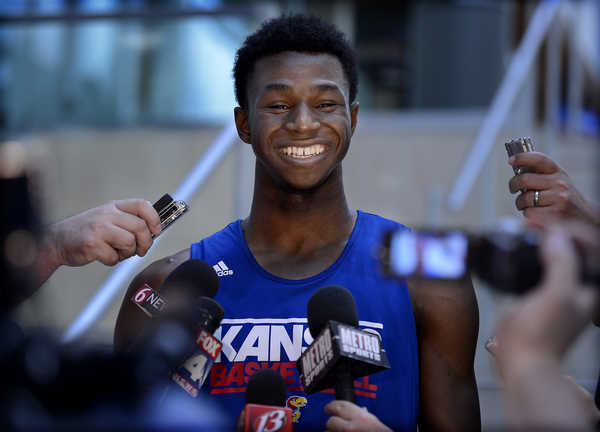
Getting those two stars back is enough cause for celebration, but Self is sitting on a loaded team with every key contributor returning. Tyshawn Taylor is a star in the making and the Morris twins (Marcus and Markieff) are poised to break out next year. Then there’s the unthinkable, which is that Kansas is in the running for Xavier Henry, the nation’s #1 shooting guard, and Lance Stephenson, one of the top uncommitted wings. If KU manages to get even one of those two freshman studs, you’d have to believe that the Jayhawks become the odds-on favorite for the 2010 national title, regardless of what happens in Lexington or E. Lansing in the offseason.
Despite their embarrassing performance in the Sweet 16 against Oklahoma (aka “The Tony Crocker Show”), many people around the Syracuse basketball team expected that they might have a chance to win a national title next year if they returned their nucleus with Kristof Ongenaet being the only senior who played significant minutes. Although there had been talk of some of the stars testing out NBA waters, it was widely expected that only 1 player would declare. Well it turns out that Jim Boeheim may have some more work to do next season.
According to reports, Eric Devendorf and Paul Harris have decided to enter the NBA Draft (neither has hired an agent yet) while Jonny Flynn has decided to “test the waters”. Interestingly, Flynn is the only one of these three who is in Chad Ford’s Top 100 although he has Harris listed as being “late first to early second” despite being ranked #103.
Jim will be busier this off-season than previously expected
While Syracuse should be able to compete for a NCAA bid with Andy Rautins, Rick Jackson, and Arinze Onuaku returning and the addition of DaShonte Riley and Brandon Triche, their fans will have to hope that Flynn decides to return because if he decides to go pro (projected to be a late lottery pick) they might end up going from a national title favorite to the middle to back of the pack in the Big East next year.
With all the suspense on college campuses about whether or not underclassmen will be leaving perhaps the least suspenseful announcement of the week came earlier today when everybody’s national Player of the Year Blake Griffinannounced that he will forgo his final 2 years of eligibility to enter the NBA Draft. In his second year at Oklahoma, Griffin became the 3rd straight national player of year from the Big 12 (save your e-mails and comments UNC fans; we both know that Michael Beasley deserved it last year).
Griffin, who averaged 22.7 PPG and 14.4 RPG, was clearly the best player in college this season and was only derailed in the Elite 8 by eventual champion UNC when his Sooner teammates went 2/19 from 3-point range. Even in defeat, Griffin showed everyone why he will be the most clear-cut #1 pick since LeBron James in 2003 as he dominated Tyler Hansbrough and the other UNC interior players. Griffin finished the year with 30 double-doubles (second all-time to only David Robinson’s 31) and 504 rebounds (second all-time to only Larry Bird’s 505).
While everyone knows that Griffin will go #1 (assuming some brain-dead NBA GM doesn’t do something completely insane–not outside the realm of possibilities), the big question is what will happen in Norman where Jeff Capel turned down numerous job offers to stay as the Oklahoma head coach. The Sooners will be losing Taylor Griffin, Austin Johnson, and Omar Leary with only the first 2 contributing significantly. Although the Sooners will certainly take a step back next year, they can still compete in the top half of the Big 12 next year if freshman Willie Warren can resist the temptation of the money that comes with being a lottery pick and sticks around Norman for another year (or two). With a nucleus of Warrnen, Tony Crocker, and Juan Pattillo, Capel has a team that should challenge Kansas and Texas next year.
While most of the nation has been fixated on the Final 4 and the circus going on in Lexington, which is probably over (for now), several players have decided to enter the NBA Draft. Here’s the list:
DaJuan Summers (Georgetown, junior)–#47 in Chad Ford’s Top 100/#47 in the DraftExpress Top 100
Nick Calathes (Florida, sophomore)–#38 in Chad Ford’s Top 100/#73 in the DraftExpress Top 100
Patrick Christopher (California, junior)–Unranked
Brandon Costner (NC State, junior)–Unranked
Greivis Vasquez (Maryland, junior)–#55 in Chad Ford’s Top 100/#78 in the DraftExpress Top 100
B.J. Mullens (Ohio State, freshman)–#21 in Chad Ford’s Top 100/#15 in the DraftExpress Top 100
Summers is the only one who appears to be in the process of selecting an agent, but don’t expect to see Mullens back in Columbus next year as he did not even register for spring classes accordging to some reports.
Several Lexington TV stations are reporting that Kentucky’s 1st team All-SEC forward Patrick Patterson (18.4 PPG on 61.5% FG and 9.2 RPG) has decided to return for his junior year. This obviously bolsters Kentucky’s chances of making the NCAA tournament next year particularly in the dreadful SEC. The Wildcats other star, Jodie Meeks, still has not announced whether or not he will be returning for his junior season, but perhaps Patterson’s decision and the fact that he will at least have one competent teammate will make him decide to spend another year in Lexington.
Patterson in happier times
Perhaps the bigger news for Wildcat fans is the impact that Patterson’s decision will have on the job status of Billy Gillispie, who according to some reports was potentially looking at joining the growing ranks of the unemployed. However with Patterson’s (and potentially Meeks’s) return along with Patterson’s recent support of Gillispie, this might be enough to help Gillispie keep his job although that won’t stop Wildcat nation from continuing to call for his head.
Since we’re in the deadest of dead times when it comes to college basketball, we figured now was as good a time as any to update some of our databases with 2008 figures. We like to do this for a couple of reasons: a) we’re incredibly stat nerdy, and if we don’t update our charts with new data in a reasonable amount of time after it becomes available, we begin suffering cold-sweat night terrors involving 39395 errors; and, b) like everyone else, we find it difficult to access this kind of historical data on the interwebs, and so this year we’ll be adding links to Google Docs to harbor all of our raw data.
Yes, Redheads Appreciate Robust Data
Our first task is to update our NBA Draft Picks by School information. You may recall that we put together several posts last summer detailing the historical statistics of the first two rounds of the NBA Draft from its inception as a round-robin spectacle in 1949. (See Draft Picks 1949-2006 by School, by Round and by Decade) Since not a lot of the data has changed in the interim, we’re going to take a different tack this time around. Rather than overwhelming you as we did last year with enormous data-filled tables, we’re going to break it down into smaller bite-size morsels first before giving you the full Monty. However, if you’re the type of person who can’t wait to dive headfirst into reams of data, be our guest. All of the raw data from the 1949-2008 NBA Drafts is here.
So here’s Table A, where we list the 11 programs with the most NBA Draft picks in history (1949-2008). For the full list of programs with ten or more historical draft picks, see our Google Doc on the subject.
It doesn’t take much brainpower to see that UCLA’s Ben Howland and UNC’s Roy Williams are likely to spend the next decade further dominating this list. Louisville and Kansas also stand to rise into the top five quickly with the players Rick Pitino and Bill Self are recruiting these days. Indiana, Duke, Kentucky – all have been trending downward, but how will the newish coaches at IU and UK change that, and will Coach K start recruiting studs again now that making the Sweet 16 is the norm at Duke? St. John’s and Maryland?Bothare living on lost glory with no recent signs of improvement. And keep an eye on the sleeping giant Thad Matta is building at Ohio St. (currently at 25 total picks) – he could overtake the Terps with two more of his Thad Five-type classes.
Total draft picks are nice, but championships are won with first-round talent, and first-round talent tends to become first-round picks (just sayin’). So let’s slice the data a little further to see what schools produce the most first rounders (Table B).
The top six programs in history are also the top six producers of first round talent. Correlation, much? (ok, for that comment, forget Notre Dame and their zero F4s) We’re still aghast that Minnesota continues to appear in the top ten of this list. Something tells us that Tubby won’t exactly set the Twin Cities on fire with first rounders up there on the tundra.
How about elite players? It’s true that a good argument can be made that the NBA’s recent propensity in drafting potential over production has mitigated some of the value of analyzing these draft numbers at the college level, but there’s likely still a strong correlation between elite NBA draftees and collegiate team success. See Table C for the list of the schools with the most Top 10, Top 5 and #1 Overall Picks.
LSU is the real anomaly of this group – they’ve had a modicum of team success over the years (three F4s), but they seem to excel in producing top-tier individual talent, with eight Top 5 picks in history. Considering that LSU trails only UNC, UCLA and Duke in that category, it is phenomenal that the Tigers haven’t had more national success over the years (until we remember again… Dale Brown, John Brady). Did anyone else realize that Duquesne has had two #1 picks in its history, and that they were in consecutive years?!? Those Dick Ricketts (1955) and Sihugo Green (1956) teams of the mid-50s must have had P-town roiling, eh? (well, actually, the Dukes were NIT Champs in 1955).
Now we’re to Table D, which shows the breakdown of picks by decade. Keep in mind that the table is sorted by the 2000s column on the left – yes, we’re guilty of a serious case of presentism.
We threw this table up mostly to show that with one NBA Draft remaining this decade, several schools have a chance to take the lead for most picks in the 2000s. UCLA, Duke, Connecticut, Florida and Arizona could all have a couple more picks in the books by this time next year. UNC is the real wildcard, though. The Heels could have as many as five draftees in next year’s class, which would give them an outside shot at leading the decade, and is amazingly something that UNC has never done in its regal NBA Draft history.