

Buddy Hield Out to Make Norman a Two-Sport Town

Posted by Chris Stone on April 2nd, 2016

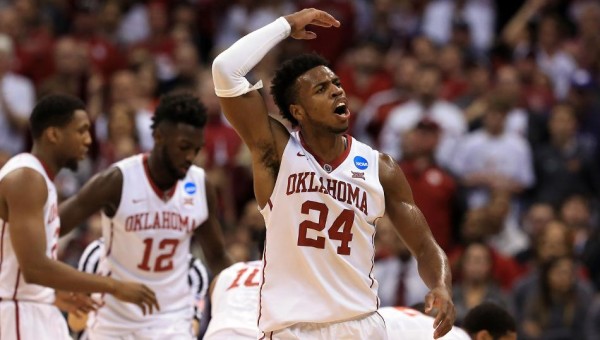
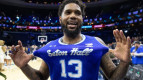
Oklahoma isn’t a college that is historically known for basketball. That doesn’t mean that a number of outstanding basketball players and several teams haven’t passed through Norman over the years, but the Sooners are set to play in just the program’s fifth Final Four in history (the most recent was in 2002). They have twice made the national title game (1947 and 1988), but the school has never raised a championship trophy in hoops. Oklahoma is much more commonly known as a football school — the only such entity in this season’s Final Four (North Carolina, Villanova and Syracuse are, without question, basketball schools) — and while the Sooners can lay claim to seven gridiron national titles, Buddy Hield is ready to challenge football’s dominance in the Sooner State this weekend.
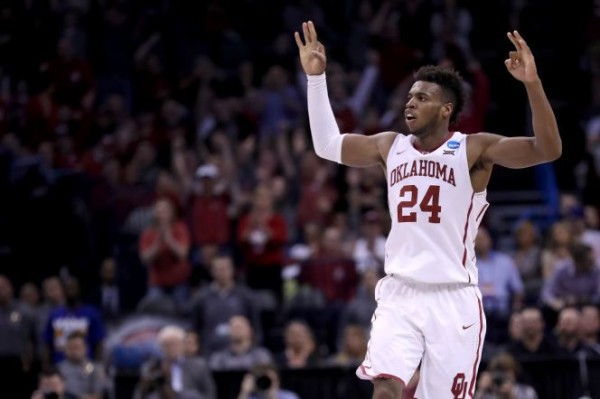
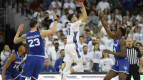
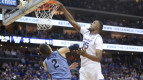
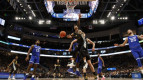
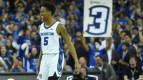
Buddy Hield will lead the charge for Oklahoma in the Final Four. (Ronald Martinez/Getty Images)

Buddy Hield will lead the charge for Oklahoma in the Final Four. (Ronald Martinez/Getty Images)

What makes this Oklahoma team the one that can cut down the nets in Houston? The short answer is Hield himself, one of the most prolific collegiate scorers in recent memory. The senior guard is the only player since 2009-10 (the first year Basketball Reference began tracking minutes played) to average more than 25.0 PPG and finish the season with a true shooting percentage higher than 65 percent. The long answer is that Oklahoma is a lot more than just the RTC National Player of the Year. The Sooners’ backcourt, comprised of Isaiah Cousins and Jordan Woodard, is one of the best in the country. Both players shoot better than 40 percent from behind the arc and can act as point guards capable of navigating Villanova’s stingy trapping defense. And contrary to popular belief, the Sooners are more than just an offensive show. Oklahoma is also stout on the defensive end where it can flexibly switch one through three on the perimeter and employ the shot-blocking prowess of Khadeem Lattin inside — whose grandfather, incidentally, played on the 1966 Texas Western team that won an NCAA championship.

The last time the Sooners were national title good was in 2008-09 when future #1 pick Blake Griffin was a sophomore. Griffin’s squad lost to the eventual champion, North Carolina, in an Elite Eight game that was generally noncompetitive. This season offers the Sooners a shot at redemption. If they can make it past Villanova this evening, they’ll likely get another shot at the Tar Heels, and this time with a national title on the line. Oklahoma has already become the first school to make both the College Football Playoff and the Final Four in the same season, but Lon Kruger‘s group have a chance to surpass their football counterparts, if only for a weekend. Still, given the folk hero popularity of Hield around Norman, maybe this is the team that could help turn it into a two-sport town.
Share this story

On Roy Williams and Jim Boeheim: Hall of Fame Alumni

Posted by Matt Patton on April 2nd, 2016

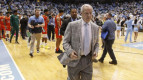
Roy Williams and Jim Boeheim couldn’t seem more different on most days. Both reflect their environments: one is a cranky New Yorker; the other sounds every bit like he grew up in Swannanoa, North Carolina (a town of fewer than 5,000 people in the eastern North Carolina mountains). But the two have fascinating reputations to unpack.

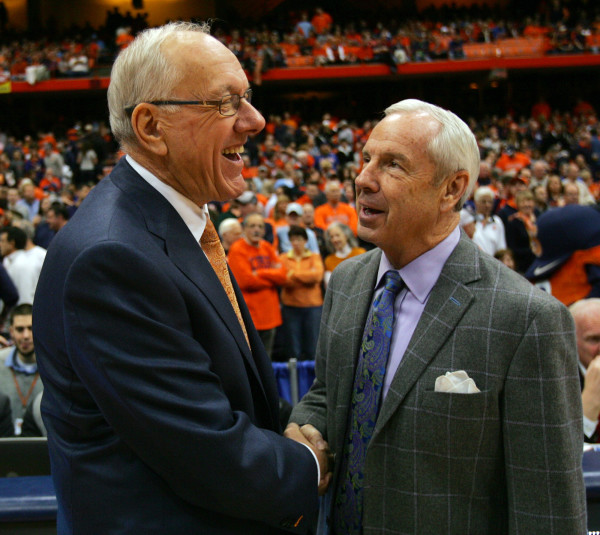
Syracuse head coach Jim Boeheim, left, and North Carolina head coach Roy Williams, right, greet each other before for the start of an NCAA college basketball game in Syracuse, N.Y., Saturday, Jan. 11, 2014. Syracuse won 57-45. (AP Photo/Nick Lisi)

Syracuse head coach Jim Boeheim, left, and North Carolina head coach Roy Williams, right, greet each other before for the start of an NCAA college basketball game in Syracuse, N.Y., Saturday, Jan. 11, 2014. Syracuse won 57-45. (AP Photo/Nick Lisi)

Williams was a longtime assistant for Dean Smith, and he rarely lets an opportunity get by without letting you know about it. Everything from his disinterest in calling timeouts to stop opponent runs to his frequent first half subbing harken back to his assistant coaching tenure under Smith. After a decade on the Tar Heels’ bench, Williams left in 1988 to take over a Kansas program in disarray as a result of Larry Brown. Hardly a rebuilding job, though, Williams made the NCAA Tournament in every year he was in Lawrence except his first (the Jayhawks were still on probation). He wound up taking Kansas to the Final Four a total of four times, including the 2002-03 season, right before he left for Chapel Hill. At the time, Williams famously said, “I could give a sh– about North Carolina,” immediately following his championship game loss to (ironically) Jim Boeheim and Syracuse.

Back at his alma mater starting in 2003, Williams took over a floundering program that had lost 36 games in its previous two seasons (it would take Williams six years to log 36 losses). Matt Doherty bequeathed him a young team with many of the players Williams would ride to his first national championship — Raymond Felton, Jawad Williams, Sean May and Jackie Manuel. But Williams’ Tar Heels bore no resemblance to the ones coached by Doherty. They ran like the wind and turned the undersized May into an unstoppable juggernaut. It’s impossible to consider now, but North Carolina was arguably one more bad hire away from long-term irrelevance (with Coach K just down the road having just won his third championship in 2001).

Read the rest of this entry »

Share this story

Pac-12 Postseason Odds and Ends

Posted by Mike Lemaire on April 1st, 2016

The college basketball season isn’t quite over yet but the page has already turned for the Pac-12. Once Oregon was rudely bounced from the tournament by Oklahoma last weekend, it was time for the always exciting period when coaches are hired and fired, players declare for the NBA Draft, and some others decide on a change of scenery. The Pac-12 has been full of these changes in the past two weeks — from Stanford hiring a new coach to Washington’s precocious freshmen hiring agents to a multitude of players transferring — there’s been a lot of action.

Let’s break down some of the moves that have already been announced and what they mean for their respective teams.

Jerod Haase Hired by Stanford

Jerod Haase Has Won A Lot In C-USA But Can He Do It In The PAC-12 Too?

Stanford Coach Jerod Haase Has Won A Lot In C-USA But Can He Do It In The PAC-12 Too?

Stanford isn’t the can’t-miss job that many think it is, but it still feels like the Cardinal reached in its replacement of Johnny Dawkins. Haase came up as an assistant to Roy Williams and made headlines when his team at UAB beat Iowa State last season, but he has only been to the NCAA Tournament once and his three seasons of 20+ wins are as much a result of Conference USA being awful as his coaching prowess. Furthermore, advanced statistics have not been impressed with the Blazers at all despite their several-year win totals. The former Cal graduate and Bay Area native will bring energy and excitement to the Stanford program, but the jury is out on whether he can coach at this level.

Dejounte Murray and Marquese Chriss Declare for NBA Draft

It isn’t surprising that Murray and Chriss have decided to test the waters after excellent freshman seasons at Washington. It also wouldn’t have been surprising if they had decided to stay in the draft after gathering enough information. What is surprising is that both signed with agents almost immediately, effectively ending their college careers before March was even finished. Both players have a shot at at the lottery, which will mean that their decisions are probably good ones. But Washington could have been poised for a special season next year with the duo back in Seattle. Now, Lorenzo Romar’s rebuilding project looks to be moving a bit slower now.

Read the rest of this entry »

Share this story

Breaking Down Villanova’s Enhanced 1-2-2 Zone Press

Posted by Justin Kundrat on April 1st, 2016

Jay Wright’s teams have long employed a 1-2-2, three-quarter-court press as a variant to its standard halfcourt man-to-man defense. This has been partly used as a way to force turnovers, but it also helps the Villanova defense by burning valuable time off the shot clock. Its efficacy largely hinges on its personnel. Villanova has always had talented backcourts with proven abilities to score, but the necessary buy-in on the defensive end has only occurred in recent years. As a result, the zone press has experienced a significant uptick in usage — a testament to both Jay Wright‘s acknowledgement of its success and increased practice time in mastering its implementation. But the biggest development in this defensive scheme hasn’t been just added practice time — rather, the arrival of freshman Mikal Bridges has drastically improved the defensive scheme. Bridges gives Villanova a deceptively long, athletic wing with above-average foot speed who can wreak havoc within this extended defense.

The set-up of the 1-2-2 is as follows. The most important position is the player circled in red at the top, whose job it is to force the opposing ball-handler to one side of the floor.

Some of the more aggressive variations of the 1-2-2 press will attempt to trap the ball-handler in his own backcourt. While that strategy may force more turnovers, the downside is that it leaves the press exposed on the other end of the floor — especially true if the opponent has multiple ball-handlers. Wright’s adjustment is that Villanova presses in a more passive manner. The first objective is to bait the dribbler into throwing a pass, whereby players 1 -3 will aggressively pursue anything thrown over the top.

Read the rest of this entry »

Share this story

Early Draft Declarations Create Uncertainty at Kansas

Posted by Brian Goodman on March 31st, 2016

Although Kansas fell short of expectations in failing to reach this weekend’s Final Four, the Jayhawks enjoyed another hugely successful season. They won the Maui Invitational, took home their 12th straight Big 12 title, broke a three-year Big 12 Tournament championship drought and earned the overall #1 seed in the NCAA Tournament. When a team typically has that kind of year, it has at least a couple players talented enough to enter the NBA Draft. Wayne Selden and Brannen Greene have their warts as prospects, but they remain skilled players in the eyes of talent evaluators, and for that reason (among others, in Greene’s case), neither will be returning to Kansas next season. Their decisions could mean that Bill Self‘s method of addressing the openings created by his two departing wings could come to define his team’s offseason.

Will the allure of playing time created by roster defections be enough to keep Svi Mykhailiuk in Lawrence? (AP)

Will the allure of playing time created by roster defections be enough to keep Svi Mykhailiuk in Lawrence? (AP)

The Jayhawks’ tremendous depth this season means the team may be able to shoulder the losses of Selden and Greene with an in-house solution. Svi Mykhailiuk is a dynamic rising junior who can blow games open with his shooting — in a similar fashion to Greene — while possessing the ball-handling skills and court vision Greene lacked and Selden didn’t need. Of course, those attributes, in addition to Mykhailiuk’s young age (he doesn’t turn 19 until this June), make him a candidate for early entry as well. However, with Selden and Greene already officially gone from Kansas’ roster, the sophomore might see the situation as an opportunity to hone his skills for 20-plus minutes a night next season.

Read the rest of this entry »

Share this story

ACC Back in the Final Four With Two Teams, Again…

Posted by Brad Jenkins (@bradjenk) on March 31st, 2016

When North Carolina squares off with Syracuse in Saturday’s late national semifinal, it will mark the sixth time in league history that the ACC has entered two schools into the season’s final weekend. It’s been a great March Madness showing for the conference, with a record six schools in the Sweet Sixteen, a record-tying four teams in the Elite Eight, and an overall 18-5 record. The last time the ACC sent two teams to the Final Four was in 2004, when the league still carried nine teams. Since then, the ACC has undergone two major expansions that resulted in an immediate and noticeable downturn in its long tradition of basketball excellence. But combined with last year’s fine NCAA Tourney showing, it appears that the ACC has regained its status as the best among the nation’s major hoops conferences.

Marcus Paige and North Carolina will face a familiar foe in Saturday's National Semi-Finals. (Bill Streicher/USA TODAY Sports)

Marcus Paige and North Carolina will face a familiar foe in Saturday’s National Semifinals. (Bill Streicher/USA TODAY Sports)

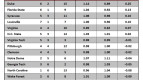
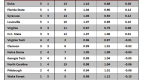
It’s a little surprising how often individual conferences send multiple teams to the same Final Four. Of course, only one school per conference could participate in the NCAA Tournament for the first 36 years of the event. That changed in 1975 — thanks in large part to Maryland’s exclusion in 1974 — and, from there, it only took one season for a league to place two teams in the season’s final weekend — Indiana defeated fellow Big Ten school Michigan in the 1976 title game. In 1980, the Big Dance became a fully open tournament, with no limit on the number of teams a conference could send. Since then, 65 percent (24 of 37) of the subsequent Final Fours have featured multiple teams from the same conference. Particular hats off to the 1985 Big East, a league that sent three of its members to the Final Four. As you can see below, the Big Ten leads the way with multiple appearances over that span.

Read the rest of this entry »

Share this story

Three Statistics That Favor Wisconsin Over Notre Dame

Posted by Deepak Jayanti on March 25th, 2016

January 12, 2016, was a low point for Wisconsin basketball. Not only did the Badgers lose to a sub-par Northwestern squad on the road, but they also appeared to have dug themselves into a dangerous and perhaps irrevocable hole with a 1-4 record in the Big Ten. Nobody then would have expected that team to have a legitimate chance of making the Elite Eight two months later. Ken Pomeroy’s model predicts a one-point win for the #7 seed in its regional semifinal versus #6 Notre Dame tonight. The oddsmakers in Vegas, however, originally pegged Notre Dame as a one-point favorite, although that appears to have moved toward Wisconsin as well since then. Here are three statistics that indicate that KenPom is accurate in considering Wisconsin tonight’s favorite.

Bronson Koenig should have plenty of good looks from beyond the arc against a porous Irish defense. (AP)

Bronson Koenig should have plenty of good looks from beyond the arc against a porous Irish defense. (AP)

  • Opponents shot 38.7 percent from three against the Irish during ACC conference play. Notre Dame ranked 12th of 15 ACC teams in this defensive category this season, so poor perimeter defense will be an issue against a hot Bronson Koenig, who went 6-of-12 from behind the arc against Xavier last weekend. As a team, the Badgers shot 38 percent from three-point range during conference play, and Koenig’s long-range efforts have been complemented effectively by Vitto Brown‘s 40 percent shooting. Demetrius Jackson and Steve Vasturia will have their hands full in keeping up with Wisconsin’s hot-shooting backcourt.

Read the rest of this entry »

Share this story

Key Matchups Loom Large in UNC-Indiana Battle

Posted by Deepak Jayanti on March 25th, 2016

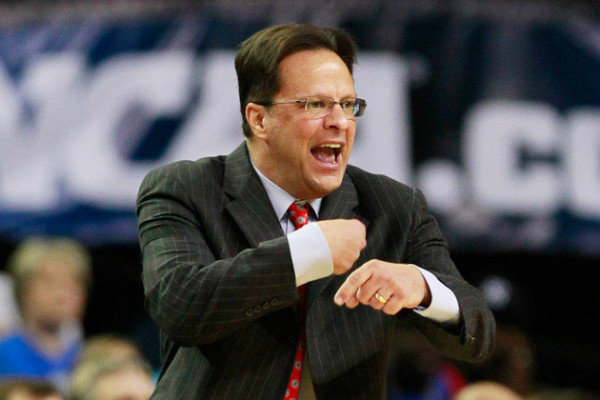
During a postgame interview after Indiana’s tough win over Kentucky, Indiana head coach Tom Crean said that he “didn’t want to stop coaching this team.” His sentiment makes sense. Crean has a fun and talented team, led by one of the best players in Hoosiers history. But while Yogi Ferrell played his heart out (18 points, five rebounds, four assists) against Tyler Ulis and the Wildcats, he can’t do it by himself against North Carolina. The Hoosiers should be in good shape on the offensive end, especially if freshman Thomas Bryant continues to stay out of foul trouble; however, expect Indiana to be challenged in different ways by the Tar Heels. For Crean to get his wish and continue coaching this team, the Hoosiers will have figure out the answers to tonight’s following matchups.

Tom Crean's defense will have its work cut out against Brice Johnson and Marcus Paige in the Sweet 16 round. (Getty)

Tom Crean’s defense will have its work cut out against Brice Johnson and Marcus Paige in the Sweet Sixteen. (Photo: Getty)

  • Brice Johnson vs. Troy Williams or Thomas Bryant. Johnson has been arguably the best forward in the country over the course of a season in which he averaged 16.8 PPG and 10.5 RPG. His athleticism around the rim will definitely demand double-teams from the Hoosiers’ defense. Indiana’s help defense against Kentucky’s big men was successful because neither Alex Poythress nor Marcus Lee are comfortable with their backs to the basket; Johnson, however, has the exact opposite skill set. Bryant has the weight to push Johnson away from the paint but the Tar Heels big man could run circles around him if he chooses to face the basket. Williams, on the other hand, has the wingspan to defend Johnson but will be susceptible to picking up easy fouls against him. Those would hurt the Hoosiers considerably on the other end of the floor. Even if they end up letting Johnson get his 20 points in the paint, protecting the defensive glass is paramount. It will not be a close contest if Johnson ends up with multiple second chances on the offensive end.

Read the rest of this entry »

Share this story

The Big 12’s Road to the Final Four

Posted by Chris Stone on March 24th, 2016

The opening weekend of the NCAA Tournament was a mixed bag for college basketball’s toughest conference. Although three Big 12 teams — Iowa State, Kansas and Oklahoma — advanced to the Sweet Sixteen, the other four invitees headed home after the first weekend. Baylor, Texas and West Virginia were all upset by double-digit seeds, while Texas Tech was knocked off by higher-seeded (but favored) Butler. Still, this is the first time since 2009 that the Big 12 has produced as many as three Sweet Sixteen teams and each has a legitimate chance to make the Final Four in Houston. Let’s take a look at how they can get there.

Buddy Hield is the key to Oklahoma's Final Four potential. (Getty Images)

Buddy Hield is the key to Oklahoma’s Final Four potential. (Getty Images)

  • Iowa State – The Cyclones have the most difficult task ahead. Virginia is currently the top-ranked team in the KenPom ratings and represent a stylistic nightmare for an Iowa State team that prefers to get up and down the floor. Virginia has not played a single game with more than 70 possessions this season, while only about a third of the Cyclones’ contests have fallen below that mark. Iowa State will have to rely on its highly efficient offense — especially senior All-American Georges Niang  to produce enough points to get past the Cavaliers. If Steve Prohm’s team can make it to the Elite Eight, they’ll face one of two teams in Gonzaga or Syracuse with good but not great defenses. In either matchup, Iowa State would likely be favored to advance to Houston. The key game for the Cyclones comes Friday night.

Read the rest of this entry »

Share this story

ACC Crashes the Sweet Sixteen Party in Unprecedented Way

Posted by Brad Jenkins (@bradjenk) on March 23rd, 2016

The ACC has advanced a record six teams into the Sweet Sixteen of this year’s NCAA Tournament, giving the league an impressive total of 11 appearances in the second weekend over the last two years. Last year’s placement of five ACC teams in the regional semifinals was only the second time a conference had put that many teams there (Big East — 2009), but this year’s sextet marked a new record for postseason conference superiority. There has since understandably been much discussion on how to contextualize this year’s performance, and we’ll weigh in on that question while examining its meaningfulness for the conference as a whole.

The Biggest ACC Surprise is One of the Most Recognizable Names (USA Today Images)

The Biggest ACC Surprise is One of the Most Recognizable Names (USA Today Images)

The ACC has gone through two major expansions in the last dozen years, poaching schools from the Big East in each case. At least dating back to the early 1980s, those two leagues (often along with the Big Ten) have waged battle for the prestigious title of best conference in college basketball. The league’s first round of additions (Miami, Virginia Tech, Boston College) in the mid-2000s were added for their prestigious football programs and lucrative television markets — the result was that the league’s status as first among basketball powers slumped. But the most recent ACC expansion north resulted in the acquisition of four good-to-great basketball programs. The arrivals of Syracuse, Louisville, Notre Dame and Pittsburgh sparked notions that the ACC could become the best basketball conference ever assembled. And so far, so good. After a shaky first year as a bulky 15-team league, the ACC has now logged two consecutive seasons of impressive postseason success. Two of the ACC’s six Sweet Sixteen participants this year are recent additions (Syracuse and Notre Dame), and a third newcomer, Louisville, would have certainly been a high seed had the Cardinals been eligible this year.

Read the rest of this entry »

Share this story