

ACC Trends: The Rise of Three-Point Shooting, Part II

Posted by Brad Jenkins (@bradjenk) on December 22nd, 2016

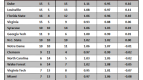
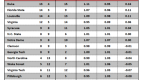
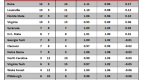
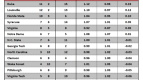
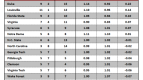
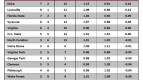
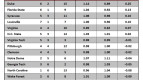
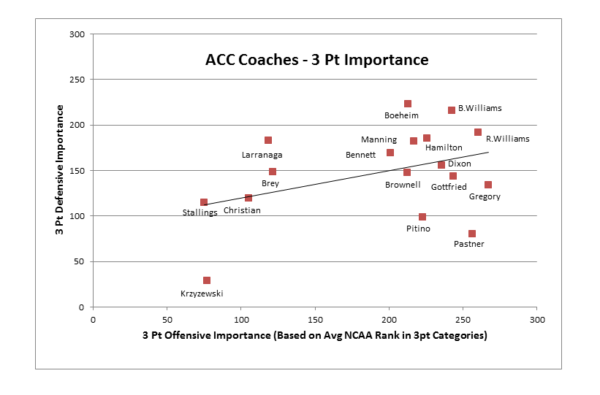
In Part I of this series published earlier this week, we examined the latest stylistic change in college basketball: a substantial surge in three-point shooting. Players in both the NBA and college basketball are hoisting and making more long-range shots than ever before, a trend we expect to continue growing into the future. With that in mind, we decided to gauge how the 15 current ACC head coaches may be willing to adapt to such a shift in style of play. To make that assessment, we must first look at recent history.Coaches3s-ImportanceThe graph above shows the relative importance of three-point shooting for ACC coaches over the past five seasons, both offensively and defensively. This rating is simply an average of how a coach’s team has ranked nationally in three areas concerning three-point shooting: three-point accuracy; three-point attempt percentage; and the percentage of points derived from three-point baskets. With only one exception — Wake Forest head coach Danny Manning has only four years under his belt — we used data from the last five seasons for each coach, including seasons at other schools (i.e., Josh Pastner at Memphis and Kevin Stallings at Vanderbilt). Read the rest of this entry »
Share this story

Oklahoma Already Looking Bubbly Going into Last Pre-Conference Game

Posted by Justin Fedich on December 21st, 2016

If college basketball games ended after the first 20 minutes, Oklahoma would be one of seven remaining unbeaten teams in Division I and presumably ranked among the top 10 or 15 teams in the nation. Unfortunately for the Sooners, which currently stand at 6-4 and have led at halftime in all four of their losses this season, there are still two 20-minute halves in college basketball. Unless Lon Kruger‘s team can figure out how to be as successful in the second halves of games as they are in the first, Oklahoma is likely to miss its first NCAA Tournament since 2012. In its four defeats this season to Northern Iowa, Wisconsin, Wichita State and Memphis, all but one of those contests came down to the wire. The excuse of the loss of NPOY Buddy Hield, who could knock down big shots late in the game, is no longer an excuse as Jordan Woodard has proven more than capable. Rather, it has been the inconsistency among Woodard’s supporting cast that has caused Oklahoma’s struggles in putting together a complete performance against good competition.

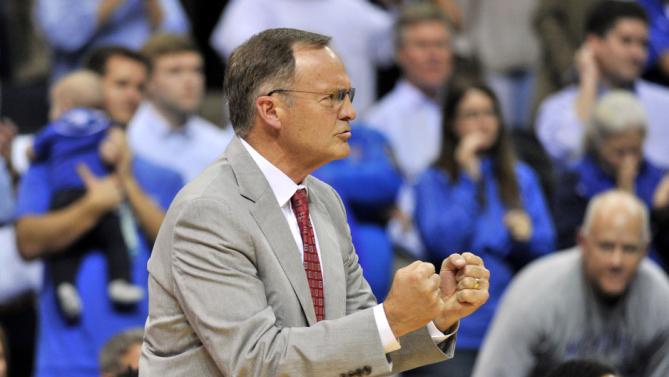
Lon Kruger has a built a serious Final Four contender in his fifth season with Oklahoma. (AP Photo/Brandon Dill)

Lon Kruger’s squad is still trying to find its groove. (AP Photo/Brandon Dill)

The Sooners have fielded a different starting lineup in all four losses as Kruger has searched to find a formula that will work for his young, inexperienced team. This is evidenced most recently by the inclusion of freshman guard Jordan Shepherd into the lineup. Shepherd played eight combined minutes in Oklahoma’s first three losses but he led the team with 37 minutes and contributed 18 points in last Saturday’s overtime loss against Memphis. If his emergence in the backcourt is a sign of things to come, the Sooners may have finally found a workable rotation that includes Woodard, Christian James and Rashard Odomes. The frontcourt, however, is holding Oklahoma back. Khadeem Lattin, the only returning starter other than Woodard from last season’s Final Four team, has scored in single digits in five of his last six games including an anemic four points against Memphis and three points against Wichita State. While Lattin hasn’t been a consistent scoring threat at any point in his career, Oklahoma needs to find more scoring from the post. Khristian Doolittle and Jamuni McNeace are promising young frontcourt prospects, but Lattin as the more experienced player needs to provide more than the 6.7 points and 5.5 rebounds per game he contributed in the four defeats.  Read the rest of this entry »

Share this story

Illinois Finding Consistency During Five-Game Winning Streak

Posted by Brendan Brody on December 21st, 2016

Illinois’ Malcolm Hill is averaging 18.2 PPG and 6.4 RPG in a final season that has so far been nothing short of outstanding. His contributions have been consistent with his talent, but the difference for head coach John Groce this season is that additional weapons across his lineup have mitigated the team’s need to exclusively rely on the senior. Illinois struggled early but has since improved to 9-3 with two of its losses coming against top-30 teams. In a winning streak that is now at five games and includes victories over NC State, VCU and BYU, the Illini have done a much better job in taking care of the ball, have improved defensively, and have had six different players score in double figures. Removing the need for Hill to carry the team on his back enables Illinois to enter Big Ten play next week in good position to end its three-year NCAA Tournament drought.

Tracy Abrams has lead the Illini in scoring over the last two games. (Eric Gay/AP)

Tracy Abrams has lead the Illini in scoring over the last two games. (Eric Gay/AP)

Turnovers were a factor in all three losses, coming to a crescendo when the Illini coughed it up 22 times each in losses to Winthrop and West Virginia — even more troubling was that Illinois seniors (Hill, Jaylon Tate, and Maverick Morgan) were the primary culprits. An average of 12.8 turnovers per game during the winning streak still isn’t great, but it’s an improvement on the 19.0 miscues per game they averaged in the three losses. Another issue that has improved during the last five games is that Illinois has decreased opponents’ three-point field goal percentage from 44.6 percent in the losses to 30 percent since. The Illini have also had three different players lead the team in scoring (Hill, Tracy Abrams, and Leron Black), with several other double-figure scoring outputs coming recently from Jalen Coleman-Lands, Morgan and Michael Finke. Illinois’ improved scoring balance illustrates that the team has options when Hill is struggling.

Read the rest of this entry »

Share this story

A Coaching Tree Grows in Stillwater…

Posted by Brian Goodman on December 21st, 2016

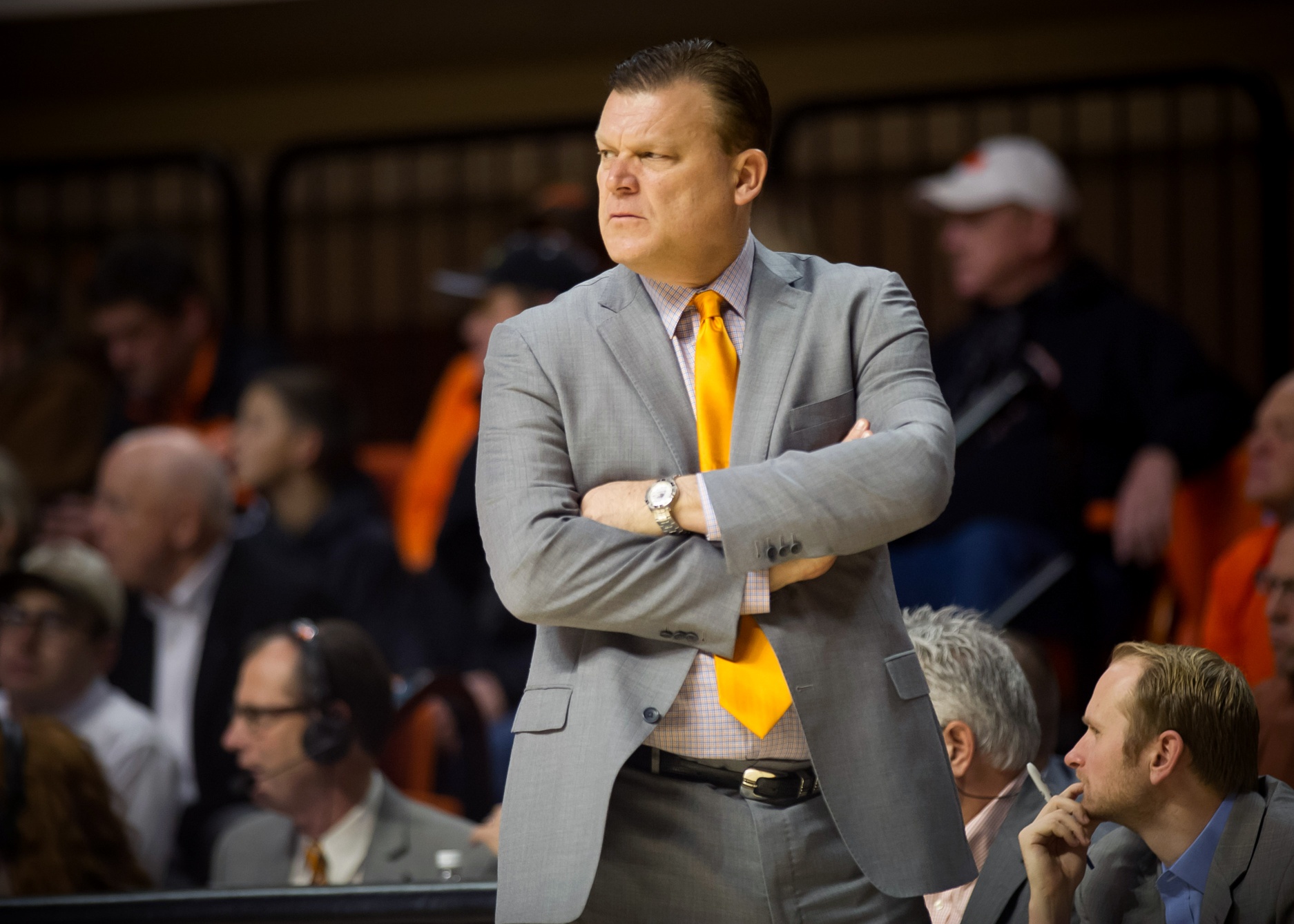
West Virginia’s renaissance under Bob Huggins is by now a familiar story — perennially relevant hoops brand endures an uncharacteristic drought of postseason success, only to right itself with an overhaul of the team’s identity focused on frenzied defense, relentless offensive rebounding, a rare degree of unselfishness and staggering depth. Some 1,100 miles away, though, Brad Underwood – a former disciple of Huggins — is hard at work resurrecting Oklahoma State in a similar fashion.

Brad Underwood is Up to Plenty of Good in Stillwater (USA Today Images)

Brad Underwood is Up to Plenty of Good in Stillwater (USA Today Images)

Last Saturday, Underwood’s Cowboys dominated Wichita State 93-76 at Intrust Bank Arena to move to 9-2 on the season. The result didn’t get much national attention because of a surplus of good games that afternoon, but Oklahoma State dismantled a team that had gone 116 home games without allowing so much as 80 points to an opponent. The victory gave a significant boost to Oklahoma State’s non-conference resume in the wake of missed opportunities against North Carolina and Maryland, and come Big 12 play, opponents would be ill-advised to overlook the Cowboys in much the same way they overlooked the Mountaineers two seasons ago.

Read the rest of this entry »

Share this story

Should Georgia Tech Be Buzzing About Its Start?

Posted by Mick McDonald on December 20th, 2016

The expectations for the first year of the Josh Pastner era at Georgia Tech were about as low as they can get, as the Yellow Jackets were picked to finish 14th of 15 teams — ahead of only lowly Boston College — by the media in October. One national hoops writer even went as far to predict that Georgia Tech would go winless in the ACC this season. While Pastner’s team certainly won’t be an NCAA Tournament contender and will still most likely finish within the bottom tier of the conference standings, it is also clear that the Jackets are better than expected. That feeling was somewhat reinforced when Tech defeated a solid VCU team in Richmond last week, but keep in mind that it has also lost at home to Ohio (a top 100 team) and was demolished on the road by a mediocre Tennessee squad. However, there are several bright spots on this team that should have the fans in Atlanta excited for the future.

Yellow Jackets freshman Josh Okogie has been one of this biggest surprises in the country. (Adam Hagy/USA Today)

Yellow Jackets freshman Josh Okogie has been one of this biggest surprises in the country. (Adam Hagy/USA Today)

The obvious place to start is with junior center Ben Lammers. A three-star recruit, Lammers did not show much more than potential in his initial two years under Brian Gregory. Whether Pastner is simply getting more out of him this season or he is finally showing a progression of skills, he is clearly a different player. Lammers leads the Yellow Jackets in scoring (15.8 PPG), rebounding (10.8 PPG) and blocks (4.6 BPG), and he is currently the second-leading rebounder in the ACC and the nation’s leader in blocks per game. Fellow junior Tadric Jackson is shooting 56.3 percent from three-point range, giving Pastner a much-needed outside threat and a terrific complement for when the defense collapses on Lammers. Senior Quinton Stephens has not shot the ball very well but he has taken on the versatile forward role that was expected of him, averaging 11.8 points, 7.6 rebounds and 2.5 assists per game. But it is the rise of an unheralded freshmen who has been the biggest bright spot so far for the Yellow Jackets. Read the rest of this entry »

Share this story

ACC Trends: The Rise of Three-Point Shooting, Part I

Posted by Brad Jenkins (@bradjenk) on December 20th, 2016

*Ed. Note: This is a repost of an article that first appeared on the site November 8, 2016. 

Throughout its long and illustrious history, the sport of basketball has gone through numerous stylistic changes. For many years, the focus was on dominant post players with names like Russell, Chamberlain, Abdul-Jabbar and Walton. In the 1980s a shift to the era of great all-around players began. With apologies to Oscar Robertson, Larry Bird and Magic Johnson led the charge and Michael Jordan took it to the highest level. This trend of the two-way superstar continued to present day, with Kobe Bryant giving way in the last decade to LeBron James. Now, in the mid-2010s, we may be entering the dawn of a new era — the age of the three-point bomber. And if this trend is here for awhile, how will it affect the short-term future for ACC schools? In this first of a two-part look at the issue, we will examine some recent conference trends on three-point shooting.

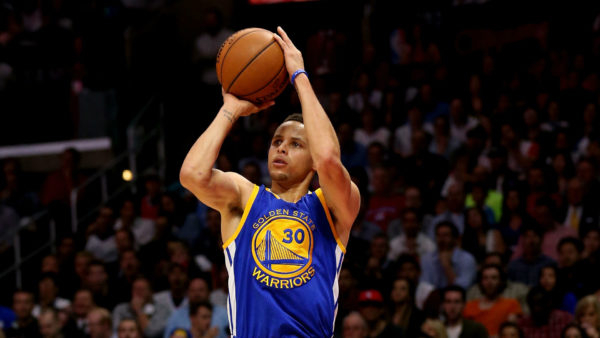
Stephen Curry's long range bombing represents the new stlye of basketball that's already changing the college game. (Credit: www.sportingnews.com)

Stephen Curry’s long range bombing represents a new style of basketball that’s already changing the college game. (Getty)

To a great extent nowadays, college coaches borrow ideas from both the NBA and international basketball. High-major programs with a number of future pros like to use pick-and-roll or isolation sets. Coaches with less talented squads often mirror European offenses that feature a drive and kick approach with multiple long-range shooters available. Of late we have seen a dramatic stylistic shift in the NBA that incorporates much of the European model. Despite coming up short to James’ Cleveland Cavaliers in last June’s NBA Finals, the Golden State Warriors are the hottest thing in basketball right now. Led by two-time MVP Stephen Curry, the Warriors set an NBA record by averaging 13.1 made threes per game last season. But Golden State isn’t the only professional team prospering from the deep shot. Clearly seeing the value of good three-point shooting, the average NBA team attempted 24.1 three-pointers last season, compared with an average of only 18.0 just five years prior. And in terms of overall success, the five NBA teams that made the most shots from behind the arc all finished with winning records – including both championship round finalists (the Cavaliers finished second in made threes). Read the rest of this entry »
Share this story

Texas Won’t Make the NCAAs This Year and That’s Probably a Good Thing…

Posted by Nate Kotisso on December 19th, 2016

The Texas men’s basketball head coaching job is one of the most visible in all of college athletics and Shaka Smart certainly embraced that aspect of the position when he accepted it. After then signing the nation’s fifth best recruiting class, expectations in Austin quickly became that these recruits would walk in to the Erwin Center and take the country by storm. Through the first 10 games of this season, however, it is becoming increasingly clear that the “take the country by storm” part was at best an incorrect forecast. It’s looking a lot more like day-long cloud cover with periods of heavy rain shifting to light precipitation after dark.

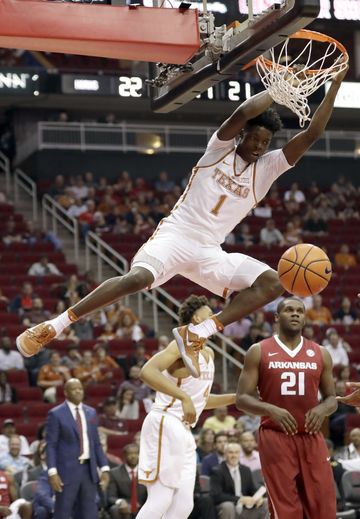
Texas freshman Andrew Jones had his best all-around game (17 points, seven assists) in the team's losing effort. (David J. Phillip/Associated Press)

Texas freshman Andrew Jones had his best all-around game (17 points, seven assists) in the team’s losing effort. (David J. Phillip/Associated Press)

While it is true that the Longhorns are getting better, spotting that improvement has been difficult to identify. The last time Texas stepped on to a neutral floor — at the Legends Classic in Brooklyn — Smart’s team was run off the floor in embarrassing double-figure defeats to Northwestern and Colorado. Fast forward to Saturday afternoon’s game against Arkansas and the Longhorns arguably played their best game of the year despite the loss. Jarrett Allen (11 points, 10 rebounds), Andrew Jones (17 points, seven assists) and Tevin Mack (20 points, 12 rebounds) provided Smart with a diversity of scoring options for a team that has often struggled to both find good shots and make them.

Read the rest of this entry »
Share this story

Northwestern on Track But Needs Bryant McIntosh to Find His Groove

Posted by Brendan Brody on December 19th, 2016

Northwestern is now 9-2 after holding on for dear life to defeat Dayton in the State Farm Legends Classic on Saturday night. As the Wildcats progress through the rest of the season, the chatter about whether they can string together enough wins to break their infinite NCAA Tournament drought will pick up accordingly. A quick review of Northwestern’s season so far reveals that star point guard Bryant McIntosh has struggled to match his production from a year ago. His numbers across the board is down — shooting, assists, scoring — and his turnovers are up. This can be viewed two different ways. The first is that a good team can become that much better if McIntosh returns to his previous levels of output. The second view of it is that the Wildcats are likely to face some problems once league play starts if their junior point guard is in the midst of a season-long swoon.

Bryant McIntosh has struggled at times as the lead guard for Northwestern. (AP).

Bryant McIntosh has struggled this season for Northwestern. (AP).

McIntosh’s problems start with a prolonged shooting slump through the first 11 games — he is connecting on a miserable 24.4 percent of shots from distance — down from a career mark of 37 percent coming into the season. His shooting woes have bled into other facets of his game, including a higher turnover rate (20.6 percent, up three percent) and lower assist rate (29.3 percent, down eight percent). There have been some better moments against good competition — a 23-point game against Wake Forest and a 20-point outing against Texas — but his production in the team’s two losses of 9.5 PPG with a 1:1 assist-to-turnover ratio has been a problem. The Wildcats’ loss to Notre Dame was especially brutal as the team ran several isolation plays for its lead guard during the final few minutes, but he was unable to deliver a bucket.

Read the rest of this entry »

Share this story

Big Ten Weekend Look Ahead: 12.16.16 Edition

Posted by Alex Moscoso (@AlexPMoscoso) on December 16th, 2016

We might as well call tomorrow Super Saturday because five of the games involving Big Ten teams are as intriguing of a slate as in recent memory. In addition to the always-enjoyable Crossroads Classic in Indianapolis involving Purdue and Indiana, three other league schools will face off against potential NCAA Tournament teams. This provides each team with a golden non-conference opportunity to a land a resume-enhancing win and build some momentum heading into league play the week after Christmas. Here’s the Weekend Look Ahead:

Caleb Swanigan has a chance to wreak havoc in the paint in the Crosstown Classic against a smaller Notre Dame team. (AP).

Caleb Swanigan has a chance to wreak havoc in the Crossroads Classic against a smaller Notre Dame team. (AP)

  • #21 Notre Dame vs. #15 Purdue (Saturday 2:00 PM ET, ESPN2). With all four teams ranked, the Crossroads Classic couldn’t ask for a better slate. The annual event tips off with Notre Dame’s high-powered offense facing off against Purdue. While the Boilermakers have been impressive all season, they’ve fallen just short in their two chances against elite competition – losing close games to #1 Villanova and #11 Louisville. If Matt Painter‘s group can establish its inside-out game between Caleb Swanigan and outside threats Dakota Mathias and Ryan Cline, in addition to submitting a respectable defensive performance, the Boilermakers will walk out of Bankers Life Fieldhouse with their best win of the season.

Read the rest of this entry »

Share this story

Weekly Pac-5: Mid-Range Shooters

Posted by Adam Butler on December 16th, 2016

The game is evolving away from the basket and toward the three-point line. That’s what Daryl Morey and James Harden would have you believe. The Golden State Warriors would have you think the same. We don’t need advanced metrics to understand that 3>2. Especially if you can make it, the three-pointer is the most valuable in the sport. This distance trend isn’t reserved for just the pros. The collegiate three-ball is being shot at a higher clip than ever before. A 36 percent share of all shots are from distance. Like we explored last week, teams make an effort to help their best shooters make that shot. But what if that’s not your strongest suit?

Regardless of how they did it, Thomas Welch and UCLA are one step away from the Sweet 16. (Andy Lyons/Getty Images)

Considering his skill set, it’s not a huge surprise Thomas Welsh tops this list. (Andy Lyons/Getty Images)

What if you’re better off the bounce or closer to the basket? What if, philosophically, your team isn’t a three-point shooting team? This week we want to consider the Pac-12’s best mid-range players. It isn’t a lost art! It’s just a less appreciated and certainly a less sexy shot. It’s neither three points nor a dunk. Like middle management, the mid-range jumper isn’t glamorous, but it is effective. So who’s the most effective at it in the Pac this season? Here are the Pac-12’s five leading mid-range shooters (quantified by total number of makes):

Read the rest of this entry »

Share this story