

Kansas State’s Real Work Begins This Weekend

Posted by Drew Andrews on December 29th, 2016

Kansas State will begin conference play against a reeling Texas team on Friday night in Manhattan, and it’s about time. Head coach Bruce Weber should be commended for getting to the start of Big 12 play with only a one-point loss to Maryland on the Wildcats’ resume, but his team has played the fifth-worst schedule of 351 Division I college basketball teams, according to KenPom. The offenses that Kansas State has faced ranks second-worst in the nation. With the Longhorns coming to Bramlage Coliseum as the only Big 12 offense ranked outside of the top 75 nationally, it is safe to say that the Wildcats’ schedule is about to get much more difficult.

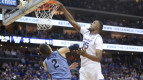
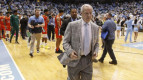
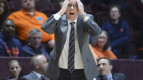
Bruce Weber Doesn't Yet Know What He's Got This Season (USA Today Images)

Bruce Weber Doesn’t Yet Know What He’s Got This Season (USA Today Images)

What has worked for the Wildcats this season is that they have been equally effective on both the offensive and defensive ends of the floor. Ranked 41st and 29th, respectively, in offensive and defensive efficiency, Weber’s team has shot very well from three-point range (38.8% 3FG) and smothered teams inside the arc (38.9% 2FG defense). Given the weak schedule, it’s difficult to know if these statistics are sustainable, but last year’s team by contrast was one of the worst in the country from beyond the arc (30.0% 3FG). The addition of freshman wing Xavier Sneed (38.8% 3FG) and the maturation of sophomores like Kamau Stokes (40.7% 3FG) and Dean Wade (40.7% 3FG) has led to a more balanced offense. No Wildcat shot better than 34 percent from three-point range a season ago; this season, four players have double-figure makes and are shooting above that mark.
Read the rest of this entry »

Share this story

Grading the Pac-12 Non-Conference Performances, Part II

Posted by Mike Lemaire on December 28th, 2016

The non-conference portion of the schedule is now over for the entire group of Pac-12 teams and, aside from UCLA running roughshod over every team it faced, it was a relatively uneventful non-conference season. Some teams scored important wins and other teams showed their weaknesses, but none of the 12 at-large resumes really stand out at this point in the season. To prove it to ourselves, let’s run through where each team stands heading into the 18-game Pac-12 schedule.

Ed. Note: the other half of the league’s report cards published yesterday.

UCLA – A+

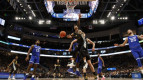
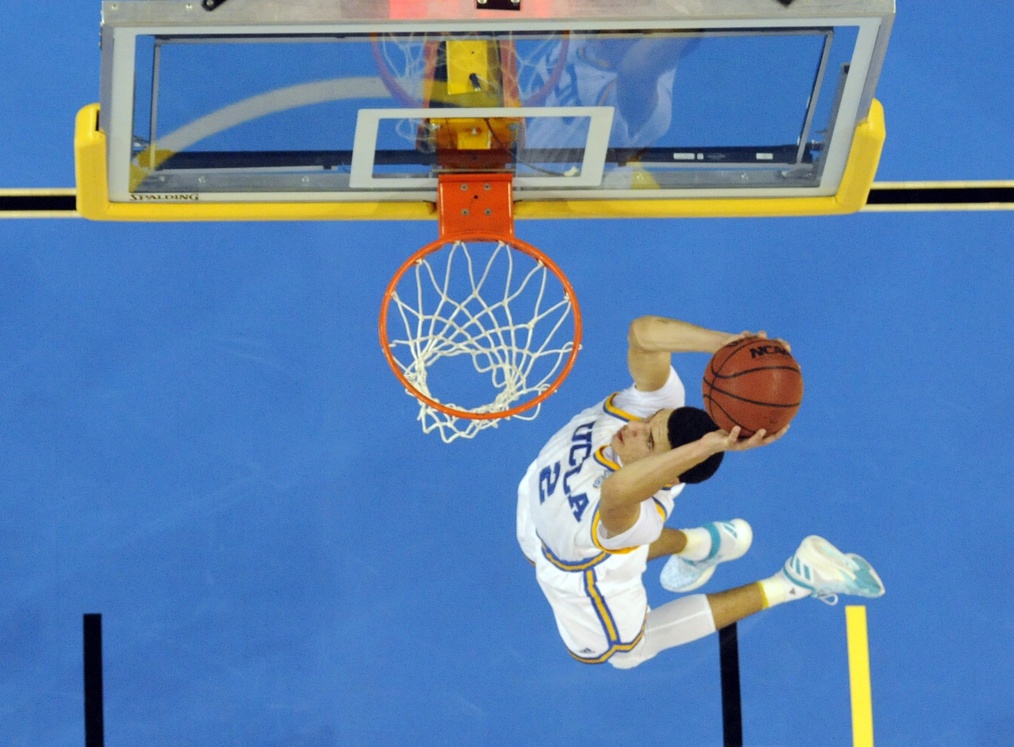
Lonzo Ball (USA Today Images)

Lonzo Ball Has Turned UCLA into a National Title Contender (USA Today Images)

  • Good wins: Kentucky, Texas A&M, Michigan, Ohio State
  • Bad losses: None
  • Synopsis: When you breeze through the non-conference portion of your schedule with several quality wins (including a road victory at Kentucky), you probably deserve a perfect grade. UCLA has perhaps the most efficient offense in the country, multiple All-America candidates and enviable depth and size at every position. The Bruins’ defense is a non-negligible concern but head coach Steve Alford has his team firing on all cylinders and headed toward a No. 1 seed in March.

Stanford – C+

  • Good wins: Seton Hall
  • Bad losses: None
  • Synopsis: The Cardinal’s performance to this point won’t blow anyone away but they have quietly been a solid team under first-year head coach Jerod Haase. A win over Seton Hall in Florida was a nice starting point while losses to the likes of Kansas, St. Mary’s, Miami and SMU were to be expected. Plus, there is something to be said for taking care of business against lesser opponents. Stanford probably won’t force its way on to the right side of the bubble with this schedule, but Haase has at least served notice that the program is on solid footing.

Read the rest of this entry »

Share this story

Should Purdue Think About Going Small?

Posted by Jim Root on December 28th, 2016

Entering the season, West Lafayette, Indiana, had a fairly legitimate claim to possession of the best collegiate frontcourt in college basketball (apologies to Wisconsin and a couple of other teams). Between incredibly versatile swingman Vince Edwards, half-man/half-Terminator center Isaac Haas, and former five-star power forward and Big Ten POY candidate Caleb Swanigan, the Boilermakers had the bodies to own the paint in most any match-up.

purdue-bigs

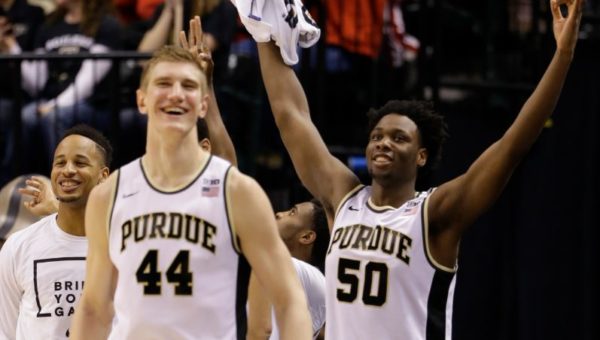
Vince Edwards, Isaac Haas and Caleb Swanigan provide a potent trio up front for the Boilermakers .(Associated Press)

Despite all of that front line talent, though, head coach Matt Painter has faced an interesting decision in how to deploy his best three players. Playing them at the 3-4-5 spots gives the Boilermakers a massive size advantage, but there are drawbacks with that lineup too. Haas, for example, can be a liability on both ends of the floor when pulled outside of the paint, and his presence on the offensive end — despite being a major weapon in drawing fouls and double-teams — can clog up the lane for the more dynamic Swanigan. To his credit, Swanigan has developed his outside shot to the point of greater respectability (52 percent from three-point range this season, compared with 29 percent last year), which resolves some of the prior spacing issues. But Painter’s tradeoff of playing Swanigan with Haas usually takes him out of the interior, where his combination of strength and quickness make him a match-up nightmare for most defenders.

Read the rest of this entry »

Share this story

Evaluating Maryland’s Freshman Duo: Anthony Cowan & Justin Jackson

Posted by Deepak Jayanti on December 27th, 2016

Losing experienced seniors such as Jake Layman and Rasheed Sulaimon was a big concern for Maryland heading into this season. Without Layman’s energy and Sulaimon’s offensive versatility, the Terrapins needed the talented trio of Robert Carter, Diamond Stone and Melo Trimble to stick around campus. Trimble’s sole decision to return saved whatever was left of Mark Turgeon’s roster, but considering all the key personnel losses, Turgeon has to be pleased with a 12-1 record heading into today’s Big Ten opener against Illinois. The primary reason that the Terps have not dropped off the cliff has been the surprisingly consistent contributions from freshmen Anthony Cowan and Justin Jackson.

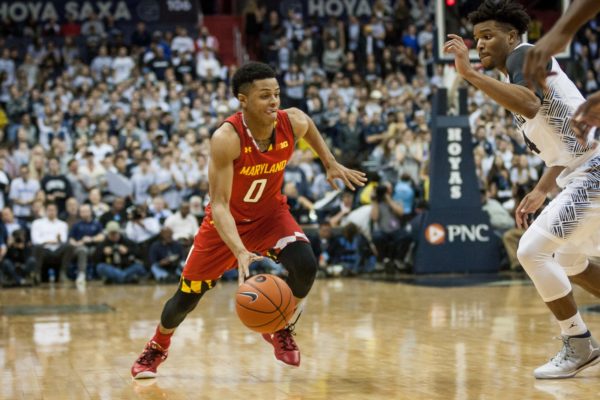
Anthony Cowan's emergence at the point guard position should help Melo Trimble's offensive production.

Anthony Cowan’s emergence at the point guard position should help Melo Trimble’s offensive production. (Getty)

Cowan’s reliability in handling the ball allows Trimble to roam around to find his shot. This dynamic was blatantly obvious in the second half against Charlotte last week when Trimble nailed multiple long-range shots that were assisted by the freshman. Cowan is averaging a team-high 3.7 assists per game, and while his 2.5 turnovers per contest is too many for a player getting over 70 percent of the available minutes at the position, he will improve as he gains more experience. During Maryland’s one-point wins over Georgetown and Oklahoma State, Cowan took some of the pressure off Trimble by averaging 11 points per contest. Another impressive aspect of the young point guard’s game is his ability to get to the free throw line — he attempted 23 total free throws against Georgetown, Charlotte and Oklahoma State, already showing his maturity in understanding there’s more to the game than long jump shots. Read the rest of this entry »

Share this story

Grading the Pac-12 Non-Conference Performances: Part I

Posted by Mike Lemaire on December 27th, 2016

The non-conference portion of the schedule is now over for the entire group of Pac-12 teams and, aside from UCLA running roughshod over every team it faced, it was a relatively uneventful non-conference season. Some teams scored important wins and other teams showed their weaknesses, but none of the 12 at-large resumes really stand out at this point in the season. To prove it to ourselves, let’s run through where each team stands heading into the 18-game Pac-12 schedule.

Arizona – B+

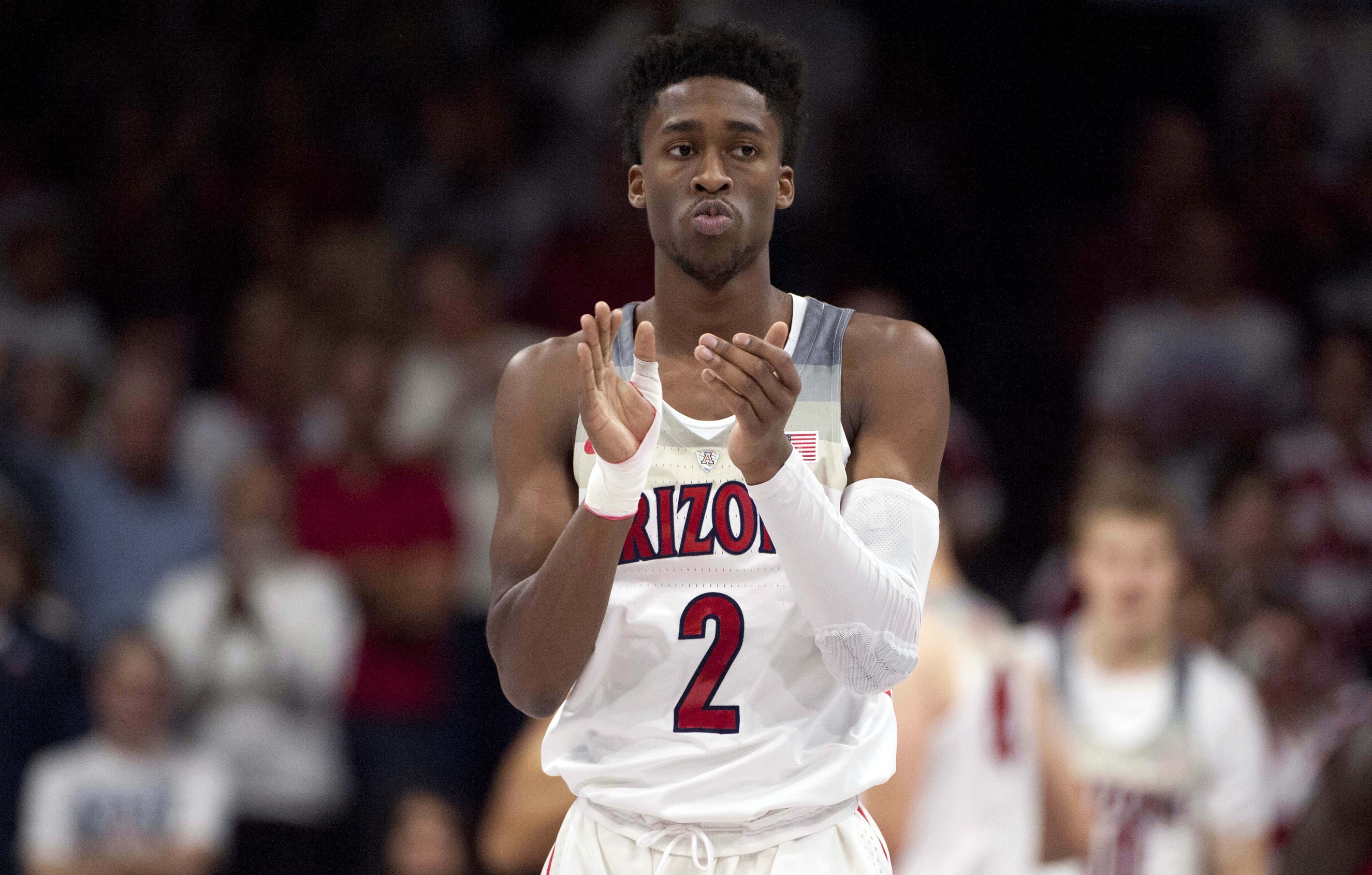
Arizona (USA Today Images)

It’s Unclear Where Arizona is Headed But a B+ Non-Conference Grade is Acceptable(USA Today Images)

  • Quality wins: Texas A&M, Michigan State
  • Bad losses: None
  • Synopsis: The Wildcats would have received an A- except that their best win over Michigan State doesn’t look as good as it would have in most years. That said, the Wildcats posted an impressive 11-2 non-conference record and have done so without the services of arguably their best player (Allonzo Trier) and inarguably their best point guard (Parker Jackson-Cartwright). It would have been nice to steal a win against Gonzaga or Butler, but Arizona has to this point helped its NCAA Tournament chances more than it has hurt them.

Arizona State – C-

  • Quality wins: None
  • Bad losses: New Mexico State, Northern Iowa
  • Synopsis: Bobby Hurley hasn’t been subtle about his desire for more national exposure for his program but the strategy somewhat backfired this year as the head coach has opened more eyes with his press conferences than with his team’s play. The Sun Devils are shorthanded and weren’t expected to contend for an NCAA Tournament bid this season, but the way in which they have been blown out by quality opponents is at least mildly embarrassing. Arizona State’s non-conference performance deserves the low side of the gentleman’s C.

Read the rest of this entry »

Share this story

Breaking Down Creighton’s Powerful Offense

Posted by Justin Kundrat on December 27th, 2016

As Mo Watson‘s National Player of the Year campaign has gained momentum and Marcus Foster is making the most of his second chance with multiple 20-point outings, Creighton has catapulted up the national rankings. The preseason #22 team sports a flawless 12-0 record with notable drubbings of Wisconsin and NC State on its way to a current top 10 ranking in the national polls. Occasional lapses of defense have generated some concern, but the well-oiled machine that is Greg McDermott‘s offense is keeping the ship very much afloat. Through the first third of the season, the Bluejays rank ninth nationally in offensive efficiency, a measure of effectiveness supported by what might be the most well-balanced scoring unit in the country. For Creighton, its offensive efficiency is the what, but it is the how that makes this team so intriguing.

Creighton is an Offensive Juggernaut (USA Today Images)

Creighton is an Offensive Juggernaut (USA Today Images)

The first component of the how is Creighton’s proficient outside shooting — McDermott’s team connects on a nation-leading 45.5 percent of its long-range shots. What kills opponents, however, has less to do with accuracy than with every player in the core rotation being a legitimate threat from deep. That includes 6’10” Toby Hegner and 7’0″ freshman Justin Patton.

When Creighton runs its spread offense and initiates action from dribble handoffs or pick-and-rolls, help defense is an ambitious endeavor. When defenders choose to double in the post or step in to protect the lane against Watson, someone who can knock down open jumpers is routinely left alone beyond the arc. Conversely, the spacing created from this array of outstanding shooters ultimately allows natural penetrators such as Watson or Foster to attack the rim in advantageous, one-on-one settings. Read the rest of this entry »

Share this story

Breaking Down Ivan Rabb vs. Virginia’s Defense

Posted by Adam Butler on December 26th, 2016

Virginia basketball doubles the post. This is less opinion than fact. Tony Bennett’s teams double the post and they double it effectively. In using Internet search devices you’ll discover a fifty-two-second video compilation of Virginia post-doubles when searching the terms, “VIRGINIA BASKETBALL DOUBLES POST.” And then another video with three minutes of post-doubles. Core to the pack-line defense is denying the paint, to ensure help is always available. In sending the immediate double-team, these tenets are fulfilled: help arrives immediately, and the post – and player – is denied.

Ivan Rabb Was Often Swarmed by Cavaliers (USA Today Images)

Ivan Rabb Was Often Swarmed by Cavaliers (USA Today Images)

The ultimate point I’m beleaguering here is that California center Ivan Rabb didn’t touch the ball for the final four minutes in last week’s 56-52 loss to Virginia. Rabb, the second-highest vote-getter in Preseason All-America voting, took only four shots on the evening and did not touch the ball for the final four minutes of a crucial non-conference home game. OK, to be fair, he did get a touch with 18 seconds remaining. It was with his back turned 24 feet away from the basket and resulted in an immediate handoff to teammate Jabari Bird (and zero threat to score). Ignoring that touch fits this final four-minute narrative but also demonstrates two key points: 1) Bennett is indeed the best defensive coach in America; 2) Cal is ineffectively using its greatest asset.

Let’s expand on the latter because to this point we’ve effused on the former. Bennett’s teams have never finished outside the top 100 in defensive efficiency and have been among the top 25 in nine of his 11 head coaching seasons. That point is clear. So, back to Rabb. If Virginia denies the post and Rabb is one of the nation’s best post players, what’s a Berkeley to do? First of all, one of the things that makes Rabb special is his pronounced versatility. He can score from all over the floor, create on his own and draw fouls. To quantify: he shoots 84 percent at the rim and 41 percent in the mid-range; only half of his shots are assisted; and he owns the 45th best free throw rate in America. Furthermore, his 12 percent assist rate suggests that, while he won’t soon rival Lonzo Ball in his passing capabilities, Rabb will find the open man (for context, that’s roughly the fifth-highest assist rate among Pac-12 bigs). So what was Cuonzo Martin‘s team trying to do at the end of a winnable game against a top 10 team? Well here’s a detailed look at Rabb’s 34 touches on the evening (including the last second, back-to-the basket, moment):

Read the rest of this entry »

Share this story

Six Big Ten X-Factors Heading Into Conference Play

Posted by Brendan Brody on December 26th, 2016

Conference play is almost here, and after a 138-42 (.767) combined non-conference start, Big Ten teams will begin squaring off against each other tomorrow afternoon. As of right now, it looks like three front-runners (Wisconsin, Purdue and Indiana) have emerged, followed by a group of good-not-great teams competing for the top of the next tier — a glance at the most recent KenPom ratings reveals eight teams ranked within the NCAA Tournament at-large sweet spot of #29-#68. With things so relatively even, a number of x-factors around the league could very well swing the race with improved performances. Here are six players who could heavily influence how the Big Ten standings ultimately end up.

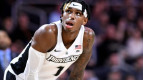
Carsen Edwards (USA Today Images)

Carsen Edwards is a Possible X-Factor For Purdue (USA Today Images)

  • Carsen Edwards, Purdue: One of the reasons why Purdue is a perceived title threat is because the majority of their players are reasonably consistent. Edwards, however, is the biggest wild card in the rotation, and his continuing development could be the key for the Boilermakers in March. Since the freshman moved into the starting lineup on December 3, he has averaged 9.3 PPG and a couple assists per outing. His shooting can stand to improve, but he’s a blur in the open court and causes havoc defensively on the perimeter. If Edwards can become a more efficient scorer during Big Ten play (95.0 Offensive Rating on 24.9 percent usage), Purdue’s offense (as well as the team) could move into the top 10 nationally.
  • D’Mitrik Trice, Wisconsin: With five returning starters this season, little was expected from Wisconsin’s lone true freshman. And yet Trice has been an efficient and capable third guard off the bench, including some outstanding shooting from deep so far (18-of-30 3FG). He has basically stolen the minutes that were going to Jordan Hill last season, and if he continues to give the Badgers another backcourt option beyond Bronson Koenig and Zak Showalter, Wisconsin could make another run at the Final Four.

Read the rest of this entry »

Share this story

John Collins Leading Wake Forest’s Resurgence

Posted by Charlie Maikis on December 22nd, 2016

Wake Forest appears to be in the midst of an astounding turnaround. After winning just 11 total games last season, the Demon Deacons are off to an 8-3 start with all three losses coming to teams ranked among KenPom‘s top 50. And for the first time since Dino Gaudio was still the head coach in 2010, Wake is itself ranked among the KenPom top 50. Danny Manning‘s offense this season has been especially improved, moving up over 100 spots in adjusted offensive efficiency (from 132nd last year to 25th). So how has the third-year ACC coach managed to bring out the best of his team this season?

John Collins has put Wake Forest on college basketball's radar. (Photo Credit: Bob Hebert)

John Collins has put Wake Forest on college basketball’s radar. (Photo Credit: Bob Hebert)

The resurgence starts with sophomore center John Collins. In a modern era of shooters and slashers, Manning has gone old school in centering his offense around the 6’10” big man. The Deacs play an inside-out game focused on getting Collins touches near the basket. Per Synergy Sports, Wake posts up on 15 percent of its possessions, the eighth-highest figure in the nation. But dumping the ball into the paint only works if you have an effective scorer there, and Collins is among the very best in the nation at doing just that. He ranks seventh in the ACC at 17.5 points per game, shoots a scorching 60 percent on twos and uses over 30 percent of the Deacs’ possessions.

Read the rest of this entry »

Share this story

Kansas Remains a Contender Even Without Udoka Azubuike

Posted by Brian Goodman on December 22nd, 2016

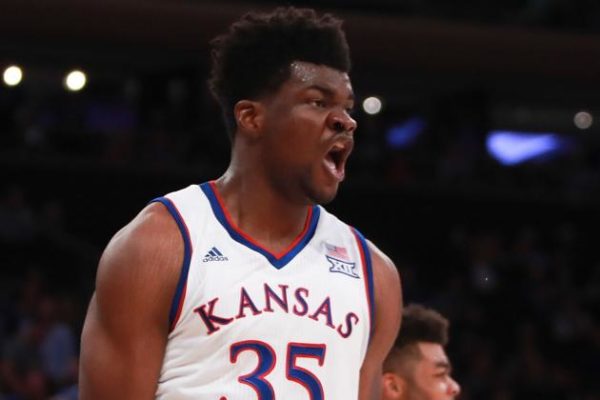
Kansas‘ transition to small-ball this season was a product of three primary factors: 1) the Jayhawks’ surplus of quality shooters and ball-handlers; 2) Josh Jackson‘s versatility; 3) a collection of big men who each brought something different to the table but none of whom possesses a well-rounded game. The Jayhawks have been getting by inside with centers Landen Lucas and Udoka Azubuike sharing the workload, but while a season-ending wrist injury to the freshman Azubuike is a clear setback, it doesn’t dispel Kansas’ status as a legitimate national title contender.

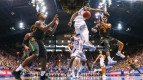
Kansas will miss Udoka Azubuike, but the Jayhawks' championship aspirations remain intact. (Michael Reaves/Getty)

Kansas will miss Udoka Azubuike, but the Jayhawks’ championship aspirations remain intact. (Michael Reaves/Getty)

For all of Azubuike’s upside as a five-star recruit with an NBA-ready body, he’ll end this season averaging a fairly modest 5.0 points, 4.4 rebounds and 1.6 blocks in just under 13 minutes per game. That’s not to say that he’s been a disappointment in his first season, or that Kansas won’t drop a game or two that it otherwise wouldn’t have, but it is to say that a team as talented and efficient as Kansas can replace his level of production. Recall that in the preseason, Azubuike wasn’t projected to play a major role this season, but it didn’t stop many in the national media from tabbing the Jayhawks to win the national title. Yes, Azubuike miss out on chances to develop in the throes of Big 12 play, and his presence in the pain will be missed against bigger teams like Baylor and West Virginia, but his rawness also made him prone to turnovers (26.6% TO), fouls (8.7 fouls per 40 minutes) and struggles at the stripe (38% FT).

Read the rest of this entry »

Share this story